
Journalist

Lee Hugh
=
-
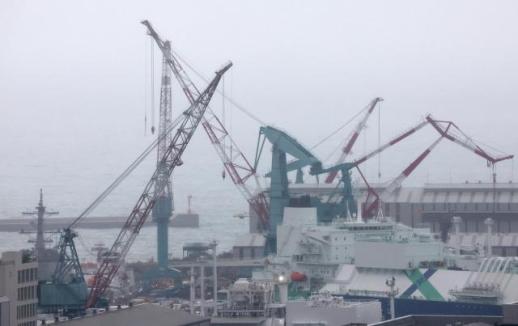 South Korea Labor Ministry Raids HD Hyundai Heavy Industries Over Ulsan Submarine Fire Labor authorities have launched a forced investigation into a recent fire aboard a submarine at a shipbuilding site in Ulsan. The Ministry of Employment and Labor said Tuesday it was conducting searches and seizures at HD Hyundai Heavy Industries' Ulsan headquarters and other locations over a Navy submarine fire at the company's Ulsan shipyard that killed a worker in her 60s. About 60 people, including labor inspectors and police, were deployed. Authorities are securing computers and related materials and focusing on whether fire-prevention measures and evacuation steps were properly carried out. The fire broke out at about 1:58 p.m. on April 9 on the Hong Beom-do, a 214-class (1,800-ton) Navy submarine undergoing maintenance at the Ulsan shipyard in Ulsan's Dong District. Most workers evacuated, but A, a woman in her 60s employed by a subcontractor, was trapped inside. After the fire was put out, firefighters searched the vessel and found her at about 4:38 p.m. near an interior passageway. Rescue efforts were hampered by the extremely tight space and repeated explosions after water used in firefighting came into contact with electrical equipment. Authorities dried the submarine and dismantled high-capacity batteries before recovering her body about 33 hours after the fire began. The Labor Ministry's Ulsan office said it will use the seized materials to determine whether required safety measures were followed and who is responsible. It will also review possible violations of the Occupational Safety and Health Act and the Serious Accidents Punishment Act. A ministry official said authorities will actively use measures such as searches, seizures and custodial investigations at workplaces where serious accidents occur or where similar incidents recur due to failures to follow basic safety rules.* This article has been translated by AI. 2026-05-06 10:10:15
 -
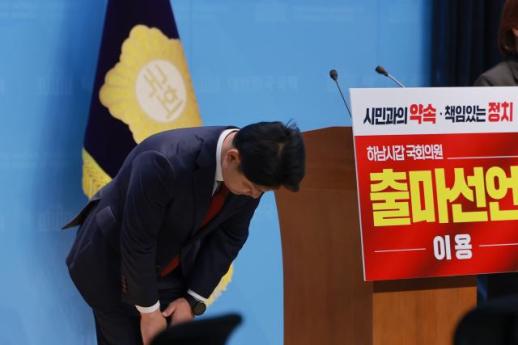 Lee Yong Announces Bid for Hanam Gap By-Election, Apologizes for Yoon Administration Lee Yong, a former lawmaker from the People Power Party, announced May 6 that he will run in the parliamentary by-election in Gyeonggi Province’s Hanam Gap district, pledging to “restore the rule of law and democracy” and “open a bigger future for Hanam.” Lee, who served as chief aide to Yoon Suk Yeol during Yoon’s presidential campaign and was known as a close protector, apologized, saying he is not free of responsibility “now that the Yoon Suk Yeol administration has disappointed and hurt the public.” Speaking at a news conference at the National Assembly press center, Lee said, “If you helped create an administration, you must also take responsibility when it fails.” “Creating an administration was the reason a party exists, and I carried out my duties as a People Power Party lawmaker,” he said. “But now that the administration has disappointed and hurt the public, I am not free of responsibility. I’m sorry. I sincerely apologize.” He added, “I will not make excuses or hide. I will not avoid the public’s punishment,” and said he would change first, take responsibility where needed, fix what must be fixed, and rebuild trust through actions rather than words. Taking aim at former Democratic Party lawmaker Choo Mi-ae and Lee Kwang-jae, a Hanam Gap candidate, Lee said the election is “a contest between someone running for Hanam and someone who came to Hanam for an election,” adding, “Hanam is not a nest where migratory birds stop briefly and leave.” Lee said he did not leave Hanam after losing the last general election because “an election ending does not mean promises to citizens end.” He said he spent the past two years visiting neighborhoods across the city and met residents for talks and other outreach sessions as few as five times a day and as many as 20. He said he would keep promises to Hanam residents and put their lives at the center of his politics, and urged voters to “judge the arrogant Lee Jae-myung administration” on June 3 and to restore livelihoods and ensure Hanam’s development continues without interruption. * This article has been translated by AI. 2026-05-06 10:09:14
 -
 Trump Says Pope Is Soft on Iran Nuclear Issue; Pope Reaffirms Opposition to All Nuclear Arms U.S. President Donald Trump and Pope Leo XIV have again traded sharp words, this time over Iran’s nuclear issue. After Trump said the pope was taking a complacent approach to Iran’s pursuit of nuclear weapons, the pope pushed back, saying the Catholic Church has long opposed all nuclear arms. The pope spoke to reporters Monday aboard the papal plane as he returned to Rome from a trip to Africa. “I am only delivering the message of the Gospel and peace,” he said. He added that “the Catholic Church has opposed all nuclear weapons for years,” distancing himself from the claim. The exchange flared again after Trump’s recent remarks in an interview with conservative host Hugh Hewitt, in which Trump said the pope was being complacent about Iran’s nuclear weapons issue. The Associated Press reported, however, that the pope has not supported Iran’s nuclear armament and instead reaffirmed his longstanding opposition to all nuclear weapons. The clash is not new. On April 13, Trump attacked the pope, suggesting he was weak on crime and problematic in diplomacy. The pope responded at the time that he was not afraid and would continue criticizing the suffering caused by war. The timing has drawn attention as U.S. Secretary of State Marco Rubio is scheduled to meet the pope at the Vatican this week. U.S. officials said the visit was planned in advance, not an improvised effort to smooth things over, but Trump’s latest comments have fueled speculation that the meeting now carries added political weight.* This article has been translated by AI. 2026-05-06 10:07:24
 -
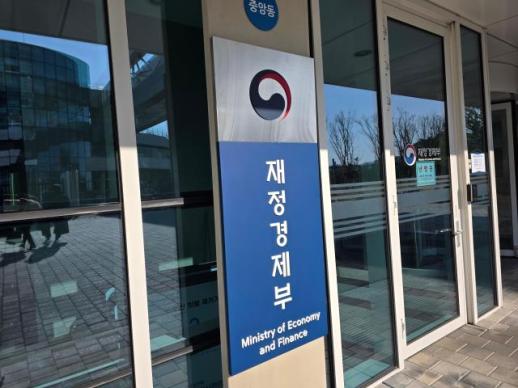 No Public Agency Earns Top Safety Rating; Korea Coal Corp. Rated Very Poor No public agency earned an “excellent” (Grade 1) rating in last year’s government safety management assessment, officials said. Korea Coal Corp. was the only agency rated “very poor” (Grade 5), while Korea Expressway Corp., Korea East-West Power Co. and Korea Land and Housing Corp. (LH) were among those rated “poor” (Grade 4). The Finance and Economy Ministry said it confirmed the results on Tuesday at the fifth meeting of the Public Institutions Steering Committee, chaired by Vice Finance and Economy Minister Heo Jang, approving the “2025 Public Institutions Safety Management Rating Review Results.” Reflecting measures announced in September to strengthen safety management at public institutions, the government expanded the review 대상 from 73 agencies a year earlier to 104 and tightened evaluations of construction sites, where fatal accidents account for a large share, the ministry said. In the assessment of last year’s safety performance, none of the 104 agencies received Grade 1. A total of 21 received Grade 2, 77 received Grade 3, five received Grade 4 and one received Grade 5, the ministry said. Korea Coal Corp. ranked last with a “very poor” rating, with officials citing weaknesses across its safety management system. The “poor” group included state-run companies such as Korea Expressway Corp., Korea East-West Power and LH. As in the previous year, no agency received Grade 1. Compared with a year earlier, the number of Grade 2 agencies rose by one, Grade 3 agencies increased by 26, and agencies rated Grade 4 or below rose by four, leaving most clustered in the middle. Since the safety rating system was introduced in 2020, the share of agencies in the mid-to-upper tiers (Grades 2 and 3) has increased to 94.2% of all institutions, the ministry said. The government said agencies rated Grades 4 and 5 must complete consulting and training from safety 전문기관 and report improvement results quarterly to their supervising ministries. “The safety management rating review system is strengthening accountability among public institution management and helping establish a safety culture,” Heo said. “But public concerns about safety persist, so we will continue to develop the system.”* This article has been translated by AI. 2026-05-06 10:06:32
 -
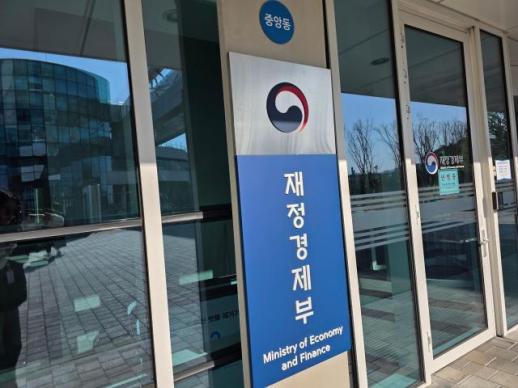 No Public Agencies Flagged for Poor Disclosure Compliance in 2025 Review; 18 Earn Top Marks Public agencies’ disclosure quality improved overall in the 2025 integrated disclosure review, with no institutions classified as poor performers for the first time in two years, the Finance and Economy Ministry said Tuesday. The ministry said it approved “the 2025 integrated disclosure inspection results and follow-up measures” at the fifth 2026 Public Institution Steering Committee meeting, chaired by Second Vice Minister Heo Jang, on April 30. Under the 2007 law on the management of public institutions, all public agencies must disclose key management information through a public system. The ministry conducts regular annual checks to improve the reliability of the disclosures. The review found 18 “excellent disclosure institutions” that received no penalty points for integrated disclosure violations for three consecutive years, or two years for other public institutions. That was up four from the previous year. Fourteen institutions were classified as “improved disclosure institutions,” meaning their penalty points fell by at least 50% for two straight years. This year, the number of institutions receiving an “institutional caution” or labeled a “poor disclosure institution” fell to zero, the ministry said. An institutional caution applies to agencies with more than 20 penalty points in a year, while poor disclosure institutions are those with more than 40. The ministry attributed the improvement to joint efforts by the government and public agencies, including tailored training and consulting for weaker performers and incentives for top performers. It also cited stronger internal controls and advance checks to prevent disclosure errors. The ministry said it will reflect the results in performance evaluations for state-owned enterprises and quasi-government agencies, as well as evaluations of other public institutions conducted by supervising ministries. It plans incentives for excellent disclosure institutions, including exemption from the next year’s disclosure inspection and preferential treatment in management evaluations. “As the public’s expectations for the right to know and for transparency at public institutions have risen, the quality of management disclosures must continue to improve,” Heo said. He added that the government will use the integrated disclosure inspection system to further raise disclosure standards.* This article has been translated by AI. 2026-05-06 10:05:37
 -
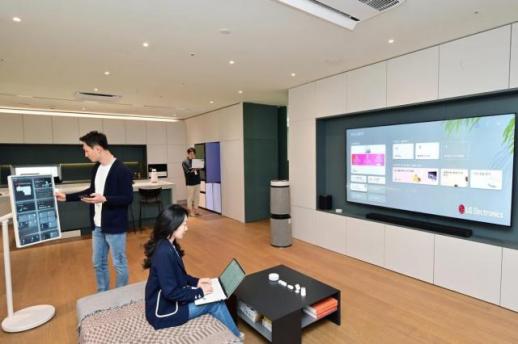 LG Upgrades ‘ThinQ Real’ AI Living Lab to Accelerate Smart Home Development LG Electronics has overhauled a research space used to validate AI-based living environments, stepping up efforts to advance its AI home business. The company said Tuesday it upgraded 'ThinQ Real,' located at LG Sciencepark in Seoul's Magok district. The facility serves as a research hub to refine AI technology using data gathered in a real-life setting and to apply the results to products and services. First built in 2022, the roughly 100-square-meter space has been redesigned to match a typical 30-pyeong home layout. LG said the focus has shifted from comparing different household types to recreating a more common housing form to closely analyze everyday living patterns. The interior is arranged like an actual home, including an entryway, living room, kitchen and bedroom, with furnishings and installations set up to mirror real use. AI appliances, IoT devices and sensors are connected to collect and analyze living data in real time. LG said it built an integrated control environment centered on its AI home hub, 'ThinQ On.' Using generative AI, the system is designed to converse with users in natural language, learn behavior and context, and automatically optimize the home environment. Researchers will run a range of daily-life scenarios in the space, verify automation functions and reflect the findings in products and services. The accumulated data will be used to improve AI algorithms and develop new services, the company said. One citizen said, "If the home responds like a single system rather than appliances working separately, convenience in daily life would increase a lot." LG said the revamp also targets expanded business-to-business demand. It strengthened the site's showroom function so construction firms, telecom companies and interior design businesses can experience AI home solutions, and said feedback gathered during visits will be incorporated into research and development. The company said the location inside LG Sciencepark, where major business divisions and research organizations are concentrated, is also intended to improve collaboration and speed the link between technology development and commercialization. Industry observers said global home-appliance makers are rapidly shifting from product competition to platform competition based on living data, and viewed LG's investment as a signal of a mid- to long-term strategic pivot. Jeong Gi-hyeon, vice president of LG Electronics' HS Platform Business Center, said, "We will quickly advance data-based AI home solutions to improve convenience in customers' daily lives." * This article has been translated by AI. 2026-05-06 10:04:20
 -
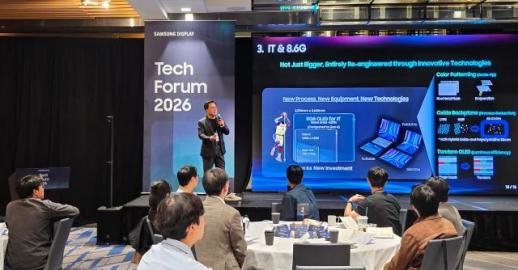 Samsung Display Expands U.S. Recruiting to Broaden Global Talent Pipeline Samsung Display is expanding its recruiting programs in the United States as it steps up efforts to secure global talent. The company said Tuesday it will broaden its U.S. recruiting footprint beyond the West Coast to locations across the country, with senior executives meeting students directly to present the company’s vision. Samsung Display on Monday (local time) held a recruiting program called the “Tech Forum” at the InterContinental Los Angeles Downtown, inviting about 50 doctoral-level candidates to share the company’s vision and promote its organizational culture. The event was tied to “Display Week,” the world’s largest display industry gathering hosted by the Society for Information Display, which has been underway in Los Angeles since May 3. Samsung Display invited top doctoral candidates from universities near Los Angeles. Lee Ju-hyeong, executive vice president and head of the company’s small- and medium-sized display business, delivered a keynote titled “AI meets OLED: Shaping the Next Interface,” urging participants to join its push for next-generation technology innovation. Lee Ho-jung, executive vice president and head of product planning for the same business unit, spoke in a technical session, outlining key innovation achievements and sharing future technology and product strategies aligned with the AI era. Unlike traditional briefing-style sessions, the Tech Forum was run as a networking event, with executives and engineers dining with students and talking informally. Students also received tailored consultations on how their specialties could fit specific departments and roles at Samsung Display. Following the Tech Forum, Samsung Display will begin a series of in-person recruiting meetings on Wednesday in San Francisco and San Jose, then visit major hubs across the U.S. in June, including Chicago, Boston and Atlanta. The company plans to invite dozens of doctoral-level candidates in each region. “In a rapidly changing display market aligned with the AI era, the key to leading innovation ultimately lies with people,” Lee Ju-hyeong said. “We hope outstanding talent active on the global stage will help Samsung Display lead a new future.” Samsung Display also holds a tech forum in Japan each October led by senior executives as part of its broader global recruiting efforts. From 2022 through last year, hundreds of top candidates took part in the company’s recruiting events in North America, Japan and elsewhere. * This article has been translated by AI. 2026-05-06 10:03:22
 -
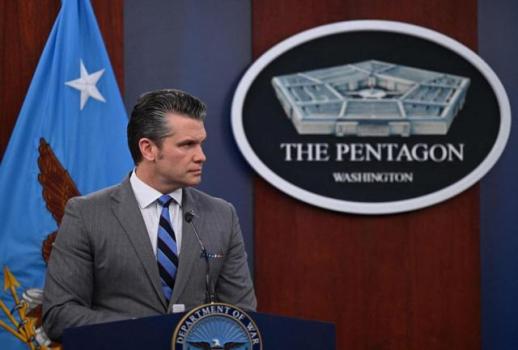 OPINION: US cybersecurity requirements emerge as key hurdle for South Korean defense firms SEOUL, May 6 (AJP) - Under the U.S. Cybersecurity Maturity Model Certification (CMMC), which took effect in November last year and requires contractors to verify their cybersecurity practices to protect sensitive information, companies cannot enter the U.S. defense market without compliance. The CMMC, enforced by the U.S. Department of Defense (DoD), applies not only to prime contractors that deliver directly to the Pentagon, but also to subcontractors supplying parts and raw materials. As South Korea aims to expand defense exports to the U.S. and become one of the world's top four arms exporters, CMMC has become a critical requirement. CMMC has three levels, based on the sensitivity of Federal Contract Information (FCI) and Controlled Unclassified Information (CUI). Most defense firms may need to prepare for Level 2, which requires meeting all 110 security requirements outlined in NIST SP 800-171. Companies handling critical controlled unclassified information (CUI) must also undergo an audit by a certified third-party assessor organization (C3PAO) every three years. Preparation typically takes 12 to 18 months, and total costs - including infrastructure, consulting, and certification - can range from 260 million won (US$177,000) to 400 million won per company. The burden falls largely on smaller suppliers. A recent survey by the Korea Defense Industry Association (KDIA) found that nearly all small and mid-sized companies lacked dedicated security staff. The most commonly cited challenges were cost, as well as a lack of information and training. About one-third said they had no plans to invest in CMMC certification, despite their interest in entering the U.S. market. Technical barriers are just as daunting. Level 2 requires encryption standards validated under U.S. rules (FIPS 140-2/140-3), and South Korea's own equivalent certification is not recognized because no mutual recognition agreement exists between the two countries. Requirements like multi-factor authentication can force companies to overhaul their entire security infrastructure. Of the 110 requirements, 61 must be fully met before a contract is signed, with no exceptions or grace periods allowed. To make matters more difficult, South Korea has no accredited C3PAO, meaning companies must rely on foreign firms, raising costs and concerns over language barriers and potential technology leakage. In this context, the legal grounds for support should go beyond assistance for system-building and consulting costs. Revisions are needed to explicitly include certifications and qualifications required for defense exports as a basis for subsidies. Existing security inspections should also be restructured to align with CMMC requirements, allowing companies to meet both without duplicating efforts. Firms that complete CMMC self-assessments or obtain certification should also be eligible for exemptions from overlapping inspection requirements. Building a domestic CMMC ecosystem is equally important. South Korea needs its own accredited C3PAO, and the government should actively support efforts to establish one. At the same time, authorities should engage directly with the DoD to address key sticking points, particularly rules around foreign ownership and influence, and requirements for high-level background checks. More funding is needed, as the current 800 million won for defense technology protection systems and 750 million won for consulting support for small defense firms are not enough to meet demand. Budgets for individual programs should be increased, and a dedicated fund could also be established to manage resources more effectively. Cost structures also need reform, as security spending is currently treated as an indirect cost, making it difficult to plan for and discouraging proactive investment. CMMC is not something companies can adopt quickly, but it cannot be avoided for those seeking to stay in the U.S. market. Competing arms exporters are already treating CMMC readiness as a national priority and supporting their companies systematically. Without coordinated action, South Korean suppliers risk losing their position to global competitors. An integrated approach involving the government, local authorities, and relevant industries is needed, and a cross-ministry consultative body should be established and begin work without delay. The next decade for South Korea's defense industry will depend on how it gets through this challenge. * This article, published by Aju Business Daily, was translated by AI and edited by AJP. 2026-05-06 10:03:11
 -
 U.S., Gulf Allies Renew Push for U.N. Resolution to Keep Strait of Hormuz Open The United States and its Gulf allies are renewing a push for a U.N. Security Council resolution demanding that Iran keep the Strait of Hormuz open, warning that additional steps, including sanctions, could be considered if Tehran does not comply. The U.S. State Department said Secretary of State Marco Rubio issued a statement on May 5 (local time) formally proposing the resolution to safeguard freedom of navigation through the strait. The draft was prepared by the United States with Bahrain and Gulf regional allies Saudi Arabia, the United Arab Emirates, Kuwait and Qatar. It calls on Iran to halt attacks on vessels, stop laying mines and cease collecting transit fees. It also demands that Iran disclose the locations of mines it has placed, cooperate in mine removal and work to establish humanitarian corridors. The new text takes a more cautious approach than a measure that failed last month. Reuters and other outlets reported the draft, mindful of Russia and China, removes language that would explicitly authorize military action. It retains the framework of Chapter VII of the U.N. Charter, leaving a basis for enforcement measures that could include sanctions and military steps. The resolution condemns alleged recent ceasefire violations by Iran and describes any attempt to close or obstruct navigation through the strait, or to impose transit fees, as a threat to international peace and security. It says disruptions from a blockade are affecting shipments of essential goods, including relief supplies and fertilizer, and urges Iran to cooperate in creating routes for humanitarian assistance. Under the draft, the U.N. secretary-general would report to the Security Council within 30 days on whether Iran is complying. If Iran fails to meet the demands, the council would reconvene to consider additional measures, including sanctions. The United States aims to circulate the text by May 8 and seek a vote next week. At a White House briefing, Rubio said, “Everyone doesn’t want this to be blocked by a veto again, and we adjusted the wording slightly.” He added, “I don’t know if we can avoid a veto,” and said he believes the effort is “a real test of whether the U.N. is actually a functioning body.” Reuters also reported the United States has proposed creating a multinational maritime coalition called the Maritime Freedom Construct (MFC). The MFC would work with a separate maritime mission led by the United Kingdom and France, aiming to fully resume transit through the Strait of Hormuz once conditions stabilize. About 30 countries are reported to be under discussion for participation in that maritime mission.* This article has been translated by AI. 2026-05-06 09:56:26
 -
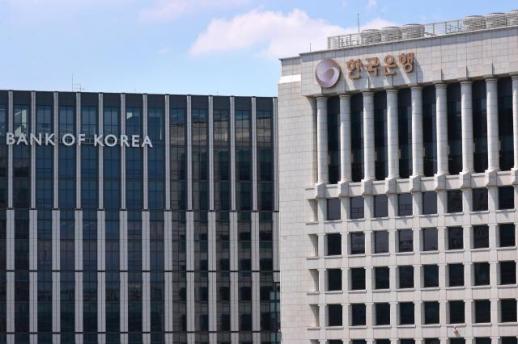 Bank of Korea Warns May Inflation Could Accelerate on Oil Prices, Base Effects The Bank of Korea said May consumer inflation is likely to pick up further as petroleum product prices stay elevated and base effects from agricultural, livestock and fisheries items add upward pressure. Senior Deputy Gov. Yoo Sang-dae said at an inflation review meeting Tuesday at the central bank’s headquarters in Jung-gu, Seoul, that “May prices will rise more as petroleum product prices remain high and base effects from agricultural, livestock and fisheries prices are added.” The National Data Center said the consumer price index in April rose 2.6% from a year earlier, the biggest increase in 1 year and 9 months. Petroleum products jumped 21.9% as global oil prices climbed, while agricultural, livestock and fisheries products fell 0.5% as shipments of major farm goods increased. Yoo said April inflation accelerated from the previous month as petroleum product prices surged on a sharp rise in global oil prices. He added that government measures to stabilize prices — including a cap on maximum oil prices and cuts to fuel taxes — were estimated to have cushioned much of the shock. He said the inflation outlook remains highly uncertain, citing developments in the Middle East, the resulting path of oil prices and the risk of spillover beyond petroleum products. “We will stay vigilant and closely monitor price conditions,” he said.* This article has been translated by AI. 2026-05-06 09:49:14