
Journalist

Lee Hugh
=
-
 K-pop girl band Le Sserafim releases world tour schedule as group targets European debut SEOUL, April 28 (AJP) - K-pop girl band Le Sserafim will perform 32 shows across 23 cities starting this July, including the first solo European concerts for the K-pop group, the five-member group's agency Source Music said Tuesday. The tour begins in the western port city of Incheon on July 11 and travels through Japan and the United States before reaching five cities in Europe this October. The expansion into Europe follows a year of commercial growth where the group was ranked among the top 10 highest-grossing K-pop tours. By booking shows in London, Paris, and Berlin, members Kim Chae-won, Sakura, Huh Yun-jin, Kazuha, and Hong Eun-chae are moving into new markets to build a larger international audience. The tour is named after the group’s second studio album, "PUREFLOW" pt.1, which is set for release on May 22. The band's agency said the name is an anagram for "POWERFUL." The group released a lead single titled "CELEBRATION" on April 24 to begin the new album cycle. The North American leg includes nine cities, such as Los Angeles, Chicago, and Newark. These dates follow a 2025 tour where the group became the first K-pop girl group to appear on the NBC program "America's Got Talent." That tour included 31 shows and a performance at the Tokyo Dome. Industry data from last year showed the group earned more from ticket sales than any other K-pop girl group during the 12 months ending in September 2025. The new schedule maintains dates in traditional markets like Taipei and Singapore while adding the European leg. Full details on venues and ticket sales are being posted to the group’s official fan platform. The tour is scheduled to conclude in November with a series of performances across Southeast Asia. 2026-04-28 17:51:46
 -
 Korean Food and Dining Brands Target May Holiday Demand With Value Deals and Takeout With an early May stretch of holidays approaching and the timing of government payments to offset high fuel prices, South Korean food and dining companies are stepping up spring promotions in hopes of a pickup in spending. Companies expect more outings during the holidays and are emphasizing convenient, portable options for outdoor activities. Value-focused offers tied to May’s Family Month are also expected to influence consumer demand. Industry officials said April 28 that as applications opened for the high-fuel-price relief payments, franchise restaurants began posting signs at entrances saying the payments can be used there, aiming to draw customers. Headquarters are also promoting the option through company apps, websites and distributed marketing materials, reflecting expectations that the funds, like last year’s consumer coupons, will flow quickly into restaurants where spending is immediate. Brands are also pushing to capture customers outside stores as spring and the holiday period bring more travelers. Outback Steakhouse rolled out three “Lunch Box” sets nationwide, targeting group meals for corporate events and picnics. It also added an app-based advance reservation service so customers can pick up orders at a preferred time and location. Delivery-heavy brands, including chicken chains, are moving to lock in demand with discount promotions. KFC is running a value-menu “KFC Snack” campaign to attract grab-and-go snack purchases. Hyundai Green Food introduced “Greeting” ready-to-cook items designed for use at camping sites, positioning them for outdoor dining. Competition is also expected to intensify in the cake market, as May includes multiple gift-giving occasions. Paris Baguette introduced a “Blue Rose Cake,” symbolizing “miracles” and “hope,” along with an object-style gift item designed not to wither, and is offering a 10,000-won set discount for app preorders. Tous les Jours is selling flower-themed cakes such as “Flower Montmartre” and character cakes, while offering up to 30% off for app reservations and running a 100% payback event to boost digital orders. Twosome Place launched a “Flower Yogurt Cake” shaped like a red rose and is providing discount coupons to customers who preorder through its app. Discount campaigns aimed at gift demand are also heating up. Jung Kwan Jang is offering up to 15% off popular red ginseng products through May 16 and providing point rewards based on purchase amounts as part of a Family Month promotion. hy is running a health-food promotion that offers up to 43% off, reward points and free shipping when customers use its gifting function. The Hanwoo Self-Sufficiency Fund Management Committee is holding an “online hanwoo market” through the 30th, selling Grade 1 sirloin at a special price of 7,120 won per 100 grams and offering discounted prices on other cuts. “With holidays and the relief payments expected to help restore consumer sentiment, we will raise customer satisfaction with differentiated products and services that reflect trends,” a distribution industry official said.* This article has been translated by AI. 2026-04-28 17:51:24
 -
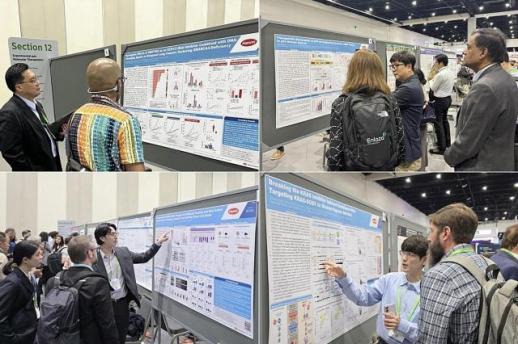 Hanmi Pharmaceutical Unveils Next-Generation Cancer Drug Pipeline at AACR 2026 Hanmi Pharmaceutical said it has unveiled a cancer drug pipeline built on a range of next-generation modalities, underscoring its growing body of oncology research. The company said on April 28 that it presented nine research findings covering eight new drug candidates at the American Association for Cancer Research meeting, AACR 2026, held April 17-22 (local time) in San Diego. Hanmi noted that recent technology-licensing deals by global drugmakers show antibody-drug conjugates and bispecific antibodies emerging as key investment targets. Hanmi said its AACR presentations were organized around three areas: targeted therapies that selectively modulate proteins highly expressed in cancer cells; targeted therapies based on next-generation modalities; and immuno-oncology candidates designed to activate immune cells and trigger antitumor responses. In targeted oncology, the company disclosed an EZH1/2 dual inhibitor (HM97662), a selective HER2 inhibitor (HM100714) and an inhibitor of SOS1-KRAS interaction (HM101207). Hanmi also highlighted an EP300 selective degrader developed using its targeted protein degradation platform. The company said the candidate showed lower toxicity and stronger anticancer efficacy than existing inhibitors, suggesting a potential new treatment approach. In immuno-oncology, Hanmi presented research on STING mRNA and p53 mRNA cancer drug candidates, as well as multispecific antibody-based programs led by Beijing Hanmi Pharmaceutical: a 4-1BB x PD-L1 bispecific antibody (BH3120) and a B7H3 x PD-L1 bispecific antibody-drug conjugate (BH4601). Hanmi said animal models showed tumor-growth suppression after intravenous and intramuscular administration. It also reported increased immune cells and anticancer activity in so-called “immune-cold” tumors that do not respond to existing immunotherapies. The company said it confirmed a dual mechanism that both activates immunity and suppresses cancer-cell proliferation while maintaining survival of normal cells. Hanmi said BH3120 uses its “Pentambody” bispecific antibody platform, enabling one antibody to bind two different targets and combine targeted anticancer treatment with immune-cell activation. The company said BH4601 is a bispecific antibody-drug conjugate that targets B7H3 and PD-L1 at the same time, and it presented a mechanism aimed at reducing resistance and activating immunity across a range of solid tumors. Choi In-young, head of Hanmi Pharmaceutical’s R&D Center, said the company’s next-generation modality-focused oncology pipeline demonstrated its research and development competitiveness. “We will continue to expand future growth engines through technology convergence and R&D,” Choi said.* This article has been translated by AI. 2026-04-28 17:46:44
 -
 Appeals court sentences Kim Keon Hee to 4 years in prison in stock manipulation, graft case Kim Keon Hee, who was indicted over alleged Deutsche Motors stock manipulation and receiving valuables tied to the Unification Church, was sentenced on appeal to four years in prison. The Seoul High Court’s Criminal Division 15-2 on Monday sentenced Kim, who was indicted in custody, to four years in prison and a 50 million won fine for violations of the Capital Markets Act and the Political Funds Act, and for bribery for influence-peddling under the Act on the Aggravated Punishment of Specific Crimes. The court also ordered the forfeiture of one Graff necklace and about 20.94 million won in additional collection. The panel said the crimes were serious, citing damage to “fairness in the stock market and investor trust.” Unlike the first trial, the court found part of the Deutsche Motors stock manipulation charge proven. It said Kim provided a securities account containing 2 billion won and entrusted trading, and that she sold 180,000 shares at a specific time and price, recognizing her participation in price manipulation. On the Unification Church-related allegations, the court found the influence-peddling charge fully proven, going beyond the first trial’s partial guilty finding. It said Kim accepted money and valuables while recognizing an implicit request. However, as in the first trial, the court acquitted Kim of allegations tied to Myung Tae-kyun involving free polling services. The panel said the polls were provided to multiple people, making it difficult to view them as a property benefit. Kim’s lawyers said after the ruling that they intend to appeal to the Supreme Court. * This article has been translated by AI. 2026-04-28 17:45:58
 -
 Majesty Golf Signs Veteran Kim Young, Expands Customer Events in May Majesty Golf has signed veteran Kim Young to its Team Majesty roster and plans to step up customer outreach in May, which is widely observed in South Korea as Family Month. Kim has one win on the LPGA Tour, five on the KLPGA Tour and one on the JLPGA Tour, the company said. Majesty Golf said the partnership was built in part on Kim’s prior use of Majesty clubs when she won on the Japanese tour. With Kim’s addition, Majesty Golf said it will strengthen marketing around its recently released Prestigio 14 line. The company said it will move beyond product promotion by expanding opportunities for customers to experience the brand through club demo sessions and lesson events in which Kim will participate directly. Customer-participation programs are also planned throughout May across major channels including Shinsegae, Hyundai and Lotte department stores, as well as Golfzon Market and AK Golf, the company said. A Majesty Golf official said the company has continued activities to broaden customer contact since the launch of Prestigio 14 and will expand chances in May for customers to experience both a professional golfer and the brand. The official added that Majesty Golf will continue brand activities with Kim to communicate more closely with customers.* This article has been translated by AI. 2026-04-28 17:45:15
 -
 South Korean Lawmakers Weigh Token Securities as Tool to Share Real Estate Gains, Curb Jeonse Fraud Tokenized securities, known as STOs, could become a new financial tool to share profits from real estate development with the public and help reduce damage from jeonse rental fraud, speakers said at a National Assembly-linked forum as South Korea prepares to bring STOs into the regulated system. The Democratic Party’s Digital Assets Task Force held a discussion on April 28 at the Korea Financial Investment Association’s training center in Seoul’s Yeouido district, focusing on real estate finance models using STOs and possible responses to jeonse fraud. Participants included In Ho, a professor at Korea University’s Blockchain Research Institute (KDAA); Hong Seung-pil, a professor at Hanshin University; Ahn Chang-won, a program manager at the Institute of Information & Communications Technology Planning & Evaluation; Kim Jin-hoe, an official at the Ministry of Science and ICT’s Digital Society Planning Division; Kim Dong-wook, a managing director at Hana Securities; Chu Hyo-hyun, vice president at Apanda Partners; and Park Sang-wook, a unit head at Bankware Global. In, the first presenter, proposed using STOs to return a share of real estate development gains to the public. “Global tokenized assets are expected to grow to about $16 trillion by 2030,” he said, adding, “We no longer have time to stay at the starting line.” He said STOs had been limited by a lack of legal basis and the absence of a secondary market, but that revisions to laws have now created an institutional foundation. “It’s time to move to the execution stage,” he said. In outlined three real estate STO models: a national housing welfare fund model, a presale-linked model and a national dividend model. Under the concept, the public could participate in development projects and share profits in the form of dividends. “Traditional real estate development has been a zero-sum structure among stakeholders, but applying STOs shifts it to a structure where everyone shares gains,” he said. He described it as providing “basic assets,” not basic income, to the public. Hong presented a “jeonse deposit STO” model, saying tokenizing the deposit structure could help ease problems. He said blockchain could transparently record property rights information, while smart contracts could automate contract performance and compensation procedures. “Smart contracts are difficult to manipulate and execute automatically, which can lower the risk of jeonse fraud,” Hong said. “Tenants can reduce deposit risk, and landlords can secure asset liquidity.” He added that combining artificial intelligence for abnormal-transaction detection and risk forecasting could enable a more sophisticated real estate finance system. The National Assembly passed amendments in January to the Electronic Securities Act and the Capital Markets Act to introduce STOs. With the system set to take effect on Feb. 4 next year, detailed rules are being designed. The Financial Services Commission last month held the first meeting of a public-private “token securities consultative body” to discuss operating plans and policy direction. The group is to run on an ongoing basis through four working divisions covering technology and infrastructure, issuance, distribution and settlement.* This article has been translated by AI. 2026-04-28 17:37:05
 -
 Survey: 75% of South Korea visitors cite K-culture as key reason for trip K-culture is emerging as a major driver of South Korea’s tourism growth, with foreign visitors drawn by Korean music, TV and other cultural content staying longer and spending more than other travelers, according to an Airbnb global survey report. Airbnb released the findings at a media briefing on April 28 in Seongsu-dong, Seoul. The survey covered 4,500 travelers in the Asia-Pacific region and the United States who have visited South Korea or plan to visit. In the survey, 94% said K-culture influenced their interest in traveling to South Korea, and 75% cited it as a core reason for visiting. Those travelers spent an average of $435 more per person than travelers visiting for other reasons. In addition, 88% said they stayed, or plan to stay, at least three nights, and 68% said they tend to travel with friends or family. Sharon Chan, Airbnb’s head of communications for Asia-Pacific, said K-culture has become “a powerful magnet and engine” drawing travelers to South Korea. She said K-culture fans are not just consuming content but want to immerse themselves in everyday life and experience local culture firsthand. Airbnb said it is expanding hands-on offerings to turn that interest into real travel experiences. It will run a large pop-up in Seongsu-dong from May 1 to 7 in collaboration with the group Cortis. The “Airbnb Originals” experience is designed to reflect the artists’ personalities in the space and enable deeper interaction with fans. The company has pursued similar K-pop-linked stays and experiences in recent years, including accommodations tied to 2022’s “In the SOOP BTS ver. Season 2,” a 2024 stay recreating a space from Seventeen’s music video, and a 2025 experience marking a 10th debut anniversary. It has also offered immersive content by turning well-known landmarks into places to stay, including “Sky Suite, Hangang Bridge, Seoul,” and an overnight event at Dongdaemun Design Plaza (DDP). Still, industry concerns remain that K-culture’s tourism spillover beyond Seoul will require addressing chronic lodging shortages in regional areas. In the survey, 83% of potential travelers said the availability of suitable accommodations outside major cities was an important factor in booking decisions. Among potential MZ-generation travelers who are driving K-culture trips, 53% said lodging availability, including shared accommodations, was a key factor in whether they would visit South Korea. Another 34% said they would delay or reconsider a trip if they could not find suitable lodging. Seo Ga-yeon, Airbnb Korea country manager, said the company’s goal is to help ensure strong interest in K-culture spreads nationwide and leads to “a complete trip” with deeper cultural engagement. She said Airbnb would actively cooperate on expanding lodging infrastructure and improving systems, including reforms to the foreign tourist city homestay business framework, and contribute in practical terms to achieving an era of 30 million foreign visitors. 2026-04-28 17:36:09
 -
 South Korea: E-Finance Payment Fees Edge Down; Card Rate Averages 1.98% Electronic financial services firms’ payment fees have inched down, a sign that the disclosure system is helping strengthen market discipline. According to the Financial Supervisory Service’s report released on the 28th on payment-fee disclosures, the weighted-average fee rates for 18 covered firms from September last year through February were 1.98% for card payments and 1.74% for prepaid payments. Compared with the previous disclosure period (February to July last year) based on 11 firms, the card payment fee rate fell by 0.01 percentage points and the prepaid payment fee rate dropped by 0.07 percentage points. Card payment fees showed little variation across four major business types: dedicated payment gateway providers, or PGs (2.01%); dual-business PGs (1.80%); shopping mall-type operators (2.08%); and delivery platform-type operators (2.01%). Fees for small and midsize merchants were lower than those for general merchants. Prepaid payment fees varied widely: delivery platform-type and shopping mall-type operators posted 3.00% and 2.38%, respectively, while dual-business PGs and dedicated PGs recorded 1.63% and 0.30%. The FSS attributed the gap to the prepaid business model, in which operators manage the full process — including issuing prepaid value and settling with merchants — resulting in a higher share of fees retained by the operator. The operator-retained share averaged 80.6% for prepaid fees, compared with 10.6% for card fees. The watchdog said fees declined slightly from the prior disclosure period, indicating the disclosure system is having some effect. Payment fee rates are set autonomously by firms based on business strategy and cost structure. Card payment fees generally favor smaller merchants, and the FSS said prepaid fees, while differing by company, are also being set at levels similar to card fees across merchant sales brackets. The FSS plans to expand the disclosure 대상: from firms with monthly payment volume of at least 500 billion won this year to at least 200 billion won next year, and to all firms in 2028.* This article has been translated by AI. 2026-04-28 17:34:56
 -
 Samsung Electro-Mechanics CEO says AI, autonomous driving growth is an opportunity Samsung Electro-Mechanics held its “2026 Partner Cooperation Day” on April 28 with key suppliers, highlighting joint growth and recognizing partners for innovation over the past year. About 200 people attended, including CEO Jang Deok-hyeon; Lee Dal-gon, chairman of the Commission for Shared Growth; and Kwon Hyuk-seok, vice chairman of the suppliers’ council and CEO of MK Chem&Tech. Jang said the company sees opportunity in the sectors it is focusing on, citing “continued high growth in the artificial intelligence (AI) industry and the advancement of autonomous driving systems.” He urged partners to “create competitive products together with differentiated core technologies.” Samsung Electro-Mechanics presented awards to five suppliers for innovation in four areas last year: productivity, technology development, quality and a special category. Woosung SE, which supplies equipment for multilayer ceramic capacitors (MLCC), received a productivity innovation award for shortening equipment manufacturing and setup schedules. In quality innovation, Jeongjin Nextech, a supplier of camera module-related parts, was recognized for introducing a new process, while Abico Tech, which performs lamination for package substrates, was honored for improving lamination quality. The company also introduced support programs aimed at strengthening suppliers’ competitiveness, including financial assistance, ESG management consulting, technology protection and professional training. Starting this year, Samsung Electro-Mechanics will open its patents to suppliers to help them build practical product and technology competitiveness. It also held a product and technology exhibition by suppliers for the first time, creating a forum to share technology trends and explore cooperation opportunities. A company official said Samsung Electro-Mechanics plans to actively support domestic and overseas market development so showcased technologies can lead to commercialization. 2026-04-28 17:34:23
 -
 Google Signs AI Contract With Pentagon, Joining OpenAI and xAI The U.S. Department of Defense has signed a contract to use Google’s artificial intelligence models, The Information reported April 28, citing a source. Under the deal, the Pentagon would use Google’s AI for “any lawful government purpose,” including classified work such as operational planning and weapons targeting, the report said. The contract is said to include language stating both sides agree the AI system is not intended to be used — and must not be used — for large-scale domestic surveillance or autonomous lethal weapons, including selecting targets, without appropriate human oversight and control. However, it also says the agreement does not grant any right to control or deny the government’s lawful operational decision-making, according to the report. That wording has been interpreted to mean Google’s “Gemini” model could be used for surveillance of Americans or autonomous lethal weapons depending on circumstances, if needed. A Google spokesperson told Reuters, “Providing API access to our commercial models, including Google infrastructure, in line with industry-standard practices and terms, is what we believe is a responsible approach to supporting national security.” Reuters said Google is the third company to sign an AI deal with the Pentagon, following OpenAI and xAI, the AI startup founded by Tesla CEO Elon Musk. The Pentagon last year signed separate AI-use contracts worth up to $200 million each with major AI companies including Google, OpenAI and Anthropic. Afterward, Anthropic clashed with the Pentagon over a requirement that its AI model be used for “any lawful government purpose,” saying it did not agree to use for “large-scale domestic surveillance” or “autonomous lethal weapons development.” The Defense Department terminated its contract for Claude, and the Donald Trump administration issued an order banning Claude’s use within U.S. government agencies. More recently, President Trump said the Pentagon’s use of Claude could be possible, raising the prospect of a new contract, the report said.* This article has been translated by AI. 2026-04-28 17:33:43