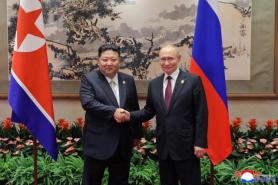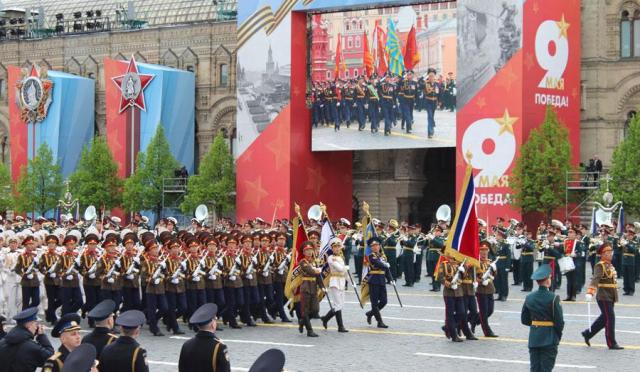
According to the state-run [North] Korean Central News Agency (KCNA), North Korean troops marched in the parade at Moscow's Red Square the previous day marking the 81st anniversary of the Soviet Union's victory over Nazi Germany in World War II, during which Russian President Vladimir Putin expressed his "gratitude."
Russian media earlier reported that North Korea participated in the annual parade for the first time, with its leader sending a "message of greeting" to Russian President Vladimir Putin.
KCNA carried detailed coverage of the parade along with a slew of photos, highlighting the deepening military ties between Pyongyang and Moscow.
Meanwhile, this year's parade was the most scaled down in years amid Russia's prolonged war in Ukraine. Putin, however, suggested the war may soon be resolved, saying, "I think that the matter is coming to an end," while urging continued support from his allies.
North Korea has reportedly dispatched around 15,000 combat troops along with military weapons to Russia to support Moscow's war in Ukraine since the two countries signed a mutual defense pact during Putin's visit to Pyongyang in June 2024.
Thousands of North Korean soldiers, most of them deployed to Kursk, a southwestern Russian region bordering Ukraine, are believed to have been killed or wounded during the prolonged war.
Copyright ⓒ Aju Press All rights reserved.