
Journalist

Lee Hugh
=
-
 ST Pharm Shares Rebound After Early Profit-Taking Despite Strong Q1 Results ST Pharm, which recently posted strong earnings, fell early on profit-taking but later rebounded. According to the Korea Exchange, ST Pharm was trading at 168,400 won as of 1:16 p.m. on the 28th, up 0.54% from the previous session. The stock had slid as much as 3.34% intraday to 161,900 won before recovering. In a filing the previous day, the company said preliminary first-quarter consolidated revenue rose 27.7% from a year earlier to 67.0 billion won, while operating profit surged 1,024.6% to 11.5 billion won. Revenue came in slightly below market expectations, but operating profit beat forecasts by more than 30%, prompting brokerages to maintain or raise target prices. Kim Seon-a, an analyst at Hana Securities, said, “In the first half of this year, we will confirm second-quarter earnings growth, and in the second half there will be many events as well as earnings growth through the fourth quarter.” She maintained her target price of 210,000 won and reiterated a “buy” rating. Lee Ji-su, an analyst at Daol Investment & Securities, cited multiple second-half research and development catalysts, including “an imminent PDUFA approval for olezarsen (severe hypertriglyceridemia), phase 3 for pelacarsen, and topline results for STP0404 (AIDS).” She said she was raising her fair value estimate to 210,000 won to reflect “mid- to long-term profitability leverage from CMO growth and improved yields.” Ha Hyeon-su, an analyst at Yuanta Securities, also raised his target price to 200,000 won, saying the company appears to be entering a stable growth phase as the share of commercialized project CDMO in total revenue increases.* This article has been translated by AI. 2026-04-28 13:24:31
 -
 South Korea to Cut Virgin Plastic Use by 30% by 2030 in Shift to Circular Economy The government will step up its shift to a “plastic-free circular economy,” aiming to cut plastic waste by 2030 and reduce the use of virgin plastic made from oil and naphtha by at least 30%. Climate, Energy and Environment Minister Kim Seong-hwan reported the “Action Plan for Transition to a Plastic-Free Circular Economy” to a Cabinet meeting on Monday, outlining measures to expand recycling and curb demand for new plastic. The plan is being pushed as a key national policy task as the recent war in the Middle East has made supplies of oil and naphtha — key plastic feedstocks — more uncertain. The government said it aims to build a sustainable circular economy ecosystem and strengthen industrial competitiveness. Recycled-content mandates expanded to curb virgin plastic The government will gradually expand mandatory use of recycled materials. The current requirement for PET bottles — 10% recycled content starting this year — will be raised to 30% by 2030. The government also plans to introduce internationally aligned recycled-content target rates for food and cosmetics containers and plastic film products made from polyethylene (PE) and polypropylene (PP). It will support equipment replacement and shifts to smart manufacturing processes, starting with pay-as-you-throw garbage bags, which were among key response items during the Middle East conflict. Officials also said they will review steps to stabilize the market if recycled materials cost more than virgin, petroleum-based inputs. Policies to reduce plastic products will be strengthened. The government will assess items such as cosmetics containers and plastic bags for reusability and ease of recycling, and will encourage switching to alternatives such as paper where plastic is not necessary. Delivery containers and parcel packaging will also face tighter rules. For delivery containers, the government will encourage weight reductions by optimizing structural design while keeping overall size and shape. For parcel packaging, it will limit excessive packaging to reduce plastic use. Packaging that is hard to recycle or that disrupts recycling of other products will face limits on market entry through industry agreements. For major product categories such as clothing and electrical and electronic goods, the government will flesh out a “Korean-style eco-design system” to ensure recyclability is considered from the design and production stages. The waste charge system will also be revised. Rates will be differentiated to reflect varying product lifespans, such as for disposable goods and furniture, and fee reductions for using recycled materials will be expanded. Recycling expanded to plastics now incinerated; reuse pushed The government also plans to bring plastics that have typically been incinerated into the recycling loop, building collection and recycling systems for items long considered blind spots, including clothing and disposable plastic cups. Working with the National Police Agency, the government will collect police uniforms that were previously burned, extract recycled polyester, or use the material as filling and insulation. It plans to expand the program later to other uniforms, including military clothing. Disposable cups, currently subject to waste charges, will be brought under the extended producer responsibility recycling system so they can be managed and recycled together with containers made of the same material. The government will expand preprocessing facilities that open and sort pay-as-you-throw bags and increase deployment of artificial intelligence and optical sorting equipment to recover plastic waste that has been burned or buried. For waste plastic film, it will promote pyrolysis to extract recycled naphtha by building wider-area collection systems and diversifying feedstocks. It will also accelerate a shift to reusable containers, focusing on multiuse facilities where disposable items are heavily used. Funeral halls will switch to reusable tableware through agreements starting with facilities run by public institutions nationwide, with a phased expansion to private facilities based on implementation results. The government will also seek to establish a culture of reusable containers at workplace cafeterias and cafes, sports stadiums, and cafes near public institutions. It plans to expand personal-cup discount programs already used by some coffee chains and to sign agreements to refrain from using mixed-material packaging. The ministry said it plans to extend the source-reduction and circular-use approach beyond plastics to future waste resources across sectors, including used electric vehicle batteries and discarded solar panels. Kim said the Middle East war is a crisis but also an opportunity to address “the structural vulnerability of a linear economy that depends on imported resources while mass-producing and discarding products.” He said the government will push “source reduction and circular use” quickly and forcefully to build a sustainable, plastic-free economy that is resilient to external shocks. 2026-04-28 13:21:25
 -
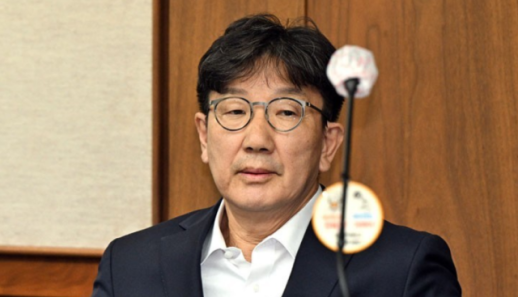 Court Upholds Rep. Kwon Seong-dong’s 2-Year Sentence for Illegal Political Funds A South Korean appeals court on Monday upheld a two-year prison sentence for People Power Party lawmaker Kwon Seong-dong for taking illegal political funds from figures linked to the Unification Church. The court rejected appeals by both Kwon and the special prosecutor, leaving the lower court ruling intact. The Seoul High Court’s Criminal Division 2-1 maintained the original sentence of two years in prison and forfeiture of 100 million won for violating the Political Funds Act. Kwon was indicted and detained on charges that in January 2022, ahead of the 20th presidential election, he received 100 million won from Yoon Young-ho, a former global headquarters chief of the Unification Church, along with requests for support for the group. The trial court found all charges proven and imposed the two-year term and forfeiture. In the appeal, the special prosecutor sought a four-year sentence. On the key dispute over admissibility, the appeals court said it was difficult to view the collection and use of evidence as illegal, rejecting the defense claim. It also dismissed the argument that derivative evidence based on illegally obtained material should be excluded, saying it could be used to prove the charges. The court also agreed with the first ruling on the credibility of Yoon’s statements, saying it was hard to conclude he made false claims to frame Kwon. Citing KakaoTalk messages and the political circumstances at the time, the court said Kwon’s influence continued. Even if he resigned from an election committee post, the court said it was a temporary step to ease internal party conflict and that the church side still approached him on the premise of his political clout. The court interpreted references in the chats to “Yongsan” as pointing to Yoon Suk Yeol, considering the situation surrounding the relocation of the presidential office at the time. In sentencing, the court strongly criticized the nature of the offense. It said receiving political funds can go beyond support for political activity and become a means for a specific religious group to gain access to state power, adding that entanglement between politics and religion can threaten the principle of separation of church and state and undermine core democratic values. The court said Kwon, a five-term lawmaker and prominent politician with constitutional responsibilities, accepted illegal funds, making the crime serious. It noted mitigating factors, including his long public service and lack of a criminal record, but concluded the original sentence was appropriate within the court’s discretion. Kwon has denied the allegations, saying he met for a meal but did not take money. He also argued key evidence was illegally obtained and that the case was not within the special prosecutor’s mandate, but the appeals court did not accept those claims. Yoon, who was also tried in the case, was sentenced the previous day in his own appeal to 18 months in prison. * This article has been translated by AI. 2026-04-28 13:18:23
 -
 South Korea to Expand Employment Retention Subsidies Nationwide, Speed Wage Recovery The government will expand the scope of employment retention subsidies from designated regions and industries to the entire country when nationwide employment conditions sharply deteriorate. It will also curb support for employers with repeated wage arrears and move faster to collect repayments tied to unpaid wages. The Ministry of Employment and Labor said April 28 that the Cabinet reviewed and approved amendments to the enforcement decrees of the Employment Insurance Act and the Wage Claim Guarantee Act. Until now, expanded employment retention subsidies have been limited to special employment support industries and employment crisis areas. The revised decree allows broader support even when job conditions worsen markedly nationwide. Eligibility requirements for the subsidy, previously set differently by type such as temporary shutdowns or leave, will be unified under a single standard: measures in which workers do not provide labor. The ministry said the change is intended to simplify complex application rules and improve understanding and use in the field. The government will also restrict access to programs under the Employment Insurance Act — including employment promotion and employment stability subsidies — for employers deemed habitual wage delinquents. The ministry said amendments to the Labor Standards Act created a legal basis to limit government subsidies and support for such employers, a step expected to encourage payment of overdue wages and reduce harm to workers. When the state pays workers unpaid wages on an employer’s behalf, it will collect the repayment using procedures for delinquent national taxes. Previously, collections followed civil enforcement, but critics said the process took a long time until a court ruling and lacked coercive power, leaving the cumulative recovery rate at 30%. Labor authorities said the change will allow compulsory collection without a final court judgment, sharply shortening recovery time and improving the recovery rate. The ministry said it expects the measure to heighten employers’ awareness of their ultimate responsibility for wage arrears and help operate the advance payment system more stably.* This article has been translated by AI. 2026-04-28 13:15:27
 -
 Seoul to Open One-Stop Center to Help International Students Find Jobs and Settle Seoul is shifting policy to move foreign students from “potential talent” to long-term residents, aiming to link study with employment and settlement rather than simply increasing arrivals. The city said April 28 it will open the Seoul Global International Student Support Center in the Sinchon university district and begin full operations in May. The center is designed as a one-stop platform offering integrated help with jobs, startups and daily life, positioning Seoul as a hub where global talent gathers and stays. The move responds to a surge in international students. Over the past decade, the number of foreign students in South Korea rose from about 90,000 to 250,000, but officials and others have said pathways to jobs and long-term settlement remain weak. A survey found 65.5% of international students want to remain in South Korea, while only 13.8% end up employed. To close what the city called a gap between “inflow” and “settlement,” Seoul plans an integrated model connecting education → employment → settlement, with the new center serving as the main base for delivering services. The center includes counseling space, a shared office, classrooms and community facilities. It will provide job support, startup support, visa and residency counseling, and help with adapting to life in Seoul. The city remodeled an existing youth startup facility, shifting its function to meet changing policy demand. Employment links are a major focus. Programs include training for trade marketers, business Korean courses and on-site work-experience programs. The center will also provide foreigner hiring information, resume and interview consulting, and “career fairs” aimed at connecting students to jobs. Support for stable settlement will run in parallel. A “30 days around Seoul” program will offer cultural and company experiences, while TOPIK preparation classes and Korean-language meetups will help students adjust. The center will also provide information on visas, housing and daily life and support community activities to encourage local integration. Seoul said it will expand the support system with universities and related organizations, including job programs linked with the Korea SMEs and Startups Agency, and will develop demand-based policies through communication with university international offices and international student associations. Lee Young-mi, head of Seoul’s foreign residents and immigration office, said international students are “already proven global talent.” She said the city will build “systematic support that leads to employment and long-term settlement” to make Seoul a place where global talent gathers and remains. 2026-04-28 12:42:17
 -
 South Korea Doubles Reusable Cup Points, Adds 300,000 Lodging Coupons for Depopulating Areas 정부가 중동전쟁에 따른 에너지 위기에 대응하기 위해 ‘친환경 녹색소비’ 확산에 나섰다. 다회용컵을 이용하면 적립되는 탄소중립포인트가 300원에서 600원으로 한시 상향되고, 비수도권 인구감소지역 숙박쿠폰은 30만장 추가 공급된다. 재정경제부는 28일 이재명 대통령 주재 국무회의에서 ‘친환경 녹색소비·관광 붐업 방안’을 발표했다. 정부는 다음 달까지 녹색소비를 집중 홍보하고 6월을 ‘녹색소비주간’으로 지정해 참여를 확대하기로 했다. 지역사회·기업·공공부문이 함께하는 ‘모두의 녹색소비’ 캠페인과 녹색제품 구매 인증 이벤트도 추진한다. 제로웨이스트 제품 판매 촉진을 위해 탄소중립포인트 2배 이벤트를 진행한다. 다회용컵 이용 시 적립되는 포인트는 다음 달 6일부터 17일까지 이벤트 기간에 600원까지 늘어난다. 이달부터 에너지 저소비 제품 판매 매장에서 구매하면 지역사랑상품권을 최대 5% 추가 할인한다. 지방정부가 매장을 발굴·신청하면 중앙정부가 심사해 추가 할인에 대한 국비 70%를 지원한다. 저소득층의 노후 창호·보일러 등 난방설비 교체 지원단가는 243만원에서 267만원으로 인상된다. 재생원료를 사용한 종량제 봉투 생산·보급을 늘리기 위해 생산설비 교체비 지원에 138억원을 투입한다. 전기차 전환도 가속한다. 공공기관 의무구매임차제 실효성 강화와 공공·민간 차량 전환 확대 방안은 6월 중 마련한다. 전기승용차와 소형 전기화물차의 정부 지원 물량은 각각 2만대, 9000대 확대한다. 대중교통 인센티브를 늘리고 유연근무 확대로 출·퇴근 수요 분산도 추진한다. 모두의카드 정액형 기준금액은 50% 낮추고, 기본형 시차 출퇴근 시간대 환급률은 30%포인트 높인다. 재생에너지 중심의 에너지 구조 개편도 속도를 낸다. 다음 달 중 재생에너지 기본계획을 마련하고 6월 중 한국형 녹색전환 전략을 준비한다. 건물·주택 태양광 보급 목표는 6000건에서 8000건으로 늘리고, 아파트 10만 가구에 베란다 태양광 설치를 지원한다. 민·관 릴레이 소비행사로 친환경·지역소비 분위기도 조성한다. 다음 달 10일까지 열리는 동행축제를 지역·친환경 축제로 운영하고, 전국 50개 지역축제·행사와 연계한 이벤트를 진행한다. 디지털 온누리상품권 할인율은 다음 달 1일부터 5일까지 한시 확대한다. 기업 업무추진비 손금 산입 특례 대상에 온누리상품권 지출분을 추가해 지역경제 활성화를 유도하고, 백년가게·전통시장·온누리가맹점 결제 시 10% 청구할인도 가능해진다. 정부는 중동전쟁 영향 품목인 나프타·석유·요소 등에 대한 관리도 이어간다고 밝혔다. 나프타 수입비용 지원에는 6744억원을 투입했고, 석유 비축물량 확대도 추진 중이다. 또 100억원의 추가경정예산으로 국산 농축산물 정부 할인지원을 실시한다. 노지채소·시설과채·닭고기 등은 최대 40% 할인 효과가 나며, 계란은 30구당 1000원을 정액 할인한다. 수산물은 주요 판매처와 협력해 제철 수산물을 중심으로 온·오프라인 최대 50% 할인한다. 관광 활성화 대책도 포함됐다. 숙박쿠폰 사용기간은 내달 초까지 연장하고, 5월 초 철도·항공 등 대중교통을 증편한다. 철도는 총 64회 늘려 3만3000석을 추가 공급하며, 항공은 20개 노선에서 2580편을 운항한다. 비수도권 인구감소지역 숙박쿠폰은 기존 20만장에서 30만장까지 확대하고, 5월 초 장기연휴를 활용해 공공부문의 연가·여행을 장려한다. 반값여행 환급 지원대상은 인구감소지역 내 식사·체험·숙박 이용금액에서 지역 내 대중교통 이용금액까지 넓힌다. 반값휴가 대상은 중견기업 근로자까지 확대한다. 인구감소지역 자유여행상품에는 열차운임 100% 할인쿠폰을 지급하고, 5개 테마열차는 50% 할인한다.* This article has been translated by AI. 2026-04-28 12:40:12
 -
 South Korea Extends Remedies on Hanwha Defense Merger Up to 5 Years, Citing Ongoing Monopoly Concerns South Korea’s Fair Trade Commission said April 28 it will extend, for up to five years, the period for corrective measures imposed as a condition for approving the business combination involving Hanwha Aerospace, Hanwha Systems and Hanwha Ocean (formerly Daewoo Shipbuilding & Marine Engineering). The FTC said it will extend the measures for three years and, if needed, add up to two more years. The FTC approved the combination in May 2023 after a full-commission meeting and ordered the companies to comply with remedies for three years. The measures ban: unfairly discriminatory price quotes for naval vessel parts; unjustified refusals to provide technical information on naval parts when Hanwha Ocean’s rivals request it through the Defense Acquisition Program Administration; and providing Hanwha affiliates with trade secrets obtained from competitors. After reviewing market competition and changes in relevant laws and systems, the FTC concluded the risk of reduced competition had not been resolved and decided at a full-commission meeting on April 15 to extend the remedies. The FTC cited market conditions over the past three years, saying Hanwha Ocean has remained the leading supplier in both the surface-ship market (67.3%) and the submarine market (64.8%). It also said Hanwha Aerospace and Hanwha Systems remain monopolists or dominant No. 1 suppliers in eight of 10 naval parts markets. Because rival shipbuilders have difficulty sourcing the relevant parts from suppliers other than these companies, the FTC said concerns remain about foreclosure effects stemming from discriminatory price quotes and information sharing. The FTC said, however, that competition concerns tied to the combination have been resolved in the markets for ship identification friend-or-foe equipment and ship integrated engine control systems, citing new entrants and changes in the companies’ market shares and rankings. “We will closely track and monitor changes in competition and the regulatory environment not only at the time of the business combination but also when the extended deadline arrives,” the FTC said, adding it will decide then whether to extend the remedies further. * This article has been translated by AI. 2026-04-28 12:39:18
 -
 Seoul court cancels 68.7 billion won of Netflix Korea tax assessment A South Korean court on Monday ordered tax authorities to cancel 68.7 billion won ($?) of a corporate tax assessment against Netflix’s South Korean unit. The Seoul Administrative Court’s Administrative Division 6, led by Presiding Judge Na Jin-i, ruled partly for Netflix Services Korea in its lawsuit seeking to overturn corporate tax and related assessments imposed by the head of the Jongno tax office and other officials. The court ordered the cancellation of 68.7 billion won of the roughly 76.2 billion won Netflix sought to void. The panel said it dismissed the portion of the case challenging local corporate income tax assessments issued by the heads of Jung-gu and Jongno-gu in Seoul, finding there was no separate legal interest to contest them apart from the cancellation of the withholding tax collection and corporate tax assessments made by the Jongno tax office. The dispute stems from a 2021 National Tax Service audit in which the agency concluded Netflix reduced its taxable profit in South Korea by shifting a significant share of revenue earned in the country to its U.S. headquarters. The tax agency said Netflix paid more than 80% of its sales to its headquarters under items such as “management advisory fees” and “content usage fees,” inflating costs. According to Netflix’s audit report, of last year’s South Korean sales of 823.3 billion won, about 81% — 664.4 billion won — flowed to the U.S. headquarters. As a result, operating profit booked in South Korea was low, and corporate tax paid totaled 3.6 billion won, or about 0.16% of sales. The National Tax Service imposed about 80 billion won in additional taxes, applying suspected tax-avoidance grounds. Netflix won a partial reduction through the Tax Tribunal but still challenged the outcome, filing an administrative lawsuit in November 2023. In earlier hearings, Netflix argued that because the service is operated by an overseas entity, its South Korean unit served only as a reseller. It said the overseas Netflix entity has the personnel and facilities and oversees content delivery, while Netflix Services Korea only managed the company’s Korean OCA, its own caching servers. On that basis, it argued money sent from Netflix Services Korea to the overseas entity was business income, not copyright royalties. Tax authorities countered that taxation was justified because Netflix Services Korea effectively used and exercised the copyrights. The National Tax Service said Netflix Services Korea paid copyright royalties to the overseas entity and therefore had a withholding obligation. 2026-04-28 12:24:19
 -
 China Media Defends Block on Meta’s Planned Acquisition of AI Startup Manus China’s state media on Tuesday defended the government’s decision to block U.S. tech giant Meta from acquiring Chinese-founded AI startup Manus, calling the move “reasonable, lawful and consistent with international practice.” China’s National Development and Reform Commission said the previous day it had decided, “in accordance with the law,” to ban foreign capital from acquiring the Manus project and had asked Meta to withdraw from the deal. Manus, founded in China, drew attention after unveiling a general-purpose AI agent in March last year and was at one point dubbed “a second DeepSeek.” Months later, it raised U.S.-linked funding and moved its headquarters to Singapore, prompting suspicions it was trying to sidestep U.S. and Chinese regulations. After Meta announced late last year it would buy Manus for about $2 billion, concerns grew in China about the loss of domestic talent and technology, and regulators moved to halt the transaction. In an editorial, the state-run Global Times said the central issue was that Manus, which grew using Chinese engineers and infrastructure, took U.S. investment and then cut ties with China. The paper said many in the industry viewed the shift as “Singapore washing” — relocating to Singapore to avoid scrutiny from both Washington and Beijing — and noted allegations the deal amounted to “acquihiring,” or buying a company mainly to secure its staff. The editorial said the government had not disclosed specific reasons for the block but argued China had sufficient jurisdiction and legal grounds. It said that even if Manus is incorporated in Singapore, its early research and development took place in China and key data are also based there, making the movement of people, technology and data directly tied to national interests. It added that whether China has jurisdiction depends on the company’s links to China in technology, talent and data and their relationship to national interests, citing measures on foreign investment security reviews, export-control technology lists and the foreign trade law as grounds for requiring a security review. The Global Times also said the action aligns with international practice, arguing that cross-border mergers involving sensitive technologies — including AI, data, algorithms, core software and key personnel — are not merely commercial transactions and that countries have broadly tightened investment security reviews. Markets are watching whether the decision can force the deal to be unwound. Under China’s foreign investment security review measures announced in late 2020, outcomes fall into three categories: “approval,” “conditional approval” and “investment ban.” If parties refuse to comply, authorities can order the disposal of equity or assets within a set period, place the party on a bad-credit record in a national credit information system and impose joint disciplinary measures as provided by regulations. Bloomberg said it was unclear whether the deal would collapse. Laila Kawaaja, head of research at Gavekal Dragonomics, said the decision carries “significant symbolic meaning” but that canceling the transaction would be difficult in practice because capital and technology transfers have already progressed substantially. Some observers said China could seek influence by restricting overseas activities by Manus executives or pressing for reduced roles or resignations on the Meta side. Kawaaja said the move also signals a clampdown on Chinese startups shifting headquarters to places such as Singapore to attract global investment. She called it a strong warning against a “de-China strategy” aimed at accessing overseas funding and markets, adding that China appears willing to allow global expansion while tightly controlling the outflow of talent and technology. * This article has been translated by AI. 2026-04-28 12:21:20
 -
 South Korea to Brief Exporters on New EU Packaging Rules Taking Effect in August The South Korean government is stepping up support for industry as the European Union prepares to enforce new packaging rules in August. The Ministry of Climate, Energy and Environment said Monday it will hold a joint government briefing Tuesday at the National Railroad Authority auditorium in Dong-gu, Daejeon, titled “Joint Government Briefing on Global Regulations in the Packaging Materials Sector.” The session is designed to help domestic companies respond to the EU’s Packaging and Packaging Waste Regulation, or PPWR, set to take effect in August, and the Food-Contact Plastic Packaging Safety Regulation, due to take effect in September. The PPWR applies to all packaging used in the EU and sets broad sustainability requirements, including limits on hazardous substances, compliance with recyclability grading standards, mandatory use of recycled content and bans on excessive packaging. Key provisions include restrictions on heavy metals and PFAS, a ban on placing products on the market with recyclability below 70%, and a requirement that plastic beverage bottles contain 30% recycled material. The food-contact plastic packaging rule strengthens safety standards for plastic containers that touch food, tightens requirements to prevent contamination from impurities in recycled plastics and expands obligations to provide information to consumers. The government said the rules could affect the production, distribution and consumption of virtually all physical goods, making early preparation necessary. It expects heavier compliance burdens for sectors with high exports to Europe, including food, cosmetics and household products. Officials said ministries have so far tracked the regulations through bilateral consultations with the EU and held separate briefings, but decided a more systematic, comprehensive response was needed. At the briefing, the ministry and the Korea Environment Corporation will explain the PPWR’s main requirements and practical compliance steps, including required documentation. The Ministry of Food and Drug Safety will present response strategies tailored to the food and cosmetics sectors, including the food-contact plastic packaging rule. The Ministry of Agriculture, Food and Rural Affairs and the Ministry of SMEs and Startups will outline sector-specific measures and ministry support programs for the agriculture and food industry and for small and medium-sized businesses, respectively. The government said it will continue operating an interagency working-level task force starting with this briefing. “Stronger EU-led standards on the sustainability and safety of packaging materials will have a significant impact across our industries,” said Kim Go-eung, director general for resource circulation at the ministry. “The government will continue working with industry to prepare thoroughly in advance and enhance the sustainability of our products and export competitiveness.”* This article has been translated by AI. 2026-04-28 12:11:19