
Journalist

Lee Hugh
=
-
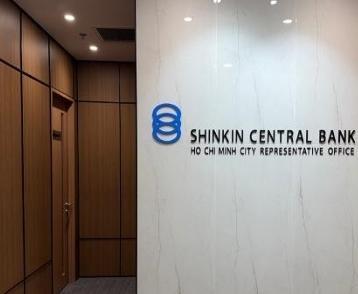 Shinkin Central Bank to Open Ho Chi Minh City Representative Office on May 1 Shinkin Central Bank will open a representative office in Ho Chi Minh City in southern Vietnam on May 1. It will be the bank’s first new overseas representative office in 13 years, since it established a base in Bangkok in 2012. The Ho Chi Minh City office will be located in Tower 1 of Saigon Centre, a mixed-use complex in the city center. It is near the Opera House Station on Metro Line 1, offering convenient access. The surrounding area has many office buildings and commercial facilities, making it suitable for market research by client companies considering expansion into Vietnam. Soichi Ogasawara will head the office. Operations will start with four staff: one Japanese representative and two local staff members, in addition to Ogasawara. The office will support Shinkin credit union client companies with entry into Vietnam and local assistance, fundraising, sales channel expansion, use of foreign talent, and training programs for credit union employees. Shinkin Central Bank said the number of credit union client companies operating in Vietnam had surpassed 500 as of October 2025. The bank has also seconded an employee to the Japan Desk at the Bank for Investment and Development of Vietnam, or BIDV, in the capital, Hanoi, and will support clients through its two bases in Ho Chi Minh City and Hanoi.* This article has been translated by AI. 2026-04-28 11:30:59
 -
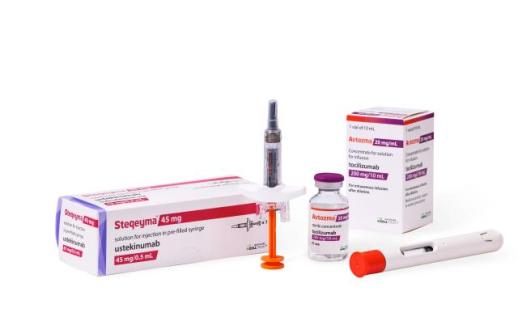 Celltrion Launches Autoimmune Drug Aptozma in Japan as First Mover Celltrion said April 28 that it has launched Aptozma (tocilizumab), an autoimmune disease treatment, in Japan as a first mover. The launch comes about seven months after the drug won marketing approval from Japan’s Ministry of Health, Labour and Welfare in September. Celltrion said it has secured approvals for key indications including rheumatoid arthritis, juvenile idiopathic arthritis, Castleman disease and cytokine release syndrome. Celltrion’s Japan unit plans to supply the product through a direct sales system. The company said it aims to speed market adoption by drawing on sales capabilities and supply experience built through its existing autoimmune treatments. Ahead of the launch, the company provided scientific information to clinicians and shared clinical data at the 70th Annual Meeting of the Japan College of Rheumatology to raise awareness of the product. Celltrion said it has established a stable foothold in Japan’s autoimmune disease market. Remsima and Yuflyma hold 44% and 19% market share, respectively, and remain among the top prescribed biosimilars, while Stekima continues to grow. With Aptozma, the company’s local portfolio has expanded to four products. Celltrion said it plans to maximize synergies across its products and step up marketing to medical institutions. It said portfolio expansion is expected to continue, with Omliclo targeted for launch in the second half of the year and Remsima SC also being prepared for entry into the Japanese market.* This article has been translated by AI. 2026-04-28 11:30:13
 -
 Hyundai Rotem signs deal for local production of K2 tanks in Poland SEOUL, April 28 (AJP) - Hyundai Rotem has signed a contract with a Polish defense firm for the production and maintenance of South Korea's K2 battle tank, it said on Tuesday. The signing ceremony, which follows a preliminary deal signed in August last year, was held in Warsaw the previous day and was attended by Hyundai Rotem CEO Lee Yong-bae and Bumar-Łabędy CEO Monika Kruczek. Under the contract with Bumar-Łabędy, a subsidiary of Poland's state-run defense group Polska Grupa Zbrojeniowa (PGZ), the South Korean manufacturer will collaborate on local production of the Polish version of the tank, dubbed the K2PL. It is a customized version developed to meet Polish requirements and expected to be produced locally, along with other Poland-specific variants based on the K2 platform. A key part of the deal involves cooperation on assembly, with some equipment to be sourced from Poland. Hyundai Rotem said items such as front- and rear-view cameras, which allow crews to monitor surroundings from inside the tank, and an inertial navigation system that helps enable precise movement and firing will be Polish-made. The contract also includes on-site training for Polish personnel in Hyundai Rotem's maintenance work on the tanks, aimed at helping Poland build its maintenance capabilities before local production begins. Hyundai Rotem said it plans to strengthen mid- to long-term cooperation with Bumar-Łabędy and other local defense companies, using the partnership as a foothold for its expansion in Europe, as it believes it would offer growth opportunities for South Korea's defense industry. Expressing confidence in its competitiveness, the company said it has a track record of delivering shipments several months ahead of schedule or on time. "The latest deal will lay the groundwork to expand K2-related projects in Poland," a Hyundai Rotem spokesman said. 2026-04-28 11:29:11
 -
 Cha Biotech Partners With Miltenyi Biotec to Develop Allogeneic CAR-NK Cancer Therapy Cha Biotech said on the 28th it will work with Miltenyi Biotec, a global cell and gene therapy company, to develop an allogeneic chimeric antigen receptor-expressing natural killer cell (CAR-NK) therapy. Under the collaboration, Miltenyi Biotec will produce lentiviral vectors and supply them to Cha Biotech. The company said Miltenyi brings expertise including its BaEV platform, designed to improve gene-delivery efficiency while lowering manufacturing costs. The BaEV platform targets ASCT1 and ASCT2 receptors expressed on NK cells to boost gene transfer efficiency. Cha Biotech plans to use the vectors to develop a CAR-NK-based anticancer cell therapy, CHACAR-NK-201. Based on its in-house NK cell culture technology, the company said it is expanding research in solid tumors including liver cancer, glioblastoma and triple-negative breast cancer. A Cha Biotech official said CAR-NK therapies are viewed as next-generation immune cell treatments because they can be mass-produced using NK cells from healthy donors, offering advantages in accessibility and cost compared with CAR-T therapies that require patient-specific manufacturing. Separately, Cha Biotech said it is also working with Miltenyi Biotec Korea to develop an automated process for mass production of allogeneic CAR-NK therapies and to strengthen manufacturing capabilities that meet global standards. * This article has been translated by AI. 2026-04-28 11:27:16
 -
 Macau Visitor Arrivals Rise 13.7% in First Quarter of 2026 Macau welcomed 11,213,904 visitor arrivals in the first quarter of 2026 (January-March), up 13.7% from a year earlier, according to the Macau government’s Statistics and Census Service. Same-day visitors rose 20.3% to 7,007,320, while overnight visitors increased 4.1% to 4,206,584. Average length of stay slipped to 1.0 day from 1.1 days a year earlier. Overnight visitors averaged 2.2 days, unchanged. By origin, visitors from mainland China climbed 16.4% to 8,388,921, accounting for 74.8% of the total. Of those, independent travelers rose 18.4% to 4,750,197. Arrivals from Hong Kong edged up 1.8% to 1,783,763. Taiwan posted a sharper gain, up 29.1% to 285,464. Outside greater China, South Koreans were the largest group, up 7.4% to 184,938. The Philippines followed, up 4.1% to 131,749. Those were the only two markets with more than 100,000 visitors. Japan fell 14.5% to 38,209. Russia recorded the fastest growth, up 84.5% to 17,654, followed by Thailand, up 70.5% to 59,811.* This article has been translated by AI. 2026-04-28 11:25:16
 -
 Automakers Warn U.S. Low-Cost Models Could Exit Without USMCA Deal as Tariffs Bite Foreign automakers including Hyundai have warned the Trump administration that they may pull low-priced models from the U.S. market if the U.S.-Mexico-Canada Agreement is not maintained or if a new deal does not sufficiently reduce tariff burdens on North American vehicles and parts. The Wall Street Journal reported April 27, citing people familiar with the matter, that Nissan, Hyundai and Toyota conveyed those concerns to the administration’s economic advisers. The companies are among the few that still supply small, lower-priced new vehicles to U.S. buyers, as U.S. automakers in recent years have shifted production toward SUVs and pickup trucks, shrinking choices in the budget passenger-car segment. The dispute centers on USMCA renegotiation and auto tariffs. President Donald Trump signed the USMCA in 2020, granting duty-free treatment to vehicles that primarily use parts from the United States, Mexico and Canada. But in the second-term administration, a 25% tariff was imposed even on vehicles previously eligible for duty-free treatment, applied to the portion that reflects non-U.S. parts content. During this year’s USMCA review, officials also raised the possibility of scrapping the pact or shifting to separate agreements with Canada and Mexico. Automakers say the tariff burden is hitting the profitability of low-priced cars first. Jennifer Safavian, CEO of Autos Drive America, said, “Without the certainty and scale that a three-country USMCA provides, automakers cannot continue to produce affordable options for American consumers.” A pullback in budget models would clash with the Trump administration’s push to ease cost-of-living pressures. The average price of a new vehicle in the United States has risen to around $50,000, a level already out of reach for many consumers. Current lower-priced options include the Mexico-built Nissan Sentra at about $22,600 and the Hyundai Venue imported from South Korea at about $20,550. According to auto information firm Edmunds, eight of the 10 cheapest new vehicles sold in the United States are models from foreign automakers; the other two are small SUVs that General Motors produces in South Korea. Companies say losses on low-priced models are already growing. Nissan Americas Chairman Christian Meunier said in a recent interview, “Tariffs are killing our affordable cars.” Toyota has also been accumulating losses in its North American business since the tariffs took effect last year. Toyota plans to invest up to $10 billion in U.S. plants over the next decade, but it is taking a cautious approach to major expansion under the current trade environment. The Trump administration says bringing manufacturing back to the United States is the priority. The White House said automakers that want to sell vehicles to U.S. consumers need to accept the need to return production to the United States. Industry officials, however, say that if tariffs persist, cuts to low-priced models could come before any meaningful expansion of U.S. production. USMCA renegotiation remains uncertain. U.S. trade authorities have indicated that some level of tariffs could remain even under a revised USMCA, while Canada and Mexico are making tariff relief a key negotiating goal. The outcome could determine how many low-priced new vehicles remain available to U.S. consumers. 2026-04-28 11:24:23
 -
 LG Electronics Shares Jump 7% on Expectations of Nvidia Physical AI Partnership LG Electronics shares rose more than 7% on expectations of cooperation with Nvidia on physical AI. According to the Korea Exchange, as of 11:04 a.m. on the 28th, LG Electronics was trading at 139,600 won, up 9,600 won (7.38%) from the previous session. A Seoul Economic Daily report published the previous day said Ryu Jae-cheol, LG Electronics’ CEO, and Madison Huang, Nvidia’s senior director of Omniverse and robotics product marketing and the eldest daughter of Nvidia CEO Jensen Huang, were set to meet at LG’s headquarters in Seoul’s Yeouido district to discuss cooperation between the companies. The report said the talks are expected to include a review of ways to integrate LG’s home robot, “LG Cloiide,” unveiled at “CES 2026,” with Nvidia’s robotics platform, “Isaac.” Isaac is a platform that trains robots in a physics-based simulation environment. The simulation approach allows companies to test a range of scenarios in advance, reducing trial and error in real-world settings. LG Electronics is pursuing a strategy of first training Cloiide in a simulated environment and then applying it in the field to improve both development speed and overall performance. * This article has been translated by AI. 2026-04-28 11:19:05
 -
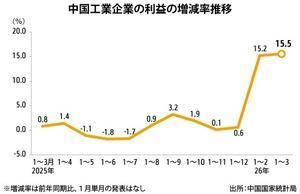 China’s Industrial Firms’ Profits Rise 15.5% in Q1 on AI, Chip-Related Gains China’s National Bureau of Statistics said on the 27th that profits at industrial firms above a designated size rose 15.5% in the first quarter of 2026 (January-March) from a year earlier to 1.69604 trillion yuan (about 39.5 trillion yen). The growth rate was 0.3 percentage points higher than in January-February, as rapid expansion in artificial intelligence and semiconductors boosted profits at related parts makers. In March alone, profits increased 15.8% from a year earlier, with the growth rate 0.6 percentage points higher than in January-February. By major sector in January-March, manufacturing, which accounts for 70% of the total, rose 19.1% to 1.23843 trillion yuan, accelerating from 18.9% growth in January-February. Mining increased 16.2% to 256.33 billion yuan. Profits at electricity, heat, gas and water production and supply fell 3.2% to 201.28 billion yuan, turning negative. High-tech manufacturing profits jumped 47.4%, lifting the overall growth rate by 7.9 percentage points. Driven by AI and semiconductor-related industries, optical fiber manufacturing rose 4.4 times, optoelectronic device manufacturing increased 43.0%, and display device manufacturing gained 36.3%. With demand rising for smart products, smart unmanned aerial vehicle (drone) manufacturing climbed 53.8%, and other smart consumer equipment manufacturing rose 67.3%. Equipment manufacturing profits increased 21.0%. Computer, communications and other electronic equipment manufacturing rose 2.2 times, while railway, ship, aerospace and other transport equipment manufacturing increased 16.7%, widening its growth by 5.3 percentage points. Raw materials manufacturing profits rose 77.9%. As strategic emerging industries such as aerospace, new energy and next-generation IT expanded rapidly, nonferrous metal smelting and rolling processing more than doubled profits. Petroleum, coal and other fuel processing swung from a loss a year earlier to a profit of 22.94 billion yuan. Chemical raw materials and chemical products manufacturing increased 54.5%. By contrast, automobile manufacturing profits fell 17.7%, extending the decline. The bureau cited continued double-digit drops in domestic sales amid a review of measures to promote adoption of new energy vehicles, as well as rising operating costs. By ownership type in January-March, state-owned enterprises posted a 10.1% increase to 619.61 billion yuan. Private firms rose 20.9% to 1.30546 trillion yuan. Foreign-invested firms increased 1.2%, turning positive after a 3.8% decline in January-February. Individually owned businesses rose 25.4%. Industrial firms’ revenue increased 5.0% to 33.19129 trillion yuan. Operating costs rose 4.5% to 28.18859 trillion yuan.* This article has been translated by AI. 2026-04-28 11:18:21
 -
 Kim Seong-beom resigns as Oceans vice minister, seen running in Seogwipo by-election Kim Seong-beom, vice minister of oceans and fisheries, submitted his resignation on the 28th and left public office. He held a farewell ceremony that day at the ministry’s building in Busan and formally stepped down. His resignation, however, had not yet been accepted. Political circles said Kim is expected to run in the June 3 by-election for a National Assembly seat in Seogwipo City. With the farewell ceremony held before his resignation was accepted, the ruling camp appeared to be moving quickly to recruit him. The current Seogwipo lawmaker, Wi Seong-gon, has been confirmed as a candidate for Jeju governor and is expected to resign on the 29th. Kim is widely seen as the pick to fill the candidate field in what is considered a Democratic Party stronghold. Kim, a Jeju native, spent his school years in Namwon-eup, Seogwipo, and has held a range of senior posts in the oceans and fisheries sector. Analysts have also credited him with handling key issues — including the ministry’s relocation to Busan — during a roughly four-month vacancy in the minister post. At the farewell ceremony, Kim exchanged final greetings with staff and expressed both apology and gratitude to employees who endured the move to Busan. * This article has been translated by AI. 2026-04-28 11:12:17
 -
 Korea Institute Urges Long-Term Solar Contracts, Permitting Fixes for Wind Power As resource security concerns grow amid war in the Middle East, a state-run research institute said South Korea needs a stable supply of materials, parts and technology to ensure reliable renewable power generation. It called for a shift to long-term contracts for solar power and for removing institutional barriers that slow wind projects. The Korea Institute for Industrial Economics and Trade released the recommendations on 28 in a report titled, "Measures to Strengthen the Competitiveness of Korea’s Renewable Energy Industry From a Resource Security Perspective." The institute said recent instability around the Strait of Hormuz has exposed structural vulnerabilities in an energy system centered on fossil fuels. It added that persistent geopolitical tensions, the spread of artificial intelligence data centers and an accelerating green transition are broadening the resource security debate to the entire energy and power-generation system. It said renewables are durable facilities used for long periods after installation, making them harder to protect through stockpiling or diversifying import sources alone, as with fossil fuels. With rapid technological change and varied standards, strengthening the domestic industrial base can be a more practical response, it said. The institute pointed to limits in Korea’s industrial base despite pressure to expand deployment, citing wind power as a key example. As of the end of 2024, domestically made wind turbines accounted for 47.5%, and the share could fall further as offshore wind expands, it said. For wind, the institute urged action to ease nonprice bottlenecks such as permitting and military operational assessments. It said resolving difficulties tied to those assessments, securing dedicated ports, expanding installation and maintenance vessel capacity, and reinforcing grid infrastructure would improve predictability for project execution. It also called for institutional changes for solar power, saying a structure centered on the spot market for renewable energy certificates, or RECs, increases price volatility and strengthens incentives to adopt low-priced imports, weakening investment and production conditions for domestic manufacturers. It said the government’s push to shift to a supply system centered on bidding and long-term contracts is also justified from a resource security standpoint, and recommended considering supplementary measures such as a public track during the transition. Lee Seul-gi, a research fellow at the institute’s New Industry Strategy Research Division, said in the report, "While the domestic industrial base is important in strengthening renewable energy resource security, selective and strategic policy intervention that respects market functions is more desirable."* This article has been translated by AI. 2026-04-28 11:09:21