
Journalist

Lee Hugh
=
-
 Iran Enforces New Strait of Hormuz Transit Rules Requiring Advance Clearance Iran has put a new system in place to manage ships transiting the Strait of Hormuz, state-run Press TV reported. Reuters also cited the report, saying Iran has introduced a new mechanism to control vessel traffic through the waterway. Press TV said Iran on May 5 (local time) officially began operating the new maritime traffic management system for the strait. Under the system, ships seeking to pass through must receive guidance on transit rules and procedures, adjust their sailing plans accordingly, and obtain advance clearance, the broadcaster said. It added that the system is now in operation. Reuters, citing Press TV, reported the same day that Iran has set up the new framework to manage ship movements in the Strait of Hormuz. Reuters said Iran warned the U.S. Navy to refrain from approaching the strait and said commercial vessels must transit in coordination with Iran’s military. It also reported that Iran presented a new map of the strait showing an expanded area of Iranian-controlled waters. The move had been signaled earlier inside Iran. Press TV reported that on May 3, Ali Nikzad, deputy speaker of Iran’s parliament, said a new law setting conditions for passage through the Strait of Hormuz would go through parliamentary approval. Nikzad was quoted as saying, “Israeli ships will not be allowed to pass under any circumstances, and permits will not be issued to hostile countries such as the United States.” He said other vessels would also have to meet passage conditions under the law to be approved by parliament.* This article has been translated by AI. 2026-05-06 08:27:14
 -
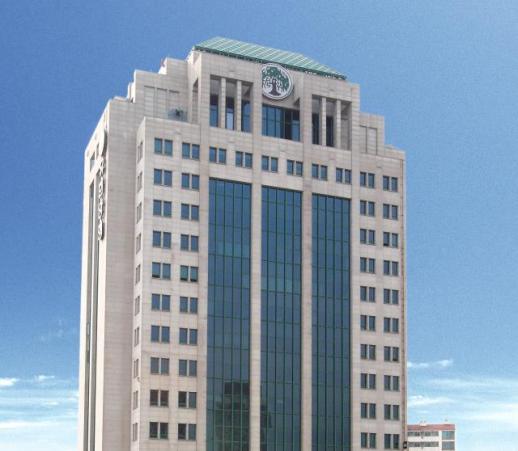 Shinhan Investment Cuts Yuhan Target Price on Slower-Than-Expected Lazertinib Uptake Shinhan Investment Corp. on Tuesday kept its “buy” rating on Yuhan Corp. but cut its target price 29.4% to 120,000 won, citing slower-than-expected growth in prescriptions for lazertinib. Analyst Lee Ho-cheol said lazertinib royalty income has fallen short of expectations, weighing on the stock’s recent performance, but added that a turnaround remains possible depending on key clinical results in the second half of the year. Yuhan reported consolidated first-quarter 2026 revenue of 526.8 billion won, up 7.2% from a year earlier. Operating profit rose 37.3% to 8.8 billion won, with an operating margin of 1.7%. The results, however, missed market consensus, Lee said. He cited several factors: the company did not recognize a $30 million milestone tied to a European launch of lazertinib; royalties of 5.3 billion won came in below expectations; and a higher share of overseas active pharmaceutical ingredient, or API, sales with higher cost ratios weighed on profitability. Lee said the longer-term outlook remains intact. He expects Yuhan to receive the European milestone in the first half of the year, and said a foundation for broader prescribing is forming after lazertinib was listed as a preferred first-line regimen in NCCN guidelines and the U.S. Food and Drug Administration approved a subcutaneous formulation of the combination drug Rybrevant. He also said the overseas API business is expected to grow on capacity expansion and improved bargaining power. Expansion of the HC building is underway, with operations targeted for the first half of 2028, and potential benefits from a U.S. biosecurity law have also been discussed. Lee said the key variable for a rebound in the share price will be clinical results in the second half. He said that if the MARIPOSA Phase 3 trial shows the lazertinib-Rybrevant combination is superior to Tagrisso in median overall survival, or mOS, and safety, prescriptions could expand and the stock could see a valuation re-rating. * This article has been translated by AI. 2026-05-06 08:19:18
 -
 KakaoBank posts record Q1 net profit of 187.3 billion won on stronger noninterest income KakaoBank said in a regulatory filing on Tuesday that it posted a record first-quarter net profit of 187.3 billion won ($187.3 billion won), up 36.3% from a year earlier. Operating revenue rose 4.4% to 819.3 billion won. The results were driven by growth in noninterest income. Noninterest income increased 7.5% from a year earlier to 302.9 billion won, topping 300 billion won for the first time and accounting for 37% of operating revenue. Fee and platform income rose 4.1% to 80.8 billion won. Interest income climbed 2.7% to 515.6 billion won. Net interest margin was 2.00%, down 0.09 percentage point from a year earlier. Loans outstanding totaled 47.699 trillion won. Loans to mid- and low-credit borrowers accounted for 32.3% of the total, down about 0.5 percentage point from a year earlier but above the regulator’s 30% target. Loans to individual business owners stood at 3.403 trillion won, up 348 billion won from the previous quarter. Asset quality remained stable. The delinquency rate rose 0.01 percentage point from a year earlier to 0.51%. The ratio of substandard or below loans was 0.53%, and the credit loss ratio was 0.55%, both unchanged from the previous quarter. Deposits totaled 69.356 trillion won, increasing by more than 1 trillion won over three months. Regular savings deposits fell amid a strong domestic stock market, but demand deposits and time deposits grew. Balances in group accounts rose by about 1 trillion won, supporting growth in demand deposits. KakaoBank’s customer base also expanded. Total customers reached 27.27 million at the end of the first quarter, up 570,000 over three months. Monthly active users hit a record 20.32 million. The bank said nonoperating gains included a 93.3 billion won valuation gain tied to its investment in Indonesia’s digital bank Superbank, supporting the rise in net profit. A KakaoBank official said the bank achieved balanced growth by focusing on loan expansion centered on individual business and policy loans, while diversifying through fee and platform businesses and treasury operations. The official said the bank will strengthen a sustainable growth structure based on its platform and global businesses.* This article has been translated by AI. 2026-05-06 08:18:20
 -
 Wall Street Rallies as Oil Slides Nearly 4%; S&P 500, Nasdaq Close at Records U.S. stocks rose across the board on Tuesday as crude oil fell nearly 4%, easing inflation worries and lifting risk appetite. The S&P 500 and the Nasdaq Composite both finished at record highs, supported by strength in chipmakers and expectations for solid corporate earnings. The Dow Jones Industrial Average gained 356.35 points, or 0.73%, to close at 49,298.25. The S&P 500 added 58.47 points, or 0.81%, to 7,259.22, and the Nasdaq rose 258.32 points, or 1.03%, to 25,326.13. The S&P 500 and Nasdaq set all-time highs at the close. Markets took comfort from signs of easing tensions in the Middle East. With a view spreading that a ceasefire between the United States and Iran was holding, oil prices cooled after surging a day earlier. Brent crude fell 4% to $109.87 a barrel, a move that helped temper inflation concerns and supported equities. Semiconductor shares led the advance. Intel jumped 13% after reports that Apple is considering using Intel and Samsung Electronics for semiconductor production in the United States. AMD rose 4% ahead of its earnings report. The Philadelphia Semiconductor Index climbed 4.2% to a record, bringing its gain for the year to 55%. Earnings expectations also underpinned the market. Reuters reported that first-quarter profits for S&P 500 companies are expected to rise 28% from a year earlier. All 11 sectors ended higher, with materials and information technology posting the biggest gains. Treasury yields fell, with the 10-year U.S. Treasury yield slipping to around 4.42%. With oil stabilizing and earnings optimism building, investors focused more on corporate profits and demand for risk assets than on inflation shocks.* This article has been translated by AI. 2026-05-06 08:15:14
 -
 Hana Securities Raises Hyundai Corporation Target Price on Energy Parts Rebound Hana Securities said Tuesday it raised its target price for Hyundai Corporation by 15.2% to 38,000 won, citing a rebound in the company’s energy commercial parts business, which previously drove earnings growth. It maintained a “buy” rating. In a report, analyst Yoo Jae-seon said Hyundai Corporation’s first-quarter results beat market consensus and that previously weak segments such as steel are showing a better trend than in 2025 as market conditions improve. Yoo said profit growth is expected to moderate from the second quarter after factoring in a temporary earnings boost in petrochemicals, but added that the company is still likely to post higher profit for the full year. He estimated the stock trades at a price-to-earnings ratio of 4.5 based on this year’s forecast and a price-to-book ratio of 0.5. First-quarter revenue rose 11.6% from a year earlier to 2.1 trillion won. Yoo attributed the increase to favorable exchange rates and broad-based growth across business lines. He said steel revenue likely fell from a year earlier due to global trade restrictions such as U.S. tariffs, but he viewed last year as the bottom and said the business is gradually recovering. He added that passenger-vehicle operations are growing as weaker demand in the Commonwealth of Independent States was offset by sales in Central and South America and the Middle East. Yoo said energy commercial parts are benefiting from solid demand for power equipment, with distribution transformer performance continuing to rise. He added that a temporary sales gap caused by tariffs in the previous quarter has eased, allowing the business to return to a growth trend. He said geopolitical issues, including conflict in the Middle East, have increased global uncertainty, but Hyundai Corporation’s major businesses are continuing stable growth. He added that the company plans to keep pursuing new businesses this year and that stronger shareholder returns could be expected over the medium to long term.* This article has been translated by AI. 2026-05-06 08:12:50
 -
 Trump Says Iran Talks Advancing, Pauses Hormuz ‘Project Freedom’ Operation U.S. President Donald Trump said he would temporarily suspend a military operation tied to the Strait of Hormuz, citing progress in negotiations with Iran. In a post Monday on his social media platform Truth Social, Trump said “Project Freedom,” which he described as referring to ship movements through the Strait of Hormuz, would be paused for a short period “to determine whether a final agreement can be concluded and signed.” He said the decision took into account requests from Pakistan and other countries, what he called “tremendous success” in U.S. military operations against Iran, and “substantial progress” toward a “complete and final” agreement with Iranian representatives. The move suggested Trump is putting greater emphasis on ceasefire talks after launching the escort operation for commercial vessels transiting the strait a day earlier. Trump added that maritime blockade measures against Iran would remain in place, indicating the United States would keep its core pressure point — control over shipping through the Strait of Hormuz — while deciding next steps based on whether talks continue to advance. In an interview with Fox News the previous day, Trump issued a stark warning about the “Project Freedom” operation to help commercial ships he said were trapped in the Strait of Hormuz, saying that if Iran tried to target U.S. vessels, Iran’s military would “disappear from the face of the Earth.” 2026-05-06 08:12:13
 -
 ‘Dolsing N Mosol’ Contestant George Sparks Backlash After Zero Votes, On-Air Outburst A surprise on-air moment involving George, a contestant who received zero votes on MBC every1 and E Channel’s dating show “Dolsing N Mosol,” drew sharp reactions on online communities. On the 6th, posts about “George, who got zero votes in the couple selection,” spread across multiple online forums. In the episode, as other participants discussed their date plans, George stood up saying he was going to the restroom, then suddenly stopped. Turning to the group, he asked, “Why didn’t you choose me?” When Camellia responded, “If you want to ask someone, ask just one person,” he said he wanted to ask everyone. As the cast appeared taken aback, George brushed it off, saying, “Ah, never mind, whatever,” then abruptly called for the producer in charge and held a one-on-one meeting. He told the producer, “There’s a part of me that feels a bit upset. To be honest, I’m already thinking, ‘Should I use an exit strategy and go home?’” He added, “My family is a professional family, and I come from a family where my hands are precious, so I think, ‘Why didn’t the woman I want show up?’ That makes me not want to do this.” He continued, “Of course, I’m arrogant and I’m not 100% objective about myself, but even though I tell myself not to be that way, I’m human and those feelings come up,” adding, “I’m saying my morale dropped a bit. I know you did your best for me.” After the scene aired, commenters called him “a type of contestant never seen before on a dating program.” Some wrote, “I’m going to believe he’s an actor planted by the production team,” and, “It feels like they’re running a social experiment by forcing in someone who’s lacking, and I can’t watch because it’s unpleasant.” Another said the show should be used “as an educational program to teach people with low social intelligence or poor awareness that others don’t like this kind of behavior.” Others added, “He doesn’t even realize he’s the problem, so there’s nothing to do,” “It doesn’t seem like he has even 10% self-awareness,” and, “Being inexperienced in dating is the least of it — he seems to have various personality issues.” 2026-05-06 08:09:04
 -
 Foreign Investors Chase Surging Korean Stocks, Led by Samsung Electronics ◆Aju Economy top stories ▷Foreign investors jump on momentum, concentrating net buying in soaring shares -According to the Korea Exchange on May 5, the top 10 stocks most heavily net-bought by foreign investors on the main KOSPI market at the end of last month all posted positive returns compared with the end of March. -The biggest foreign net buy on the KOSPI last month was Samsung Electronics, totaling 1.3231 trillion won. Over the same period, the stock jumped 32%, to 220,500 won from 167,200 won. -SK hynix, the No. 2 net-buy, rose 59%. With Samsung Electronics and SK hynix reporting record first-quarter results, expectations that semiconductor earnings will keep improving appear to have lifted share prices. -On the KOSDAQ, foreign money flowed into growth stocks. Many of the top net-bought names were tied to semiconductor equipment, AI semiconductors and biotech, and posted sharp gains. -In particular, many of the KOSDAQ’s top net-buy picks have shifted toward semiconductor equipment, materials and AI infrastructure, underscoring a trend of capital concentrating in “core supply chains” even within growth industries. Securities firms said foreign inflows are moving around two main themes: AI and semiconductors, and power infrastructure. ◆Key report ▷Why the KOSPI is surging: Semiconductors are beating high oil prices -The AI-driven semiconductor rally is continuing. The Philadelphia Semiconductor Index has surged 55% since the start of the year, far outpacing gains in the “M7” and the Nasdaq index. -The rally is also providing strong momentum for the economies and stock markets of major chip-producing countries such as South Korea and Taiwan. Another key point is that the semiconductor rally is offsetting the shock from high oil prices. -In past periods of high oil prices, global markets — especially South Korea’s — typically showed vulnerability. This time, an exception is emerging. iM Securities said the main reason the KOSPI can rally strongly, unlike in previous high-oil periods, is a sharp increase in the semiconductor trade surplus that more than offsets the oil trade deficit. -The report said oil prices are expected to remain elevated, fluctuating around $100, but given the semiconductor cycle, the gap between the semiconductor trade balance and the oil trade balance is likely to stay positive, with room for the surplus to widen further. -It added that a proxy for South Korea’s terms of trade — the difference between the semiconductor price increase rate and the oil price increase rate — is also likely to remain positive for a considerable period, supporting expectations for strong momentum in the domestic economy and stock market in the second half even amid high oil prices. ◆Major disclosures after the close (May 4) ▷Stage One Entertainment: 1 billion won third-party allotment rights offering ▷GS E&C: Won 680 billion contract for Seocho Jinheung Apartments reconstruction project ▷Lotte Chilsung: Q1 operating profit 47.8 billion won, up 91.2% from a year earlier ▷Pan Ocean: Q1 operating profit 140.9 billion won, up 24.4% from a year earlier ◆Fund flows (as of April 29, excluding ETFs) ▷Domestic equity funds: +28.1 billion won ▷Overseas equity funds: -86.5 billion won ◆Key events today (May 6) ▷South Korea: Consumer Price Index (April) ▷China: Caixin services PMI (April) ▷United States: ADP private employment report (April) ▷Eurozone: Producer Price Index (March)* This article has been translated by AI. 2026-05-06 07:45:19
 -
 Coupang Posts 2nd Straight Quarterly Revenue Dip; Q1 Operating Loss Tops 350 Billion Won Coupang Inc., the parent of South Korean e-commerce company Coupang, posted an operating loss of about 350 billion won in the first quarter, its largest in about four years and three months since 2021. Revenue rose from a year earlier, but growth slowed to its weakest pace since the company’s New York listing, and profitability swung back into the red. In a first-quarter consolidated filing submitted to the U.S. Securities and Exchange Commission on Tuesday (Korea time), Coupang reported revenue of $8.504 billion, up 8% from $7.908 billion a year earlier. Using the average won-dollar exchange rate of 1,465.16 won in the quarter, revenue was 12.4597 trillion won, up 8% from 11.4876 trillion won. However, quarterly revenue fell from the previous quarter for a second straight period, following 12.8103 trillion won in the fourth quarter of last year. The company’s first-quarter revenue growth rate was 8% on a constant-currency basis, the lowest since Coupang listed on the New York Stock Exchange in 2021. It was also the first time the quarterly growth rate fell to a single digit; the previous low was 14% in the fourth quarter of last year. Coupang reported an operating loss of $242 million (354.5 billion won), reversing a year-earlier operating profit of $154 million (233.7 billion won). The operating loss was about 52% of the company’s full-year operating profit last year of 679.0 billion won. Net loss was $266 million (389.7 billion won), compared with net profit of $114 million (165.6 billion won) a year earlier. The results also missed market expectations. Bloomberg’s consensus forecast called for revenue of $8.511 billion, an operating loss of $39.27 million and a net loss of about $100 million. Some foreign media had projected revenue of about $8.6 billion and an operating loss of roughly $44.94 million. With the operating loss coming in about five to six times larger than forecasts, Coupang shares weakened in after-hours trading in New York immediately after the earnings release. As of 5:10 a.m., the stock was down about 3% to 4% in after-hours trading from the regular-session close.* This article has been translated by AI. 2026-05-06 06:36:19
 -
 Trump says Korean cargo ship attacked in Strait of Hormuz after sailing alone U.S. President Donald Trump said a Korean cargo ship was attacked by Iran in the Strait of Hormuz after operating on its own, apart from a protected group of vessels. According to Yonhap News Agency, Trump said at a White House event on May 5 local time that South Korea gets 43% of its oil through the Strait of Hormuz, adding that a Korean ship was attacked because it was not in a convoy. “They weren’t in the line of ships and they decided to go alone,” he said. “And their ship got smashed yesterday.” Trump also claimed that ships protected by the United States were not attacked. South Korea’s government has said the cause of the explosion and fire on the vessel Namuho has not yet been determined. Trump, however, has described the incident since the previous day as an Iranian attack and has urged South Korea to contribute to easing tensions in the Strait of Hormuz. In a phone interview the same day with an ABC reporter, Trump repeated that it was a Korean ship “sailing alone,” and said multiple shots were fired at it, adding that South Korea should take action in response. The United States on May 4 launched what it called a “Liberation Project” to help commercial ships trapped in the Strait of Hormuz escape. That day, the U.S. military said Iran used missiles and fast boats to attack commercial vessels and that U.S. forces repelled the attacks, heightening fears the ceasefire could collapse. Iran resumed attacks against targets including the United Arab Emirates, the report said. Asked what would constitute an Iranian violation of the ceasefire, Trump said, “We’ll know soon,” adding, “They know what they have to do, and more importantly, what they must not do.” Trump urged Iran to “make a smart choice,” saying, “Because we don’t want to go in and kill people,” and insisted Iran should “wave the white flag of surrender.” He also said Iran had no chance of winning the war, referring to the conflict as a “little skirmish.” * This article has been translated by AI. 2026-05-06 06:27:16