
Journalist

Lee Hugh
=
-
 Samsung Unveils Glasses-Free 32-Inch 3D Spatial Signage Display Samsung Electronics said on the 28th it will launch a new 32-inch glasses-free 3D display called “Spatial Signage.” The next-generation display uses Samsung’s proprietary “3D Plate” technology to create a three-dimensional effect without dedicated 3D glasses, making images appear to have depth as if there were space inside the screen. Samsung expanded the lineup after introducing an 85-inch model earlier this year, adding the 32-inch version to boost visibility for smaller products on display. The existing 85-inch model offers 4K UHD resolution and a screen about 190 centimeters tall, designed to deliver an immersive experience, such as viewing a runway show at a glance. The 32-inch model uses FHD resolution and a 9:16 aspect ratio, enabling realistic 360-degree rotating video that shows products such as shoes and jewelry from the front, sides and back. Despite a slim 49.4-millimeter profile, it delivers a sense of depth and can provide a lifelike viewing experience without physically displaying the product, the company said. Weighing 8.5 kilograms, it is lighter than box-shaped hologram-style 3D displays and is designed for easier installation in tight spaces, including on store shelves, Samsung said. Samsung’s commercial-display software, Samsung VXT, supports remote device management, real-time monitoring, and simpler content creation and operations. The company said it has added a range of new features to VXT to improve usability and operating efficiency across Samsung signage products, including Spatial Signage. A newly added “AI Studio” app allows users to create video content for signage using a single photo, Samsung said. Kim Hyeong-jae, a vice president in Samsung Electronics’ Visual Display Business, said the 32-inch Spatial Signage is designed to deliver an immersive 3D experience in places where large signage is difficult to install. “By building an integrated digital signage ecosystem that combines innovative display products and solutions, we will provide customers with optimal commercial displays,” Kim said.* This article has been translated by AI. 2026-04-28 08:46:38
 -
 Trump Skeptical of Iran Proposal to Open Strait of Hormuz, Pause Nuclear Talks U.S.-Iran talks aimed at ending the war have stalled, and President Donald Trump has been skeptical of a new Iranian proposal described as a “three-step peace plan,” according to a report. The Wall Street Journal reported April 27, citing U.S. officials, that Trump and his national security team view Iran’s offer with doubt. The proposal would include opening the Strait of Hormuz and deferring discussions of Iran’s nuclear program, the officials said. Trump discussed the offer with advisers that morning, the report said. He did not reject it outright, but questioned whether Iran is negotiating in good faith. He also expressed skepticism that Iran would accept key U.S. demands to stop uranium enrichment and abandon nuclear weapons development, according to the officials. Officials said Iran’s plan has three stages. In the first, the United States and Israel would halt military action against Iran and provide assurances it would not resume. In the second stage, mediating countries would work to resolve the issue of a Strait of Hormuz blockade and help reach an agreement on how the strategic waterway would be managed. Iran is said to be seeking to retain control over the strait during that process. In the third stage, Iran would enter talks on other disputes — including its nuclear program and support for regional proxy forces — only after those conditions are met, the officials said. The United States plans to keep negotiating, and the White House is likely to present an official position and a counterproposal within days, the report said. Trump has warned he could resume airstrikes on Iran if talks to end the war fail, but officials said sentiment within the administration to avoid renewed military conflict has been growing. White House spokeswoman Anna Kelly said, “The United States does not negotiate through the media, and anything not officially announced by President Trump or the White House should be considered speculation.”* This article has been translated by AI. 2026-04-28 08:45:50
 -
 Lee Praises NTS Chief Lim for Tracking Overseas Hidden Assets of Tax Delinquents President Lee Jae-myung applauded the National Tax Service on the 28th for tracking overseas hidden assets held by tax delinquents, calling tax fairness “a very important value.” In a post on X, formerly Twitter, Lee thanked NTS Commissioner Lim Gwang-hyeon for “working hard,” noting that Lim took the job after leaving his seat as a lawmaker. The NTS said the previous day it had recovered 33.9 billion won in overseas assets from delinquent taxpayers since Lee’s government launched in July last year. Lim wrote on X the previous day that the agency has recovered a total of 37.2 billion won in delinquent taxes from overseas since 2015, including 33.9 billion won during the nine months since Lee’s government took office. He added that recovery procedures are still underway in locations around the world. * This article has been translated by AI. 2026-04-28 08:45:16
 -
 Heungkuk Securities Raises Hyundai Steel Target on Improving Steel Market Outlook Heungkuk Securities maintained its “buy” rating on Hyundai Steel and raised its target price to 55,000 won. The brokerage cited expectations for improving steel market conditions and the impact of planned price increases, saying a near-term earnings rebound is becoming more visible. Jinsoo Jung, an analyst at Heungkuk Securities, said Hyundai Steel’s first-quarter results missed market expectations, with revenue of 5.7397 trillion won and operating profit of 15.7 billion won. He attributed the shortfall to a lagging effect that reflected lower prices for flat steel products and higher costs, which narrowed rolling margins. Still, sales volume rose to 4.26 million tons, which he said confirmed a demand recovery led by flat products. Jung said improved steel scrap prices and contributions from standalone subsidiaries helped cushion results. He added that consolidated profitability improved on one-off gains such as a tariff refund at Hyundai Steel Pipe and expanded operations at the Pune SSC in India. Looking ahead, Jung took a more upbeat view of the industry. He said global supply and demand are improving as Chinese hot-rolled coil prices rise and exports decline, and that anti-dumping effects are also creating conditions for domestic steelmakers to regain market share. He said domestic steelmakers are pursuing price hikes to reflect higher raw material costs, with the impact expected to show gradually in results starting in the second quarter. He added that a faster normalization is expected, particularly in the long steel segment. Jung said he raised his EBITDA estimate by 16% and increased the target price by applying a target EV/EBITDA multiple of 6.3. He forecast that improving market conditions would continue into the second half, alongside the effect of price increases for high value-added steel sheets used in automobiles.* This article has been translated by AI. 2026-04-28 08:42:06
 -
 Comedian Choi Yang-rak Says He Moved to Australia After Being Told He Was Too Old Comedian Choi Yang-rak has explained why he once moved to Australia. Choi appeared as a guest on the tvN STORY program “Namgyeoseo Mwohage,” which aired on the 27th. On the show, Lee Young-ja said it felt abrupt when he announced he was moving to Australia and asked why he stopped appearing on TV at the height of his career. Choi said it happened in 1998, when he was hosting “Good Friends” with Nam Hee-seok. “I was told the bureau chief wanted to see me, so I went, and I was notified I was being fired,” Choi said. “I was 38, and they said I was too old. So I left for Australia in anger.” Choi said only one person in his family of four had a job at the time. “Only my daughter had the ‘job’ of being a student, and the rest of us were unemployed,” he said, adding that taking his daughter to and from school was his only daily routine. He said he went with the money he had saved but was in no position to earn a living there. “I didn’t speak English, and I had no skills,” he said. “I’ve had a lot of ups and downs in my life.” Choi said he kept writing comedy after emigrating, and that his wife urged him to return to South Korea. He said she told him, “Let’s go back to Korea. You can do it,” and helped him prepare for a comeback, including getting him double-eyelid surgery and a short haircut. He said he returned with the new look and performed “alkkagi,” expressing gratitude to his wife, Paeng Hyun-sook, for helping him revive his career. 2026-04-28 08:39:24
 -
 Bitcoin Slips to $77,064 as U.S.-Iran Talks Stall U.S.-Iran negotiations have stalled, pushing bitcoin lower. Bitcoin was trading at $77,064 as of 8 a.m. on the 28th, down 1.66% from the previous day, according to CoinMarketCap. The price briefly topped $79,000 intraday on the 27th, nearing $80,000, before turning lower. The decline followed the breakdown of face-to-face talks between the United States and Iran, with the two sides unable to find common ground. Iran proposed discussing the nuclear issue after a pause in the war and the reopening of the Strait of Hormuz under Pakistani mediation. The White House has maintained a cautious stance, saying it is reviewing the matter internally. President Trump has repeatedly said he would not allow Iran to possess nuclear weapons, prompting assessments that Washington is unlikely to accept Iran’s proposal. Major altcoins also fell. Ethereum slipped 0.04% to $1, Solana dropped 2.58% to $85, and XRP fell 2.22% to $1.39. In South Korea, bitcoin on the won-based exchange Bithumb was down 0.7% from the previous day at 114.93 million won (about $78,047) at the same time. The so-called “kimchi premium,” in which domestic prices trade above overseas levels, stood at 1.26%. 2026-04-28 08:30:18
 -
 NIA Exports Seoul Station 5G Open RAN Testbed Technology to U.S. Hospital in $21 Million Deal The National Information Society Agency, or NIA, said April 28 it has exported the “Seoul Station 5G specialized network Open RAN demonstration network,” built under a Ministry of Science and ICT competitive project, to a large hospital in Alabama. The project was carried out in 2025 by GNTEL. It combined LG Electronics’ software-based virtualized radio access network base station (vRAN) with Open RAN radio units (O-RU) from three manufacturers: Gigalane, Wave Electronics and Samji Electronics. NIA said the system, made entirely with Korean equipment, achieved performance comparable to or better than global vendors and proved its capabilities through global certification (OTIC). The exported equipment is scheduled to be deployed starting in August to build 5G specialized-network communications infrastructure at the Alabama hospital. NIA said the export volume is significantly larger than the Seoul Station test site, with vRAN about seven times higher and small and midsize companies’ Open RAN radio units about 30 times higher. The export value is about 2.1 billion won, exceeding the government funding invested in the Seoul Station Open RAN project. “This export is a major achievement that proves the technological strength of Korean wireless network equipment in the global market,” NIA President Kim Hyeong-cheol said. “We will continue to provide full support to help our companies expand their global reach.”* This article has been translated by AI. 2026-04-28 08:28:03
 -
 S&P 500, Nasdaq Close at Record Highs on Big Tech Earnings Optimism U.S. stocks ended higher and pushed the S&P 500 and Nasdaq to fresh record closes on expectations for strong Big Tech earnings, even as U.S.-Iran ceasefire talks remained stalled. On April 27 (local time), the S&P 500 rose 8.83 points, or 0.12%, to 7,173.91, and the Nasdaq composite gained 50.50 points, or 0.20%, to 24,887.10 on the New York Stock Exchange. Both indexes set record highs for a second straight session. The Dow Jones Industrial Average fell 62.92 points, or 0.13%, to 49,167.79. With five of the so-called “Magnificent Seven” mega-cap tech companies due to report results this week, investors kept betting on upside surprises tied to the artificial intelligence boom. Alphabet, Microsoft, Amazon and Meta are scheduled to report on April 29, and Apple is set to release results the next day, April 30. Reuters reported that of 139 S&P 500 companies that had posted first-quarter results through April 24, 81% beat market expectations. Based on LSEG data, Wall Street analysts raised their forecast for S&P 500 companies’ earnings per share growth this year to 16.1% from 14.4% earlier this month, supporting expectations the rally can continue. Oil prices, however, climbed after a second round of ceasefire talks between the United States and Iran failed to materialize and the closure of the Strait of Hormuz continued, limiting gains in equities. Brent crude settled up 2.8% at $108.23 a barrel. It neared $110 intraday, its highest level in about three weeks since April 7. Some analysts said war-related risks remain the key variable. “Until the situation in the Strait of Hormuz is more controlled, it will be difficult for the market to stabilize,” Gabriel Shahin of Falcon Wealth told CNBC. “That’s why I see the Iran issue as still the top variable.” Meanwhile, the Federal Reserve is set to hold a Federal Open Market Committee meeting April 28-29 to discuss the direction of monetary policy. Markets broadly expect the Fed to keep its benchmark rate unchanged at 3.50% to 3.75%. Investors are focused on what Fed Chair Jerome Powell signals about recent economic conditions and the policy outlook at his April 29 news conference.* This article has been translated by AI. 2026-04-28 08:27:16
 -
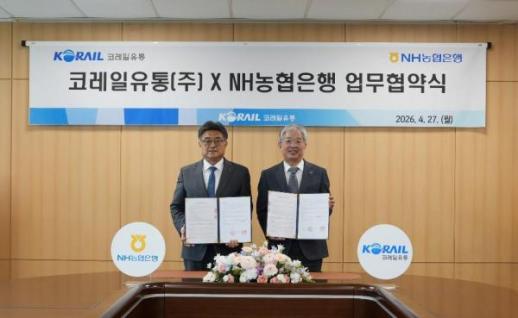 NH NongHyup Bank Named Korail Retail’s Main Bank Through March 2031 NH NongHyup Bank said April 28 it was selected as the main bank for Korail Retail, a public institution under the Ministry of Land, Infrastructure and Transport, after winning an open bidding process. The main-bank agreement ceremony was held the previous day at Korail Retail’s headquarters in Seoul’s Yeongdeungpo district. Attendees included Lee Young-woo, executive vice president and head of NH NongHyup Bank’s Agriculture · Public Finance Division, and Park Jeong-hyeon, Korail Retail’s CEO, along with other officials. Under the agreement, NH NongHyup Bank will handle key financial services for Korail Retail through the end of March 2031, including managing operating funds, supporting corporate card operations and providing financial services for employees. Lee said the bank will provide stable and efficient financial services through cooperation with Korail Retail and will continue strengthening its financial support capabilities for public institutions.* This article has been translated by AI. 2026-04-28 08:24:15
 -
 Daishin Securities Keeps Hanwha Ocean Target at 164,000 Won on Merchant Ship Gains Daishin Securities on Monday said Hanwha Ocean’s merchant ship business is expected to drive overall profit growth, keeping its target price at 164,000 won and its “buy” rating. In a report, Daishin analyst Lee Jin-yi said the merchant ship division is “showing operating leverage” as it repeatedly builds high-margin, high-priced vessels and improves production efficiency. Lee said Hanwha Ocean posted first-quarter revenue of 3.2099 trillion won, up 2.1% from a year earlier, and operating profit of 441.1 billion won, up 70.6%. He said profit at the merchant ship division rose sharply “without one-off factors.” He cited earlier deliveries from repeat-build effects and cost reductions as key drivers, adding that performance bonuses were decided to be reflected as a one-time year-end item, the same as last year. Lee said revenue recognition is expanding in earnest for high-priced orders won since 2023, and the company is maintaining a structure in which the share of high-margin prices centered on liquefied natural gas carriers, or LNGCs, is increasing. He said LNGC revenue share in overall merchant ships may dip slightly as the first tranche of Qatar volume drops out, but profit is expected to rise. He also said the special ship division could provide a near-term earnings cushion, with remaining change orders tied to U.S. maintenance, repair and overhaul, or MRO, work expected to be reflected in the second quarter. Over the medium term, he said fixed-cost pressure could ease if orders for the next-generation destroyer program, known as KDDX, and a Thai frigate become visible within the second to third quarter. Lee said the key issue is whether Hanwha Ocean wins an order in the first half for Canada’s next submarine program, CPSP. Hanwha Ocean said a day earlier, in its consolidated first-quarter filing, that the merchant ship division led earnings growth on the back of high-priced projects and LNG carrier orders.* This article has been translated by AI. 2026-04-28 08:22:06