
Journalist

Lee Hugh
=
-
 Olive Young to Hold Beauty Festa in Japan; Gmarket Taps Director Jang Hang-jun; Lotte Duty Free Signs Deal With Paradise City Olive Young to hold ‘Olive Young Festa JAPAN 2026’ in Chiba CJ Olive Young said Sunday it will hold “Olive Young Festa JAPAN 2026” from May 8-10 in Chiba Prefecture, Japan. The event is tied to “KCON JAPAN 2026” and will be staged at Makuhari Messe, a convention center in Chiba City, on a 164-pyeong site. A total of 55 brands will operate booths. The walkways will be designed to resemble the streets of Myeongdong and Hongdae to highlight K-beauty’s identity, the company said. Special areas will include a “K-Cosme Ranking Zone” and a “K-Beauty Select Zone,” showcasing Olive Young’s curation strengths. The company will also offer in-store-style experiences for local visitors, including a “quick touch-up” makeup service by Olive Young beauty consultants. Olive Young said the festival, launched in 2019 as the country’s first beauty festival, is expanding overseas this year. It plans to hold an Olive Young Festa in Los Angeles in September. Gmarket names film director Jang Hang-jun as new advertising model Gmarket said Sunday it has selected film director Jang Hang-jun as its new advertising model and will roll out campaign videos in stages. Gmarket said Jang, who recently joined the ranks of directors with 10 million moviegoers with “Wang and the Man,” will be featured in a campaign built around the concept of him taking on a new challenge as a “10 million-view” commercial director. The company said the videos combine Jang’s trademark humor and cinematic style to introduce popular items it recommends buying during its Big Smile Day promotion. Gmarket said “legendary” film actors will also appear, with the cast lineup to be revealed in the main video to be released May 1. The company noted that since last year it has drawn positive responses with its “G-Rock Festival” campaign, in which well-known artists sing signature songs with lyrics rewritten around shopping items. Lotte Duty Free, Paradise City sign MOU to attract foreign VIP visitors Lotte Duty Free said Sunday it has signed a memorandum of understanding with Paradise City to expand efforts to attract foreign tourists. Under the agreement, the two companies aim to build a one-stop consumer experience linking shopping and entertainment. Lotte Duty Free said it will provide Paradise hotel guests with a coupon book offering discounts of up to $121 and benefits such as an upgrade to Gold-tier membership. Paradise City said it plans to offer premium rates to Lotte Duty Free customers. Lotte Duty Free has been stepping up efforts to expand its foreign customer base after resuming operations at its Incheon Airport store on April 17, about three years after it stopped operating there. “Through this agreement with Paradise City, we will be able to provide foreign VIP customers with a premium experience that combines shopping and entertainment,” said Namgung Pyo, head of Lotte Duty Free’s marketing division. “With differentiated marketing that brings together the strengths of both companies, we will contribute to attracting visitors to Korea.” * This article has been translated by AI. 2026-04-27 18:19:10
 -
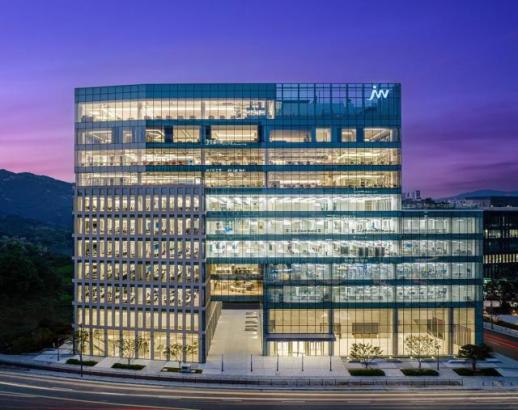 JW Pharmaceutical Completes Phase 3 Dosing for Gout Drug Candidate; Results Due by Year-End JW Pharmaceutical completes Phase 3 dosing for gout drug candidate epaminurad; results due by year-end JW Pharmaceutical said April 27 it has completed dosing the last patient in a multinational Phase 3 trial of its gout treatment candidate epaminurad (URC102). Epaminurad is an oral uricosuric drug designed to selectively inhibit hURAT1, promoting uric acid excretion. The company is developing it for hyperuricemia and gout, conditions marked by abnormally high blood uric acid levels. JW Pharmaceutical said it has been running the Phase 3 study in five Asian countries, including South Korea, after receiving approval for the trial plan (IND) from the Ministry of Food and Drug Safety in 2022. The study was designed to compare uric-acid lowering effects and safety against the existing treatment febuxostat, and the final patient was dosed in Malaysia. In an earlier Phase 2 trial, epaminurad met key efficacy endpoints and showed safety and tolerability, the company said. JW Pharmaceutical also said it recently secured a U.S. patent from the U.S. Patent and Trademark Office covering dosing and administration, extending U.S. exclusivity to 2038. The company plans to produce a clinical study report by the end of this year after follow-up and data analysis. HK inno.N expands collaboration to develop next-generation obesity drug using AI platform HK inno.N said April 27 it signed a joint research and development agreement with Atomatrix to develop a next-generation obesity treatment. The partners said they will use an artificial intelligence and computer-simulation drug design platform to identify small-molecule candidates with new mechanisms intended to address limitations of incretin-based obesity drugs, including GLP-1 receptor agonists. Under the agreement, HK inno.N will synthesize compounds and conduct biological evaluations to verify efficacy and safety, while Atomatrix will design and screen candidates using its platform, CANDDIE. CANDDIE applies molecular dynamics-based analysis to predict not only binding stability between target proteins and candidates but also drug-response effects after binding, the companies said. HK inno.N cited its commercialization track record with the gastroesophageal reflux disease drug K-CAB and said it aims to expand competitiveness in the obesity treatment market. SK Chemicals holds spring outing volunteer program with seniors to boost intergenerational ties SK Chemicals said April 27 it held a family volunteer program, “Norang, Spring,” bringing together seniors and employees’ families ahead of Family Month in May. The company said it is emphasizing hands-on volunteering, not only donations, as part of its social responsibility efforts. The event was organized with the Unjeong Comprehensive Social Welfare Center in Paju and travel agency Yellow Balloon, and took place around Insadong and Jongno in central Seoul. The program paired seniors living alone with SK group employees’ families for cultural activities and an outing in the city. About 50 people, including families from SK affiliates and seniors using the welfare center, took part, the company said. Activities included making rice cakes, visiting a museum, touring the city by bus and visiting the Cheong Wa Dae Sarangchae. Kolon Life Science publishes preclinical results for anticancer gene therapy candidate KLS-3021 Kolon Life Science said April 27 that preclinical findings on its anticancer gene therapy candidate KLS-3021 for cutaneous squamous cell carcinoma, or cSCC, were published in the international journal Molecular Therapy Oncology (impact factor 5.3). KLS-3021 is a candidate built on a recombinant vaccinia virus engineered for greater selectivity for cancer cells and loaded with therapeutic genes PH-20, IL-12 and sPD1-Fc. It is designed to lyse tumors, break down extracellular matrix within tumors and trigger immune responses, the company said. In the study, KLS-3021 showed higher selective cytotoxicity and viral replication in cancer cells than in normal cells, and the virus’s ability to replicate inside tumors suggested potential for additional therapeutic effects, the company said. In a metastatic model, viral spread was also confirmed at metastatic sites. The company said a single injection could allow the drug to circulate and target cancer cells at distant sites, raising the potential for treating metastatic cancer. The study also observed changes in the tumor microenvironment, including hyaluronic acid degradation, increased immune-cell infiltration and immunogenic cell death, suggesting it may be able to address physical and immunological barriers at the same time, the company said.* This article has been translated by AI. 2026-04-27 18:17:37
 -
 Honda Korea’s Auto Sales Exit Raises Used-Car, Service Concerns for Owners Honda Korea’s decision to end its auto sales business is fueling anxiety among current owners, from fears of falling used-car prices to concerns about gaps in after-sales service. Industry watchers say the pressure on resale values could intensify if the company discounts remaining inventory ahead of its exit and if cancellations of existing contracts increase. According to the industry on the 27th, Honda Korea has begun follow-up procedures to close the auto sales business by the end of this year. Starting this week, it plans talks with its seven dealers on how to handle inventory and respond to customers with contracts, before setting a specific end date for sales. Honda Korea announced the move at an emergency news conference on the 23rd, about 23 years after it began its auto business in South Korea in 2004. The company said it will stop selling cars around year’s end and focus on its motorcycle business going forward. Concerns spread quickly online. Posts in owner communities asked, “Will used-car prices drop a lot?” “How will we get service eight years from now?” and “What happens to the lifetime engine-oil coupon?” Owners are particularly sensitive to resale values. When an automaker exits a market, uncertainty about long-term service can deter buyers, weakening demand for used vehicles and pushing prices down. If Honda Korea moves to clear inventory before it exits, promotions could make it harder to support prices for existing vehicles. Added discounts could also widen if canceled orders rise after the announcement. The industry said inquiries from customers who already signed new-car contracts have been pouring in. Another point of dispute is whether buyers can still use the “lifetime engine-oil coupon” Honda Korea offered to new-car customers to mark the launch of the 2025 New Odyssey last year. The company promoted the coupon as providing free engine oil for life, but the exit announcement has raised questions about whether that period can be guaranteed just one year later. Under the Automobile Management Act, Honda Korea must maintain after-sales service for at least eight years. However, because service centers are operated through contracts with dealers, some observers say the network could still be reduced depending on the outcome of future talks.* This article has been translated by AI. 2026-04-27 18:16:43
 -
 Korean Power-Equipment Makers Pause in Q1, but Backlogs Hit Records on AI Data Center Demand AI data centers are driving a surge in electricity demand, and South Korea’s power-equipment makers posted strong year-over-year growth in the first quarter even as results cooled from the prior quarter. Industry officials said April 27 that Hyosung Heavy Industries, LS Electric, HD Hyundai Electric and Iljin Electric generally expanded sharply from a year earlier but saw some quarter-on-quarter easing. They cited a base effect from record fourth-quarter results and the seasonal first-quarter slowdown. Hyosung Heavy Industries reported first-quarter operating profit of 152.3 billion won, up 48.8% from a year earlier but down from the previous quarter as some revenue recognition was delayed during the off-season. The company secured about 4 trillion won in new orders for the quarter, and sales of ultra-high-voltage transformers are rising quickly, led by North America. Hyosung Heavy Industries’ share price recently topped 3 million won, and it traded above 4 million won intraday that day. The company has maintained that it is not reviewing a stock split. LS Electric posted first-quarter operating profit of 126.6 billion won, up 45% from a year earlier and a quarterly record, though slightly below 129.7 billion won in the prior quarter. With distribution-equipment orders for Amazon Web Services data centers being reflected in results, demand is spreading beyond ultra-high-voltage transformers into distribution. The company is also diversifying products from AC-focused equipment to DC power equipment. HD Hyundai Electric, which was set to report earnings April 28, was expected to show a similar pattern. FnGuide estimated first-quarter operating profit at about 270 billion won, up from a year earlier but slightly down from the previous quarter, reflecting the seasonal slowdown and some delayed revenue recognition for North American projects. Iljin Electric was also expected to extend its growth streak. First-quarter operating profit was forecast at about 50.8 billion won, up 49.2% from a year earlier, supported by expansion at its second plant in Hongseong, a higher share of higher-priced transformers for North America, and revenue recognition from long-term order backlogs. The four companies have already secured at least three years of work, with backlogs at record levels. Hyosung Heavy Industries’ heavy-industry division had an order backlog of about 15 trillion won. LS Electric’s backlog stood at 5.6425 trillion won at the end of the first quarter, up 13% from the prior quarter. HD Hyundai Electric had about 9.4 trillion won, and Iljin Electric about 2.39 trillion won. “The quarter-on-quarter decline in sales largely reflects the seasonal first-quarter slowdown and the fact that recently won orders have not yet been recognized as revenue,” an industry official said. “The boom in power equipment is expected to continue for the next four to five years, and backlogs are sufficient.”* This article has been translated by AI. 2026-04-27 18:15:49
 -
 Hyundai, Kia and Tesla Battle for South Korea EV Market as Subsidy Rules Shift South Korea’s electric vehicle market is seeing intensifying competition between domestic automakers and imported brands, with policy changes poised to reshape the landscape. The government has revised EV subsidies to award extra points based on contributions to domestic industry, raising the prospect of a shift in market dynamics. The local auto industry is also urging the government to include EVs in a planned “domestic production promotion” tax credit — often described as a Korean version of the U.S. Inflation Reduction Act — adding to uncertainty over how incentives will be set. As of Monday, the market has settled into a two-sided contest between Korean and imported brands, according to the Korea Automobile & Mobility Association and other groups. A total of 220,177 EVs were newly registered in South Korea last year. Kia led with 60,609, followed by Tesla with 59,893 and Hyundai with 55,461. Imported EV brands have closed in on domestic makers. Imported EVs accounted for 42.8% of the market last year, compared with 57.2% for Korean brands. The gap narrowed further this year. Tesla, after cutting prices, sold 20,964 vehicles in the first quarter — roughly half its total for all of last year. Over the same period, Hyundai sold 19,040 and Kia sold 34,303. Industry officials say the chase could be disrupted in the second half of this year, after the government said it will shift subsidy criteria from a focus on vehicle and battery performance to an emphasis on contributions to domestic industry and research-and-development results. Another potential turning point is a tax-credit plan scheduled to be announced in July. The domestic production promotion tax credit would allow corporate tax deductions tied to domestic production and sales of strategic-industry products, a structure that favors companies with larger investments in local manufacturing facilities. Hyundai Motor Group has said it will invest 125 trillion won in South Korea by 2030. Tesla, by contrast, has made little domestic production investment, according to the article. Regulatory filings cited by the report show Tesla Korea posted 3.3066 trillion won in revenue last year and recorded 0 won in donations. Most of its vehicles are produced in China and sold in South Korea. A key question is whether EVs will be included in the tax-credit program, which is currently limited to some advanced industries such as semiconductors and secondary batteries. The Korea Automobile & Mobility Association and others have formally asked the government to add EVs, arguing that subsidies alone have limits in encouraging domestic production. The association said the share of EVs produced in China in the South Korean market rose to 33.9% last year, and warned that the presence of China-made EVs is increasing. The report also noted that major countries including Japan provide tax credits for EVs through domestic production promotion policies. Still, some concerns have been raised that including EVs in the tax-credit program could shift imported-car prices and reduce consumer choice. Kim Ju-hong, executive director of the Korea Automobile & Mobility Association, said wider EV adoption is needed to energize the domestic EV industry and meet greenhouse-gas reduction targets in the transport sector. “We need to grow the ecosystem for both finished vehicles and parts through not only subsidies but also the introduction of a domestic production promotion tax credit,” Kim said. 2026-04-27 18:14:36
 -
 Renault Korea’s Grand Koleos Gains Attention as SUV Buyers Prioritize Quality Competition in the SUV market is shifting from size to overall execution, as buyers focus less on body dimensions and seat counts and more on comfort and usability in real-world driving. In that environment, Renault Korea's midsize hybrid SUV, the Grand Koleos, has drawn favorable reviews as a well-built model aimed at everyday practicality. Industry officials said the Grand Koleos is positioned as an SUV that balances design, utility and fuel economy, serving both daily commuting and leisure use. Rather than adding a third row, it uses a second-row-focused layout intended to improve space efficiency and driving refinement. Based on a 2,820-millimeter wheelbase, it offers ample legroom and headroom and is designed to reduce fatigue on long trips. Cargo space is rated at 633 liters, expanding to as much as 2,050 liters with the seats folded, supporting routine errands as well as travel and outdoor activities. By simplifying the body structure and reducing weight, the company said it also improved fuel economy and stability. The Grand Koleos is rated at 15.7 kilometers per liter, among the best in its class, and uses a hybrid E-Tech system that can handle much of city driving in electric mode. Renault Korea said a dual-motor series-parallel hybrid system and a multimode transmission were used to improve driving feel. Quietness, a key factor for family-oriented SUVs, was also emphasized. The vehicle applies active noise cancellation to reduce outside noise and engine sound, aiming for a cabin environment closer to that of an electric vehicle. The interior includes the openR panorama screen to strengthen user convenience. On safety, the Grand Koleos uses an ultra-high-strength body structure and includes a range of advanced driver-assistance systems as standard equipment, earning a 2024 Korea New Car Assessment Program, or KNCAP, Grade 1 rating. The company said the approach reflects a safety-centered design philosophy beyond simple feature comparisons. The Grand Koleos is the first model under Renault Korea's strategic Aurora Project. Developed in about 24 months, it has been cited by the company as an example of combining a fast development schedule with high completion. A Renault Korea official said, "The Grand Koleos refined its design not by adding, but by subtracting," adding that as the SUV market's focus shifts from size and specifications to practical user efficiency, the Grand Koleos is emerging as a realistic option.* This article has been translated by AI. 2026-04-27 18:13:31
 -
 Daesang Chungjungone Marks 30th Anniversary at Seoul Spring Festival; Woongjin, KGC Launch Promotions Daesang Chungjungone runs '30th anniversary' brand booth at Seoul Spring Festival Daesang’s Chungjungone brand is taking part in the “2026 Seoul Spring Festival” to expand consumer engagement, the company said Sunday. The city-center culture and tourism festival is co-hosted by the Seoul Metropolitan Government and the Seoul Tourism Organization. It began on April 10 and runs through May 5 along the Han River. About 820,000 people attended last year, including about 22% foreign tourists. Chungjungone is operating a brand booth at Yeouido Hangang Park in two phases: April 24-26 and May 1-5. The booth offers tastings and event-based activities aimed at direct interaction with domestic and overseas visitors. The booth is built around the brand’s 30th anniversary campaign message, “Today We Wanted.” It features a “30th anniversary emblem” using Chungjungone’s signature colors and shapes, alongside key products, the company said. On-site programs focus on low-sugar and low-calorie items. After completing participation steps via QR code, visitors can sample “Low-Sugar Hongcho” and choose products such as “Kongdam Baekmyeon Bibim Guksu” and “Grainbow Tuna & Crab.” A social media verification event also offers a roulette-style giveaway of items including low-sugar ketchup, pork cutlet sauce and oyster sauce. About 6,500 people visited during the first three-day run, April 24-26, the company said. It expects additional traffic during the May holiday period. Woongjin Foods to hold 50th anniversary online appreciation sale Woongjin Foods said it will launch a large-scale discount event to mark its 50th anniversary and thank customers. The company said the “50th Anniversary Appreciation Sale” will run from Sunday through May 24 on its Naver Brand Store, offering discounts of up to 56% across a broad lineup, from long-running brands to newer products reflecting recent trends. It will sell 24-count, two-item selection sets bundling products such as The Victoria sparkling water and tea drinks including Haneulbori, Achimhaetsal and Chorokmaesil, aiming to improve shopping convenience through curated packages, the company said. A separate special package will focus on newer items, combining products such as “Jayeoneun The Dried Peach,” “Teazle Zero Peach Oolong Tea,” and fresh-brew green tea and hojicha, using the same selection format. All packages include a scratch coupon for additional benefits. A consumer event, titled “Our 50 Years, Your Story,” will invite customers to share brand-related experiences in comments. Winners will be selected by drawing to receive new products or discount coupons. On the first day, Woongjin Foods will also run a live commerce broadcast at 10 a.m. tied to Naver Brand Day, offering extra benefits on top of the discounts. “We prepared this event to repay the support customers have shown over the past 50 years,” a Woongjin Foods official said. “We will continue to expand customer touchpoints through various promotions.” KGC JungKwanJang unveils new Everytime campaign with actor Park Bo-gum KGC said Sunday it has released a new advertising campaign for Everytime featuring actor Park Bo-gum as the model. The campaign promotes a daily health routine for moments when people need energy. In the ads, Park is shown managing his health with Everytime whenever he feels low on energy, emphasizing steady, everyday habits rather than a one-time boost. The campaign includes three spots — an office worker version, a baseball cheering version and a combined version — portraying relatable situations when energy dips. KGC said the ads highlight Everytime’s differentiated value, framed as clearing fatigue and replenishing energy based on the scientific functionality of red ginseng. JungKwanJang’s Everytime, launched in 2012, has recorded cumulative sales of 2 trillion won, KGC said. It has exported more than 7 million units to 22 countries and has expanded formats including sticks, ampoules and films, along with product lines ranging from the premium “Limited” to the milder “Soft” and fruit-flavored “Flavor.” To mark the ad launch and Family Month, KGC Korea Ginseng Corp. said it will run promotions through May 16 at JungKwanJang franchise stores nationwide, department stores, Jung Mall and Naver Store. Major products including “Everytime Original” and “Film” will be sold at discounts of at least 10%. New customers who visit stores and sign up for Members during the period will receive an “Everytime Energy Pack” (three-day trial) worth 10,000 won, the company said.* This article has been translated by AI. 2026-04-27 18:12:13
 -
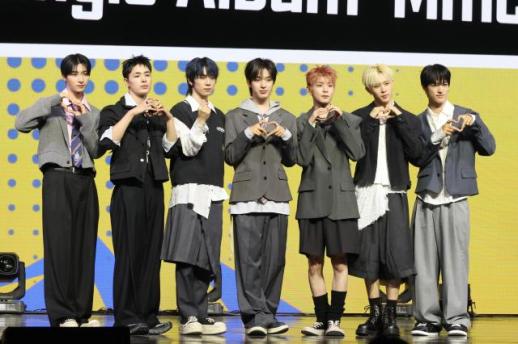 NEXZ returns with 'Mmchk' as JYP sharpens global group strategy SEOUL, April 27 (AJP) — Rookie boy group NEXZ is back with its second single “Mmchk,” underscoring JYP Entertainment’s evolving strategy to globalize the K-pop model through multinational lineups. The seven-member group held a showcase in Seoul on Sunday to mark the release of the single album at Blue Square Woori Bank Hall in Yongsan District. Formed through “Nizi Project Season 2,” a joint audition program between JYP and Sony Music Japan, NEXZ embodies a growing industry trend: exporting Korea’s idol training system while localizing talent. The group consists of six Japanese members—Tomoya, Yu, Haru, Hyui, Yuki and Seita—and one Korean member, So Geon. The survival-style program evaluated roughly 20 contestants on vocals, dance, stage presence and character, with only those meeting all criteria advancing. Unlike NiziU, which debuted primarily in Japan, NEXZ first launched in South Korea before expanding outward—signaling a more integrated, reverse-entry approach to global markets. The members underwent training periods ranging from two to over four years. Tomoya and Hyui joined JYP as early as 2019, while others entered through the structured audition pipeline. NEXZ debuted in May 2024 with “Ride the Vibe” and returns about six months after its previous release, the mini album “Beatboxer” in October 2025. The group has since gained early traction, winning Best New Artist at ASEA 2025 and being named among the “Best 5 New Artists” at the Japan Gold Disc Awards. The title track “Mmchk,” a bass-house dance number, features lyrical contributions from members Yuki, Hyui and Tomoya—part of an effort to shape the group’s own musical identity. “We can’t believe it’s already been two years since our debut—it still feels like yesterday,” Yu said during the showcase. “With the experience we’ve gained, we hope to reach more people through this comeback.” “It’s our first release in about six months, and we know fans have been waiting,” he added. “We’ll do our best to show growth both musically and on stage.” Reflecting on the group’s evolution, Tomoya said, “I remember how nervous I was before our debut. Now we’ve gained confidence and a clearer identity as NEXZ.” Members who participated in writing the lyrics said the track conveys a message of mutual inspiration. “We wanted to express that ‘because you shine, we can shine too,’” they said, noting the challenge of writing in Korean. On performance, the group emphasized flexibility over categorization. “Rather than defining ourselves within a specific genre, we want to present our own style and deliver performances that audiences keep coming back for.” Addressing the coined term “Mmchk,” So Geon described it as a symbolic keyword representing the group’s desire for recognition. “We hope it becomes something people naturally associate with NEXZ,” he said. Despite a crowded comeback season, the group struck an optimistic tone. “There is some pressure, but more than that, we feel excited,” he added. “It’s an opportunity to show everything we’ve prepared.” Seita said the group aims to earn its first music show win, while Hyui added that a special performance is planned if that goal is achieved. NEXZ will continue its global push with a showcase tour starting in Taipei next month, followed by Hong Kong and Bangkok. The single “Mmchk” will be released on major music platforms at 6 p.m. Monday, marking the start of full promotional activities. 2026-04-27 18:12:00
 -
 KOVO Fines Volleyball Setter Ahn Hye-jin 5 Million Won, Issues Warning Over DUI Ahn Hye-jin, a professional volleyball setter who sparked controversy over drunk driving ahead of free-agent talks, has been disciplined by the Korea Volleyball Federation (KOVO) with a stern warning and a 5 million won fine. KOVO said it convened its disciplinary committee on April 27 at its office in Seoul’s Mapo district and decided on the penalty after reviewing the case. The committee called drunk driving a serious antisocial act but said it considered several factors: her blood alcohol concentration at the time was relatively low at 0.032%; she voluntarily reported the incident to her club and the league after it occurred; and she has shown deep remorse. It also said it took into account that she has effectively been sidelined for a season as an unsigned free agent and was removed from the national team. Under KOVO rules, penalties for drunk driving range from a warning to expulsion, and a fine of at least 5 million won may also be imposed. The league said it weighed past cases and fairness. Ahn, wearing a black suit, attended the hearing and bowed as she apologized. “I’m sorry for causing concern. I will make sure this never happens again,” she said. Ahn was caught by police on April 16 for driving with a blood alcohol concentration of 0.032%, a level that triggers a license suspension, and was questioned. Her club notified KOVO the next day and requested discipline under league rules. The fallout has been significant. Ahn, the starting setter for GS Caltex in the 2025-2026 season, helped the team win the championship and was selected for the national team for the first time in five years after the season ended. She was dropped from the national team call-up list shortly after the drunk-driving case. She had been seen as a strong candidate for a major free-agent deal, but no club signed her, including GS Caltex. As a result, she remains unsigned and will be unable to play in the women’s V-League in the 2026-2027 season.* This article has been translated by AI. 2026-04-27 18:11:14
 -
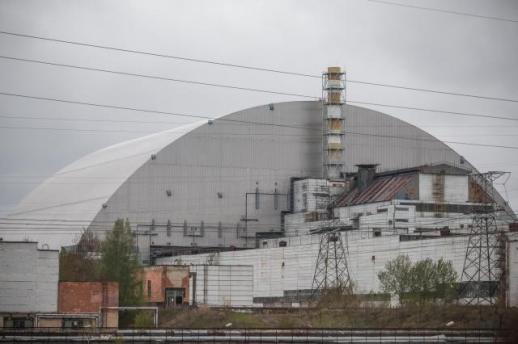 Forty years after Chernobyl and nuclear power is back in vogue SEOUL, April 27 (AJP) - Forty years ago today, the Chernobyl Nuclear Power Plant became a global epitaph for technological hubris. The radioactive clouds that drifted across Europe did more than contaminate soil; they poisoned the public's trust in the atom for a generation. In a historical paradox, the very anniversary of the disaster finds the world—and South Korea included—sprinting back toward nuclear energy with newfound urgency. The shift is being driven by today's "perfect storm": a volatile Middle East destabilizing energy markets, the relentless power hunger of the AI revolution, and the unforgiving clock of the climate crisis. For decades, Chernobyl stood as the ultimate cautionary tale. However, the narrative among experts has shifted from categorical fear to forensic distinction. "Chernobyl was a bizarre event stemming from reckless behavior and a flawed RBMK design that lacked a containment structure," says Jacopo Buongiorno, professor of nuclear science at MIT. Modern engineering has effectively "designed out" the vulnerabilities of the past. Today’s Western-standard reactors, such as the AP1000 or South Korea’s APR-1400, utilize passive safety systems—mechanisms that rely on the laws of physics, like gravity and natural convection, to cool a core without human intervention or external power. “No modern reactor approved under a Western regulatory framework combines those characteristics,” said Sara A. Pozzi, professor of nuclear engineering and radiological sciences at the University of Michigan and president of the IEEE Nuclear and Plasma Sciences Society. Nuclear energy is now undergoing a broad reassessment, driven by converging pressures: climate change, energy security, and surging electricity demand from artificial intelligence and digital infrastructure. It already covers roughly 10 percent of global electricity and about a quarter of all low-carbon power. More than 400 nuclear reactors are in operation across 31 countries, with about 70 more under construction. The United States remains the largest producer, operating 94 reactors and aiming to quadruple nuclear capacity by 2050. China, meanwhile, is rapidly expanding, with nearly 40 reactors under construction and ambitions to surpass the U.S. “The world cannot power its industries, meet the demands of artificial intelligence or secure its energy future without nuclear power,” U.S. Undersecretary of State Thomas DiNanno said recently. Even Europe, once the epicenter of anti-nuclear sentiment, is shifting its stance. European Commission President Ursula von der Leyen has acknowledged that turning away from nuclear energy was a “strategic mistake,” citing the continent’s growing dependence on imported fossil fuels. Geopolitical shocks have accelerated the shift. Russia’s invasion of Ukraine exposed Europe’s energy vulnerabilities, while Middle East tensions have underscored the fragility of global supply chains. Ukraine itself still relies on nuclear power for roughly half its electricity—even during wartime. In this environment, nuclear energy is no longer viewed solely as a climate solution, but increasingly as a strategic asset. “Nuclear power is among the safest and cleanest power options,” said Daniel Hoornweg, faculty member in engineering and applied science at Ontario Tech University. “Yes, they are safe—historical accidents cannot happen,” Pavel Tsvetkov of Texas A&M University also assured. But the drawbacks are equally clear: high upfront costs, long construction timelines, regulatory hurdles and persistent public skepticism. Waste management and proliferation concerns remain unresolved, complicating expansion. “The challenges with Fukushima and TMI are largely about public perception,” Hoornweg added. At the forefront of the next phase are small modular reactors (SMRs), which promise lower costs, faster deployment and greater flexibility. Yet their commercial viability remains uncertain. While pilot projects are underway, particularly in Canada, their economics are still unproven. “They may remain a niche solution,” Hoornweg added. “SMRs are not commercially available yet,” Buongiorno agreed. South Korea remains a titan in the nuclear sector, boasting a robust supply chain and the rare ability to build reactors on time and within budget. However, the domestic path is fraught with political and social friction. While the current administration has signaled support, domestic experts like Lee Jeong-ik of KAIST argue that policy has yet to fully revitalize the industry. The 12th Basic Plan for Electricity Supply and Demand remains a point of contention, with critics arguing it lacks the aggressive expansion needed for Small Modular Reactors (SMRs)—the factory-built, "plug-and-play" future of the industry, he pointed out. The massive upfront costs and the perennial "NIMBY" (Not In My Backyard) sentiment also pose setback. For Koreans, the memories of the 2011 Fukushima meltdown remain vivid, even as the "inconvenience" of energy price hikes pushes the public toward pragmatic acceptance. As the world marks four decades since the tragedy in Ukraine, the atom has undergone a profound rebranding. It is no longer just a source of fear, but a source of possibility. The question for 2026 is no longer whether we can afford to live with nuclear power, but whether we can afford to live without it. 2026-04-27 18:08:47