

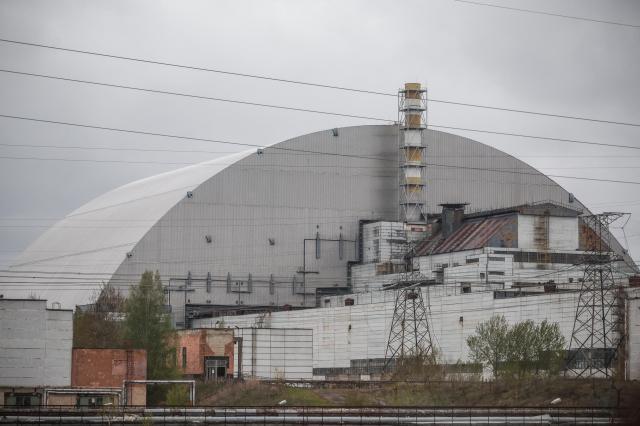
In a historical paradox, the very anniversary of the disaster finds the world—and South Korea included—sprinting back toward nuclear energy with newfound urgency.
The shift is being driven by today's "perfect storm": a volatile Middle East destabilizing energy markets, the relentless power hunger of the AI revolution, and the unforgiving clock of the climate crisis.
For decades, Chernobyl stood as the ultimate cautionary tale. However, the narrative among experts has shifted from categorical fear to forensic distinction.
"Chernobyl was a bizarre event stemming from reckless behavior and a flawed RBMK design that lacked a containment structure," says Jacopo Buongiorno, professor of nuclear science at MIT.
Modern engineering has effectively "designed out" the vulnerabilities of the past. Today’s Western-standard reactors, such as the AP1000 or South Korea’s APR-1400, utilize passive safety systems—mechanisms that rely on the laws of physics, like gravity and natural convection, to cool a core without human intervention or external power.
“No modern reactor approved under a Western regulatory framework combines those characteristics,” said Sara A. Pozzi, professor of nuclear engineering and radiological sciences at the University of Michigan and president of the IEEE Nuclear and Plasma Sciences Society.
Nuclear energy is now undergoing a broad reassessment, driven by converging pressures: climate change, energy security, and surging electricity demand from artificial intelligence and digital infrastructure.
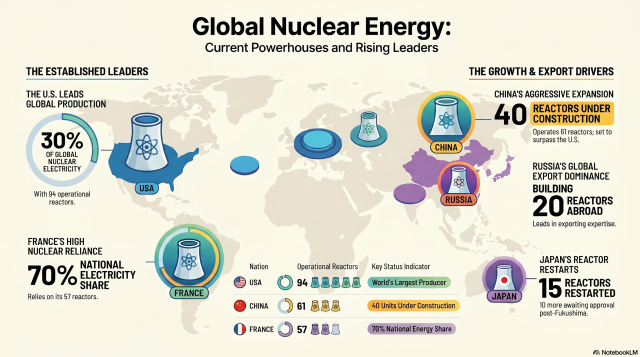
It already covers roughly 10 percent of global electricity and about a quarter of all low-carbon power. More than 400 nuclear reactors are in operation across 31 countries, with about 70 more under construction.
The United States remains the largest producer, operating 94 reactors and aiming to quadruple nuclear capacity by 2050. China, meanwhile, is rapidly expanding, with nearly 40 reactors under construction and ambitions to surpass the U.S.
Even Europe, once the epicenter of anti-nuclear sentiment, is shifting its stance.
European Commission President Ursula von der Leyen has acknowledged that turning away from nuclear energy was a “strategic mistake,” citing the continent’s growing dependence on imported fossil fuels.
Geopolitical shocks have accelerated the shift. Russia’s invasion of Ukraine exposed Europe’s energy vulnerabilities, while Middle East tensions have underscored the fragility of global supply chains.
Ukraine itself still relies on nuclear power for roughly half its electricity—even during wartime.
In this environment, nuclear energy is no longer viewed solely as a climate solution, but increasingly as a strategic asset.
“Nuclear power is among the safest and cleanest power options,” said Daniel Hoornweg, faculty member in engineering and applied science at Ontario Tech University.
“Yes, they are safe—historical accidents cannot happen,” Pavel Tsvetkov of Texas A&M University also assured.
Waste management and proliferation concerns remain unresolved, complicating expansion.
“The challenges with Fukushima and TMI are largely about public perception,” Hoornweg added.
At the forefront of the next phase are small modular reactors (SMRs), which promise lower costs, faster deployment and greater flexibility.
Yet their commercial viability remains uncertain.
While pilot projects are underway, particularly in Canada, their economics are still unproven.
“They may remain a niche solution,” Hoornweg added. “SMRs are not commercially available yet,” Buongiorno agreed.
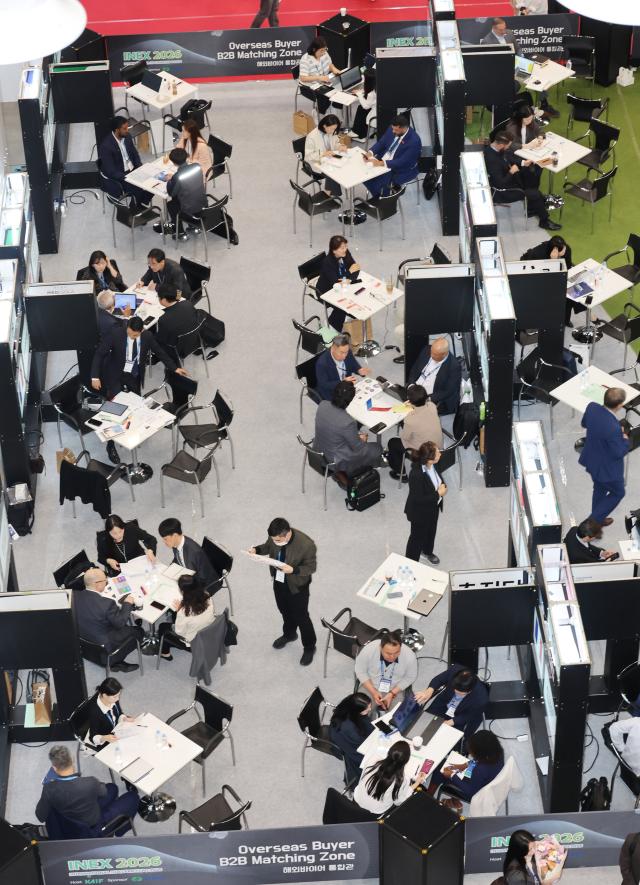
South Korea remains a titan in the nuclear sector, boasting a robust supply chain and the rare ability to build reactors on time and within budget. However, the domestic path is fraught with political and social friction.
While the current administration has signaled support, domestic experts like Lee Jeong-ik of KAIST argue that policy has yet to fully revitalize the industry.
The 12th Basic Plan for Electricity Supply and Demand remains a point of contention, with critics arguing it lacks the aggressive expansion needed for Small Modular Reactors (SMRs)—the factory-built, "plug-and-play" future of the industry, he pointed out.
The massive upfront costs and the perennial "NIMBY" (Not In My Backyard) sentiment also pose setback.
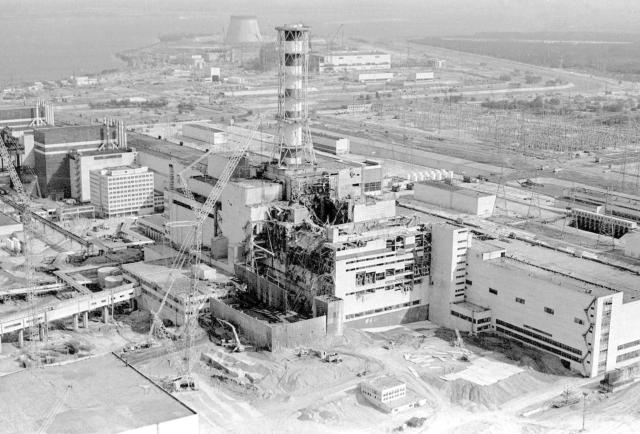
As the world marks four decades since the tragedy in Ukraine, the atom has undergone a profound rebranding. It is no longer just a source of fear, but a source of possibility.
The question for 2026 is no longer whether we can afford to live with nuclear power, but whether we can afford to live without it.
Copyright ⓒ Aju Press All rights reserved.
