

SEOUL, April 27 (AJP) - South Korea has locked in energy and industrial partnerships in India and Viet Nam this month to guard against a global "era of un-order." The agreements signed during the mid-April visits aim to double trade with India to 50 billion dollars and reach 150 billion dollars with Viet Nam by 2030 to counter intensifying supply chain volatility.
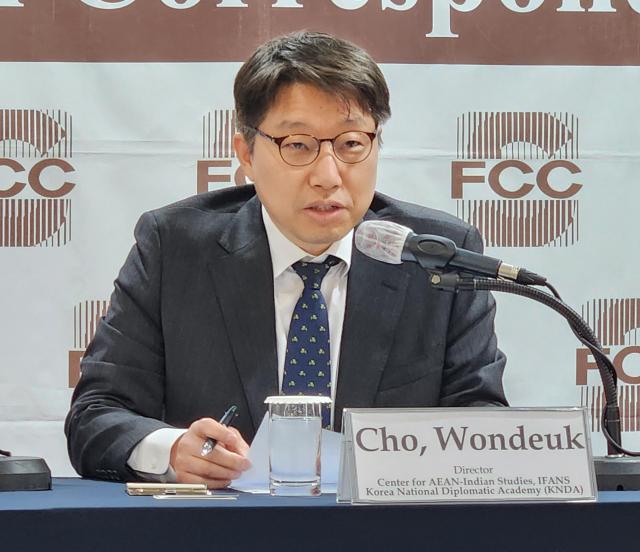
Cho Won-deuk, director of the Center for ASEAN-Indian Studies at the Korea National Diplomatic Academy, told reporters during a briefing at the Seoul Foreign Correspondents Club on Monday that the tour was a "choice of survival" as major power competition spills over into energy and minerals. The director noted that the Lee Jae Myung administration is pursuing "pragmatic diplomacy centered on national interest" to protect domestic industry from "trade fragmentation" and "energy insecurity."
In New Delhi, the focus centered on institutionalizing a roadmap to secure a dominant position in the regional industrial landscape. South Korea and India are committed to a total overhaul of the Comprehensive Economic Partnership Agreement to modernize a framework that has remained largely stagnant for fifteen years. The scholar noted that moves into shipbuilding and defense are "no longer the choice of economy, but the choice of survival." As part of this effort, HD Hyundai signed agreements with Cochin Shipyard to support India's goal of becoming a top-five global shipbuilder by 2047.
The mission in Hanoi focused on securing access to energy and raw materials, where Lee Jae Myung declared that the "future of Viet Nam is the future of Korea." The visit resulted in two memorandums of understanding for the construction of new nuclear power plants, which the director characterized as a "big opportunity for Korean companies" seeking to expand in Southeast Asia. South Korea also established a partnership to exploit the rare earth reserves of Viet Nam, which rank sixth in the world with approximately 3.5 million tons.
The scholar described the mineral collaboration as "very meaningful" for securing an "alternative supply" of materials required for semiconductors and batteries. South Korea remains heavily dependent on external sources for energy and minerals, according to data from the Korea International Trade Association. The director concluded that in an environment where no country can survive in isolation, it is the "most rational choice for middle powers to bind themselves together."
Copyright ⓒ Aju Press All rights reserved.
