
Journalist

Lee Hugh
=
-
 South Korea: Elementary Student Faints After Neck Caught on Illegal Banner Cord An elementary school student in Pocheon, South Korea, fainted after his neck became caught on a banner cord while crossing a crosswalk, according to a local report. Gyeonggi Ilbo reported on April 27 that the incident happened about 4 p.m. on April 25 near the Jungang Intersection in Songu-ri, Soheul-eup, Pocheon. The 11-year-old boy, identified only as A, was crossing with friends when a thin banner string that was hard to see snagged his neck, knocking him to the ground. The sudden pressure caused him to lose consciousness. Pocheon City Council member Kim Hyeon-gyu, who witnessed the scene, called 119, the report said. The boy was taken to a nearby hospital and is being treated, the report said. A Pocheon Fire Station official told Gyeonggi Ilbo that the boy had injuries including abrasions to his neck and showed temporary loss of consciousness. The official said the hospital was conducting tests to determine his condition. 2026-04-27 16:45:15
 -
 May Movie Releases: 'Mortal Kombat 2,' Michael Jackson Biopic, Korean Zombie Thriller and New Star Wars Film May theaters are preparing a lineup of genre films, from a video game-based action blockbuster to a music biopic, a Korean zombie suspense film and a new Star Wars title. First up is the video game-based action film 'Mortal Kombat 2,' set for release May 6. A sequel to 2021's 'Mortal Kombat,' it puts the franchise’s signature lethal tournament fights and fantasy action front and center. The previous film drew attention for its intense action and built-in fan base; the new installment signals an expanded universe with the addition of new characters including Johnny Cage. On May 13, the music biopic 'Michael' arrives. The film covers the life and music of pop star Michael Jackson, with Jackson’s nephew Jaafar Jackson in the lead role and Antoine Fuqua, who directed 'Training Day' and 'The Equalizer,' at the helm. It opened in North America on the 24th and has also drawn notice for its global box office performance in its first weekend. Among anticipated Korean films is director Yeon Sang-ho’s new movie 'The Colony,' opening May 21, with an IMAX release also confirmed. The cast includes Jun Ji-hyun, Koo Kyo-hwan, Ji Chang-wook, Shin Hyun-been, Kim Shin-rok and Go Soo. It follows people trapped in a sealed space as they fight unidentified infected individuals. Yeon previously demonstrated the commercial potential of Korea’s zombie genre with 'Train to Busan,' and the new film has drawn strong interest from genre fans. Later in the month, the Star Wars film 'The Mandalorian and Grogu' is scheduled for May 27. A theatrical feature based on the Disney+ series 'The Mandalorian,' it is directed and co-written by Jon Favreau, with Dave Filoni also credited as a co-writer. The film expands the adventures of Din Djarin and Grogu onto the big screen, with attention on whether Star Wars will rally its fan base in theaters after a long gap. Also in the mix is 'The Devil Wears Prada 2,' opening April 29. While not a May release, its timing is expected to directly affect early May box office competition. It is the first sequel in 20 years to the 2006 film 'The Devil Wears Prada,' with key cast members including Meryl Streep, Anne Hathaway and Emily Blunt returning. Attention is also on the box office performance of the animated film 'Super Mario Galaxy,' which opens the same day. Overall, May’s slate is not concentrated in a single genre but aimed at distinct audience segments: 'Mortal Kombat 2' for game and action fans, 'Michael' for music and biographical-film audiences, 'The Colony' for Korean genre-film viewers and 'The Mandalorian and Grogu' for Star Wars fans. If 'The Devil Wears Prada 2' sustains momentum into early May, theaters are expected to see closely spaced releases competing from late April through late May. 2026-04-27 16:38:26
 -
 Big Tech Earnings Week Seen as Key Test for U.S. Stock Rally U.S. markets are turning their attention to a heavy week of earnings from major technology companies, with results expected to help determine the next move for stocks. Tech shares have led gains even as tensions between the United States and Iran have added to uncertainty. MarketWatch reported April 26 that Alphabet, Microsoft, Amazon and Meta are scheduled to report results after the close April 29 (Korea time: the morning of April 30). Apple is set to report after the close the next day (Korea time: the morning of May 1). U.S. stocks have continued to rise despite instability in the Middle East. The Standard & Poor’s 500 and the Nasdaq have climbed for four straight weeks, extending runs of record highs. Analysts say Big Tech has been central to the rally. Tech stocks are widely viewed as relatively defensive. Even if growth concerns increase, solid earnings can support sentiment, and if geopolitical risks rise, the sector is seen as less exposed to the impact of higher oil prices. Garrett Melson, a portfolio strategist at Natixis Investment Managers Solutions, said tech stocks are set up to “win either way,” arguing that strong results can underpin confidence even if the U.S. economy slows. The largest technology names — Apple, Microsoft, Alphabet, Nvidia, Amazon, Tesla and Meta, often called the “Magnificent Seven” — have remained core holdings for many investors on expectations of artificial intelligence-driven growth. Related exchange-traded funds have rebounded sharply in April, recovering much of their earlier losses. Kevin Shaye, chief strategist at BNY Wealth, said April trading reflected the view that tech valuations were attractive and that the fundamentals of the AI ecosystem remained positive even as war raised questions about a cyclical recovery. He said large-cap tech has again drawn buying and led the market, adding that the sector’s growth drivers are more structural than macroeconomic. MarketWatch said whether that optimism holds may depend on this week’s earnings. Matt Weller, head of research at StoneX, said the key issue this season is not the size of AI and data center spending itself, but the profitability of that investment. With Big Tech companies having poured large sums into data centers and AI infrastructure, he said investors want evidence it is translating into returns. The Federal Reserve’s interest-rate decision, also due the same day, is another factor. Markets largely expect rates to be held at current levels, but uncertainty remains over the selection of a successor to Chair Jerome Powell and the direction of policy. MarketWatch said earnings that meet expectations could help extend the rally, while disappointing results could increase volatility.* This article has been translated by AI. 2026-04-27 16:36:53
 -
 KOSPI Hits Record 6,600 as Retail Day Trading Pushes April Turnover Near 40% The rally to record highs is accelerating in South Korea’s stock market, and short-term trading is rising with it. The KOSPI on the 27th climbed past 6,600 for the first time, and April turnover is nearing 40% as investors rapidly rotate in and out of shares. According to the Korea Exchange, the KOSPI closed at 6,615.03, up 139.40 points, or 2.15%, from the previous session. The index also broke above 6,600 during the session, putting the 7,000 level within sight. By investor type, foreigners and institutions were net buyers, purchasing 890.5 billion won and 1.1015 trillion won, respectively. Retail investors were net sellers of 1.9763 trillion won, a sign of heavy profit-taking. In recent sessions, retail investors have often sold into strength and bought on dips. That pattern is reflected in turnover, a measure calculated by dividing trading volume by the number of listed shares. Higher turnover indicates more frequent changes in ownership — often associated with day trading. As of the 27th, April turnover stood at 37.63%, meaning about 3.7 out of every 10 listed shares changed hands over the month. It was below March’s 40.55% but above January’s 31.29% and February’s 34.08%. With three trading days left in the month, April could still surpass March. Daily data also point to brisk short-term trading. This month, turnover exceeded 2% on six sessions: the 2nd (2.47%), 16th (2.36%), 23rd (2.27%), 10th (2.10%), 17th (2.10%) and 15th (2.05%). Most of those sessions — except the 2nd and 17th — ended higher, suggesting momentum buying and profit-taking were both active during the upswing. Turnover jumped not only on the 2nd, when investor sentiment weakened after U.S. President Donald Trump made hard-line remarks toward Iran, but also on the 16th, when the index first broke above 6,200 after the outbreak of the Iran war. Similar moves were seen on the 23rd, when semiconductor strength lifted the index to around 6,470 and a fresh record, and on the 15th, when it settled above 6,000. The surge in turnover suggests a market increasingly driven by short-term trades. Faster rotation can also amplify risk, especially when paired with leveraged bets. Kim Seok-hwan, an analyst at Mirae Asset Securities, warned that “the expansion of direct investment using leverage should be noted as it may be exposed to volatility risk going forward.”* This article has been translated by AI. 2026-04-27 16:36:19
 -
 Nexon, SOOP launch N-CONNECT preseason to link streamers, users and games SOOP is teaming up with Nexon to build a new ecosystem that connects streamers, users and games. SOOP said it will begin a preseason for “N-CONNECT,” a streamer-focused program, starting on the 27th. The rollout includes an account-linking service that connects the two companies’ activity data in real time. N-CONNECT is designed to tie together streamers’ content activity, user participation and in-game experiences. Centered on Nexon titles, it aims to expand viewing and participation so users and streamers can interact more naturally. Streamers who join will operate as “N-Connectors,” broadcasting Nexon games and engaging with viewers. Participants can receive content support funds, drops and special goods, with rewards structured around three pillars — activity, growth and impact — to encourage sustained participation. Any streamer who broadcasts on SOOP can take part. Streamers who log at least 10 hours in Nexon game categories will receive N-CONNECT special goods. SOOP and Nexon will also run promotional support to help general streamers grow. Benefits are also planned for users. Those who link their Nexon game accounts with SOOP accounts can receive rewards such as drops-event items and Nexon Cash. The companies said they will gradually expand in-game benefits and other participation events during the preseason. The N-CONNECT preseason will run for about five months, through September. SOOP and Nexon said they plan to refine the program based on participation data and feedback from users and streamers, then expand it into an official season. A SOOP official said the companies plan to keep strengthening a participation-based ecosystem that combines game content and live streaming, starting with N-CONNECT.* This article has been translated by AI. 2026-04-27 16:33:14
 -
 LH Holds Briefing With Builders to Advance Small-Scale Housing Renewal Projects 한국토지주택공사(LH)는 민간 건설사와 소규모주택정비 관리지역의 사업 활성화를 위한 소통 간담회를 개최했다고 27일 밝혔다. LH는 이번 간담회에서 소규모주택정비 관리지역(서울시 모아타운)의 사업 장점과 인센티브를 소개하며, 우수 건설사의 참여를 유도했다고 설명했다. LH는 앞으로 시공사 선정이 필요한 관리지역 8곳(약 7300가구 규모)에 대한 선정 로드맵도 제시했다. LH는 올해 관악난곡, 서대문홍제, 강서화곡, 금천시흥2 등 4곳의 시공사를 선정할 계획이다. 내년에는 동작노량진, 성북종암, 종로구기, 인천가정 등 수도권 4곳의 시공사 선정을 완료할 예정이다. LH는 관리지역으로 지정되면 사업 면적을 최대 4만㎡까지 확대할 수 있어 규모의 경제를 기대할 수 있고, 설계·시공 통합발주가 가능해 속도와 효율을 높일 수 있다고 밝혔다. 또 주택도시기금의 저리 융자를 통해 초기 사업비를 안정적으로 조달할 수 있으며, 정비계획 수립 절차를 생략할 수 있어 사업 기간 단축에도 도움이 된다고 덧붙였다. 박현근 LH 수도권정비사업특별본부장은 “이번 간담회를 계기로 사업 규모 확대와 공공 지원책을 널리 알려, 역량을 갖춘 중·대형 건설사들이 적극적으로 참여할 수 있도록 노력하겠다”고 말했다.* This article has been translated by AI. 2026-04-27 16:30:15
 -
 Sony Raises PS5 Prices in South Korea as Memory Costs Surge Surging semiconductor demand tied to the spread of artificial intelligence has driven memory prices sharply higher, prompting a steep increase in Sony's PlayStation 5 console prices in South Korea. The so-called “chipflation” is spreading across consumer IT devices. Sony Interactive Entertainment Korea said on the 27th it will raise PS5 prices in the Korean market, with the new prices taking effect May 1. The PS5 Digital Edition will rise 43.48% to 858,000 won from 598,000 won. The PS5 Disc Edition, which supports physical discs, will increase 26.74% to 948,000 won from 748,000 won. The higher-end PS5 Pro will climb 16.1% to 1,298,000 won from 1,118,000 won. The adjustment follows moves in other markets. Earlier this month, Sony Interactive Entertainment raised PS5 prices by about $100 in major markets including the United States. At the time, SIE Vice President Isabelle Tomatis said, “Amid continued cost pressure across the global economic environment, a price adjustment was unavoidable.” Industry officials point to structural shifts in the memory-chip market. As demand for AI servers jumps, chipmakers are focusing production on high-bandwidth memory and higher-capacity products, while supplies of consumer DRAM and NAND flash are tightening, analysts say. Memory prices have been rising quickly. Counterpoint Research said first-quarter DRAM prices jumped more than 50% and NAND flash more than 90%. TrendForce forecast additional second-quarter increases of 90% to 95% for DRAM and 55% to 60% for NAND flash from the previous quarter. The trend is extending beyond game consoles. Prices for laptops and smartphones, which also rely heavily on memory components, are rising as well. Samsung Electronics and LG Electronics have recently raised laptop prices by as much as nearly 1 million won compared with previous models, and new smartphone launch prices are also moving higher. * This article has been translated by AI. 2026-04-27 16:28:09
 -
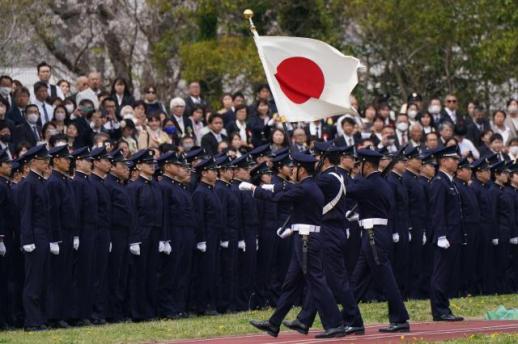 Korea-Japan rivalry may spill over to defense after Tokyo's lift of weapons ban SEOUL, April 27 (AJP) - The historic industrial rivalry between South Korea and Japan—once defined by a relentless "car war"—is migrating toward a high-stakes defense-industrial faceoff. As Tokyo pivots away from decades of postwar pacifist constraints to permit the export of lethal platforms, it enters a market where Seoul currently enjoys a global "golden age." While both nations operate as critical linchpins of the U.S. security architecture in Asia, their defense-industrial bases (DIBs) are products of fundamentally different strategic environments and threat perceptions. Despite hosting significant U.S. troop presences—roughly 28,500 in South Korea and 50,000 in Japan—the two nations have developed asymmetric military doctrines that have, in turn, shaped their industrial strengths. South Korea maintains a high-intensity, "total war" posture against North Korea, supporting a conscription-based force of 450,000 that prioritizes heavy armor and artillery. In contrast, Japan’s Self-Defense Forces operate as an all-volunteer force of 250,000 bound by Article 9 of its Constitution. Japan’s geography as an archipelago has necessitated a focus on "island defense" and "active deterrence," prioritizing maritime interdiction and aerospace superiority over ground-based power projection. This divergence has allowed South Korea to emerge as the world’s "arsenal for democracy" in land systems. Seoul’s competitive advantage lies in its integrated defense ecosystem, offering a "triple threat" of rapid delivery, cost-efficiency, and battlefield-proven reliability. Platforms like the K9 self-propelled howitzer and the K2 Black Panther tank are optimized for the European theater, where the threat of conventional land warfare has returned. Poland’s massive acquisition of K-defense systems underscores Seoul’s ability to scale production at a pace Western competitors often struggle to match. Furthermore, the Cheongung-II missile defense system’s reported 90 percent success rate against Iranian-origin threats in the Middle East has transitioned South Korea from a "budget alternative" to a premier Tier-1 provider of kinetic defense. Japan, meanwhile, is shedding its image as a "hidden supplier" of sub-components to become a visible lead integrator in the sea and air domains. The Soryu- and Taigei-class submarines, incorporating world-leading lithium-ion battery technology for extended undersea endurance, represent a quantum leap in conventional deterrence. Japan's recent breakthrough in the surface vessel market—specifically Canberra’s selection of a Mitsubishi Heavy Industries’ Mogami-class variant for the Royal Australian Navy—marks a watershed moment. This multi-billion-dollar deal signals Tokyo’s emergence as a major competitor in complex maritime procurement, moving beyond its previous role as a "reluctant exporter." South Korean shipbuilders, including HD Hyundai Heavy Industries and Hanwha Ocean, also participated in the 2024 tender but failed to make the final shortlist. Mitsubishi Heavy Industries ultimately secured the contract after competing against Germany’s ThyssenKrupp, highlighting strengths in stealth capabilities, reduced crew requirements and faster construction timelines. However, Japan’s resurgence introduces a new strategic vulnerability for the South Korean defense sector. Professor Kim Houng-yu, a member of the Korea Defense Industry Association, notes that Japanese companies hold world-class capabilities in missile sensors and optical systems, which he describes as “critical and strategic components” in modern weapons development. This technological leverage introduces a significant strategic risk for Seoul. Professor Kim warns that Japan’s growing influence in these niche areas could mirror the 2019 export restrictions on semiconductor materials. “If Japan designates these as strategic items and limits exports, Korean firms that rely on them could face serious challenges,” Kim said. He argues that to avoid a repeat of past industrial dependencies, South Korea must secure its own technological foundation. “To avoid this, South Korea must move toward full defense self-reliance and secure core technologies such as optics.” The emerging rivalry mirrors the 20th-century trajectory of the automotive and semiconductor sectors, where South Korea moved from assembling Japanese designs to dominating the global market. Yet, in the defense sector, the challenge is no longer just "catch-up" growth; it is technological sovereignty. For Seoul, the rise of a rearmed Japan serves as a catalyst for full-spectrum self-reliance. As the Indo-Pacific grows more volatile, the competition between the "K-Defense" mass-production model and Japan’s "High-Tech Shield" will not only determine market share but also the future of the region's security-industrial autonomy. 2026-04-27 16:26:12
 -
 Attorney Won Chang-yeon Chosen as New Managing Partner of Law Firm Dongin Attorney Won Chang-yeon, a member of the Judicial Research and Training Institute’s 28th class, has been selected as the new managing partner of Law Firm (LLC) Dongin, according to reporting by Ajunews on Monday. Dongin recently chose Won through an internal election, the report said. An official announcement is expected soon. Won, born in November 1963, graduated from Yonsei University with a degree in political science and diplomacy and earned a master’s in law from Yonsei University’s Graduate School of Legal Studies. He also completed Seoul National University’s specialized legal program covering mergers and acquisitions theory and practice. He passed the 38th bar exam in 1996 and completed the Judicial Research and Training Institute. After working at law firms Aram and Human, he joined Dongin in 2006. He served as a representative attorney from 2018 to 2022 and has again been listed as a representative attorney since last year. Won’s practice has focused on M&A, corporate restructuring, management control disputes, finance and securities, and real estate project financing. His work has included advising Korea Asset Management Corp. on the sale of special nonperforming loans worth 1 trillion won, as well as advising and litigating on M&A deals and control disputes involving multiple listed companies. In management control disputes, he has handled cases tied to corporate governance, including injunctions to block new share issuances, injunctions related to placing items on meeting agendas, injunctions to inspect and copy shareholder registers, and court petitions to convene extraordinary shareholders’ meetings. In finance and securities, he has worked on asset-backed securities, acquisition financing and cases involving the Capital Markets Act. The selection comes ahead of the end of Managing Representative Attorney Hwang Yun-gu’s term, which runs through the end of this month. Dongin is expected to shift to the new managing-partner structure starting next month. A Dongin official said observers expect Won’s prior experience leading the firm could put the focus on organizational stability and strengthening corporate advisory work, though the specific management direction is expected to be clarified after the official announcement. Dongin is regarded as a law firm with strength in criminal litigation. It has also been working to bolster its advisory capabilities in areas including M&A, fair trade, tax, intellectual property, and environment and energy. * This article has been translated by AI. 2026-04-27 16:19:46
 -
 Dong-A Socio Holdings Q1 Operating Profit Falls 6% Despite Revenue Growth Dong-A Socio Holdings said profitability weakened in the first quarter as higher costs offset revenue growth. The company said on the 27th that, on a consolidated basis, first-quarter revenue rose 6.9% from a year earlier to 351.0 billion won, while operating profit fell 6.0% to 19.1 billion won. The company attributed the decline in operating profit to higher cost ratios at its operating subsidiaries, citing the impact of external conditions. Healthcare unit Dong-A Pharmaceutical posted revenue of 188.0 billion won, up 10.5%, driven by growth in Bacchus and over-the-counter drug sales. Operating profit rose 22.1% to 20.6 billion won. Bacchus and OTC products grew 11.0% and 17.3%, respectively, while health functional foods slipped 2.1%. STgen Bio, a contract manufacturer of biopharmaceuticals, reported revenue of 18.0 billion won, down 5.7%. Operating profit plunged 89.1% to 200 million won due to fixed-cost burdens. The company said results can vary by quarter depending on customer order schedules, adding that planned annual orders totaling 21.1 billion won are proceeding as scheduled. Logistics unit Yongma Logistics recorded revenue of 110.6 billion won, up 9.6% from a year earlier, helped by new client wins. Operating profit, however, fell 10.4% to 3.8 billion won due to higher fuel costs and rising prices for logistics materials.* This article has been translated by AI. 2026-04-27 16:19:02