
Journalist

Lee Hugh
=
-
 Lee Jae-myung vows tough punishment for syringe hoarding, price-gouging President Lee Jae-myung said he will deal sternly with companies caught hoarding syringes, calling it antisocial profiteering that exploits a community crisis. In a post Friday on X, formerly known as Twitter, Lee said he instructed the Cabinet to take all possible follow-up steps, including continued crackdowns, swift investigations, tough punishment and the maximum administrative penalties for confirmed violations. He also wrote, “What’s the point of living well alone? Let’s live together.” The remarks came after the Ministry of Food and Drug Safety said a special nationwide inspection of syringe sellers, aimed at stabilizing distribution, found 32 distributors violated a notice banning syringe hoarding. Some companies were found to have stockpiled about 130,000 syringes without selling them, or to have supplied 620,000 only to specific clients. * This article has been translated by AI. 2026-04-25 16:39:15
 -
 U.S. Energy Exports Hit Record as Hormuz Closure Spurs Demand Amid Iran War The closure of the Strait of Hormuz amid the Iran war has pushed U.S. energy exports to record levels. According to Yonhap News Agency and The Wall Street Journal, Asian and European buyers cut off from Middle Eastern supplies are turning to U.S. crude oil and liquefied natural gas, or LNG. Last week, U.S. exports of crude and petroleum products averaged 12.9 million barrels a day, a record high. U.S. exports of crude and LNG to Asia in March and April rose about 30% from a year earlier. The surge reflects the Hormuz blockade, which has disrupted purchases of Middle Eastern energy. Countries long dependent on the region have had little choice but to seek U.S. supplies. It is unclear whether the shift will last after the war. Many Asian refineries are designed for Middle Eastern crude, and the United States cannot increase exports without limit. Tsuneo Watanabe, a researcher at the Sasakawa Peace Foundation, a Japanese think tank, said, “If the Strait of Hormuz reopens and Middle East energy prices return to normal, U.S. crude and gas will no longer be attractive.” 2026-04-25 15:39:15
 -
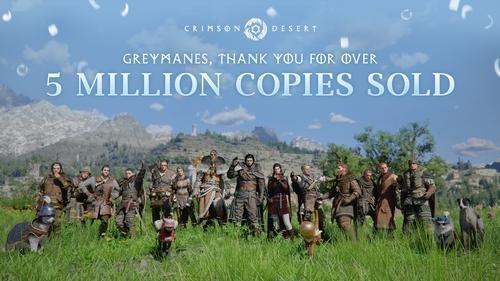 S. Korean PM lauds Pearl Abyss' 'Crimson Desert' for 5 mln sales, pledges industry support SEOUL, April 25 (AJP) - South Korean Prime Minister Kim Min-seok congratulated video game developer Pearl Abyss (263750.KQ) on the record-breaking global sales of its latest title, "Crimson Desert," pledging proactive government support to bolster the country's gaming industry across broader platforms. In a social media post late Friday, Kim highlighted the action-adventure game's milestone of surpassing 5 million copies sold just 26 days after its release, calling the feat a "splendid achievement." Kim praised the developers for captivating global users with a "living game world created entirely with their own technology, photorealistic graphics, and active communication." He added that the game seamlessly integrated South Korean cultural elements, such as Taekwondo and traditional cuisine, thereby "opening a new chapter for K-content." The prime minister framed the title's commercial success as a significant indicator of the domestic industry's potential abroad. "This is an important turning point showing that the domestic gaming industry can expand and leap forward across various platforms, including consoles," Kim wrote. "The government will take responsibility and actively support this to create an environment where K-games can shine as a core pillar of K-content." "Crimson Desert" launched on March 20 and immediately set a record for the fastest-selling South Korean packaged game, moving 2 million copies on its first day. Global sales reached 3 million by the fourth day, 4 million by April 1, and crossed the 5 million mark on April 15. Separately, Pearl Abyss released the game's first official soundtrack album, featuring 75 tracks, on domestic and global streaming platforms on Friday. 2026-04-25 15:29:23
 -
 Appeals court rejects COVID-19 damages suit by Seoul detention center inmates, families Inmates and their families who sued the South Korean government over a COVID-19 outbreak at Seoul Eastern Detention Center in 2020 have also lost on appeal. According to Yonhap News Agency on Friday, the Seoul Central District Court’s Civil Appeals Division 5-1 recently ruled against 33 inmates and family members who sought damages from the state and Choo Mi-ae, the justice minister at the time who oversaw correctional facilities, upholding the lower court’s decision. The panel said it did not see a link between a first wave of infections centered on staff that began Nov. 17, 2020, and a second wave centered on inmates that continued after Dec. 7 that year. The court said it was difficult to conclude the inmate cluster stemmed from the earlier staff outbreak. “The similarity between the viruses in the first and second outbreaks is low, and testing conducted during the first outbreak showed a low positivity rate among inmates,” the court said, adding that it was reasonable to view the routes of introduction as different. The court also rejected the plaintiffs’ claim that infections spread because close contacts were not separated by transmission route. It said the detention center distinguished close contacts using a clear standard of confirmed versus unconfirmed cases, and that identifying each confirmed patient’s route of infection would have been very difficult given time and space constraints. * This article has been translated by AI. 2026-04-25 14:39:16
 -
 South Korea’s Kim Min-seok hails Pearl Abyss’ ‘Crimson Desert’ as milestone for K-games Prime Minister Kim Min-seok congratulated Pearl Abyss on its game “Crimson Desert” surpassing 5 million copies sold just 26 days after release. According to Yonhap News Agency on the 25th, Kim wrote the message on social media the previous evening while sharing an article about the sales milestone. Kim said the title won over players worldwide with a “living game world” built with the developer’s own technology, lifelike graphics and active communication with users. He added that it opened “a new chapter” for K-content by naturally incorporating Korean elements such as taekwondo and Korean food. Kim also said the government would help promote the game industry. Calling it “an important turning point” showing the domestic game industry can expand to platforms including consoles, Kim said the government would “actively support” the sector with a sense of responsibility. He said he would work to create conditions for K-games to shine as a pillar of K-content. “Crimson Desert” was released on March 20 and sold 2 million copies worldwide on its first day, setting a record for the fastest and highest sales for a Korean-made packaged game. It topped 3 million copies on day four, surpassed 4 million on day 12 on April 1, and reached 5 million as of April 15, its 26th day on the market. * This article has been translated by AI. 2026-04-25 14:24:16
 -
 Cha&Mom Phytocerin Outdoor Play Sun Stick Offers Gentle, Hygienic UV Protection Sunscreen is a staple in my bag. As the weather warms and outdoor reporting increases ahead of the June 3 local elections, choosing a product has felt more important — and I have become more careful about what I carry. The one I have been using is Cha&Mom’s ‘Phytocerin Outdoor Play Sun Stick,’ from Cha Bio F&C’s family skin-health brand. As the name suggests, it is a stick, so it goes on quickly without getting on your hands. That makes it easier to use hygienically outdoors, where washing up is not always an option. It glides on smoothly and, even with repeated applications, feels neither sticky nor heavy. It dries down to a soft, powdery finish. It also has a banana scent, which helps children use it without resistance. In summer, it does not take much movement to start sweating. The company says it applies an “Activeproof Solution” so UV protection lasts longer even with sweat or heavy activity. In my use, the dry finish held up relatively well while I moved quickly to follow election candidates, and after a child ran around for a long time. That can mean fewer touch-ups. The ingredients are also positioned as gentle. The product description says it uses zinc oxide, a non-nano mineral UV filter, to reduce skin burden, and that clinical testing found it nonirritating. The “Phytocerin” in the name is a proprietary ingredient developed by Cha Bio dermatological science specialists; the company says it helps soothe skin, strengthen the skin barrier and form a moisturizing layer. The white cast often associated with sunscreen was not especially noticeable, making it easy to swipe on without a mirror — including for children. With its simple, hygienic application and a formula intended for both kids and adults, Cha&Mom’s ‘Phytocerin Outdoor Play Sun Stick’ is likely to stay in my bag this summer. _Cha&Mom ‘Phytocerin Outdoor Play Sun Stick,’ 25 grams* This article has been translated by AI. 2026-04-25 14:03:18
 -
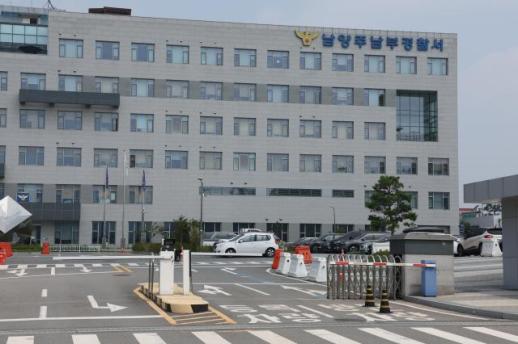 South Korean nightclub worker arrested for attempted murder of teenager SEOUL, April 25 (AJP) - A 20-year-old employee of an adult entertainment establishment has been arrested on suspicion of attempted murder after allegedly stabbing a teenager during a dispute that began while soliciting customers, police said Saturday. The Namyangju Nambu Police Station said the suspect, identified only as A, is accused of stabbing a male teenager in the chest and abdomen at approximately 2:30 a.m. Thursday. The incident took place in an underground parking garage of a commercial building in Hwado-eup, Namyangju, Gyeonggi Province. The victim was transported to a nearby hospital for emergency surgery and remains hospitalized for treatment. According to investigators, the altercation began on the street when A, who was working as a promoter for a local venue, encountered the victim, who was reportedly intoxicated at the time. Following a verbal exchange, A allegedly returned to his place of employment to retrieve a weapon before moving to the parking garage with the victim to carry out the attack. A local court issued an arrest warrant for the suspect on Friday, citing concerns that he might attempt to flee. Police officers apprehended A at the scene immediately following the stabbing. Authorities have secured CCTV footage from the area and are currently analyzing the video to determine the precise circumstances of the dispute. The investigation is ongoing as police work to establish the specific motive behind the violent escalation. 2026-04-25 13:54:37
 -
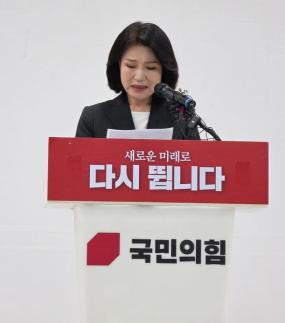 Lee Jin-sook Drops Out of Daegu Mayor’s Race After PPP Cutoff Lee Jin-sook, a former chair of the Korea Communications Commission who was cut from the People Power Party’s primary for Daegu mayor, said April 25 she will not run in the June 3 local election. With Rep. Joo Ho-young also having declared he will not run, the party’s internal turmoil over the Daegu race appeared to ease. Speaking at a news conference at the People Power Party’s Daegu office, Lee said, “Today, I am stepping down from the position of preliminary candidate for Daegu mayor.” She added, “When the People Power Party’s Daegu mayoral candidate is chosen tomorrow (26th), I will do my best to help that person defeat the Democratic Party candidate. I will help protect Daegu from the reckless Democratic Party government.” Lee again called the party nomination committee’s decision to cut her unfair, but said she would not run as an independent. “I also had the desire to leave the party and run as an independent to receive the judgment and choice of citizens,” she said. But she said she was held back by concerns that “if even Daegu is handed over to the left, what will happen to the Republic of Korea,” adding that she feared Daegu, a conservative stronghold, could be overtaken by “socialist populism.” Asked whether she might run in a possible parliamentary by-election that could arise from the Daegu mayoral contest, Lee did not answer directly. “As I said in my statement, I have only one 마음 — to protect Daegu as the last bastion of liberal democracy,” she said. Asked whether she had further meetings with party leader Jang Dong-hyuk or other members of the nomination committee, Lee said Jang met her before leaving for the United States and that they met again recently to discuss the Daegu situation. “We discussed how to protect Daegu, and there was also common ground,” she said. * This article has been translated by AI. 2026-04-25 13:51:17
 -
 Analysis: Missile Stockpiles, Costs Fuel Calls for a Broader Middle East Peace Deal War often begins with a stated purpose, but what remains is destruction, exhaustion and a bill. The Iran war launched by the United States and Israel is no exception. Framed as “security” and “deterrence,” it has increasingly highlighted rapid depletion of munitions, pressure on national economies and a broader drag on the global economy. Missile inventories and public patience can run out before any victory banner is raised. Recent analyses by U.S. media and think tanks underscore the scale of consumption. After the “Grand Rage” operation, the U.S. military has used more than 1,100 JASSM-ER long-range stealth cruise missiles, with remaining stockpiles down to about 1,500. Each missile costs about 1.6 billion won and was originally positioned as a strategic asset for a full-scale conflict with China, but nearly half has been spent in the Iran theater. More than 1,000 Tomahawk missiles have been fired — about 5.3 billion won each, roughly 10 times the annual purchase volume. More than 1,200 Patriot interceptor missiles have also been used, exceeding twice last year’s total production. War is measured not only in gunfire but in numbers. Analysts estimate the cost of munitions used in the first two days alone at $5.6 billion, with total war costs already exceeding $28 billion to $35 billion. Daily costs are nearing $1 billion. That spending is not abstract: it could have gone to health insurance for the U.S. middle class, student loans for young people, or repairs to aging urban infrastructure. Ultimately, the public pays the price. But the deeper problem is not only U.S. depletion. Israel, too, is not in a position to sustain “unlimited defense.” The Iron Dome and Israel’s layered air defenses — long regarded as among the world’s strongest — have shown clear limits in prolonged fighting. When short-range rockets and drones, ballistic missiles and cruise missiles arrive in waves, Iron Dome must prioritize targets, and saturation has appeared in some key areas. One interceptor can cost more than dozens of attack drones. Once defense becomes more expensive than offense, a long war becomes harder to sustain. Israel has also had to manage the northern Hezbollah front, Gaza and long-range threats aimed at Iran itself at the same time. Air defense is not only a technology issue but a stockpile issue; the depth of ammunition reserves can determine national security. Even the most advanced system fails if interceptors run short. Some strategic facilities and industrial infrastructure have been threatened, and civilian psychological fatigue has risen sharply. The idea of a “perfect shield” has been tested. Iran’s situation is no less severe, and in some ways more structural. Iran has maintained an “axis of resistance” centered on the Revolutionary Guard, but in a prolonged war its missile production bases and underground storage sites, drone assembly plants, air-defense radar networks and command-and-control systems have been hit repeatedly. Losses to long-range ballistic missile production lines and key air-defense bases are difficult to restore quickly. Missile launches may continue, but if sustainable production capacity collapses, Iran’s ability to wage war can weaken rapidly. Sanctions, dwindling foreign currency reserves, difficulty sourcing industrial parts and restrictions on importing precision guidance systems are already squeezing Iran’s economy. Missiles are not built on willpower alone; they require semiconductors, specialized metals, precision machinery and supply chains. The longer the war lasts, the more likely Iran’s economy is to break before its military does. Israel and Iran, the article argues, are no longer calculating victory so much as trying to avoid mutual ruin. One side’s defenses are thinning; the other’s production base is being damaged. The United States is drawing down its own stockpiles, while allied cohesion in Europe and Asia is weakening. The central issue is not who wins, but that continued fighting leaves everyone weaker. The rationale for the war is also wearing thin. The United States has spoken of removing a nuclear threat; Israel has described its actions as self-defense for survival; Iran has invoked resistance, dignity and anti-imperialism. Over time, each justification has lost persuasive force as fatigue accumulates among civilians, the international community and allies. The question “Why are we fighting?” has become harder to answer clearly. The article says wars tend to be most political when short and more commercial as they drag on: the arms industry benefits while daily life deteriorates. Oil prices rise, exchange rates swing and supply chains become unstable again. For a trade-dependent country such as South Korea, that becomes a matter of survival. A spike in oil prices can ripple from petrochemicals to aviation, logistics and food. Currency volatility can chill corporate investment and push up household costs. A war without a convincing purpose can hold the global economy hostage. The question, it says, is whether to keep fighting or to survive. Negotiations are difficult for several reasons. First is regime security. For Iran, nuclear capability is described as more than technology — it is insurance for the system’s survival. Iran, the article says, remembers Libya’s Moammar Gadhafi and what happened after he gave up nuclear ambitions. For Israel, Iran’s nuclear capability is seen as an existential threat; one side’s insecurity becomes the other’s fear. Second is domestic politics. Israel’s leadership risks political instability if it appears less hard-line. Iran’s revolutionary system is not positioned to choose retreat easily. The United States, facing a presidential election, also finds it politically difficult to accept a perceived retreat in the Middle East. Peace may be necessary, the article says, but politicians often calculate approval ratings first. Third is the regional order. Saudi Arabia, the United Arab Emirates, Turkey, Qatar, Egypt, and also Russia and China all have interests at stake. The Middle East is not a simple chessboard, the article argues, but a multilayered board where one move can shift several directions. That is why a structural agreement, not a simple ceasefire, is needed. The article calls for a new framework it labels a “Noah Accord,” beyond the Abraham Accords. The Abraham Accords, brokered by the United States in 2020, marked a diplomatic turning point as Israel and the UAE and Bahrain agreed to normalize relations, later joined by Sudan and Morocco. The core shift was that the long-standing formula — no normalization with Israel before resolving the Palestinian issue — weakened under political realities. The United States offered security assurances, arms sales and economic support, while Arab states chose to counter Iran and pursue practical interests. The process moved through strong U.S. diplomatic coordination, quiet working-level talks and formal signing at the White House. But that was mainly an adjustment of state interests, the article says. What is needed now is a deeper civilizational understanding — returning to a more fundamental shared ancestor than Abraham, namely Noah. Citing Genesis 10, it says Elam, understood as an ancestor of Iran, is placed in the line of Shem, Noah’s son. Israel is also described as descending from Shem, with Abraham within that genealogy. The article notes interpretations linking Eber to the origin of the term “Hebrew,” concluding that Iran and Israel are not civilizational strangers but nations that split from the same roots. AJP, the English news service of Aju News Corporation, says it has long been uncomfortable with media framing that reduces the region to “Arabs versus Israel.” The Middle East includes Persians, Turks, Kurds and Jews, it says, and Iran is not an Arab country. Persia’s 5,000-year civilization is distinct, and the article argues that any serious regional expert should understand that basic historical structure. The article cites Jeremiah’s judgment of Elam’s pride while also quoting, “In the last days I will restore the fortunes of Elam” (Jeremiah 49:39). It argues that judgment and recovery can coexist, and that total destruction does not create a sustainable order; only a peace that allows recovery can shape the future. It says a “Noah Accord” should start from three points: addressing the nuclear issue within a framework of regime security guarantees; redesigning a multilateral regional security architecture that includes Iran and Israel; and linking economic cooperation, supply-chain stability and joint energy management. Peace does not arrive by declaration alone, it argues, but by building shared structures for daily life. If the Abraham Accords were a diplomatic agreement, the article says, a Noah Accord must be an agreement for survival. In a reality where no one can win completely and no one can disappear completely, coexistence is presented as the only exit. The article cites Sun Tzu’s maxim that the best victory is won without fighting, the Tao Te Ching’s line that the strong are broken while the soft survive, and the Bible’s blessing on peacemakers. Civilization, it argues, is built not on the edge of a sword but on order. What Iran and Israel need now is not more missiles, the article concludes, but more imagination and trust. With munitions depleted and justifications fading, it says the remaining choice is whether to keep fighting and collapse together, or remember shared roots and live together. It adds that Middle East peace is no longer only a regional issue, but tied to global economic stability, South Korea’s national interest and the next chapter of human civilization — and that it is time for agreements, not gunfire, to change history. * This article has been translated by AI. 2026-04-25 13:47:04
 -
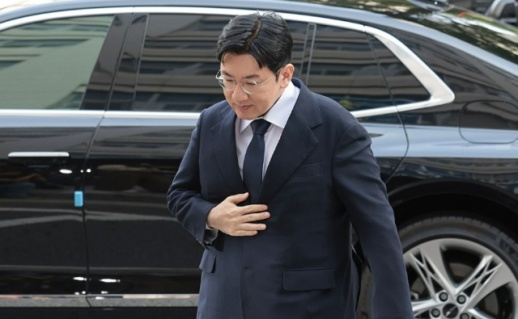 Prosecutors Seek More Investigation in Suspected Capital Markets Case Involving HYBE’s Bang Si-hyuk No one stands above the law, and capital markets run on trust built through fair disclosure and transparent procedures. Allegations that HYBE Chairman Bang Si-hyuk violated South Korea’s capital markets law therefore warrant careful scrutiny. The core suspicion is that before the company’s initial public offering, Bang told existing shareholders there were no IPO plans, encouraged them to sell stakes to a specific private equity fund, and later realized large gains through the listing. If proven, the conduct should be judged under the law. Markets do not move on emotion or reputation. They move on contracts, disclosures and verifiable facts. In that context, prosecutors’ recent decision to return a request for an arrest warrant for Bang and seek additional investigation is significant. It does not amount to a finding of no wrongdoing; it reflects a judgment that, at this stage, the case has not met the threshold to justify detention as a compulsory measure. A basic principle of criminal justice is investigation without detention. In many economic-crime cases, key evidence is preserved in documents — contracts, accounting records and internal reports. Unless there is a clear risk of flight or evidence destruction, detention is generally treated as a last resort. The article notes that Bang is a globally known business figure whose domestic and overseas activities are public, and that he has cooperated with repeated summons for questioning. Equality before the law is essential, but proportional and rational enforcement is also part of justice. Detention is an investigative tool, not punishment, and should not be used as a symbolic response to public pressure. The case also unfolds against a broader backdrop. Bang’s name is closely tied to BTS, described here as a global cultural asset and a major symbol of South Korea’s cultural influence. The article calls 2026 a pivotal year, saying the members are expected to return as a full group after completing military service and that global demand for BTS’ return remains high. It describes the fan base, known as ARMY, as a cross-border cultural community, and says competition to host BTS concerts has spread beyond entertainment into the realm of diplomacy, from Seoul to Mexico, Vietnam, the United States, Europe, the Middle East and Latin America. In Mexico, the article says, discussion has included a message that the country’s president hopes to attract a BTS concert — framed not as a simple request but as an event tied to national image, tourism revenue, youth culture and consumer spending. Vietnam is also described as seeking a concert as part of youth cultural demand and national branding. The article argues that a BTS world tour cannot be measured only by ticket revenue, citing ripple effects across airlines, hotels, retail, cosmetics, fashion, food and platform businesses. It says a single Seoul concert can generate economic effects in the “trillions of won,” and that overseas tours expand the scale, including broader exposure for Korean brands and gains in national image and tourism. It also links BTS to a wider “K-series” of industries — including K-food, K-beauty, defense exports and semiconductors — and says K-dramas and Korean cinema should be part of that package. It cites the global impact of “Squid Game” and the stature of “Parasite” as evidence that South Korea’s cultural industries have become more than export products. The article contends that diplomacy should not be limited to ministries and industrial deals, and that cultural assets such as K-pop, K-dramas and Korean film should be considered alongside sectors like semiconductors and defense. It says many world leaders know BTS and consume Korean dramas and films, and that culture can open doors before formal agreements do. At the same time, it argues that national interest is not a reason to halt legal proceedings. The law must apply fairly to everyone. But it also says enforcement should consider whether the truth can be established without detention, warning against approaches that could unnecessarily damage what it calls national assets. The article concludes that South Korea faces a choice that goes beyond Bang’s guilt or innocence: how to uphold justice while safeguarding the country’s future strategy. It calls for calm legal analysis and mature judgment, saying detention is not synonymous with justice. 2026-04-25 12:36:36