

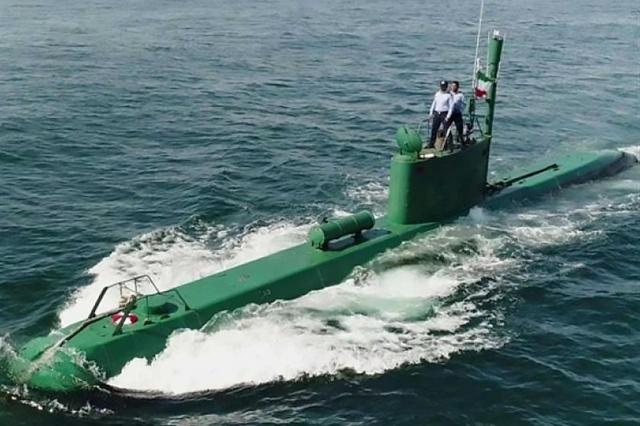
The 2010 sinking of the ROKS Cheonan, which killed 46 South Korean sailors near Baengnyeong Island in the Yellow Sea, was attributed by a multinational investigation to a North Korean Yono-class midget submarine — the same submarine lineage that Iran later acquired and adapted into its domestically produced Ghadir-class fleet.
According to a Bloomberg report published Monday citing the International Institute for Strategic Studies, Iran currently operates “at least 16” Ghadir-class submarines.
The report did not specify which edition of the institute’s annual Military Balance assessment the figure was drawn from. Other open-source defense assessments estimate substantially larger numbers.
The Nuclear Threat Initiative estimates Iran operates around 23 Ghadir-class submarines, while the Washington Institute for Near East Policy places the number near 20. Defense database Global Firepower estimates roughly 26 units. The 2020 edition of Military Balance listed 14.
Iran does not officially disclose the size of its submarine fleet.
The issue carries direct strategic significance for South Korea.
The Strait of Hormuz, where the Ghadir-class is heavily concentrated operationally, carried roughly 20 million barrels per day of crude oil and petroleum products in 2025, according to the International Energy Agency — equivalent to about one-fifth of global oil consumption.
South Korea remains among the largest destinations for crude exports transiting the chokepoint, according to the latest transit data from the U.S. Energy Information Administration.
While Bloomberg attributed claims that Iran copied North Korean submarine designs to an anonymous source, the underlying connection has long been documented in public intelligence and defense assessments.
In its March 2017 unclassified report Iranian Naval Forces: A Tale of Two Navies, the U.S. Office of Naval Intelligence stated that Iran purchased at least one Yono-class submarine from North Korea before developing its own domestic variant.
The Nuclear Threat Initiative similarly describes the Ghadir-class as “based on the North Korean Yono-class submarine,” while noting that the precise extent of North Korean involvement in design and production remains unclear.
The same Yono designation appeared in the findings of the multinational Joint Civilian-Military Investigation Group that examined the March 26, 2010 sinking of the Cheonan.
The investigation, conducted with experts from the United States, the United Kingdom, Australia, Canada and Sweden, concluded that a 130-ton North Korean Yono-class submarine fired a CHT-02D torpedo whose underwater explosion split the 1,200-ton corvette in two.
The findings were formally submitted to the United Nations Security Council in June 2010 and remain the internationally recognized record of the incident.
Technical characteristics of the Ghadir-class remain broadly consistent across reporting by IISS, ONI, NTI and Jane’s Fighting Ships.
Each submarine displaces roughly 117 tons surfaced and 125 tons submerged, measures approximately 29 meters in length and operates with a crew of seven.
The submarines are equipped with two 533-millimeter torpedo tubes capable of firing heavyweight torpedoes, launching anti-ship cruise missiles and laying naval mines.
The boats are operated by the Islamic Republic of Iran Navy from Bandar Abbas and are specifically designed for the shallow waters of the Persian Gulf, where sea depths rarely exceed 100 meters.
Tracy A. Vincent previously assessed that the submarines provide Iran with “additional surveillance capability” while creating “a new layer of defense.”
Meanwhile, Daniel Dolan described the submarines as “well-designed for the purpose of guerrilla warfare, ambush and anti-access/area denial.”
For South Korea, the connection between the Yono-class submarine implicated in the Cheonan sinking and Iran’s expanding Ghadir-class fleet underscores broader concerns over North Korean weapons proliferation and asymmetric naval warfare.
More than a decade after the Cheonan disaster shocked South Korea, the same submarine lineage now sits at the center of one of the world’s most volatile maritime flashpoints.
Copyright ⓒ Aju Press All rights reserved.
