
Journalist

Lee Hugh
=
-
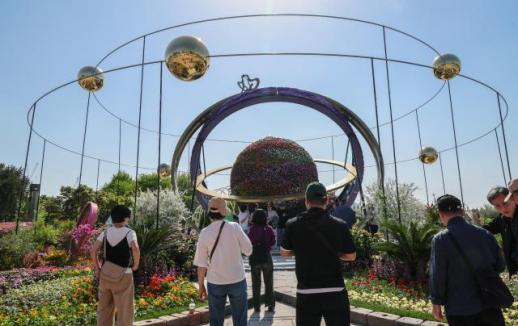 Sea of colorful bloom at Goyang flower festival SEOUL, April 24 (AJP) -Spring arrives in full and assorted colors at Ilsan Lake Park as the 2026 Goyang International Flower Festival opens, drawing visitors into a vast landscape of blooms just northwest of Seoul. Under the theme “Flowers Color Time,” the 17-day festival unfolds across a 250,000-square-meter venue, where more than 100 million flowers shape gardens, installations and winding paths along the lakeside. Large-scale floral sculptures rise against the water, while walking gardens and shaded rest areas offer a slower pace for visitors taking in the season. Families gather around themed spaces featuring Pengsoo, adding a playful touch to the spring outing. Inside, exhibition halls shift the mood from open-air spectacle to curated artistry. Floral designers from around the world present intricate arrangements, while an international flower exhibition brings together participants from some 30 countries, showcasing rare species and diverse plant life. Now in its 18th year, the festival has grown into one of the country’s best-known spring events, attracting more than 9 million visitors over time and cementing its place as a seasonal escape near the capital. 2026-04-25 12:14:46
 -
 U.S. Envoys Head to Pakistan for Possible Iran Peace Talks; Tehran Denies Meeting Planned As the United States and Iran issue conflicting messages about whether peace talks will resume, reports say delegations from both sides could make contact in Pakistan as soon as this weekend. Yonhap News Agency reported that The New York Times, citing two senior Iranian officials, said Iranian Foreign Minister Abbas Araghchi is expected to meet U.S. Middle East envoy Steve Witkoff and President Donald Trump’s eldest son-in-law, Jared Kushner, in Pakistan this weekend. The officials said Araghchi traveled to Islamabad carrying a written response to a U.S. proposal for peace talks. They said Iran has publicly maintained it would not hold talks until the U.S. blockade of the Strait of Hormuz is lifted, but has privately explored ways to restart negotiations through intermediaries including Pakistan. Araghchi arrived in Islamabad on April 25 local time. The Washington Post also reported the talks would resume this weekend. A U.S. official told the newspaper that Witkoff and Kushner had received confirmation from Iran about restarting talks, saying, “Otherwise they wouldn’t be going.” The U.S. government also officially confirmed plans to send Witkoff and Kushner to Pakistan. The White House said it “expects positive progress” from the visit. Trump suggested talks could advance, saying Iran “will come up with a proposal.” Reports differ on timing. The Associated Press said a meeting was set for Saturday, April 25, while Axios, citing multiple sources, reported it could be held Monday, April 27. Iran’s official position, however, diverged from the U.S. account. Iranian Foreign Ministry spokesman Esmail Baghaei wrote on X that “no meeting between Iran and the United States is planned.” He said Araghchi’s Islamabad trip was to meet senior Pakistani leaders and to support Pakistan’s continuing efforts to end the U.S.-led war and restore regional stability. * This article has been translated by AI. 2026-04-25 10:57:17
 -
 Microsoft, Meta Layoffs Highlight Paradox of Massive AI Spending Microsoft is moving ahead with a large voluntary separation program for some U.S. employees. The plan primarily targets workers whose age and years of service add up to 70 or more. Some estimates put the eligible group at about 7% of Microsoft’s roughly 125,000 U.S. employees, or about 8,700 people. On the same day, Meta also announced plans for major job cuts and reduced roles. As the race to invest in artificial intelligence intensifies, the paradox of cutting people while spending heavily on technology is becoming more visible. Microsoft recently announced cloud and AI investment plans totaling $18 billion in Australia and $10 billion in Japan. Building data centers, semiconductors and large-scale computing infrastructure requires enormous capital. Companies fear that falling behind in generative AI could cost them market leadership. As money flows to machines and servers, pressure to cut costs often lands on workers. From a management perspective, reallocating resources to future growth areas during a technology shift is not unusual. Reducing overlapping organizations and raising productivity are standard goals, and publicly traded companies face constant pressure from earnings and stock prices. The key questions are the method, the pace and the level of social responsibility. Microsoft’s approach also raises a broader issue: how companies value experience. Using a combined age-and-tenure threshold can be defended as an efficiency measure, but it can also signal that skill and institutional knowledge are being treated mainly as costs. Corporate competitiveness is not built only on younger talent and new technology. Crisis-management experience, operational know-how, customer networks and the ability to mentor colleagues are assets that are hard to quantify. The moves also risk clashing with the values big tech companies have promoted, including diversity, inclusion, sustainability and people-centered innovation. If priorities shift and the response is large-scale layoffs, trust can erode. A technology company’s brand is shaped not only by products but also by culture and stated principles. A deeper concern is that AI may reshape jobs faster than society can prepare. Restructuring is increasingly reaching high-paid office workers, developers and middle managers. Where earlier automation first disrupted factory labor, today’s AI is directly affecting white-collar roles. That makes the issue more than a corporate staffing decision; it points to a broader shift in labor markets. South Korea is not immune. Domestic companies are also weighing bigger AI spending alongside leaner organizations. Pressure to improve workforce efficiency could grow across semiconductors, finance, platform businesses and manufacturing. Without early preparation — including retraining systems, job-transition support, measures for older workers and wage structures linked to productivity — the shock could be larger. Companies need to invest in the future. But they should not treat today’s workers as disposable in the name of progress. Voluntary separation programs are not just a way to reduce headcount; they can change a person’s livelihood, career and direction in life. Adequate compensation, re-employment support and respectful procedures should follow. Competitiveness in the AI era will not be decided by server capacity alone. Companies that adopt new technology while protecting people, and that pursue efficiency without abandoning community responsibility, are more likely to endure. Big tech companies should answer whether cutting workers first while spending tens of trillions of won on AI is truly innovation.* This article has been translated by AI. 2026-04-25 10:33:18
 -
 US Sanctions China’s Hengli Group Over Purchases of Iranian Oil The United States has added China’s major refining company Hengli Group to its sanctions list over imports of Iranian oil. According to Yonhap, the U.S. Treasury and State departments said on April 24 (local time) they were sanctioning Hengli Group for buying Iranian oil. The Treasury Department’s Office of Foreign Assets Control said Hengli is among the largest customers, purchasing Iranian oil worth tens of billions of dollars. Treasury said it determined that Hengli and other Chinese refiners, by importing sanctioned Iranian oil, were providing economic support to Iran’s government, including Iran’s military. Hengli is known to have refining facilities in the northeastern port city of Dalian with capacity to process about 400,000 barrels of crude oil a day. Treasury also targeted a shipping network involved in transporting Iranian oil. It added about 40 shipping companies and vessels to the sanctions list for operating a “shadow fleet” that moves Iranian oil while evading sanctions. Under the measures, U.S.-based assets of the designated companies and vessels will be frozen and property interests blocked. Entities in which they directly or indirectly own 50% or more are also covered. Sanctions may also be imposed on institutions that conduct transactions involving funds, goods or services with them. Separately, Treasury said it froze $344 million worth of cryptocurrency believed to be linked to Iran. Treasury Secretary Scott Bessent said on X that OFAC is imposing sanctions on “multiple wallets” tied to Iran, adding the action would “systematically degrade Tehran’s ability to generate and move funds back home.” He also said the department would track funds Tehran is “desperately” trying to move abroad and target all financial lifelines connected to the government. CNN reported that the cryptocurrency freeze was carried out through Tether, the issuer of the world’s largest stablecoin, USDT, based on information provided by Treasury. * This article has been translated by AI. 2026-04-25 09:57:16
 -
 Sunday Forecast: Mostly Sunny Nationwide; Showers for Jeju and Parts of the South Sunday the 26th is expected to be mostly sunny nationwide. The Korea Meteorological Administration said Jeollanam-do, the Gyeongsang region and Jeju Island will see more clouds at times. Jeju is forecast to get 5 to 10 millimeters (0.2 to 0.4 inches) of rain from dawn through daytime hours. Showers are also expected from afternoon into evening in southern Jeollanam-do; inland areas of Busan, Ulsan and South Gyeongsang; and the southern East Sea coast of North Gyeongsang. Forecast rainfall is 5 to 10 millimeters in southern Jeollanam-do and inland areas of Busan, Ulsan and South Gyeongsang, and around 5 millimeters along the southern East Sea coast of North Gyeongsang. Morning lows will range from 6 to 15 C (43 to 59 F), similar to or slightly higher than usual. Daytime highs will be 20 to 26 C (68 to 79 F). With day-to-night temperature swings near 20 C (36 F), the agency urged caution for health. Dry weather advisories are in effect for central regions, North Gyeongsang and parts of North Jeolla, and could expand to other areas. Authorities urged caution to prevent wildfires. Fine dust levels are expected to range from good to moderate nationwide due to favorable atmospheric dispersion. Waves are forecast at 0.5 to 1.0 meters (1.6 to 3.3 feet) in nearshore waters of the East and South seas and 0.5 meters (1.6 feet) in the West Sea. In offshore waters about 200 kilometers (124 miles) from the coast, wave heights are expected at 0.5 to 1.5 meters (1.6 to 4.9 feet) in the East and South seas and 0.5 to 1.0 meters (1.6 to 3.3 feet) in the West Sea. * This article has been translated by AI. 2026-04-25 09:36:17
 -
 Iran’s Revolutionary Guard Seizes Ship It Says Visited U.S. Ports, Citing Maritime Violations Iran’s Islamic Revolutionary Guard Corps Navy has seized a vessel it said was suspected of cooperating with the U.S. military. According to Yonhap News Agency, Iran’s Tasnim news agency reported that the Guard on Thursday (local time) seized the EPAMINODES, citing violations of maritime regulations. The Guard’s navy said it had monitored the ship for the past six months and confirmed it had visited U.S. ports several times. It said the vessel was seized after it ignored repeated warnings and continued to violate maritime rules. The seizure comes as tensions rise amid Iran’s threat to block the Strait of Hormuz and what the report described as a U.S. maritime blockade of Iran. The Revolutionary Guard seized three vessels on April 22, saying they tried to transit the Strait of Hormuz without authorization from Iran’s military. The United States previously seized two ships in the Indo-Pacific that were part of what the report called Iran’s “dark fleet” — vessels such as tankers involved in illegal shipments of crude oil and other cargo to evade international sanctions — after they departed Iranian ports and before the maritime blockade began. * This article has been translated by AI. 2026-04-25 09:04:20
 -
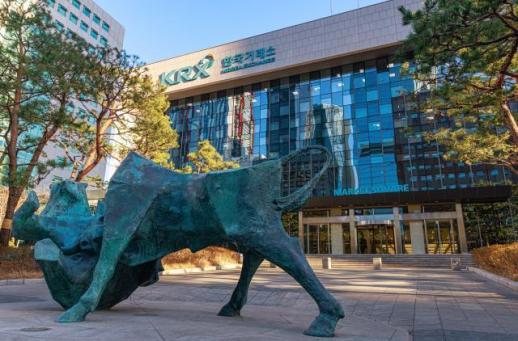 Debate Grows Over Extending Korea Exchange Stock Trading Hours Disagreement is widening inside South Korea’s market over the Korea Exchange plan to extend stock trading hours. The exchange says longer hours would boost global competitiveness and investor convenience, but securities firms and some retail investors question the benefits and warn of confusion. Even if change is needed, a revamp that fails to win market trust is unlikely to succeed. The exchange had pushed to add a premarket and after-hours session, expanding the trading day from the current 6 hours 30 minutes to about 12 hours. After brokerages raised concerns about the burden of systems development, a lack of testing time and staffing needs, the exchange delayed implementation from late June to Sept. 14. It also adjusted the premarket closing time and decided participation would be voluntary for brokerages. The schedule change may ease tensions on the surface, but core issues remain. The exchange argues that as overseas markets such as the United States move toward longer trading, South Korea must follow to stay competitive. It says both foreign and domestic investors want more opportunities to trade. In the United States, some markets have active off-exchange trading, and debate continues over 24-hour trading. Critics say South Korea’s market conditions differ. With liquidity not always sufficient, simply extending hours could spread trading thinner and distort price formation. Thinly traded periods could bring bigger swings, and there are concerns about an increase in spoof orders or short-term speculative trading. Institutions and foreign investors may be able to staff and equip overnight operations, but retail investors could be disadvantaged in access to information and ability to respond. Brokerages also face added costs. Longer hours would require expanded IT infrastructure, more customer-service staffing and stronger risk-management systems. Large firms may absorb the expense, but smaller and midsize firms could struggle. The cost of a market overhaul could ultimately be passed on to investors through fees or reduced services. Retail investors are divided as well. Office workers and those seeking trades linked to overseas markets could gain more options. Others warn of fatigue from monitoring prices for longer periods, encouragement of excessive day trading and disruption to daily routines. Longer trading hours, they argue, do not automatically mean greater investor benefit. The key issue is not speed but sequence. Extending trading hours is not a simple change in business hours; it reshapes market structure. The exchange must first ensure a unified order system, stable technology, safeguards to curb volatility, stronger surveillance against unfair trading and investor-protection measures. Rushing implementation without preparation could leave confusion rather than modernization. With the exchange now reviewing the plan, it should move away from a one-way push. The article calls for an open verification process involving retail investors, brokerages, academia and financial authorities to assess demand and costs objectively. It also warns against treating the demands of some investors as the needs of the entire market, while cautioning that innovation should not be halted solely because of industry burdens. The article argues that capital-market competitiveness comes from trust, not trading hours. Markets grow when investors believe trading is fair, systems are stable and prices are formed transparently. Extended hours should come later. If the exchange is acting for the market, it should broaden trust before lengthening the clock. * This article has been translated by AI. 2026-04-25 09:03:24
 -
 South Korea Forecast: Clear Skies Nationwide, Highs Up to 27C Saturday will be sunny nationwide, with daytime highs rising to as much as 27 degrees Celsius. The Korea Meteorological Administration said daytime temperatures will range from 20 to 27C, higher than usual. In inland areas, the day-to-night temperature gap will be around 20 degrees, and people should take care with their health. Dry weather advisories are in effect for the central region, North Gyeongsang Province and parts of North Jeolla Province, and the advisories could expand to other areas. Authorities urged caution to prevent fires. Fine dust levels are expected to be "good" to "moderate" nationwide due to smooth atmospheric circulation. Waves are forecast at 0.5 to 1.5 meters in the East and South seas and about 0.5 meters in the West Sea. In offshore waters (within about 200 kilometers of the coastline), wave heights are expected at 0.5 to 2.0 meters in the East and South seas and 0.5 to 1.0 meters in the West Sea.* This article has been translated by AI. 2026-04-25 08:33:17
 -
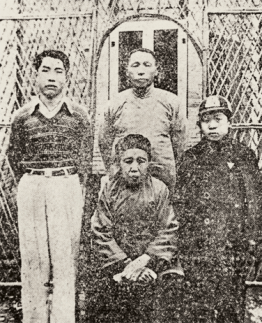 Kim Gu’s ‘My Wish’ at 150: Weighing a Strong Korea Against a Beautiful One One hundred fifty years is long enough to commemorate a person. But when that name still poses a question, the anniversary is also about the present. Marking the 150th anniversary of independence leader Kim Gu’s birth, the issue is not only what he achieved, but what he asked: What kind of country are we building now? Among Kim’s best-known writings is “My Wish.” He said he wanted a beautiful country, not merely a strong one. He envisioned a nation respected for its culture, not one that rules by force. The line was not simple idealism, but a conclusion drawn from the colonial era: Material power alone does not earn respect, and people and culture ultimately shape a nation’s face. A century and a half later, South Korea has reached a landscape Kim never saw: a top-10 global economy, strong industrial competitiveness and the spread of cultural content worldwide. By the numbers, the country is close to what many would call prosperous. The question remains: Has it moved closer to being “beautiful”? The distinction is about direction. Prosperity rewards speed — faster growth and bigger expansion. Beauty demands balance, with human dignity, community values and cultural depth advancing alongside growth. The two can collide, and the article argues South Korean society now stands at that crossroads. Against that backdrop, the government’s decision to form a public-private task force for the 150th anniversary and revive the theme of a “culture of peace” reflects an effort to reassess national priorities. Plans such as holding a culture week in Gwanghwamun and spreading messages on electronic billboards point in the same direction, shifting commemoration from static displays to public participation. One example has drawn attention: “My Wish” appearing at a bank counter. Woori Bank, working with the Korean National Commission for UNESCO, linked donations to a savings product, allowing customers to save while contributing small amounts to cultural content. An idealistic line has been placed in one of the most practical settings. The article cautions against overreading the symbolism. Banks still must generate profits, and customers still choose based on interest rates. Putting a historical message into a financial product does not change finance’s basic nature. The significance, it argues, lies in the question the attempt raises. Kim’s philosophy and a bank’s function belong to different worlds — one speaks to culture and spirit, the other to capital and efficiency. The article says forcing them to match is unrealistic, but treating them as entirely separate also misses a point: Capital has direction. Depending on how it is used, it can be mere accumulation or a source of social value. From that view, Kim’s message gains renewed relevance. He did not reject wealth, the article says; he questioned its purpose. He did not deny strength; he sought to redirect it. The question becomes not how much is earned, but where that wealth is headed. That, the article argues, is what the 150th anniversary represents: commemoration for the present. Invoking Kim’s name prompts a review of today’s choices — what is being lost amid growth, what values are being missed amid competition, and how balance can be restored. No institution — finance, business or government — is exempt from that question, the article says. Each handles capital and makes choices, and those choices accumulate into a society’s direction. In that sense, Kim’s 150th year is presented not as a ceremonial marker, but as a checkpoint. The “My Wish” display at a bank counter is not an answer, the article concludes. It is one attempt. Its meaning lies in bringing a textbook line into everyday decisions. The question, it says, is simple: What kind of country is being built? Beyond being strong by the numbers, is it becoming a country respected for its people? Kim’s question remains in the present tense, and the answer depends on what is chosen now. * This article has been translated by AI. 2026-04-25 07:04:51
 -
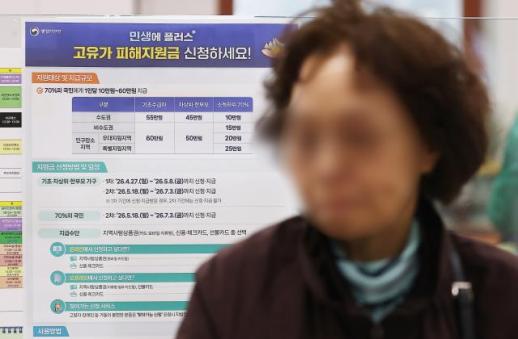 South Korea to Start High Fuel Price Relief Payments; Eligibility, Amounts and Use Rules Applications and payments for South Korea’s high fuel price relief payment begin April 27, drawing attention to who qualifies and how much they can receive. The government is rolling out the program to help stabilize household finances as international oil prices rise and inflation pressures grow. Payments vary by income and place of residence, ranging from 100,000 won per person to a maximum of 600,000 won. Basic livelihood security recipients will receive 550,000 won in the Seoul metropolitan area and up to 600,000 won outside the capital region. Near-poverty households and single-parent families will receive about 450,000 to 500,000 won. Among the general public, those in the bottom 70% by income can receive 100,000 won to as much as 250,000 won depending on region. The schedule is split by group. Vulnerable households — including basic livelihood security recipients, near-poverty households and single-parent families — will be paid first starting April 27. A second round of applications for the bottom 70% by income begins May 18. People who want advance notice can sign up for application-period alerts through the National Secretary service. Alerts can also be set through Naver, KakaoTalk and Toss. Applications and payments will be handled both online and in person. During the first week, a day-of-week system based on the last digit of a person’s birth year will be used to reduce crowding, as in past disaster relief programs. Those who want the payment on a credit or debit card can apply online through their card issuer or a mobile payment app, or apply in person at a bank branch linked to the card. Card-based payments are charged the day after application, and the relief funds are used before regular card balances. Remaining balances will be provided by text message or app notifications. Those who prefer a mobile or card-type local gift certificate can apply online through the local gift certificate app or website run by their local government. People seeking paper certificates or a prepaid card can visit their local eup, myeon or dong administrative welfare center. The funds can be used through Aug. 31 at eligible small businesses in the recipient’s local jurisdiction, including merchants with annual sales of 3 billion won or less. Use is restricted at certain businesses, including adult entertainment and gambling-related venues, online e-commerce and cash-convertible businesses. Any unused balance will expire automatically after the deadline.* This article has been translated by AI. 2026-04-25 07:03:38