
Journalist

Lee Hugh
=
-
 Blue House: South Korea Secures 74.62 Million Barrels of Crude for May Cheong Wa Dae said April 24 that South Korea has secured 74.62 million barrels of crude oil for May — about 87% of last year’s monthly average imports — easing concerns about supply disruptions as the war in the Middle East drags on. Kang Hoon-sik, the presidential chief of staff, said at an emergency economic briefing at the Chunchugwan press center that the government is “staking everything” on securing alternative crude supplies. He said South Korea has diversified not only suppliers but also tanker routes, and has obtained additional volumes from the Americas and Africa, cutting reliance on the Middle East by 13 percentage points, from 69% to 56%. For May, the government plans to import 23.99 million barrels from Saudi Arabia and 16 million barrels from the United Arab Emirates via alternative routes not involving the Strait of Hormuz. Kang called it the result of a rapid joint response by the government and private sector, saying the recovery trend is continuing on the back of strong semiconductor exports and swift government action. He added that major foreign media outlets, including The Wall Street Journal, and international investment banks have positively assessed South Korea’s response to the energy crisis and raised growth forecasts. Still, Kang warned that the impact of inflation may only be beginning. “International oil and raw material prices remain high. We cannot let down our guard,” he said. He said rising prices weaken purchasing power and can undermine a recovery in domestic demand, and pledged to ensure swift execution of the supplementary budget, including support payments for damage from high oil prices. He said the government is mobilizing all available administrative resources so companies can operate normally without worrying about raw materials and the public can maintain daily life. On naphtha, Kang said measures in the supplementary budget — including support for the gap in import unit prices — are being implemented, and that 2.1 million tons secured through a special envoy’s visit will be brought in in stages starting late this month. He said the government expects the risk indicator to shift to yellow — meaning 2 to 3 months of supply — starting about a month from now.* This article has been translated by AI. 2026-04-24 16:05:11
 -
 IBK Industrial Bank of Korea Wins Vietnam License as 10th Wholly Foreign-Owned Bank President Lee Jae-myung’s state visit to Vietnam produced a major financial milestone: Vietnam’s central bank has issued a license to establish a wholly foreign-owned bank for the first time in nine years, to South Korea’s IBK Industrial Bank of Korea. Vietnam’s VnExpress reported on April 24 (local time) that Nguyen Ngoc Canh, deputy governor of the State Bank of Vietnam, disclosed the decision a day earlier during a meeting with Jang Min-young, IBK’s chairman and CEO. IBK became the third South Korean bank to obtain an operating license in Vietnam, following Shinhan Vietnam Bank and Woori Vietnam Bank. Canh said South Korea currently has the largest number of financial institutions and banks in Vietnam.Financial Services Commission Chairman Lee Eok-won wrote on X on the same day that the president’s visit had “expanded the territory of K-finance,” as he outlined key outcomes reached in Vietnam. The most notable result was IBK’s final approval for its Vietnam unit, which officials said would serve as a key base to support South Korean small and medium-sized companies operating there. In January, Korea Development Bank’s Hanoi branch also won approval after seven years. Lee said South Korea has “overwhelming achievements,” including establishing the most banks and the second-largest number of foreign bank branches in Vietnam. ◆ As of March 2026, Vietnam has nine wholly foreign-owned banks As of the end of March, Vietnam had nine wholly foreign-owned banks in operation, including Shinhan Vietnam Bank and Woori Vietnam Bank. The most recent foreign bank to receive a license before IBK was UOB Vietnam, approved in 2017. IBK’s entry makes it the 10th wholly foreign-owned bank, marking the first new license in nine years. The State Bank of Vietnam views the SME sector as a core growth engine, citing its role in job creation and the social safety net, as well as large funding needs at Vietnam’s current stage of development. Canh said he expects IBK, which has more than 60 years of experience in SME finance, to provide comprehensive financial services not only to South Korean companies in Vietnam but also to local SMEs. Jang said IBK was founded to support SMEs and that about 75% of its outstanding credit is concentrated in that sector. He said the bank’s experience building and operating financing mechanisms for SMEs would be put to practical use in cooperation with Vietnam. Founded in 1961, IBK is 68.5% owned by the South Korean government. It currently operates two branches in Vietnam and is expected to expand its local business following the wholly foreign-owned bank license. During the visit, the Korea-Vietnam Financial Cooperation Forum shared examples of bilateral cooperation in insurance, capital markets, nonperforming loans and QR payments. Lee said he would work to further broaden financial cooperation between the two countries, adding that the Financial Services Commission would be a “running mate” as K-finance expands globally. The two countries also moved to speed up cooperation on payment infrastructure. The Korea Financial Telecommunications & Clearings Institute and Vietnam’s NAPAS signed a contract to link QR payments during the visit. Once the service launches within the year, users will be able to use the same payment apps they use in South Korea in Vietnam without separate currency exchange. Lee said the change would also reduce fees by about 2 percentage points per transaction, calling it a practical benefit for travelers, as Vietnam is the second-most visited destination for South Koreans.* This article has been translated by AI. 2026-04-24 15:57:22
 -
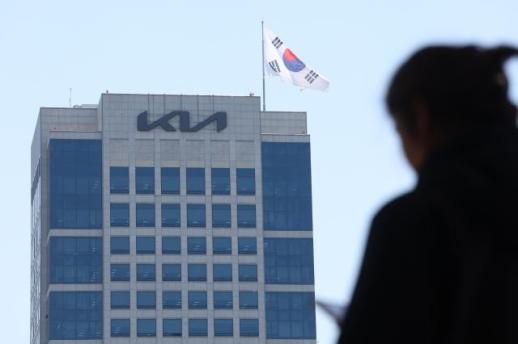 Kia Q1 profit fall near 30% on higher U.S. tariffs and Gulf shipping costs SEOUL, April 24 (AJP) — South Korean carmaker Kia, like its sister company Hyundai Motor, suffered a double-digit decline in earnings in the first quarter despite record sales, as higher tariff costs on U.S. shipments and shipping disruptions linked to Gulf tensions weighed on profitability. Operating profit fell 26.7 percent on year to 2.2 trillion won ($1.52 billion), reflecting an estimated 755 billion won increase in U.S.-related tariff costs compared to a year earlier, the company said Friday. Sales nevertheless rose 5.3 percent on year to a record 29.5 trillion won on strong demand for SUVs and electrified vehicles, even as overall industry conditions softened. Global wholesale volumes edged up just 0.9 percent to around 780,000 units, pointing to limited volume growth behind the top-line expansion. Operating margin fell to 7.5 percent from 10.7 percent a year earlier, as increased production and shipping costs eroded profitability. The cost of sales ratio rose to 80.3 percent from 78.3 percent, while selling and administrative expenses jumped 17.1 percent, underscoring mounting cost pressure. The decline was largely cost-driven, with tariff impacts, rising raw material prices and increased incentives — particularly in Europe — weighing on profitability, alongside a weaker regional mix and higher warranty-related expenses. Regional performance remained mixed. While India and Latin America posted strong growth of 11.6 percent and 34.6 percent, respectively, North America saw volumes decline 2.1 percent and the Middle East plunged 31.2 percent, reflecting the impact of the war. Despite an overall 5.5 percent fall in car demand in the U.S., Kia’s sales rose 4.1 percent and its market share climbed to 5.6 percent, helped by hybrid and EV sales surging 73.5 percent and accounting for 19.3 percent of total sales. Kia shares closed Friday at 153,400 won down 3.2 percent. 2026-04-24 15:55:24
 -
 Iran Reportedly Lays More Mines in Strait of Hormuz; Trump Orders U.S. Forces to Sink Minelayers Iran has installed additional naval mines in the Strait of Hormuz this week, Axios reported, as the United States escalated its response with orders to sink any vessels laying mines. The renewed dispute over reopening the waterway is again sliding toward a military standoff. Axios, citing U.S. officials and sources familiar with the matter, said the navy of Iran’s Revolutionary Guard Corps added mines in the strait. The U.S. military detected the activity and is monitoring it, the report said. The report follows earlier accounts last month of mine-laying in the strait. Axios said additional mines could further complicate efforts to restore normal shipping. A U.S. official did not disclose how many mines were added, and the White House declined to comment, citing intelligence sensitivities. The Strait of Hormuz is a key corridor that in peacetime carries about 20% of global seaborne crude oil and liquefied natural gas shipments. Since the war, traffic has plunged. Axios reported that passages that once exceeded 100 ships a day have fallen to single digits on most recent days. Reuters reported last month that Iran laid about 12 mines in the strait. A source said the mines were installed over several days and that many locations had been identified. President Donald Trump ordered a tougher posture. The Associated Press reported that Trump on April 23 directed U.S. forces to fire on and sink Iranian small boats if they lay mines in the Strait of Hormuz. He also said U.S. mine-clearing operations would be expanded to three times their current level. U.S. deployments have also increased. Axios reported that the USS George H.W. Bush carrier strike group arrived in the U.S. Central Command area. AP reported the number of U.S. aircraft carriers in the region has risen to three. The United States has also deployed underwater drones and expanded mine-clearing operations, according to the reports. Iran has kept up pressure with threats involving fast boats and attacks on commercial shipping. Reuters reported that Iran recently used fast boats to detain two container ships near the strait, and said the Guard’s small, high-speed craft are being used to threaten maritime traffic alongside mines, missiles, drones and electronic warfare. AP reported that the Guard recently attacked three cargo ships. The central issue remains reopening the strait. The United States views guarantees of safe passage for international shipping as one condition in negotiations. Iran, meanwhile, is demanding an end to what it describes as a U.S. blockade of Iranian ports and vessels. If mines have been added as Axios reported, the strait could increasingly be treated not merely as restricted waters but as a hazardous zone requiring military clearance operations.* This article has been translated by AI. 2026-04-24 15:54:58
 -
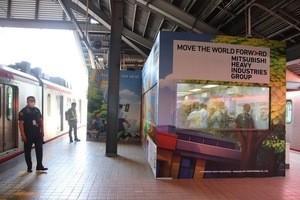 Manila LRT-1 Opens Air-Conditioned Waiting Area at Baclaran Station Light Rail Manila Corp., the operator of Manila’s LRT Line 1, began operating an air-conditioned waiting area on the platform at Baclaran Station in Pasay City on the 23rd. The room is equipped with three household air conditioners. The 46.5-square-meter space can accommodate more than 30 people. It was created by renovating an existing room. Two five-seat benches are in place, and LRMC plans to add more. At the opening ceremony, LRMC President and CEO Enrico R. Benipayo said the company wants to improve the passenger experience and signaled interest in expanding the installation to other stations. The air conditioners were provided by Mitsubishi Heavy Industries - Mahajak Air Conditioners Co., Ltd. (MACO), a Thailand-based joint venture of Mitsubishi Heavy Industries. The company aims to promote its products through the installation and by placing indoor and outdoor advertising. Aoki Taro, a senior manager in charge of marketing and sales at the company, noted that window-type air conditioners are the mainstream in the Philippines. He said he hopes people will recognize the efficiency and quiet operation of inverter air conditioners as electricity rates rise. The company plans to strengthen sales in the Philippine market through dealers. LRMC’s investors include local conglomerate Metro Pacific Investments Corp. (MPIC), as well as Sumitomo Corp., Hankyu Corp. and the Japan International Cooperation Agency (JICA).* This article has been translated by AI. 2026-04-24 15:54:24
 -
 KOSPI Ends Flat as Foreign Investors Sell; Profit-Taking Pauses Rally South Korea’s benchmark KOSPI ended nearly unchanged Thursday as heavy foreign selling offset early gains, with investors taking profits after a sharp recent run-up. According to the Korea Exchange, the KOSPI closed down 0.18 point, or 0%, at 6,475.63. It opened up 20.29 points, or 0.31%, at 6,496.10. Lee Kyung-min, a researcher at Daishin Securities, said large-scale net selling by foreign investors in the cash market, continuing from last week into this week, has been absorbing short-term supply and easing overheating concerns. He noted the index has surged more than 1,500 points, or over 30%, from its recent low. He also said expectations for talks to end the war between the United States and Iran had been priced in during the recent rise, while caution over the possibility of heightened geopolitical risks emerged over the weekend. “As the earnings season gets fully underway, sector rotation is likely to become more pronounced,” Lee said. In the main market, individuals and institutions were net buyers of 1.5066 trillion won and 646.1 billion won, respectively. Foreigners were net sellers of 2.1022 trillion won. Among large-cap stocks, Samsung Electronics fell 2.23%, SK hynix slipped 0.24%, Hyundai Motor dropped 3.57% and SK Square lost 0.41%. LG Energy Solution rose 3.11%, Doosan Enerbility gained 3.67%, Hanwha Aerospace added 2.67%, Samsung Biologics rose 0.92% and HD Hyundai Heavy Industries climbed 4.68%. The tech-heavy KOSDAQ closed up 29.53 points, or 2.51%, at 1,203.94 after opening up 2.11 points, or 0.18%, at 1,176.42. In the KOSDAQ market, foreigners and institutions were net buyers of 806.5 billion won and 179.6 billion won, respectively, while individuals were net sellers of 963.8 billion won. Among KOSDAQ heavyweights, EcoPro BM rose 1.22%, Alteogen gained 3.22%, Rainbow Robotics added 2.00%, Samchundang Pharm jumped 8.29%, Lino Industrial rose 0.89%, ABL Bio gained 2.41% and Kolon TissueGene added 0.90%. EcoPro fell 0.38% and LigaChem Bio slipped 0.74%.* This article has been translated by AI. 2026-04-24 15:51:18
 -
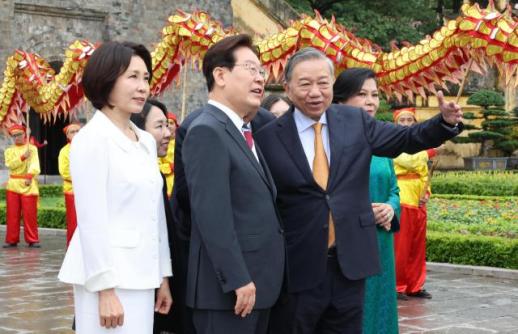 Lee visits Hanoi's historic site with Vietnamese leader before returning home SEOUL, April 24 (AJP) - President Lee Jae Myung visited a historical site in Hanoi on Friday as the final leg of his itinerary in Viet Nam. Guided by Vietnamese President Tô Lâm and his wife, the first couples of the two countries toured the Imperial Citadel of Thang Long. Located in the heart of Hanoi, the sprawling complex of historic buildings, inscribed as a UNESCO World Heritage site in 2010, blends Chinese, Vietnamese, and French architectural styles, reflecting the country's rich royal heritage and centuries of cultural evolution. They also toured the rear garden of Kinh Thien Palace, where they watched performances including a traditional lion dance. Friday's friendly, casual outing came a day after Lee and his wife Kim Hea Kyung took a stroll in central Hanoi and met Vietnamese residents while visiting major landmarks including Hoàn Kiếm Lake and the alleys of the Old Quarter, before dining at a local restaurant. Lee returns home later in the day, wrapping up his weeklong trip, which included a visit to New Delhi, India earlier in the week. 2026-04-24 15:49:26
 -
 National Railway Authority Signs Pact to Strengthen Anti-Corruption Cooperation The National Railway Authority said it is stepping up efforts to support sustainable management, including advancing “RE100” for electric railways and strengthening anti-corruption cooperation. The authority said it signed a four-party memorandum of understanding on Thursday at the Local Finance Hall to improve audit expertise and expand anti-corruption cooperation. The agreement was designed to broaden cooperation among internal audit bodies in the public sector and spread a culture of integrity. Participants included officials from the National Railway Authority, the Korea Local Finance Association, the Private School Teachers’ Pension, and Korea South-East Power, who shared audit strategies and best practices. They also discussed upgrading a prevention- and consulting-focused audit system, training specialists, strengthening the effectiveness of anti-corruption and integrity programs, and improving audit professionalism. “This agreement is a meaningful starting point to share audit capabilities among institutions and further strengthen an anti-corruption cooperation system,” said Yoo Byung-ho, standing auditor of the National Railway Authority. “We will continue working to establish a fair audit system and reinforce internal controls so we can keep growing as a clean public institution trusted by the public.” Separately, the authority said it presented next-generation technology directions for achieving RE100 in electric railways at the Korean Institute of Electrical Engineers’ Electrical Facilities Division conference now underway in Daegu. It said it will begin full-scale technology development for research projects to improve railway power supply systems, in cooperation with the Korea Railroad Research Institute and others, aiming to link renewable energy to traction power for electric railways. “By combining renewable energy with advanced technologies such as AI, we will improve the efficiency and stability of railway power facilities and lead the era of eco-friendly rail transportation,” said Lee An-ho, acting chairman of the National Railway Authority.* This article has been translated by AI. 2026-04-24 15:48:23
 -
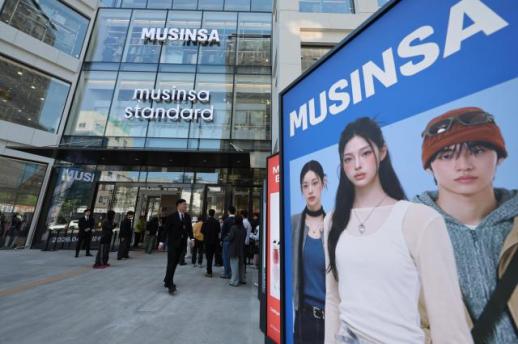 K-shopping wonderland lands in Seongsu as Musinsa scales offline push SEOUL, April 24 (AJP) - Gone are the days when group tourists shuffled through duty-free shops and the Dongdaemun marketplace. K-shopping today is about hip, affordability and fun — and sharing the experience with friends, on or off camera. To amplify that shift, a shopping-themed amusement park has arrived in Seoul’s trendiest district, Seongsu-dong. "I wish there was a store like this in the U.S.," said Maddie, a tourist from the United States, as she explored the newly opened Musinsa Megastore Seongsu on Friday. Alongside her friend Hannah, she was among the thousands who flocked to the 6,600-square-meter facility for its official grand opening. As South Korea’s leading fashion and beauty enterprise, Musinsa is pivotally expanding its domestic physical presence. While already a dominant force online and a growing name in Japan and China, this megastore—South Korea’s largest single-brand offline retail space—signals a major strategic evolution. By blending over 1,000 brands with experiential entertainment, Musinsa aims to broaden its appeal from its core Gen Z demographic to include families and shoppers in their 40s. Spanning five floors from the basement to the fourth floor, the store utilizes a "shop-in-shop" concept to present brands in a multidimensional way. Dedicated concept zones include "Girls" — featuring brands like Glowny, Low Classic Lc, and The Barnnet — as well as "Young," "Sports," and "Next Outdoor" sections featuring global names like Nike and Adidas. For international visitors, the curated selection is a primary draw. "I realized that I didn't know many of the brands, but they look cool," Maddie noted. "I feel like Musinsa has curated that for us... It’s less cumbersome. Shopping time is valuable". Hannah added that for their age group, "uniqueness" and "style" outweigh brand names, describing the quality as significantly better than "Walmart quality". The Americans compared the experience favorably to major international retailers. "We basically have things like Muji and Uniqlo, but it’s only clothes and basics," they said. "Here, you have more edgy clothes, you have Musinsa Standard on one floor, beauty on another... it’s like a department store in one". The second floor houses a massive 150-pyeong (approximately 500-square-meter) "Musinsa Beauty" section, stocking approximately 7,500 items from 700 brands. This includes several brands exclusive to Musinsa's offline channel, such as Glif, Tense, Snidel Beauty, Sensle, and Ares. The sheer scale of this offline beauty section signals Musinsa's bold expansion into a category long dominated by established offline health and beauty (H&B) giants. The move represents a direct challenge to the existing market hierarchy, sparking fierce behind-the-scenes competition for brand curation as Musinsa aggressively disrupts the traditional H&B retail landscape. Anne, a visitor from the Philippines who came specifically for skincare, praised the store’s spaciousness. "The store is massive, but it’s not too crowded that it’s uncomfortable for shopping," she said. However, some Western shoppers noted a difference in organization, observing that the beauty section is arranged by product type rather than brand, a departure from typical U.S. store layouts. Musinsa has packed the facility with "experiential content" to keep shoppers engaged. Features include the "Musing-sa" coin karaoke booth in the basement, an NCT WISH idol pop-up zone, and a custom soccer jersey marking service on the fourth floor. The top floor features a "Food Garden" with popular eateries like Tteoksan and Fuglen coffee. Musinsa officials described the F&B zone as a convenience facility designed for customer retention rather than direct profit. "You have to eat and get energy to shop again," a representative noted. The megastore is part of Musinsa's broader "O4O" (Online-for-Offline) strategy. The company now operates 75 offline locations and recently secured naming rights to Seongsu Station to solidify its presence in the district. For international visitors, the Seongsu location serves as a highly calculated business hub rather than a simple tourist attraction. The facility is equipped with multilingual self-checkout kiosks and in-store tax refund machines to streamline purchasing for foreign tourists. Furthermore, Musinsa integrates this physical experience with its "Global Store" app, allowing tourists to seamlessly continue shopping and receive direct shipments to 13 different countries after returning to their home countries. To celebrate the opening, Musinsa is holding the "ON & OFF FESTIVAL" through May 3 across 11 offline stores and its online platform, offering discounts up to 80 percent. Opening day specials include the "Mega Bag," a 49,900-won bundle containing merchandise and vouchers worth up to 400,000 won. "Musinsa Megastore Seongsu will be the pinnacle of offline retail that captures the essence of the fashion and beauty we pursue," a company official said. 2026-04-24 15:44:34
 -
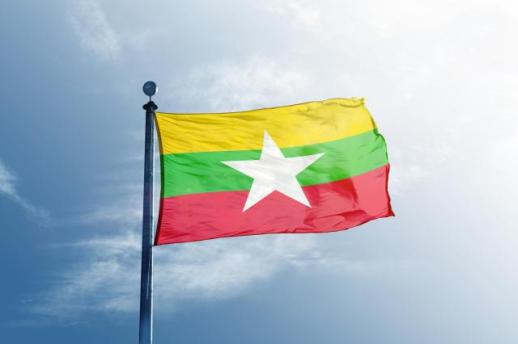 Myanmar Fishery Exports Top 326,300 Tons in FY2025 Myanmar exported more than 326,300 tons of fishery products in fiscal 2025 (April 2025 to March 2026), with export earnings topping $404 million (about 64.4 billion yen), the state-run Global New Light of Myanmar reported on the 23rd, citing the Fisheries Department under the Ministry of Agriculture, Livestock and Irrigation. By transport route, seaborne shipments exceeded 150,000 tons worth $240.48 million, while overland exports totaled 176,000 tons valued at $163.5 million. Myanmar continues to export seafood to more than 40 countries, including South Korea, Japan, China, Thailand and Bangladesh. The Myanmar Fisheries Federation said key export items include hilsa, rohu, catfish, seabass, eel, shrimp and crab. It also said more than 140 upgraded frozen and refrigerated storage facilities nationwide must renew annual permits through the Fisheries Department. In fiscal 2024, Myanmar exported about 400,000 tons of fishery products worth $421 million.* This article has been translated by AI. 2026-04-24 15:39:38