
Journalist

Lee Hugh
=
-
 Asian stocks wobble into weekly close amid entrenched Gulf uncertainties SEOUL, April 24 (AJP) - Asian markets traded mixed Friday with little sign of diplomatic breakthrough after U.S. President Donald Trump unilaterally declared an indefinite extension to the ceasefire with Iran while continuing with naval blockade of the Strait of Hormuz. Japan's Nikkei 225 rose 0.70 percent to 59,554.99, aided by spillover from overnight gains in U.S. semiconductor shares, with Advantest climbing 1.56 percent to 28,335 yen and SoftBank Group adding 1.42 percent to 5,920 yen. Hong Kong’s Hang Seng Index fell 0.94 percent to 25,672.48 and China’s Shanghai Composite Index fell 0.57 percent to 4,069.88 In Seoul, the KOSPI pulled back after closing at a fresh record high in the previous session, fluctuating near the 6,500 mark in early trading as foreign selling weighed on sentiment. Pressure also came as Samsung Electronics and SK hynix retreated from record highs. As of 11:20 a.m., the main index stood at 6,458.15, down 0.22 percent. Leading the decline, Samsung Electronics fell 2.45 percent to 219,000 won, and SK hynix slipped 0.49 percent to 1,219,000 won. Hyundai Motor dropped 3.57 percent to 513,000 won, and affiliate Kia also declined 2.84 percent to 153,900 won. Gains were seen in select industrial and defense-related names, with defense shares supported by renewed geopolitical risks in the Middle East surrounding the war overnight. HD Hyundai Heavy Industries rose 3.12 percent to 661,000 won, while Hanwha Aerospace advanced 2.74 percent to 1,464,000 won. Doosan Enerbility also gained 2.20 percent to 125,300 won, supported by optimism over expanding nuclear and gas turbine orders and potential opportunities tied to Vietnam’s nuclear plans following an MOU between South Korea and Vietnam. The stock has risen about 63 percent this year and ranks as the top foreign net-buying stock, with net purchases totaling 2.26 trillion won. The junior KOSDAQ moved higher, rising 1.26 percent to 1,189.08, with foreign and institutional buying supporting sentiment. Gains were led by biotech and technology names. Peptron jumped 10.28 percent to 279,000 won, while Samchundang Pharm surged 5.00 percent to 399,000 won. Alteogen rose 3.08 percent to 368,500 won, and Eotechonics gained 1.55 percent to 492,000 won. On the downside, Ecopro fell 1.46 percent to 154,900 won, and Rainbow Robotics slipped 0.50 percent to 597,000 won. HLB edged down 0.50 percent to 59,600 won, and Koongtook Sujin declined 0.45 percent to 99,650 won. In the currency market, the Korean won weakened slightly, with the dollar trading at 1,482.80 won, compared with the previous close of 1,481.0 won. Overnight on Wall Street, stocks closed lower as renewed geopolitical tensions in the Middle East, a surge in oil prices and weakness in software shares weighed on sentiment. The S&P 500 fell 0.41 percent, while the Nasdaq dropped 0.89 percent and the Dow Jones Industrial Average slipped 0.36 percent. The Philadelphia Semiconductor Index, however, bucked the broader downturn, rising 1.71 percent, highlighting continued resilience in chip shares. 2026-04-24 11:27:17
 -
 Three buzzed-about films move from theaters to IPTV and VOD this week Three films that drew audiences in theaters are moving to home viewing this week via IPTV and VOD services. They range from the 16.63 million-ticket hit “The Man Who Lives With the King” to Yoon Ga-eun’s festival favorite “Master of the World,” and “We Still Have Tomorrow,” which built word-of-mouth for its lingering ending. “The Man Who Lives With the King,” set in 1457 at Cheongnyeongpo, follows a village chief who volunteers to live at an exile site to revive his town and a young deposed king sent into exile. Blending humor and emotion, the film’s tragic storyline around King Danjong and the cast’s performances helped propel it to No. 2 on the all-time box office list, drawing 16.63 million moviegoers. The film will be released starting the 29th on major platforms including IPTV, cable TV VOD and OTT services. For the home version, some VFX from the theatrical cut have been enhanced, and the end credits add the OST song “Friend,” sung by Jeon Mi-do, who was praised for her role as Maehwa. The track and its music video, released earlier to mark the film passing 16 million admissions, drew strong reactions. Yoon’s “Master of the World” begins day-and-date IPTV and VOD service starting today. The film centers on Ju-in, an 18-year-old high school student whose motives are hard to read, as she alone refuses a schoolwide signature campaign and then begins receiving mysterious notes. It is Yoon’s third feature, following “The World of Us” and “House of Us,” and was screened as a world premiere at the Toronto International Film Festival ahead of its release. The film went on to win major honors, including the grand prize at the 47th Nantes Three Continents Festival; the jury prize for the Roberto Rossellini Award and the audience award at the 9th Pingyao International Film Festival; and the International Federation of Film Critics prize at the 41st Warsaw International Film Festival. In South Korea, it won best picture and a new actor award at ceremonies including the Producers Guild Awards and the Chunsa International Film Festival. It is also nominated in six major categories at the 62nd Baeksang Arts Awards in May, including best picture, best director and best screenplay. After opening, it was the only Korean independent live-action art film released in 2025 to draw 200,000 admissions, earning praise for pairing artistry with commercial appeal. Audience support remained steady, with endorsements from filmmakers Hirokazu Kore-eda, Jia Zhangke, Bong Joon Ho and Yeon Sang-ho, and actor Park Jeong-min. A “relay support screening” started voluntarily by Kim Hye-soo, Song Eun-i, Kim Tae-ri, Kim Eui-sung and Lee Jun-hyuk also drew attention. The film’s long theatrical run of more than six months was fueled by that word-of-mouth. Starting today, it is available on platforms including IPTV, Studio Choice, Skylife, Wavve, Apple TV and Coupang Play. “We Still Have Tomorrow” is also shifting to home viewing. The film follows Delia’s secret plan as she dreams of an ending more beautiful than a fairy tale, set against the historic moment in 1946 Italy when women were able to vote for the first time. The film swept audience awards at global ceremonies, including the 69th David di Donatello Awards, and drew praise such as “the most powerful ending in film history” and “a perfect twist — smart and moving.” It reached $50 million in global revenue, including in Italy as well as France, Germany, Spain and Poland. In South Korea, after opening March 4, it posted high audience ratings, and social media users shared accounts of spontaneous applause breaking out immediately after the end credits. The film is now available on IPTV and VOD platforms. With all three titles now leaving the big screen for living rooms, attention is on whether their box-office momentum, festival recognition and word-of-mouth will carry over to home audiences. * This article has been translated by AI. 2026-04-24 11:25:15
 -
 Statement Defending Streamer “Gwagjuice Seyeon” Spreads Amid Cosmetics Collaboration Backlash A natural-ingredient dermocosmetics brand has come under fire over a collaboration with streamer Gwagjuice Seyeon, as a statement defending her spread online and fueled further debate. On the 24th, online communities and social media widely shared a statement from the Korea Cyber Sexual Violence Response Center, known as Hansa-seong. Titled “We Reject the Divide Between ‘Mainstream’ and ‘Underground,’” it criticizes attacks on women who work as internet broadcast “BJ” streamers and the broader social stigma surrounding them. The group said similar controversies keep recurring, citing cases in which criticism surged after a female BJ partnered with a cosmetics brand and the company later issued an apology. It also pointed to past instances in which TV appearances or brand collaborations were canceled after complaints, arguing that certain content creators are subject to social labeling and exclusion. Hansa-seong said there is a perception that women who earn money using sexual expression should “remain underground,” calling it a discriminatory standard that divides what is considered normal from what is not. “Judging women by ‘rank’ based on their sexuality is a problem,” it said, adding that such attitudes can lead to secondary harm against victims of sexual violence. The statement also argued that demanding certain people be pushed out of society and kept out of sight amounts to hatred, and said women of diverse backgrounds should be able to participate equally in society. The statement drew substantial criticism online as well. Some users said it goes too far to label all criticism of profiting from sexual content as hatred, while others argued it is a logical leap to frame issues of free expression and market choice solely as discrimination. Other commenters said it is inappropriate to place debates over social acceptance on the same level as issues involving sexual violence victims, and questioned interpreting corporate marketing decisions and consumer reactions as “exclusion.” Founded in 2017, the Korea Cyber Sexual Violence Response Center presents itself as a women’s rights group. Its main activities include opposing illegal filming and requesting takedowns. It is not known to be a government agency, and it has previously defended Megalia and Womad. 2026-04-24 11:24:26
 -
 KDB Life Insurance up for sale again SEOUL, April 24 (AJP) - Korea Development Bank (KDB) has begun a formal process to sell its subsidiary KDB Life Insurance, aiming to complete the sale within this year. According to industry sources, the state-run bank on Friday put out a notice to sell 116 million shares in KDB Life Insurance and relinquish management control. KDB holds 99.75 percent of the insurer's outstanding shares, making it the largest shareholder. This is not the bank's first attempt to sell the subsidiary, but all previous efforts fell through as the insurer continued to rack up losses despite several capital injections of around 2.1 trillion won amid sluggish growth and restructuring across the insurance industry. Regardless of the outcome of the sale this time, the bank said it will continue efforts to turn KDB Life Insurance around, with plans to strengthen its business operations and improve profitability. 2026-04-24 11:17:02
 -
 The Moon Entertainment to Run ‘The Magnificent Hermitage’ Digital Exhibit in Seoul A special exhibition digitally recreating works from the Hermitage Museum, widely regarded as one of the world’s three leading art museums, will be held at Seoul’s Culture Depot Park in Mapo-gu. The Moon Entertainment said it will run “The Magnificent Hermitage” from April 30 to July 30 in the T4·T5 spaces at Culture Depot Park. The venue is a former oil storage facility from the 1970s that has been repurposed into a cultural site now used for exhibitions and performances. The exhibition reworks key parts of the Hermitage collection into digital content. The museum holds more than 3 million items and is often ranked among the world’s largest, alongside the Louvre and the British Museum. An official digital exhibition by the institution is rare in South Korea, the company said. Organizers said the show is designed as immersive content combining large-scale media art with interactive technology, using high-resolution scans and realistic video to broaden the viewing experience amid a global push by museums to expand digital exhibitions. The exhibition is divided into four sections. “The Winter Palace Awakens in Light” recreates the Hermitage’s iconic Winter Palace through a media facade. “Walking Through the Palace” digitally renders interior spaces to simulate a visitor route. “Official Digital Masterpieces” presents content based on ultra-precise scans using aerospace technology to capture texture and brushwork. The final section is an archive display covering materials related to the Hermitage and its Vladivostok branch. Works featured include pieces by Leonardo da Vinci, Rembrandt, Claude Monet and Henri Matisse. Organizers said visitors can see major masterpieces in one place without transporting the originals. The Moon Entertainment also said Hermitage Museum Director Mikhail Piotrovsky is expected to visit South Korea, and that academic exchanges and cultural cooperation could be discussed. Early-bird tickets will be sold through April 28 with a 40% discount for all ages. The early-bird tickets can be used through May 31.* This article has been translated by AI. 2026-04-24 11:15:57
 -
 Pony Chung Foundation Holds 2026 Academic Workshop, Awards Scholarships to 30 The Pony Chung Foundation said on the 24th that it held the “2026 Pony Chung Academic Workshop” at the Pony Chung Foundation Building in Jongno-gu, Seoul, to share research results from foundation-backed scholars and encourage its scholarship recipients. About 50 people attended, including Chairman Chung Mong-kyu and other foundation officials, newly selected early-career researchers Kim Jin-young of Seoul National University (philosophy of science), Park Cho-rong of Ewha Womans University (Korean history) and Lee Kyung-min of Seoul National University (Chinese phonetics), as well as newly chosen and current Pony Chung scholarship recipients, including humanities research scholars, overseas doctoral scholars and Vietnam exchange scholars. In remarks, Chung said it was meaningful to see the achievements of people who “continued their challenges with intense effort,” adding that the foundation would keep supporting more talent so they can focus on academic work and would “fulfill its mission” to advance humanities scholarship in South Korea. During the event, the foundation presented scholarship certificates to 30 people: three early-career researchers receiving academic support, 16 humanities research scholars and eight overseas doctoral scholars. The foundation launched its Pony Chung humanities research scholarship program in 2020, providing funding to master’s and doctoral coursework completers in humanities fields at graduate schools in South Korea and abroad. It supports each recipient annually with 10 million won for master’s students and 20 million won for doctoral students until they complete one graduation thesis, and provides separate support when the thesis is published. In 2021, it created the Pony Chung overseas doctoral scholarship program, selecting graduate students planning to enter doctoral programs at leading universities abroad and providing scholarships during their studies. Students headed to the U.S. and U.K. region receive $120,000 over three years, while those headed to the Europe and Asia region receive $45,000 over three years. Since 2013, the foundation has supported early-career researchers within five years of earning a doctorate through its academic support program, providing 40 million won in research funding for one year and 10 million won in publication support, as it seeks to build a career path for humanities support. * This article has been translated by AI. 2026-04-24 11:15:18
 -
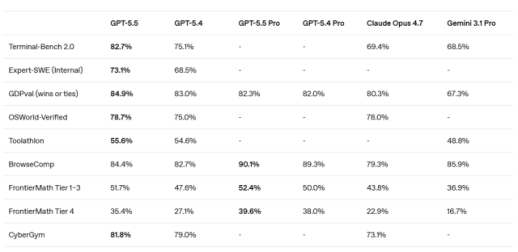 OpenAI Unveils GPT-5.5, Pushing Agent-Style AI and ‘Super App’ Strategy OpenAI has unveiled its latest artificial intelligence model, GPT-5.5, sharpening competition in generative AI and signaling a shift beyond incremental performance gains toward agent-style AI and a broader “super app” strategy. According to OpenAI on April 23 (local time), GPT-5.5 features markedly improved reasoning and autonomy. The company said capabilities for complex work such as coding, research and data analysis have advanced, with a key focus on “agent-style” task execution that can interpret a user’s intent and map out steps to solve a problem. OpenAI described GPT-5.5 as a core engine for its “AI super app” approach. The model can recognize what is on a screen and carry out computer actions such as clicking and typing, moving across tools in ways the company says bring it closer to collaborating with humans. OpenAI said this would push ChatGPT beyond a chat window into an integrated platform combining work, search and productivity tools. As an example, the company said that if a user asks it to analyze recent market trends, write a report and send it by email, GPT-5.5 can open a browser to gather information, draft the document and operate an email client to complete the task. The company framed this as a move from providing answers to acting as an executor of work. OpenAI also said it strengthened security guardrails to match the model’s capabilities, judging GPT-5.5 to fall into a “high-risk” category because of potential misuse such as cyberattacks. It said the model underwent an unprecedented level of red-team testing, or simulated attacks. The release comes as rival Anthropic has rolled out next-generation models including “Claude Mythos” and “Opus 4.7,” intensifying competition. In a report OpenAI released, GPT-5.5 outperformed Opus 4.7 on several key benchmarks. On “GDPval,” a measure of practical task performance, GPT-5.5 scored 84.9%, about 4 percentage points higher than Opus 4.7. On “Terminal-Bench 2.0,” which evaluates system-control capability, it scored 82.7%, about 13 points higher. On CyberGym, a security-related metric, it scored 81.8%, well above a competing model’s 73.1%. However, on SWE-Bench Pro, a coding benchmark, GPT-5.5 scored 58.6%, trailing Opus 4.7’s 64.3%. OpenAI also raised concerns about possible data memorization by the competing model and said it disagreed with aspects of the evaluation approach. OpenAI said GPT-5.5 will be integrated across its major services, including ChatGPT, accelerating its push toward an “AI super app” that handles a range of tasks on a single platform. As generative AI moves from a support tool to what the company described as a “digital colleague,” OpenAI said broad changes in productivity across companies and industries are expected. At a news conference, OpenAI President Greg Brockman said, “The biggest feature of this model is that it can do more with less instruction.” He added, “Its ability to interpret incomplete or ambiguous problems on its own and decide the next steps has improved significantly.” Brockman said it was “an important advance that will form the foundation for how computers are used in the future and for large-scale agent-style computation.” * This article has been translated by AI. 2026-04-24 11:14:03
 -
 Lotte, Shinsegae expand Vietnam export channels for South Korean small businesses With President Lee Jae-myung on a state visit to Vietnam, Lotte and Shinsegae moved to help South Korean small and midsize companies enter the Vietnamese market, widening overseas sales channels for K-brands. According to the industry on April 24, the Korea Trade-Investment Promotion Agency, known as KOTRA, held a Korea-Vietnam Business Partnership event the previous day at the National Convention Center in Hanoi. The event, arranged to coincide with Lee’s visit, featured consultations between South Korean companies and Vietnamese buyers, along with product showcases. Lotte Home Shopping hosted a showcase and export consultations aimed at helping South Korean small businesses expand into Vietnam. Using its home-shopping model, the company produced a mobile live broadcast from the showcase studio in collaboration with a local influencer. The broadcast featured products from small businesses including Gravity, a functional anti-hair-loss shampoo brand, and Romams, a premium diaper brand. Lotte Home Shopping streamed the program on Southeast Asian e-commerce platform Shopee and TikTok Live, while also selling products in real time. Viewership reached 52,000. Lotte Home Shopping said on-site meetings with distribution buyers led to talks on placement in local retail channels and export and exclusive distribution agreements. Chief Executive Kim Jae-gyeom said the company achieved “meaningful results” through the showcase and export consultations in Vietnam and pledged continued support for small businesses’ overseas expansion to strengthen the global competitiveness of K-brands. Shinsegae Department Store focused on supporting exports of K-beauty brands to Vietnam. It opened a “Shinsegae Hyper Ground” showcase at the venue, introducing South Korean beauty brands to local businesspeople and buyers. Eight K-beauty companies, including Kundal and Ire Recipe, took part. Shinsegae said it selected brands it viewed as competitive in Vietnam, considering local climate, consumer preferences and product functions. Participants also discussed market-entry strategies and the possibility of jointly planning products. Shinsegae Group’s online fashion platform W Concept also joined, presenting six brands including Botero and Tonywack to promote K-fashion. Industry Minister Kim Jeong-gwan and KOTRA President Kang Kyung-sung visited the venue and toured the showcase with Shinsegae Department Store CEO Park Joo-hyung. Park said Shinsegae this year will continue supporting competitive small businesses, alongside government assistance, so K-brands can expand into global markets including the United States, Taiwan and Japan. The Korea-Vietnam Business Forum held in connection with Lee’s state visit drew about 500 people from public institutions and the business community, including 109 companies in the South Korean economic delegation. Attendees included Samsung Electronics Chairman Lee Jae-yong; SK Group Chairman Chey Tae-won, who also heads the Korea Chamber of Commerce and Industry; LG Group Chairman Koo Kwang-mo; Lotte Group Chairman Shin Dong-bin; POSCO Holdings Chairman Jang In-hwa; HD Hyundai Vice Chairman Chung Ki-sun; GS Chairman Huh Tae-soo; and Hyosung Chairman Cho Hyun-joon. * This article has been translated by AI. 2026-04-24 11:12:40
 -
 Jeong Cheong-rae says Song Young-gil nominated in Yeonsu Gap as Democrats’ “only winning card” Jeong Cheong-rae, leader of the Democratic Party, said the party nominated Song Young-gil in Incheon’s Yeonsu Gap district rather than Gyeyang Eul because it judged him to be its “only winning card.” Kim Nam-jun, a former Blue House spokesperson, will run in Gyeyang Eul, where Song has served five terms. Speaking at an on-site Supreme Council meeting in Yeonsu District on April 24, Jeong said the party announced its nominees a day earlier for the Yeonsu Gap and Gyeyang Eul by-elections. “Yeonsu is not an easy district, so we decided to send Song here,” Jeong said, adding that he was grateful Song accepted the party’s decision. Song said he would “do my best to carry out the party’s order,” and pledged to build on the achievements of Park Chan-dae, the Incheon mayoral candidate who has served three terms in the Yeonsu area. Kim, who will run in Gyeyang Eul, said he would take to heart Song’s remark that “Gyeyang is my roots and my heart,” and vowed to devote all his energy to the success of the Lee Jae-myung government. The Democratic Party said it plans to quickly wrap up nominations for the by-elections by the first week of May.* This article has been translated by AI. 2026-04-24 11:11:13
 -
 AI Layoffs Hit the Workers Who Built the Systems, Raising Fears for Entry-Level Jobs 미국 실리콘밸리발 감원은 단순한 경기 대응형 구조조정이 아니라, 노동의 정의가 바뀌는 구조적 전환의 신호로 읽힌다. 특히 AI를 구축하고 학습시키던 인력이 자신들이 만든 기술에 의해 밀려나는 역설이 현실화하고 있다. 메타(Meta)는 인력의 10%를 감축하면서도 AI 인프라에 연간 1,350억 달러를 투입하고 있다. 마이크로소프트도 대규모 조기퇴직을 단행했다. 겉으로는 비용 절감이지만, 핵심은 인건비를 줄여 AI라는 자본재에 재투자하는 ‘노동의 자본 대체’가 고착화되는 흐름이라는 지적이 나온다. 감원의 중심은 단순 노무직이 아니라 ‘중간층 지식노동’이다. 마크 저커버그 메타 CEO는 “과거 대규모 팀이 필요했던 프로젝트를 이제는 뛰어난 소수가 해낼 수 있다”고 말했다. AI가 팀 규모와 인력 구조를 바꾸고 있다는 취지다. 문제는 전통적인 ‘신입-중급-시니어’로 이어지던 숙련의 사다리가 흔들린다는 점이다. 신입은 기초 코딩, 데이터 정리, 문서 초안 작성 같은 기본 업무를 통해 조직을 배우고 중급으로 성장해 왔다. 그러나 생성형 AI가 이 ‘기초 업무’ 영역을 빠르게 대체하면서, 사다리의 첫 칸이 사라지고 있다. AI를 학습시키고 데이터를 정제하며 모델을 개선하던 주니어 인력이 오히려 가장 먼저 대체 가능한 존재가 되는 역설도 제기된다. 기술이 인간의 기초 노동을 바탕으로 발전했지만, 그 과정에서 인재가 성장할 기회가 줄어든다는 것이다. 이런 ‘진입의 부재’는 청년 실업 문제를 넘어 조직 내부의 중간층 약화와 인적 병목을 낳을 수 있다는 우려로 이어진다. 기업들이 주니어 역할을 줄이고 시니어 중심의 고효율 구조를 지향하면, 시간이 갈수록 조직은 유입이 끊겨 노쇠화될 수 있다는 분석이다. 새로운 감각과 혁신을 가져올 젊은 인력이 줄어들면 조직의 역동성과 시장 대응력도 떨어질 수 있다. 경험의 단절도 문제로 꼽힌다. 숙련된 전문가는 반복적인 실무 축적을 통해 성장하지만, 주니어 직무가 AI로 대체되면 미래의 시니어가 될 인력이 역량을 쌓을 ‘훈련의 장’이 줄어든다. 그 결과 5년 뒤의 중간급 인력, 10년 뒤의 리더가 부족해지는 ‘인재 공급망 단절’이 예고된다는 지적이다. 이 변화는 한국에서도 통계로 나타나고 있다. 2026년 3월 기준 청년 취업자는 41개월 연속 감소했다. 전문·과학기술 서비스업과 정보통신업의 일자리 감소분 중 약 89%가 2030 세대에 집중됐다. AI가 전체 일자리를 줄이기 전에 “신입이 진입할 통로”부터 막히고 있다는 주장도 나온다. 변호사, 회계사, 개발자 등 자동화의 안전지대로 여겨졌던 전문직도 예외가 아니라는 것이다. 계약서 검토나 리서치 등 주니어 단계 업무가 AI로 대체되면서, 신입이 실무를 배우며 전문가로 성장할 기회가 줄어들고 있다는 문제 제기가 이어진다. 대응 역시 재점검이 필요하다는 목소리가 있다. 지금까지는 ‘AI 교육 확대’에 초점이 맞춰졌지만, 현장의 문제는 청년들이 AI를 몰라서가 아니라 AI 시대에 발을 붙일 첫 일자리가 부족하다는 데 있다는 것이다. 정책은 교육 확대를 넘어 ‘기회 구조의 재설계’로 옮겨가야 한다는 제안이 나온다. AI 도입으로 생산성이 높아진 기업들이 이익의 일부를 신입 채용과 실무 인턴십 유지에 재투자하도록, 세제 혜택을 포함한 ‘청년 첫 직무 보장제’를 사회적 논의에 올려야 한다는 주장이다. 기업과 정부가 단순 실행 위주의 직무에서 벗어나, AI 결과물을 검증하고 문제를 정의하는 ‘AI-보완형 주니어 직무’를 새로 설계해야 한다는 제안도 있다. 신입이 기술에 종속되지 않고 기술을 활용하는 역량을 키울 수 있도록 하자는 취지다. 또 실무 경험이 중요한 전문직을 중심으로 AI와 인간이 협업하며 전문성을 승계하는 ‘디지털 도제제도’ 도입 필요성도 제기된다. 시니어가 주니어를 멘토링하는 과정에서 발생하는 비용을 국가가 보전할 때, 끊어진 숙련의 사다리를 다시 잇는 데 도움이 될 수 있다는 주장이다. AI 시대의 위험은 기술이 인간을 앞서는 데만 있지 않다는 지적이 나온다. 미래 세대가 노동시장에 진입할 길을 잃으면, AI는 생산성을 높이는 동시에 청년의 기회를 줄이는 ‘세대 간 불평등’의 요인이 될 수 있다는 우려다. 청년에게 위로를 건네기보다, 새로운 형태의 진입 경로를 만드는 데 역량을 집중해야 한다는 주장으로 글은 마무리된다. * This article has been translated by AI. 2026-04-24 11:06:27