
Journalist

Lee Hugh
=
-
 Lotte Cultureworks Revamps ‘Inside the Play’ With Immersive Show Tied to Yeon Sang-ho’s ‘Gunche’ Lotte Cultureworks is relaunching its immersive, interactive performance brand, INSIDE THE PLAY, starting with a new production created in collaboration with director Yeon Sang-ho's film 'Gunche'. The brand is designed to pull audiences into a story world beyond the screen. Viewers take part directly, interacting with actors in real time and helping complete the narrative, rather than watching from the outside. The project is built around 'Gunche,' which was officially invited to the Midnight Screenings section of the 79th Cannes International Film Festival. The film centers on survivors trapped inside a sealed building during an unidentified outbreak, facing infected people who evolve in unpredictable ways. Thierry Fremaux, the festival's executive director, previously introduced Yeon's 'Gunche' as “a horror zombie genre film set inside a sealed building,” noting that audiences would imagine “various narrative devices and storytelling possibilities” within that setup. Lotte Cultureworks said it aims to expand the film's world into an offline space, blurring the line between cinema and live performance. By translating the story's claustrophobic fear and psychological pressure into an immersive format, the audience becomes a participant inside the incident. Unlike productions that follow a fixed route, this show uses a multi-ending system in which each audience member's choices and movement can affect the outcome as situations change in real time. 'Inside the Play: Gunche' opens May 21 at Lotte Cinema Sindebang. Tickets go on sale at 5 p.m. April 24 through Ticketlink and Naver Booking. “We planned this performance to build a fully immersive show in which the audience leads the narrative,” said Yoon Se-in, head of Lotte Cultureworks' live business division. “'Inside the Play' with the film 'Gunche' will be a chance to deliver thrills audiences have not experienced before.”* This article has been translated by AI. 2026-04-23 17:13:11
 -
 South Korea Passes Bills to Tighten Oversight of High-Risk Sex Offenders, Aid Illegal Lending Victims South Korea’s National Assembly passed revisions aimed at tightening oversight of high-risk sex offenders and strengthening protections for victims of illegal private lending, the Justice Ministry said. According to the ministry on the 23rd, amendments to the law governing electronic monitoring cleared the Assembly’s plenary session that day. The changes expand the scope of cases eligible for one-on-one supervision by a dedicated probation officer for high-risk sexual violence offenders. Previously, such dedicated supervision was allowed only when the victim was under 19 and the offender was deemed at high risk of reoffending. Under the revision, the measure will apply to high-risk sexual violence offenders subject to electronic monitoring regardless of the victim’s age, enabling closer oversight, the ministry said. The ministry said it expects the change to improve prevention by building a system that selects and intensively manages those at highest risk of reoffending. Lawmakers also passed amendments to the Act on Confiscation of Criminal Proceeds from Corruption Crimes. The revision adds illegal private lending offenses to the list of crimes for which illicit profits can be recovered and returned to victims. Current law allows confiscation or collection of criminal proceeds and their return to victims only for certain fraud-related crimes — including criminal organizations, illegal fundraising schemes, pyramid schemes and voice phishing — as well as embezzlement and breach of trust. Under the revision, proceeds from violations of the Money Lending Business Act, including charging interest above the legal limit or profits obtained by illegal private lenders, will also be eligible for return. The revision also creates a legal basis for the state to confiscate or collect criminal proceeds and return them to victims when victims have difficulty seeking repayment on their own, the ministry said, adding it expects the change to make recovery more effective. Justice Minister Jeong Seong-ho said the ministry will "continue to improve the system so that management and supervision of violent crime are strengthened, and recovery of criminal proceeds and victim restitution are carried out effectively."* This article has been translated by AI. 2026-04-23 17:10:31
 -
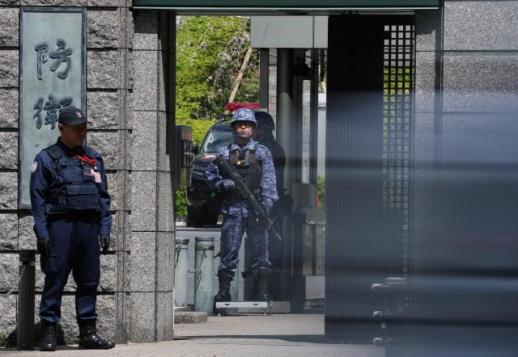 Japan's arms export shift tests Korea's security calculus amid regional buildup SEOUL, April 23 (AJP) - Japan’s decision to allow exports of lethal weapons for the first time since World War II marks a decisive step in Asia’s quiet arms buildup, raising both strategic opportunities and deep-seated concerns for South Korea as regional security dynamics shift. The government of Prime Minister Sanae Takaichi this week revised its “Three Principles on Transfer of Defense Equipment and Technology,” expanding exports beyond non-lethal categories to include fully developed weapons systems. The move builds on Tokyo’s accelerated military expansion, including bringing forward its target to raise defense spending to 2 percent of GDP to fiscal year 2025. Analysts say the policy signals a gradual but unmistakable shift toward a more conventional military posture. “This latest decision on lethal arms exports is a preparatory step toward revising Article 9 of the Constitution and turning the Self-Defense Forces into a de facto national army,” said Hosaka Yuji, a special professor at Korea University. While Japan’s Self-Defense Forces (SDF) have long operated as a functional military, the current debate centers on formalizing that reality — a move critics argue would mark a symbolic departure from postwar pacifism. Recent public opinion suggests growing acceptance. A joint poll by Sankei Shimbun and Fuji News Network found that 59.3 percent of respondents support explicitly recognizing the SDF in the Constitution. From a strategic standpoint, Japan’s expanded role could bolster deterrence across the Indo-Pacific. By supplying maritime patrol aircraft, missiles and naval assets to Southeast Asian and Pacific nations, Tokyo may help counter China’s growing naval presence and secure critical sea lanes. For South Korea, however, the implications are more complex. The country remains heavily dependent on Middle Eastern energy shipments that pass through chokepoints such as the Strait of Hormuz, the Malacca Strait, and the South China Sea — meaning any regional conflict would likely have immediate spillover effects on the Korean Peninsula. “If a war with China were to break out under such conditions, it would be extremely difficult for South Korea to accept being drawn into a conflict that could literally turn the Korean Peninsula into a sea of fire,” Hosaka said. This highlights a central paradox: while Japan’s growing military role may help stabilize sea lanes and strengthen deterrence, it could also shift the front line closer to Korea, increasing the risk of entanglement in a broader conflict. Historical memory adds another layer of sensitivity. For many South Koreans, Japan’s rearmament evokes the legacy of its 1910–45 colonial rule and wartime aggression, reinforcing persistent distrust of a “war-capable Japan.” Prime Minister Takaichi has sought to reassure neighbors, emphasizing that Japan will continue to uphold its identity as a peace-oriented nation even as it adapts to a harsher security environment. Experts note that Japan’s actual posture remains cautious, particularly regarding high-risk overseas deployments. “Japan intends to remain cautious. There are legal constraints, and as long as active combat continues, it is extremely difficult to imagine the SDF being deployed before hostilities have ended,” said Ryo Sahashi, a professor at the University of Tokyo. Domestic opinion in South Korea reflects similar ambivalence. While 56.4 percent of respondents expressed a favorable view of Japan in a late-2025 survey, perceptions diverge sharply in the security domain, with a significant share still viewing Japan as a potential threat. At the same time, the policy shift is reshaping trilateral cooperation among South Korea, the United States and Japan. Experts say deeper coordination in missile defense, anti-submarine warfare and advanced weapons production could enhance interoperability and strengthen deterrence against North Korea and China. Yet the strategic balance remains delicate. How far Japan moves toward becoming a “war-capable” nation — and how closely South Korea aligns with an expanded trilateral security framework — will determine whether this shift ultimately strengthens regional stability or adds a new layer of strategic risk for Seoul. 2026-04-23 17:10:10
 -
 KOSPI Hits Record High as Bond Yields Jump on Surprise GDP Growth South Korea’s stock and bond markets moved in opposite directions Thursday, with the KOSPI extending its record run while government bond yields surged after a stronger-than-expected first-quarter growth report raised concerns about tighter monetary policy. According to the Korea Exchange, the KOSPI closed up 57.88 points, or 0.90%, at 6,475.81. The index climbed as high as 6,557.76 during the session, setting an intraday record. Investor sentiment was supported after the S&P 500 and Nasdaq hit record highs overnight on an extension of a Middle East ceasefire and strong earnings from major companies. Samsung Electronics led gains after rising to 229,500 won, an all-time high. Shares of companies seen as benefiting from strong earnings expectations also advanced, including LS ELECTRIC, up 11.74% after posting its biggest quarterly profit, and Doosan Enerbility, up about 5.78%. Bond markets, however, were jolted by economic data released earlier in the day. At 8 a.m., the Bank of Korea reported real GDP growth of 1.7% in the first quarter, nearly double the market forecast of 0.9%. As strong growth tied to a semiconductor upcycle was confirmed, expectations for interest-rate cuts later this year faded quickly, triggering heavy selling in bonds. Data from Koscom’s Check terminal showed yields rose across the curve. The two-year government bond yield posted the sharpest jump, up 10.1 basis points from the previous day. The three-year yield rose 9.6 basis points and the five-year yield gained 9.2 basis points, both up more than 9 basis points. Yields on longer maturities also climbed: the 10-year rose 9.5 basis points, the 20-year gained 7.9 basis points and the 30-year added 7.5 basis points. Analysts said the larger rise in short-term yields suggests markets are revising the expected path of rate cuts and pricing in tighter conditions sooner. Brokerages said volatility could persist as investors react to data surprises. A securities industry official said first-quarter GDP was strong on the semiconductor upcycle, but growth could slow slightly as Middle East risks are reflected. With geopolitical uncertainty lingering, the official said market rates are likely to swing as investors watch both economic indicators and developments in the region.* This article has been translated by AI. 2026-04-23 17:06:51
 -
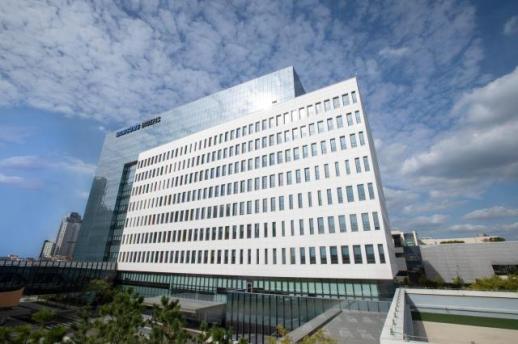 Samsung Bioepis Q1 Operating Profit Rises 13% to 144 Billion Won Samsung Bioepis said April 23 that it posted first-quarter revenue of 454.9 billion won and operating profit of 144.0 billion won. Revenue rose 14% from a year earlier and operating profit increased 13%. The company said the results meet its early-year sales guidance calling for growth of more than 10% from the previous year. It cited expanded global biosimilar sales and a broader new-product portfolio as key drivers. Samsung Bioepis said sales were supported by existing products including SB4, an Enbrel biosimilar marking its 10th year on the European market, as well as the impact of new product launches in the United States. In Europe, the company directly sells four products. For SB15, an Eylea biosimilar, it said it has been discussing potential launch timing with the originator developer, targeting Europe this month and the United States in January next year. In the United States, Samsung Bioepis said it signed a private-label supply agreement in October last year with CVS Caremark, one of the country’s three major pharmacy benefit managers, for SB16, a Prolia biosimilar, and launched it on the market. The company is also pursuing new-drug development. It recently began a global Phase 1 clinical trial of an antibody-drug conjugate candidate, and said additional pipelines being co-developed with China’s Frontline are in the preclinical stage. Separately, Samsung Epis Holdings reported consolidated revenue of 453.9 billion won and operating profit of 90.5 billion won. It returned to an operating profit in the first quarter after reporting consolidated revenue of 251.7 billion won and an operating loss of 63.6 billion won in November and December last year. The company said noncash accounting consolidation adjustments, including amortization of purchase price allocation development costs, were reflected in the results.* This article has been translated by AI. 2026-04-23 17:04:52
 -
 Korea Financial Regulators Stall Insurance Training Institute’s Token, AI Plans South Korea’s Insurance Training Institute, a nonprofit education body, is seeking to expand into new digital-asset-based businesses beyond its core training mission, but financial regulators have not approved the move, effectively putting the plan on hold. The delay is also fueling debate over whether the expansion fits the purpose of an educational institution. According to reporting by Ajunews on the 23rd, the institute submitted an application to the Financial Services Commission on Feb. 9 seeking approval to amend its charter. The proposed changes center on issuing an “education token” and establishing and investing in an AI subsidiary. More than two months later, approval has not been granted, the report said. The institute separately filed a request on the 2nd asking to be notified of the outcome and urged a prompt decision, but the commission still has not signed off. Through the charter revision, the institute aimed to issue an “education token” for uses such as paying course fees and to lay the groundwork for eventually expanding globally with a digital-asset-based payment infrastructure. Critics say the effort could go beyond the role of a nonprofit training institution. The institute was established to educate insurance industry workers, raising questions about whether issuing tokens or expanding revenue-generating activities through a subsidiary aligns with its founding purpose. Some observers say a business model that includes issuing and operating digital assets could effectively amount to a separate finance or platform business. An FSC official said there were concerns the plan could fall outside an education institution’s role, and that the commission has asked the institute for legal opinions and supplemental materials. There is also criticism that pushing a charter change premised on token issuance is premature because a basic law on digital assets that would include requirements for issuing stablecoins has not been enacted. Under the FSC’s “guidelines on cashing out virtual assets held by nonprofit corporations,” announced in May last year, nonprofit virtual-asset transactions are allowed only on a limited basis for converting donated assets into cash for donation management. Using virtual assets for payments, purchases or operations is not yet permitted. Cho Jeong-hee, an attorney at law firm Decode, said the current guidelines are intended to allow nonprofits to receive donations in virtual assets, adding that it is difficult to interpret and apply them more broadly. The institute, however, said the business is being reviewed within regulatory boundaries and does not pose a problem. An institute official said systems such as paying tuition with tokens or providing scholarships to trainees would be examined going forward, but added that no specific implementation plan has been set. * This article has been translated by AI. 2026-04-23 17:04:00
 -
 South Korea to Speed Arctic Shipping Route Plans as Supply Chain Risks Grow As the prolonged Middle East situation adds to global supply chain uncertainty, the South Korean government said it will accelerate key policies including efforts to expand use of Arctic shipping routes. Officials said major tasks such as port infrastructure expansion will be reflected in the 2027 budget, alongside stronger coordination among relevant ministries. The Office of Planning and Budget and the Ministry of Oceans and Fisheries on Wednesday inspected operations at the ministry’s Busan headquarters and visited major policy sites, including the Yeongdo marine cluster and Busan New Port. They discussed investment plans tied to building a “marine capital region” and promoting Arctic routes. In addition to uncertainty stemming from the Middle East situation, heavy reliance on specific passages such as the Red Sea and the Strait of Hormuz has emerged as a core risk for shipping and logistics, officials said. The joint visit was arranged to prepare in advance for policy shifts by promoting the Arctic route as an alternative and by concentrating development of the marine capital region — which has related infrastructure — as a forward base for entering Arctic shipping lanes. Officials said Busan New Port, located at the intersection of three major routes — the Americas, Europe and the Arctic — is expected to play a central role as a global logistics hub. The Yeongdo marine cluster is expected to serve as a key base for the marine capital region by bringing together research, education and industry support functions in the oceans and fisheries sector, including policy development, talent training and technology dissemination. Kim Tae-gon, the Office of Planning and Budget’s director general for economic budget review, said, “Building the marine capital region and promoting Arctic routes will help overcome the capital region’s one-pole system and become a new growth engine for our economy.” He added that the office plans to “listen closely to voices from the oceans and fisheries field and actively reflect them in the policy process.” Lee Sang-ho, the ministry’s director general for policy planning, said the ministry “quickly completed its relocation to Busan in December 2025 and launched the Arctic Route Promotion Headquarters,” adding that it has already built an implementation system to foster the marine capital region. He said the ministry will continue to work closely with the budget office and other agencies to develop the region and promote Arctic routes. The two ministries said they plan to incorporate measures discussed during the visit — including steps to speed development of the marine capital region and key tasks such as port infrastructure expansion to promote Arctic routes — into major policies, including the 2027 budget proposal.* This article has been translated by AI. 2026-04-23 17:03:10
 -
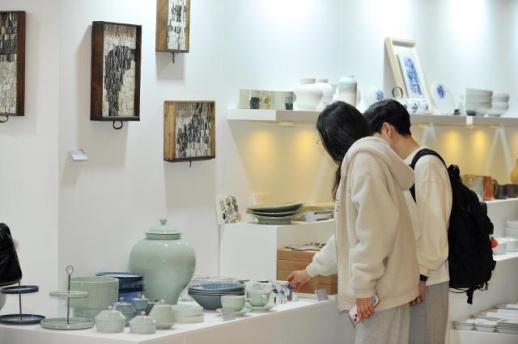 Kookmin University to hold third ceramic craft exhibition and sale SEOUL, April 23 (AJP) - Kookmin University will host the 2026 3rd Ceramic Craft Fair from May 14 to May 17 to showcase the work of emerging artists and facilitate the sale of student and alumni projects, the university said Thursday. The four-day event will take place in the lobby of the Kookmin University (KMU) Administration Hall in Seoul, South Korea. Students and alumni from the Department of Ceramic Craft within the College of Design are set to participate in the exhibition, which functions as an art platform where visitors can view and purchase various ceramic works. The fair is organized to provide students with practical market experience and help identify new talent in the field of ceramic arts. Revenue generated from the sales will be shared between the artists and the university to support a creative environment for local artists. Graduate students and alumni will serve as docents throughout the event to provide explanations of the production processes and the meaning behind specific works. The university will also utilize campus cafe spaces to integrate the exhibition into the daily environment of the campus. A hands-on workshop for children and families is scheduled for May 16 and May 17. Participants can design custom mugs using ceramic transfer techniques in sessions limited to 16 people, held five times per day. The exhibition has increased in size and participation since its launch. During the second annual fair held last year, singer and KMU alumna Lee Hyo-ri visited the campus to view the student projects. KMU President Jeong Seung-ryul said design and content are among the eight core specialized fields the university is prioritizing for its future development. "This fair will provide practical market experience for students and alumni while offering visitors the pleasure of owning art," President Jeong said. "KMU will continue to take the lead in expanding its role as a platform that connects art and industry." 2026-04-23 16:59:37
 -
 Hyundai Rotem Enters Vietnam Rail Market With Ho Chi Minh City Metro Line 2 Deal Hyundai Rotem said it signed a contract on April 23 (local time) with Vietnam’s THACO Group for the Ho Chi Minh City Metro Line 2 project, marking its first entry into Vietnam’s rail market. The deal is worth about 491 billion won. Metro Line 2 is a major rail infrastructure project being developed with a target opening in 2030. The line is planned to span 64 kilometers with 36 stations. Construction began in January, and the project is to be built in three phases. THACO Group, one of Vietnam’s leading conglomerates, is overseeing the Line 2 buildout. Hyundai Rotem will supply driverless electric multiple units for the line. Hyundai Rotem also signed a memorandum of understanding with THACO Group to supply the line’s signaling system, its first overseas supply of an unmanned driving signaling system. The company said it has worked to expand into Vietnam’s rail business since signing a localization agreement last year with THACO Group covering urban rail and high-speed rail rolling stock. Hyundai Rotem said the latest order provides a foothold for broader expansion and could support bids for large projects expected to be tendered, including the North-South high-speed rail project. The North-South high-speed rail project is estimated to total about 100 trillion won, making it Vietnam’s largest infrastructure development to date. "Entering Vietnam’s rail market for the first time, we have broadened our business base and built a meaningful foundation for local cooperation," a Hyundai Rotem official said. "We will work to establish ourselves as a partner contributing to the growth of Vietnam’s rail industry, seek new business opportunities, and help create a solid foundation for the development of Korea’s rail industry as well." Hyundai Rotem said it is also working with more than 500 partner companies to develop overseas markets and support joint expansion, including through a shared-growth fund, joint research and development, and other technical assistance.* This article has been translated by AI. 2026-04-23 16:58:16
 -
 Seoul High Court cancels 234.9 billion won fine in Samsung Wellstory catering case The Seoul High Court has ruled that the Fair Trade Commission must cancel fines totaling more than 200 billion won imposed on Samsung affiliates over allegations they funneled in-house catering contracts to Samsung Wellstory. According to the legal community on April 23, the court’s Administrative Division 3, led by Presiding Judge Yoon Kang-yeol, ruled for four affiliates — Samsung Electronics, Samsung Display, Samsung Electro-Mechanics and Samsung SDI — and Samsung Wellstory in lawsuits seeking to overturn the FTC’s corrective orders and other measures. The panel said the catering transactions, while sizable, could not be seen as providing Samsung Wellstory with excessive economic benefits. It added that the deals could not be recognized as unfair support likely to significantly undermine fair trade. The ruling lifts the burden of total fines of 234.927 billion won previously imposed by the FTC. The FTC had argued in 2021 that Samsung affiliates, under the direction of Samsung’s Future Strategy Office, steered work to Samsung Wellstory through private contracts to shore up its profits. It imposed fines totaling about 234.9 billion won: 101.22 billion won on Samsung Electronics, 22.86 billion won on Samsung Display, 10.51 billion won on Samsung Electro-Mechanics, 4.37 billion won on Samsung SDI and 95.97 billion won on Samsung Wellstory. The court rejected that reasoning, saying the evidence submitted was insufficient to accept the FTC’s claims about instructions from the Future Strategy Office or the alleged motive for the support. The decision is viewed as close to a final ruling because antitrust administrative cases in South Korea follow a two-tier structure in which the Seoul High Court reviews FTC decisions before any appeal to the Supreme Court. While the FTC may still appeal, the ruling is expected to affect a related criminal trial now underway. In 2021, the FTC also filed a complaint with prosecutors against Samsung Electronics as a corporate entity and Choi Gee-sung, a former head of the Future Strategy Office. Prosecutors indicted Choi and Samsung Electronics in 2022 on charges of violating the fair trade law, and a first trial is in progress.* This article has been translated by AI. 2026-04-23 16:53:37