

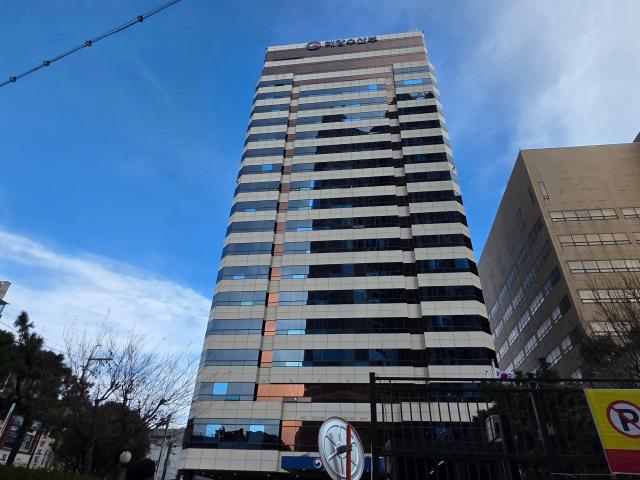
The Office of Planning and Budget and the Ministry of Oceans and Fisheries on Wednesday inspected operations at the ministry’s Busan headquarters and visited major policy sites, including the Yeongdo marine cluster and Busan New Port. They discussed investment plans tied to building a “marine capital region” and promoting Arctic routes.
In addition to uncertainty stemming from the Middle East situation, heavy reliance on specific passages such as the Red Sea and the Strait of Hormuz has emerged as a core risk for shipping and logistics, officials said.
The joint visit was arranged to prepare in advance for policy shifts by promoting the Arctic route as an alternative and by concentrating development of the marine capital region — which has related infrastructure — as a forward base for entering Arctic shipping lanes.
Officials said Busan New Port, located at the intersection of three major routes — the Americas, Europe and the Arctic — is expected to play a central role as a global logistics hub. The Yeongdo marine cluster is expected to serve as a key base for the marine capital region by bringing together research, education and industry support functions in the oceans and fisheries sector, including policy development, talent training and technology dissemination.
Kim Tae-gon, the Office of Planning and Budget’s director general for economic budget review, said, “Building the marine capital region and promoting Arctic routes will help overcome the capital region’s one-pole system and become a new growth engine for our economy.” He added that the office plans to “listen closely to voices from the oceans and fisheries field and actively reflect them in the policy process.”
Lee Sang-ho, the ministry’s director general for policy planning, said the ministry “quickly completed its relocation to Busan in December 2025 and launched the Arctic Route Promotion Headquarters,” adding that it has already built an implementation system to foster the marine capital region. He said the ministry will continue to work closely with the budget office and other agencies to develop the region and promote Arctic routes.
The two ministries said they plan to incorporate measures discussed during the visit — including steps to speed development of the marine capital region and key tasks such as port infrastructure expansion to promote Arctic routes — into major policies, including the 2027 budget proposal.
* This article has been translated by AI.
Copyright ⓒ Aju Press All rights reserved.