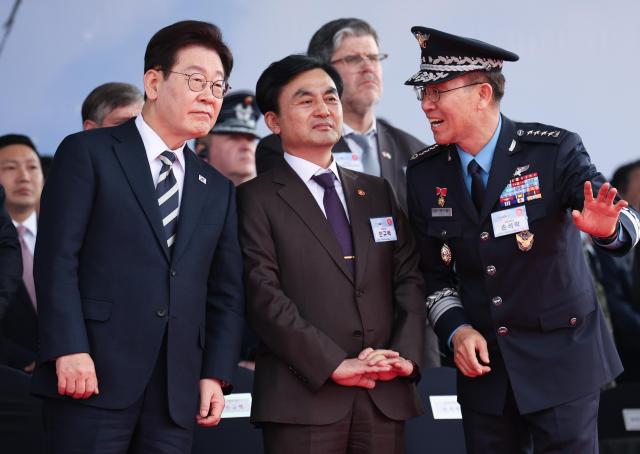
Behind the scenes, officials in Seoul and Washington are quietly diverging over the timeline for transferring wartime operational control, or OPCON, with South Korea favoring an earlier date and U.S. military leaders urging a slower, conditions-based approach.
Timeline divides the allies
South Korean officials have been working toward completing the transition before 2028, aligning with President Lee Jae Myung’s term in office.
But recent comments by Gen. Xavier Brunson, commander of U.S. Forces Korea, suggest Washington may be working on a different timeline.
“Political expediency must not outpace the conditions,” Gen. Brunson said in congressional testimony on Tuesday (local time), cautioning against setting deadlines that could compromise readiness.
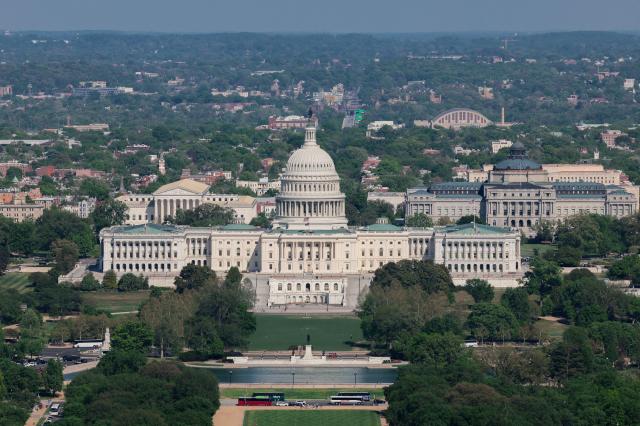
A South Korean government official, speaking on condition of anonymity, acknowledged the gap.
“We are not fundamentally apart on the goal,” the official said. “But there is clearly a difference in how fast we believe we can get there.”
Political pressure vs. military conditions
Operational control of South Korean troops was handed over to the U.S.-led U.N. Command during the 1950–53 Korean War and later transferred to the Combined Forces Command in 1978. Peacetime operational control reverted to Seoul in 1994.
The OPCON transition would place combined Korea–U.S. forces under the command of a four-star South Korean general in wartime, with a four-star U.S. general serving in a supporting role.
At the center of the timing debate is a tension between political preference and military preparedness.
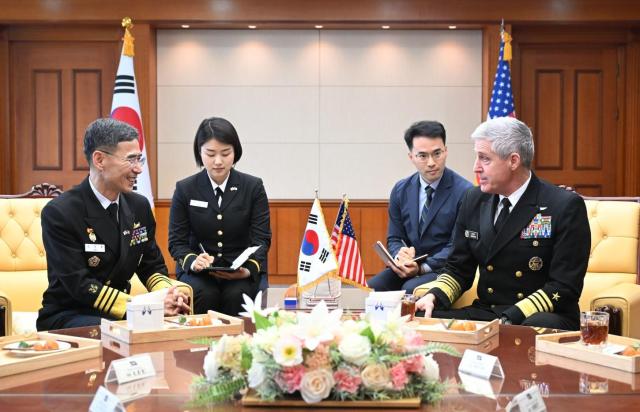
“The government is pushing this too hard because it wants to achieve it within its term,” he said. “That is not desirable. The conditions must come first.”
Experts with military and intelligence backgrounds also stressed that the OPCON transfer is fundamentally a structural security issue.
Chae Sung-jun, a former National Intelligence Service (NIS) official and now head of the Department of Military Studies at Seokyeong University, said the transition must be approached with caution.
“This is not simply about reclaiming authority,” he said. “It is about maintaining deterrence under a new command structure — and that is far more complex.”
He added that the issue should be understood in its historical and strategic context.
“The debate is not about whether to regain control, but how to integrate wartime command into an alliance structure without weakening deterrence,” he said.
Lingering dependence
Despite improvements in South Korea’s military capabilities, reliance on U.S. assets remains significant.
Yoon Sang-yong, a military studies professor at Seokyeong University, pointed to persistent gaps in intelligence and operational integration.
“We are still heavily dependent on U.S. intelligence, surveillance and reconnaissance assets,” he said. “These are not capabilities that can be replaced quickly.”
He also raised concerns about alliance dynamics after the transfer.
“If the command structure changes, there is a legitimate question as to whether the United States will respond with the same level of immediacy and scale in a crisis,” he said.
Alliance in transition
For Washington, the issue is shaped by long-standing institutional norms.
The U.S. military has historically been reluctant to place its personnel under full foreign command — a practice sometimes referred to as the “Pershing Principle.” However, it has granted operational control to foreign commanders in joint-force arrangements during combat.
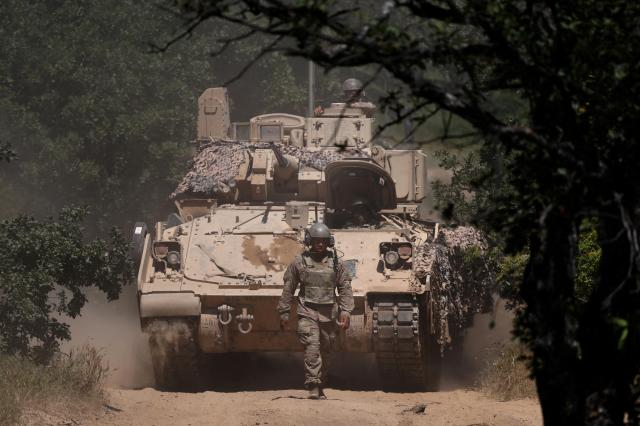
This creates a delicate balance: supporting South Korea’s autonomy while ensuring that the alliance’s deterrence posture remains intact.
The risk of miscalculation
Security experts warn that how the transition is handled could influence North Korea’s strategic calculations.
“Command structures send signals,” Chae said. “If the transition is not backed by sufficient capability, it could invite miscalculation.”
Others argue that further delays could undermine South Korea’s credibility as a self-reliant military power.
A narrow window
The coming months will be critical, with working-level consultations expected to intensify ahead of the annual Security Consultative Meeting in Washington later this year.
A senior South Korean defense official, speaking anonymously, emphasized the stakes.
“This is ultimately both a military and political decision,” the official said. “But if the balance is wrong, the consequences will be strategic.”
Copyright ⓒ Aju Press All rights reserved.