
Journalist

Lee Hugh
=
-
 SK hynix posts record Q1 operating profit of 37.61 trillion won on 52.58 trillion won revenue SK hynix said on the 23rd it posted first-quarter revenue of 52.5763 trillion won and operating profit of 37.6103 trillion won, for an operating margin of 72%. Net profit was 40.3459 trillion won, a net margin of 77%. On a quarterly basis, revenue topped 50 trillion won for the first time. Operating profit and the operating margin were also the highest since the company was founded, at 37.6 trillion won and 72%, respectively. Operating profit roughly doubled from the previous quarter, underscoring a sharp improvement in profitability. “Despite the seasonal off-peak in the first quarter, demand remained strong as AI infrastructure investment expanded,” SK hynix said, adding that it “continued its earnings uptrend by increasing sales of high value-added products such as HBM, high-capacity server DRAM modules and eSSD.” Cash and cash equivalents at the end of the first quarter rose 19.4 trillion won from the end of the previous quarter to 54.3 trillion won. Borrowings fell 2.9 trillion won to 19.3 trillion won, resulting in net cash of 35 trillion won, the company said. SK hynix said it sees AI evolving from training large models to an “agentic AI” stage, where real-time inference is repeatedly performed across a range of service environments, broadening the base of memory demand across both DRAM and NAND. It also said the spread of memory-efficiency technologies should improve the economics of AI services and expand overall service scale, further supporting memory demand. On that basis, it forecast a favorable pricing environment for both DRAM and NAND to continue. The company said it will keep developing and supplying new products across DRAM and NAND to meet increasingly diverse memory demand. For high-bandwidth memory, it said it will further strengthen overall execution capabilities integrating performance, yield, quality and supply stability. In DRAM, it will step up supply of LPDDR6 using the world’s first 10-nanometer-class sixth-generation (1c) process, and of the 192-gigabyte SOCAMM2, which began mass production this month based on the same process. In NAND, it said it has begun supplying the consumer SSD (cSSD) “PQC21,” which applies CTF-based 321-layer quad-level cell (QLC) technology. It added it will respond flexibly to AI demand with an enterprise SSD (eSSD) lineup spanning high-performance triple-level cell (TLC) and high-capacity QLC across the full eSSD range. It also said it plans to strengthen competitiveness in AI data center and AI PC storage markets by leveraging synergies with Solidigm, where it has strengths in high-capacity QLC eSSD. SK hynix said that as customer demand continues to exceed supply capacity, securing the ability to supply in line with structural demand growth in the AI era has emerged as a key competitive edge. It said this year’s investment will rise sharply from last year, driven by the M15X ramp-up, infrastructure preparations centered on the Yongin cluster, and securing key equipment such as EUV tools. “We will strategically expand our production base to respond proactively to mid- to long-term demand growth,” SK hynix said. “Through investment that reflects demand visibility, we will secure both supply stability and financial soundness.”* This article has been translated by AI. 2026-04-23 07:54:21
 -
 Track Obstruction at Oido Station Delays 9 Seoul Subway Line 4 Trains A track obstruction disrupted service at Oido Station on Seoul Metropolitan Subway Line 4. Yonhap News Agency reported that the problem occurred at about 4:18 a.m. Thursday at Oido Station on the Ansan Line in Siheung, south of Seoul, delaying nine trains by 10 to 30 minutes. KORAIL said an initial response team was dispatched and service returned to normal at about 6:08 a.m. It said trains were running normally but some residual impact could continue into the morning commute.* This article has been translated by AI. 2026-04-23 07:51:14
 -
 Korea's consumer confidence turns negative from energy concerns SEOUL, April 23 (AJP) -South Korea's consumer confidence turned negative for the first time in a year, weighed down by worries over supply-side repercussions on inflation and economic performance from a Gulf-triggered energy shock, data showed Thursday. According to the Bank of Korea (BOK), the consumer sentiment index for April dipped 7.8 points to 99.2, the first time below the 100 threshold in a year. A reading below 100 indicates pessimism outweighs optimism compared with the long-term average. The monthly fall is the steepest since December 2024 amid the shock from a brief martial-law declaration. The drop was broad-based, reflecting a sharp deterioration in both household finances and perceptions of the broader economy. Sub-indices tracking household conditions all weakened. The index for current living standards fell 3 points to 91, while expectations for future living conditions dropped 5 points to 92. Outlooks for household income and spending also declined, each falling 3 points to 98 and 108, respectively. Perceptions of the economy turned decisively dimmer. The index measuring current economic conditions plunged 18 points to 68, while the outlook for future conditions dropped 10 points to 79. Job prospects also deteriorated, with the employment outlook index down 7 points to 82. The data underscore how external shocks are increasingly feeding into domestic sentiment, as households brace for a combination of rising costs and slowing growth. Inflation concerns intensified. The expected inflation rate for the coming year rose to 2.9 percent, up 0.2 percentage point from the previous month, with the anticipation for price rise spiked 4 points to 153 whereas that for income stayed stagnated at 120 to suggest bias for tightening in spending. Consumers pointed overwhelmingly to energy-linked costs as the main driver of price pressures. Petroleum products were cited by 88.8 percent of respondents as the key factor influencing inflation expectations, followed by industrial goods at 33.1 percent and public utilities at 31.4 percent. The surge in energy-related concerns comes amid heightened volatility in global oil markets following disruptions in the Middle East, reinforcing fears of cost-push inflation rippling through the economy. Interest rate expectations also moved higher, with the index climbing 6 points to 115, reflecting growing anticipation that borrowing costs could remain elevated or rise further. The April survey was conducted from April 9 to 16 among 2,262 households nationwide. 2026-04-23 07:36:42
 -
 USFK commander says wartime OPCON transfer conditions targeted by early 2029 Xavier Brunson, commander of the Combined Forces Command and U.S. Forces Korea, said on April 22 (local time) that the allies have submitted a roadmap to the Defense Department aimed at meeting the conditions for transferring wartime operational control before the second quarter of fiscal 2029, which corresponds to the first quarter of 2029 in South Korea. According to Yonhap News Agency, Brunson made the remarks while testifying before the U.S. House Armed Services Committee, responding to a question from committee Chairman Mike Rogers, a Republican, about preparations for the OPCON transfer. The U.S. government’s fiscal 2029 runs from Oct. 1, 2028, to Sept. 30, 2029. The second quarter of fiscal 2029 covers January through March 2029. Brunson’s comments suggest a timetable to satisfy the conditions for the transfer no later than the first quarter of 2029. President Lee Jae-myung has said he aims to achieve the transfer during his term. The first quarter of 2029 overlaps with the end of President Donald Trump’s term, which runs through Jan. 20 that year, and the start of the next U.S. president’s term. The U.S. side may have drafted the roadmap with the possibility in mind that meeting the conditions could carry over into the next administration. Brunson said the allies would continue pursuing a conditions-based transfer and ensure all requirements are met. 2026-04-23 06:39:19
 -
 White House: No 3- to 5-Day Deadline Set for Iran Proposal The White House said Tuesday local time that President Donald Trump has not set a specific deadline for receiving a “unified proposal” from Iran. White House spokeswoman Karoline Leavitt told reporters, “Contrary to some reports I saw today, the president has not set a firm deadline to receive Iran’s proposal.” Trump also told Fox News that a “three-to-five-day deadline” was not true, adding that he was not rushing talks with Iran. The comments followed a report Monday by Axios, citing anonymous officials, that Trump was willing to give Iran about three to five more days of a ceasefire period. Leavitt said there were “clearly many divisions” inside Iran, calling it a fight between pragmatists and hard-liners, and said the president wants a single, unified response. She said that while a ceasefire remains in place on military and physical strikes as the U.S. waits, the “Grand Wrath” operation continues, as does a maritime blockade of ships traveling to and from Iranian ports. She added that the president is satisfied with the situation while awaiting Iran’s response. 2026-04-23 06:06:16
 -
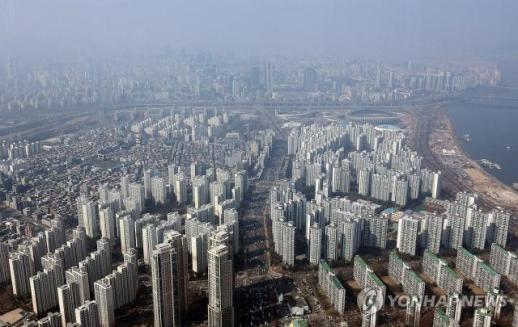 Gangnam Prices Cool, but Seoul’s Midpriced Apartments Keep Rising The recent cooling in apartment prices in Seoul’s most expensive districts is being cited by some as a sign the housing market is stabilizing. The data show weakness in high-end areas, but prices and rents in neighborhoods where most buyers can realistically compete are still rising. According to weekly figures from the Korea Real Estate Board, Seoul apartment prices rose 0.10% in the second week of April, while the so-called Gangnam three districts extended their downturn to an eighth week. Gangnam-gu and Seocho-gu each fell 0.06%, and Songpa-gu slipped 0.01%. Yongsan-gu also turned weaker again. Outside the premium core, however, midpriced apartments in non-Gangnam areas strengthened. Over the same period, Gangbuk-gu rose 0.27%, Gangseo-gu 0.24%, Dongdaemun-gu and Seongbuk-gu 0.20% each, and Guro-gu 0.17%. Transaction data point in the same direction. Seoul apartment sales in March totaled 4,742, down 17.7% from the previous month, but the share of deals for apartments priced at 1.5 billion won or less climbed to 85.3%. An analysis also found many of the most-traded complexes were in outlying districts, with 43 of the top 50 located in those areas. Official transaction prices underscore the pressure on typical buyers. An analysis by the Seoul Metropolitan Government and the Korea Real Estate Board showed Seoul’s apartment sale prices in February rose 1.9% from the previous month and were up 15.7% from a year earlier. The strongest gains were in smaller units: apartments larger than 40 square meters and up to 60 square meters rose 2.95%. Jeonse deposits also increased. Seoul apartment jeonse transaction prices in February rose 0.22% from the previous month, and the city’s northeastern area climbed 0.85%. The pattern reflects demand shifting rather than disappearing. As regulations tighten around high-priced homes and investment demand, buyers who cannot access Gangnam look to districts such as Nowon, Guro, Gangseo and Seongbuk. The interest-rate backdrop has reinforced that shift. The Bank of Korea’s Monetary Policy Board on the 10th kept the benchmark rate at 2.50% a year. With borrowing costs still elevated and lending limits binding, demand tends to concentrate on homes that fit within loan ceilings. The broader question, the article argues, is which numbers policymakers treat as proof of stability. A pullback in a few symbolic high-end neighborhoods can look like progress, but housing stability for ordinary households depends on whether prices and rents in attainable areas are easing. Experts have repeatedly said the priority should be expanding private-sector-led supply, not simply focusing on whether Gangnam prices have dipped. The more relevant measure, they say, is who is facing greater strain as midpriced homes and jeonse costs continue to rise.* This article has been translated by AI. 2026-04-23 06:04:38
 -
 South Korea Consumer Sentiment Falls Below 100 as Mideast War, Inflation Fears Grow Rising geopolitical risk tied to the war in the Middle East, along with inflation worries, pushed consumer sentiment below its long-term average for the first time in a year. According to the Bank of Korea’s consumer survey released on the 23rd, the April Consumer Composite Sentiment Index, or CCSI, fell 7.8 points from the previous month to 99.2. It was the first reading below the benchmark 100 since April last year. The CCSI is calculated from six components: current living standards, outlook for living standards, outlook for household income, outlook for consumer spending, assessment of current business conditions and outlook for business conditions. A reading above 100 indicates sentiment is more optimistic than the long-term average for 2003–2024; below 100 indicates pessimism. All six components declined. The index for assessment of current business conditions fell 18 points to 68, reflecting factors including disruptions to energy supplies. The outlook for business conditions dropped 10 points to 79 on concerns about rising prices and a slowing economy. The outlook for living standards fell 5 points to 92. Current living standards slipped 3 points to 91, the outlook for household income fell 3 points to 98, and the outlook for consumer spending dropped 3 points to 108. “Exports are showing a solid trend, but higher energy prices and supply disruptions stemming from the war in the Middle East, along with broader domestic and external uncertainty, affected consumer sentiment,” said Lee Heung-hoo, head of the Bank of Korea’s economic sentiment survey team. Separately, the outlook for interest rates rose 6 points to 115, reflecting higher market and lending rates and inflation concerns. The housing price outlook, which measures expectations that home prices will rise over the next year, climbed 8 points to 104. The bank cited continued gains in Seoul apartment sale prices, led by outlying areas, and worries that the Middle East war could push up construction costs and presale prices. Expected inflation for the next year rose 0.2 percentage points from the previous month to 2.9%, influenced by concerns about price increases tied to supply disruptions in raw materials such as crude oil. Perceived consumer inflation over the past year was unchanged at 2.9%.* This article has been translated by AI. 2026-04-23 06:03:20
 -
 Kumho E&C to Sell Price-Capped ‘Wangsuk Atera’ Apartments in Namyangju in May Kumho E&C said it will begin selling “Wangsuk Atera,” a privately participated public-sale apartment complex, in May in Wangsuk District 2 in Namyangju, Gyeonggi Province. The project will be the first complex in the third-phase new town Wangsuk District 2 to move to the main subscription stage, and it will be subject to South Korea’s price cap on new apartment sales. The company said the cap is drawing attention from buyers seeking more affordable prices amid rising presale costs. Wangsuk Atera, planned for the A-1 block in Wangsuk District 2, will have seven buildings from two basement levels to 29 stories, totaling 812 units. Homes will be offered in 59, 74 and 84 square meters, focusing on mid-size layouts favored by end users. Kumho E&C said the complex will be oriented mainly to the south and use a “4-bay” design to improve daylight and ventilation. In an earlier pre-subscription, the 84-square-meter type posted a 53.4-to-1 competition rate, the company said. Wangsuk District 2 is a new town planned to accommodate about 16,000 households and is about 5 kilometers from Seoul’s boundary, the company said. It is near other large development areas, including Wangsuk District 1, Dasan New Town and the Yangjeong station-area project, allowing residents to share infrastructure. Within about 1 kilometer of the complex, a new station tentatively called “Station 946” is planned on an extended Seoul Subway Line 9 route and the Gyeongui-Jungang Line, according to the company. Transfers to the GTX-B line are expected to be convenient via Wangsuk District 1, one stop away. Kumho E&C said residents are expected to use nearby Dasan New Town amenities at move-in, including Hyundai Premium Outlets and E-Mart. Nearby green and leisure facilities include Ilpae Neighborhood Park, Dasan Central Park and the Namyangju Sports and Culture Center. The company said education and daily-life facilities are also planned, with sites for a kindergarten and elementary and middle schools within walking distance, and proximity to a future-oriented education space called “WE Dream Park.” It added that a central commercial district site is nearby, which it said should reduce inconvenience in the early period after move-in. Kumho E&C said additional development is planned in the area, including the Wangsuk Urban Advanced Industrial Complex in Jingeon-eup, expected to host advanced industries such as artificial intelligence and biotechnology. It also cited plans including a Kakao data center and a Woori Financial Group financial R&D center. * This article has been translated by AI. 2026-04-23 05:08:26
 -
 Taeyoung Engineering to Launch 1,250-Unit Metrocity Jasan Desian Complex in Masan in May Taeyoung Engineering & Construction said it will introduce a large-scale branded apartment complex, Metrocity Jasan Desian, in May in Masan Happo-gu, Changwon, South Gyeongsang Province. The project, supplied through the Jasan district redevelopment, is linked to the city’s landmark Metrocity brand and marks the first major new supply in Masan Happo-gu in five years. The complex will span 12 buildings from two basement levels to 33 stories above ground, with 1,250 households. Of those, 739 units will be offered for general sale in 59 to 84 square meters of exclusive-use area, focusing on mid-sized layouts favored by end users. The company said the development will help complete a Metrocity brand town totaling 7,055 households. It also highlighted the area’s limited new-housing supply, noting there are no planned move-ins in Masan Happo-gu after 2026. The company cited nearby schools and transportation access. Muhak Elementary School is directly in front of the site, and residents can walk to Masan Middle and High School. Muhaksan and Chusan Neighborhood Park surround the complex, and some units are expected to have panoramic views of Masan Port. The site is near KTX Masan Station, the Masan Express Bus Terminal and the Seomasan interchange, and it pointed to the planned opening of the Busan-Bujeon–Masan double-track railway. Taeyoung said demand could grow with development of Masan Marine New Town and the planned completion in 2029 of the Digital Masan Free Trade Zone. It plans a mostly south-facing layout, glass balcony railings and resort-style community facilities including a sauna and private movie theater. A model home will open in May in Odong-dong, Masan Happo-gu, Changwon.* This article has been translated by AI. 2026-04-23 05:07:21
 -
 DL E&C to Launch Acro River Sky Apartments in Seoul’s Noryangjin New Town in May DL E&C will introduce its high-end apartment brand in Seoul’s Dongjak district with Acro River Sky in Noryangjin New Town, citing transit access and established education and daily-life infrastructure. The company said on the 14th it plans to begin sales in May for the Noryangjin 8 redevelopment promotion zone housing reconstruction project, located around 23-61, Daebang-dong, Dongjak-gu, Seoul. The complex will have 10 buildings ranging from four basement levels to 29 stories above ground, with 987 units in total. Of those, 285 units will be offered in general sales. Units will range from 36 to 140 square meters in exclusive-use area, covering small to large layouts. Noryangjin New Town is a large-scale redevelopment area planned across eight promotion zones. Once development is completed, it is expected to become a new residential district of about 9,200 households. Acro River Sky is within walking distance of Noryangjin Station, a transfer point for Seoul Subway Lines 1 and 9. For schools, the site borders Yeonghwa Elementary School, allowing for a safer walk to class. Yeongdeungpo Middle School, Yeongdeungpo High School, Sungui Girls’ Middle School and Sungui Girls’ High School are also within walking distance. Nearby parks reachable on foot include Yeouido Saetgang Ecological Park, Sayuksin Park, Nodeulnaru Park and Daebang Park, the company said. DL E&C said it plans a distinctive exterior design with three-dimensional finishes and upgraded views. Interiors will emphasize storage, including dressing rooms and pantries, and some unit types will use a four-bay, flat layout to improve space efficiency. Community facilities will include “Club Acro,” featuring fitness, Pilates, golf facilities and a sauna. The complex will also offer a kids lounge, study room and education lounge, along with premium spaces such as a sky lounge. A housing exhibition hall for Acro River Sky is planned near Maebong Station on Seoul Subway Line 3, at 2741 Nambusunhwan-ro, Gangnam-gu, Seoul.* This article has been translated by AI. 2026-04-23 05:05:10