
Journalist

Lee Hugh
=
-
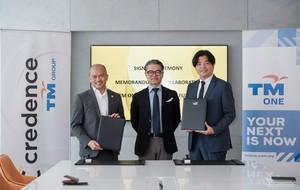 Fujifilm Malaysia Partners With Telekom Malaysia Unit on Cloud Medical Imaging Fujifilm Malaysia said on April 20 it signed a partnership with Credence, a cloud and digital services company and a subsidiary of Malaysian telecommunications firm Telekom Malaysia (TM), to roll out a cloud-based medical imaging information system in the country. Under the memorandum of understanding, the companies plan to combine TM’s cloud infrastructure, nationwide telecommunications network and cybersecurity capabilities with Fujifilm’s medical imaging and diagnostic technology. The aim is to standardize and enable sharing of imaging information across Malaysian health care institutions, improving access to imaging records for medical staff and supporting faster diagnoses and more consistent patient care. The plan calls for operating Fujifilm’s vendor-neutral archive system, Synapse VNA, on TM’s Cloud Alpha Edge platform to centrally manage medical images and data stored across imaging management systems from different manufacturers and across hospital department systems.* This article has been translated by AI. 2026-04-22 15:27:14
 -
 Lee Jae-myung Pledges Expanded Strategic Cooperation With Vietnam on Nuclear, Infrastructure Lee Jae-myung said April 22 (local time) that South Korea will expand cooperation with Vietnam in strategic areas including nuclear power, infrastructure and science and technology innovation, while stepping up coordination on global challenges such as supply chain stability, sustainable growth and climate change. Speaking at a luncheon meeting with Koreans in Vietnam at a hotel in Hanoi, Lee, who is on a state visit, said he aims to use the trip to develop what he called the two countries’ already top-level cooperation into a more future-oriented and strategic partnership. Lee noted that since establishing diplomatic relations in 1992, the two countries have become each other’s top three trading partners within a generation. He said Vietnam is South Korea’s largest destination for investment, with about 10,000 South Korean companies operating there. The two countries upgraded ties to a comprehensive strategic partnership in 2022, marking the 30th anniversary of diplomatic relations. Lee said South Korea and Vietnam have much in common, citing shared historical, cultural and economic bonds. He pointed to long periods of foreign domination, efforts to overcome hardship through their own strength, and the pain of division and war, adding that both societies share emotional ties rooted in the Confucian cultural sphere. Lee also encouraged athletes, singling out Kim Sang-sik, head coach of Vietnam’s national soccer team, who attended the luncheon. Noting that soccer is called the “king sport” in Vietnam, Lee joked that Kim would then be the “king of kings,” calling it “something to be truly proud of.” Lee, who said he once served as owner of Seongnam FC while he was mayor of Seongnam, added, “I also was once a soccer club owner, and while trying to make it succeed, I ended up being accused of a strange crime and am now on trial.” Turning to the Korean community in Vietnam, Lee said it has grown to about 200,000 people, making it the largest among ASEAN countries and the world’s fifth-largest Korean community. He expressed support for the community and said about 100,000 South Korea-Vietnam multicultural families are a valuable foundation linking the two countries by blood but face various difficulties. He pledged that the “people’s sovereignty government” would closely examine those challenges and do its best to resolve them quickly to build an inclusive South Korea. Lee began his state-visit schedule with the meeting and was set to hold a summit later that afternoon with To Lam, the Communist Party general secretary and state president. It will be Lee’s first meeting with Lam since August last year, eight months ago. Lam also assumed the post of Vietnam’s state president in April this year. An official welcoming ceremony was to be held beforehand in the main garden of the Presidential Palace in Hanoi. The schedule was to include a small-group summit, expanded talks, an exchange of memorandums of understanding, and a joint press statement. A state banquet was planned after the summit.* This article has been translated by AI. 2026-04-22 15:24:02
 -
 Villa Sales Jump in Seoul School Districts as Apartment Lease Listings Dry Up As apartment jeonse (lump-sum deposit leases) listings tighten in Seoul’s top school districts, more families are turning to villas — low-rise multi-family and row-house homes — in areas such as Mok-dong and Daechi-dong. Data from the Transport Ministry’s real estate transaction disclosure system showed that villa purchases and new lease contracts rose ahead of the new school term in key education hubs including Mok-dong, Daechi-dong and Junggye-dong in Nowon District. In Mok-dong, a major private academy area, villa sales totaled 400 as of the reporting date, with 347 deals concentrated from January through March. That was up 82.6% from 190 in the same period a year earlier. New jeonse and monthly-rent contracts also increased. The total reached 534 as of the reporting date, with 453 signed from January through March. That was an 11.0% rise from 408 a year earlier, suggesting school-term demand lifted both sales and rentals. Daechi-dong in Gangnam District and Junggye-dong showed similar patterns. In Daechi-dong, jeonse and monthly-rent transactions rose 7.8% to 250 in January-March from 232 a year earlier; the cumulative total was 277 as of the reporting date. Villa sales in January-March came to 23, up 35.3% from 17 a year earlier, with 28 sales recorded in total. In Junggye-dong, January-March sales jumped to 16 from seven a year earlier, a 128.6% increase; the cumulative total was 17. New lease contracts totaled 33 as of the reporting date, with no transactions recorded in April. That was more than triple the 10 contracts in the same period last year. The villa market in school districts began to warm after March last year, when the Gangnam three districts and Yongsan District were designated land transaction permit zones, adding owner-occupancy requirements. In Daechi-dong, row-house and multi-family sales rose from 17 in 2023 to 29 in 2024 and 90 in 2025. The trend continued through tighter lending rules and an expansion of regulated areas last year, and analysts said worsening lockups in jeonse supply further boosted villa demand. In Daechi-dong, row-house and multi-family sales in the second half of last year (58) were nearly double the first half (32). Rising apartment prices in school districts also pushed demand toward villas. Apartment sale prices in the Gangnam three districts rose about 6%, or 2.6 times Seoul’s overall average increase of 2.29%. The apartment rental market has tightened as multi-home owners put properties up for sale, reducing lease supply, while more tenants renew existing contracts, creating a chain reaction of shortages. According to the real estate platform Asil, Mok-dong jeonse and monthly-rent listings have been declining, and the market says the supply crunch is being felt. Jin Chang-ha, a professor in Hanyang University’s economics department and president of the Korea Housing Association, said the shift reflects structural change as investment-driven ownership declines and owner-occupancy rises amid tighter rules. “With moves to regulate loan maturities on top of restrictions on non-resident single-home owners and new jeonse loan guarantee rules, the market structure is being reshaped, leading to a structural transition,” he said. 2026-04-22 15:22:50
 -
 Samsung Electro-Mechanics shares rise nearly 5% on outlook for record results Samsung Electro-Mechanics surged on April 22, as upbeat brokerage forecasts appeared to lift investor sentiment. According to the Korea Exchange, shares were trading at 810,000 won as of 2:48 p.m., up 38,000 won, or 4.92%, from the previous session. Earlier in the day, Daishin Securities raised its target price by 67.3% to 920,000 won in a premarket report, saying improved profitability would help the company expand market share. Seo Ji-won, an analyst at Daishin Securities, said Samsung Electro-Mechanics is expected to post its best-ever results for a second straight year. He cited grounds for a higher valuation including record performance in 2026 and 2027, additional investment in flip-chip ball grid array (FC-BGA) to move into the No. 1 market-share position, and expectations of price increases for FC-BGA and multilayer ceramic capacitors (MLCC). Seo said FC-BGA prices are rising, driven by artificial intelligence, and that a structural supply shortage for AI server and data-center FC-BGA is persisting. He added that large-scale additional investment could help the company become the global No. 1 in AI-related FC-BGA. He also said demand for MLCC is growing in industrial uses, particularly in AI semiconductors and data centers, and that rising market share could deepen supply shortages, creating conditions that would allow price increases.* This article has been translated by AI. 2026-04-22 15:22:06
 -
 HYBE Latin America to Launch Low Clika Drama Series Ahead of New Album HYBE Latin America is rolling out a new project that pairs artists’ music with a storyline, applying what it calls a K-pop-style approach to expanding fan experiences in the Latin market. The company said on the 21st that band Low Clika will return with a new album in the second half of this year. The group drew attention through the band audition program “Pase a la Fama” and debuted in November 2025, promoting a sound that blends traditional Mexican folk music with trap, urban and pop elements. Ahead of the comeback, a short drama series titled “Low Clika: La Serie” will be released. Starting on the 23rd, one episode will be posted each week on the global superfans platform Weverse, as well as YouTube and TikTok. The drama follows the members as they face a crisis amid betrayal and intrigue, then overcome it and grow. It is structured around four main episodes, and a related new song will be released each time an episode concludes over about a month. Myrna Perez, general manager of SIENTO Records, a HYBE Latin America label, said building a connected universe in which music-centered content and narrative are organically linked is “one of HYBE and Chairman Bang Si-hyuk’s core philosophies.” She added, “Through this project, fans will experience the artists’ story, not just listen to the music.” 2026-04-22 15:21:17
 -
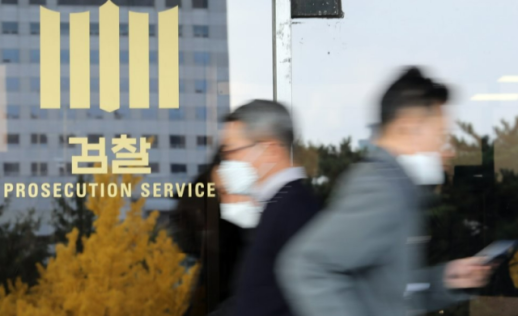 Audit Board Official Charged Over Only Part of Alleged 1.58 Billion Won Bribery Case Amid Jurisdiction Dispute A jurisdiction dispute between the Corruption Investigation Office for High-ranking Officials and prosecutors has led to a case in which only part of an alleged 1.58 billion won bribery scheme involving a senior Board of Audit and Inspection official is being punished. The Seoul Central District Prosecutors Office’s Criminal Division 5, led by Chief Prosecutor Jeong Jae-sin, said Tuesday it indicted a man identified only as Kim on charges including bribery and embezzlement under the Act on the Aggravated Punishment of Specific Economic Crimes. He was indicted without detention. Prosecutors said Kim effectively ran an electrical construction company set up under a borrowed name and is suspected of receiving about 1.58 billion won from construction firms subject to audits, disguised as subcontract payments and other fees. Prosecutors brought to trial only the portion they said was clearly supported by evidence: about 290 million won in alleged bribes from 2018 to 2021. They said Kim received illicit payments three times from private companies in return for providing audit-related favors or introducing a public official who served as a bid evaluation committee member for a government-funded project. Three employees of private construction firms accused of paying bribes to Kim were also indicted. Prosecutors declined to indict Kim over the remaining 1.29 billion won, saying evidence was insufficient. The Board of Audit and Inspection asked the CIO in October 2021 to investigate the case. After two years of investigation, the CIO sought an arrest warrant for Kim in November 2023 on suspicion of bribery and other charges, but a court rejected it, citing insufficient substantiation of the allegations. After the warrant was denied, the CIO questioned only some alleged bribe givers, then sent the case to prosecutors while requesting indictment. Prosecutors, citing the court’s reasoning, said supplemental investigation was needed and sent the case back to the CIO. The CIO refused to accept it, saying the transfer had no legal basis, and the case returned to prosecutors. Prosecutors then sought search-and-seizure and communications warrants to pursue additional evidence, but the court rejected the requests, citing a lack of legal grounds to grant prosecutors authority to conduct further investigation in a CIO case. Prosecutors ultimately indicted only the portion they said was sufficiently proven and closed the rest with a nonindictment decision. A Seoul Central District Prosecutors Office official said institutional limits prevented prosecutors from requesting supplemental investigation by the CIO or conducting it themselves, making it difficult to quickly determine the full scope of the alleged wrongdoing. The official said it was the kind of outcome that can occur when the right to demand supplemental investigation is not supported by the system and prosecutors’ own supplemental investigative authority is not recognized.* This article has been translated by AI. 2026-04-22 15:20:09
 -
 WFP Warns Middle East Tensions Could Deepen Myanmar Food Crisis The U.N. World Food Programme warned on the 20th that rising tensions in the Middle East could further worsen Myanmar’s food crisis. WFP said limits on supplies of imported fertilizer and higher prices are hurting agriculture and disrupting rice planting for the rainy season. It warned of falling farm output and growing pressure on rural livelihoods. About one-quarter of the population — 12.4 million people — is already facing severe food insecurity, it said. Independent outlet The Irrawaddy reported on the 20th that Myanmar’s agriculture sector relies heavily on imported fertilizer, with imports in fiscal 2025 (April 2025 to March 2026) topping 1.1 million tons. About half is supplied by China, but China’s restrictions on fertilizer exports in late March have intensified shortages inside Myanmar. Market prices for urea fertilizer have surged to 90,000 to 150,000 kyat per bag (about 50 kilograms), undermining rice farmers’ profitability. A farmer in the lower Irrawaddy River delta said, “Even if I sell 10 bags of rice, I can’t cover the cost of even one bag of fertilizer,” adding that soaring costs are making it difficult to keep farming. Production costs have risen to more than about 1 million kyat per acre, while rice market prices are said to be below about 1.5 million kyat per 100 bags, leaving many farmers struggling with losses. Harvests are also declining. One farmer said output from a paddy field of about 1.2 hectares fell to 130 bags (about 3 tons) from the usual 300 bags (about 7 tons) as fertilizer and irrigation costs climbed and damage from harmful animals added to losses.* This article has been translated by AI. 2026-04-22 15:19:19
 -
 Hanse Yes24 Group blood drive collects donor cards to aid children with cancer Hanse Yes24 Group has launched a relay blood donation campaign involving employees across its affiliates to mark the 40th anniversary of the death of Dr. Kim Gi-hong, a pioneer of South Korea’s blood donation movement. Industry officials said the “Life Sharing, Love Blood Donation Campaign” began April 16 at the group’s headquarters in Seoul’s Yeouido. Employees from key affiliates, including Hanse Yes24 Holdings, Hanse Corporation, Color & Touch, Yes24, and Dong-A Publishing, volunteered to donate. Staff at Hanse Mobility in Daegu are scheduled to continue the campaign on May 20 and May 27. This year’s campaign is also aimed at providing direct support for children with cancer. Blood donor cards donated by employees will be delivered to the Korea Pediatric Cancer Foundation. The group said it will also set aside 10,000 won per card through a “special matching grant” to provide additional support for patients’ treatment costs. The companywide relay was planned to honor the legacy of Dr. Kim, the late father of group founder and chairman Kim Dong-nyeong. Dr. Kim, a physician credited with laying the groundwork for laboratory medicine in South Korea, became head of the Korea Blood Donation Association in 1971. He introduced systems such as blood donation deposits and patient reimbursement, and worked to end the then-widespread practice of paid blood selling. Hanse Yes24 Group has held an annual companywide blood donation campaign since 2022. It also received a Blood Services Merit Award from the Korean Red Cross this year in recognition of its efforts. “Dr. Kim’s dedication to saving lives through blood research is now being carried forward as hope for children with cancer,” Hanse Yes24 Holdings Vice Chairman Kim Seok-hwan said. “We will continue to uphold his spirit of sharing life by helping stabilize the blood supply and strengthen the culture of blood donation.” * This article has been translated by AI. 2026-04-22 15:18:27
 -
 Hyundai Livart Launches Three New Furniture Lines for Total Interior Solutions Hyundai Livart said Tuesday it has launched three new products targeting the first-half moving and wedding season. The company said the releases share a theme of “user-centered space optimization,” focusing on efficient storage, improved comfort and multiuse designs that blur boundaries in the home. Hyundai Livart said it aims to offer a “total interior solution” spanning spaces from kitchens and living rooms to bedrooms and home offices. The “Edit” built-in wardrobe uses a made-to-order system adjustable in 5-millimeter increments to maximize storage efficiency, the company said. Its modular design lets users reconfigure the interior to fit their lifestyle. It comes in white and greige, and uses a stone-like texture intended to make the unit part of the room’s overall look. Customers can also choose an “endless door” option that extends the door line to the end of the wall to make the space appear larger, Hyundai Livart said. The “Swanie” is a hotel-style bed designed to bring a hotel-room feel to the home, the company said. It features a stable structure and restrained design, with aluminum details used in the frame. Indirect lighting runs continuously across the headboard and the tops of both side panels to create a more comfortable sleeping environment. It is available in ivory and deep brown, Hyundai Livart said. The “WeMove” is a multipurpose smart table with an electric lift system intended for use across living rooms, kitchens and home offices, the company said. The tabletop height can be adjusted from 610 millimeters to 1,020 millimeters for activities including meals, children’s play, studying and working from home. Hyundai Livart said it uses dual motors from “Jechang,” which it described as the world’s top linear motor manufacturer, to reduce vibration and noise and improve stability. The table also uses a ceramic top designed to resist stains and scratches, and a minimalist design meant to fit in various rooms. A Hyundai Livart official said the new products prioritize core function and user convenience over decorative elements. “We will continue to introduce practical products that naturally fit into daily life while improving quality of life,” the official said. * This article has been translated by AI. 2026-04-22 15:17:37
 -
 SK Group to Turn Off Lights at Major Offices for Earth Day SK Group said it will join an Earth Day lights-out event to underscore the seriousness of the climate crisis and the need to cut carbon emissions. The group said lights at major headquarters buildings of SK Inc. and affiliates including SK Innovation, SK Telecom, SK ecoplant, SK Gas, SK Square, SK Networks and SK Chemicals will be turned off for 10 minutes starting at 8 p.m. on April 22. SK said it is encouraging participation through internal bulletin boards and social media so employees can take part in saving energy in daily life. Separately, SK said it has also been voluntarily switching off nighttime lighting for SK logos attached to the exteriors of key buildings since April 8, including SK Seorin Building, T Tower, Susong Square, Jongno Tower, Samil Building, SK U Tower and Pangyo ECO Hub, as part of broader efforts to conserve energy amid a growing national energy crunch.* This article has been translated by AI. 2026-04-22 15:16:51