
Journalist

Lee Hugh
=
-
 Democratic Party infighting flares as Rep. Ahn Ho-young’s hunger strike drags on As Rep. Ahn Ho-young continues a hunger strike demanding a renewed party inspection into allegations that rival candidate Rep. Lee Won-taek had meal expenses paid by someone else in the Democratic Party’s North Jeolla governor primary, two senior party officials publicly criticized party leader Jung Cheong-rae for what they called an indifferent response. The dispute appears to be deepening within the party’s top leadership. Supreme Council Senior Member Lee Eon-ju and Supreme Council Member Kang Deuk-gu held a news conference in front of Ahn’s tent site at the National Assembly, saying Ahn had entered his 12th day of fasting and that they had come to ask him to stop. Lee said that when the allegations against Lee Won-taek surfaced, she argued the party should conduct a proper inspection and proceed with the primary in the interest of fairness, citing what she called the need for balance with the case involving allegations of cash envelopes tied to North Jeolla Gov. Kim Kwan-young. She said she was unable to press that position through and warned that optimism about the local elections appeared to be overshadowing procedural and fairness concerns. “Showing fairness is the minimum duty to voters, the public and the president,” Lee said, questioning how the party leader could fail to visit a fellow lawmaker who is fasting while raising concerns. “At least show the minimum decency to someone on a hunger strike,” she said. She also pointed to the leadership’s decision to hold a Supreme Council meeting on a boat near Yokjido, saying that while one side was “holding back tears and crying out,” the leadership looked as if it were “posing for a photo shoot” at sea. Kang also appealed to Jung, saying politicians must focus on people’s livelihoods but should also listen to Ahn and “take his hand.” Kang said he and Lee, as members of the leadership, felt “boundless responsibility” and even “a sense of shame.” North Jeolla Gov. Kim, who has said he supports Ahn, also visited the site, according to the officials.* This article has been translated by AI. 2026-04-22 11:35:43
 -
 Vietnam Festival 2026 Set for Late May at Tokyo’s Yoyogi Park, Featuring Water Puppetry The Vietnam Festival 2026 executive committee said April 21 that “Vietnam Festival 2026” will be held in late May at Yoyogi Park in Tokyo’s Shibuya Ward. The two-day event is scheduled for May 30-31 at the park’s event plaza. Organizers said it will feature 120 booths and is expected to draw 180,000 visitors. With “immersive festival” as its theme, the event will expand hands-on content and include performances of Vietnam’s traditional water puppet theater, along with concerts by popular Vietnamese artists. Organizers said a mobile ordering system will be introduced for the first time, allowing visitors to order and pay by smartphone via QR codes at the venue, in an effort to reduce wait times and improve the overall experience. The water puppet shows, typically staged in theaters, will be performed several times a day in the festival’s open-air setting. Concerts will feature ERIK and Ngô Lan Hương, organizers said. The Vietnam Festival has been held annually since 2008 and is Japan’s largest Japan-Vietnam exchange event, drawing more than 100,000 visitors each year. In 2025, it attracted 140,000 visitors.* This article has been translated by AI. 2026-04-22 11:35:11
 -
 KelpDAO Hit by $290M DeFi Hack; Possible Link to North Korea’s Lazarus Cited A major hack has hit the decentralized finance platform KelpDAO, with a North Korea-linked hacking group cited as a possible culprit. The attack has not been officially confirmed as North Korean. LayerZero, which operates the underlying infrastructure, said in a preliminary review that the incident may be connected to the Lazarus Group, specifically a subgroup known as TraderTraitor. LayerZero said on April 21 (local time) that the hack occurred April 18 and caused losses of about $290 million, or about 4.285 trillion won. Investigators believe the attacker interfered with KelpDAO’s process for verifying asset transfers, allowing nonexistent transactions to be approved as if they were legitimate — effectively tricking the validation system to siphon funds. The two sides are disputing how the breach was possible and who is responsible. LayerZero said KelpDAO’s verification design was overly simple, creating a single point of failure. KelpDAO countered that the root cause was a breach of LayerZero-provided infrastructure, not a flaw in KelpDAO’s service. Fallout is spreading. The Arbitrum Security Council froze 30,766 ether tied to the hack, worth about $71 million, or about 104.9 billion won. Crypto lending service Aave also temporarily halted transactions involving assets linked to the incident while it assesses the scale of losses.* This article has been translated by AI. 2026-04-22 11:34:29
 -
 HD Hyundai Heavy Industries to Supply $4.6 Billion in Power Equipment for U.S. Data Centers HD Hyundai Heavy Industries has taken its first step into the U.S. market as demand for data centers grows. The company said Tuesday it recently signed a supply contract with U.S. energy infrastructure developer Aperion Energy Group for power-generation equipment based on 20-megawatt HiMSEN engines. The deal totals 684 megawatts and is worth 627.1 billion won, the largest power-engine contract HD Hyundai Heavy Industries has signed to date. The equipment will be used for data center power infrastructure, where stable, large-scale electricity supply is required. The 20-megawatt HiMSEN units are large, medium-speed engines that the company said offer world-class generation efficiency and reliability. HD Hyundai Heavy Industries said the contract is significant as it expands its business portfolio into power generation for data centers. The U.S. data center market has been growing rapidly, driven by the spread of generative AI services and increased investment in cloud infrastructure. The International Energy Agency has projected that U.S. electricity demand will continue to rise through 2030, with about half of the increase attributed to the rapid expansion of data centers, the company said. HD Hyundai Heavy Industries said it plans to broaden applications for its HiMSEN engine lineup across data centers, industrial power, and emergency and auxiliary power. Han Ju-seok, head of the company’s Engine & Machinery Business, called the contract “an important bridgehead” for entering the U.S. data center market. “Building on this achievement, we will strengthen our presence in North America and continue to create diverse power-generation business opportunities, including data centers,” he said.* This article has been translated by AI. 2026-04-22 11:33:43
 -
 People Power Party chief backs Kim Jin-tae in Yangyang as governor warns of voter anger Jang Dong-hyeok, leader of the People Power Party, visited Yangyang in Gangwon Province on the 22nd to announce tailored campaign pledges and bolster Kim Jin-tae, the incumbent governor and the party’s candidate for the post. Kim, citing sour local sentiment, urged Jang to take responsibility and resolve the situation. Speaking at a party event at a fishing village hall in Yangyang County, Kim said he has met many voters who tell him, “I used to be with the red party, but thinking about the central party this time makes me so angry I won’t vote.” “At first I thought I just needed to work hard,” Kim said, “but the party has to back us up to some extent.” He warned that if such voters stay home, “we really have no hope.” Kim said there are about 300 party candidates in Gangwon Province and many feel the same way. He added that some candidates asked him to speak even more forcefully when meeting Jang. He said that even after spending all day on the trail until his feet swell, “every time central news breaks, my heart sinks.” With 42 days left until the election, he said, candidates feel the pressure. Kim, recalling their time together on the National Assembly’s Legislation and Judiciary Committee, told Jang he hoped he would “go back to the great Jang Dong-hyeok of the past.” Jang said Gangwon’s development requires a governor who has lived alongside residents and knows the province well. Taking aim at Democratic Party candidate Woo Sang-ho, Jang said Gangwon’s forests and development cannot be entrusted to a “parachute candidate” who has lived his whole life without ties to the province. Jang credited Kim with launching the Gangwon Special Self-Governing Province and said Kim continues to fight what he called the Lee Jae-myung administration’s neglect of Gangwon, including by shaving his head in protest. He said the People Power Party would stand firmly with Kim and devote all its strength to Gangwon’s development. The party’s tailored pledges for Gangwon include: △ linking the Seoul metropolitan area and Gangwon within about one hour by transportation △ promoting a medical artificial intelligence-based regional development project △ building a clean methanol and critical minerals-based cluster in Taebaek △ creating a medical industry cluster in Samcheok △ establishing a hydrogen-specialized complex along the east coast. * This article has been translated by AI. 2026-04-22 11:31:37
 -
 BTS' song tops Billboard global charts for fourth straight week SEOUL, April 22 (AJP) - K-pop juggernaut BTS' latest song has held the top spot on Billboard's global charts for four consecutive weeks. According to the American music chart, "Swim," the title track from their fifth full-length album "ARIRANG" remained at the top of the Global 200 and Global Excl. U.S. charts for the week ending this Saturday, extending its run to a fourth straight week. Their album also held steady on the main U.S. charts, remaining in the top three of the Billboard 200 albums chart, while "Swim" has stayed on the Hot 100 since its worldwide release on March 20. The momentum extends to their global tour, which kicked off in Goyang, Gyeonggi Province on April 9. They are scheduled for some 85 shows across 34 cities around the world, with more than half already sold out, the most dates ever for a South Korean act on a single tour. Following their successful concerts in Tokyo, Japan, last week, they are set to perform in Tampa, Florida for three days starting this Saturday, as they ramp up the North American leg of the tour. Separately, BTS will also hold gigs along with other programs to meet fans, as part of projects stopping in cities including Las Vegas next month and Busan in June. 2026-04-22 11:31:00
 -
 Democratic Party Unveils Local Election Platform, Calls for Region-Led Growth The Democratic Party on the 22nd announced an overall platform for the June 3 local elections built around five visions and 15 policy tasks, as it seeks victory in the vote. At a platform briefing held at the National Assembly, the party said it would pursue what it called a major shift aimed at “normalizing the nation,” including new-industry growth and region-led development tied to the Lee Jae-myung government’s “5 poles, 3 special zones” approach. The party listed its five visions as: region-led growth and balanced national development; growth in new industries such as artificial intelligence and an economic leap; guaranteeing opportunity and “national success”; stabilizing livelihoods and a fair society; and “normalizing the nation” and restoring popular sovereignty. Han Jeong-ae, the party’s policy chief, said the local elections share a common goal of supporting the Lee Jae-myung government and achieving “balanced growth for the people.” She added that detailed pledges would be presented later. Yoo Dong-soo, the party’s vice chair for economic affairs, said the party would designate “mega special zones” linked to the government’s “5 poles, 3 special zones” policy to create regional growth hubs. He said the party would provide policy support including fiscal incentives and stronger local autonomy. Yoo also outlined a “Our Child Self-Reliance Fund,” under which the government would enroll children in a fund from birth and make regular deposits. He said withdrawals would be allowed after the child becomes an adult, with use limited to purposes such as education and starting a business. Park Sang-hyeok, the party’s vice chair for social affairs, said the party would introduce “climate insurance” to reduce economic losses caused by the climate crisis through an insurance system backed by the central or local governments. He also said the party would promote a “sunlight income village” policy, forming cooperatives on public land to install solar power plants and use the proceeds, and pursue supportive housing policies to help older adults and people with disabilities with daily living as society enters a super-aged era. Han noted that the terms of local government heads elected in this vote would be similar to President Lee’s, and urged Democratic Party candidates to take an active approach. “The Democratic Party and President Lee have a clear goal of carrying out balanced regional development and drawing out real growth engines,” Han said. “I hope those who will work with us are elected. Those who win in this local election should move forward proactively.”* This article has been translated by AI. 2026-04-22 11:30:42
 -
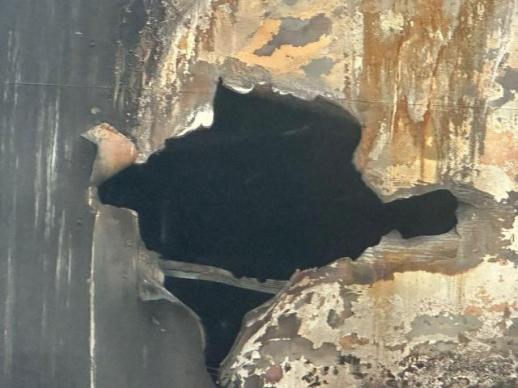 Korea's pump prices rise faster than Japan and US SEOUL, April 22 (AJP) - Kuwait’s declaration of force majeure on crude exports is adding to supply concerns at a time when South Korea’s fuel prices are already rising sharply, amplifying the impact of the prolonged Middle East conflict. State-run Kuwait Petroleum Corp. last Friday notified buyers that it would maintain contractual force majeure for an extended period, citing damage to infrastructure and the time needed to restore full operations. South Korea relied on Kuwait for 8.7 percent of its crude imports last year. With the Strait of Hormuz effectively closed for nearly two months, Seoul has been forced to turn to longer shipping routes to secure additional volumes from other Gulf producers such as Saudi Arabia and the United Arab Emirates. Unlike the two, Kuwait relies entirely on the crippled waterway to ship out its energy. The strain is already visible at the pump. Gasoline prices have climbed above 2,000 won per liter, with the national average reaching 2,003.17 won as of Tuesday, while diesel stood at 1,996.76 won, rising 18.4 percent and 25.0 percent, respectively, from Feb. 27, before the conflict escalated, according to the Ministry of Trade, Industry, and Resources Wednesday. Neighboring Japan has kept gasoline prices in the 1,500 won range — 1,527 won as of April 19 — through sustained government subsidies, limiting increases to single digits over the same period. Korea’s prices are 23.8 percent higher than Japan’s for gasoline and 28.3 percent higher for diesel. “While Korea has implemented a price ceiling, our rate of increase is more than double that of Japan,” Yang Ki-wook, deputy minister for industrial resource security, admitted at a briefing of the government’s Middle East response task force. “Japan appears to be continuing to inject substantial subsidies.” The United States presents a more mixed pattern. Gasoline prices stood at 1,586 won per liter as of April 20, about 20.8 percent below Korea’s level, while diesel was higher at 2,170 won, reflecting stronger freight demand and refining margins. The comparison comes as Seoul faces mounting calls to more aggressively curb prices through fiscal measures. Officials maintain that Korea is focused on managing the pace of increases — through a combination of price ceilings and fuel tax adjustments — rather than directly subsidizing retail prices. "With wide variations in price levels and increases across countries, whether Korea is excessively suppressing prices should be assessed in comparison with other cases,” Yang said. Korean refiners have been diversifying import sources to secure replacement volumes, but dependence on the Middle East continues to constrain flexibility. Four of Korea’s top five crude suppliers — excluding the United States — are located in the region, leaving supply exposed if disruptions persist. The pressure is also spilling into industrial supply chains. Concerns over ethylene gas — a key input derived from naphtha and used in shipbuilding — have prompted emergency coordination between the government and industry. HD Hyundai has begun producing and supplying ethylene through its affiliate HD Hyundai Chemical, shipping around 2,000 tons from the Daesan petrochemical complex to shipyards near Ulsan. About 200 tons will be allocated to smaller shipbuilders. “We will continue to expand public-private cooperation to prevent production disruptions amid supply chain instability,” Yang said. 2026-04-22 11:30:14
 -
 FuriosaAI Names Ex-Nvidia Executive Charlie Foo as Principal Advisor FuriosaAI, an artificial intelligence semiconductor company, is stepping up its push into the AI infrastructure market by hiring a senior executive with experience at major global technology firms. FuriosaAI said April 22 that it has appointed Charlie Foo, who helped expand AI infrastructure and enterprise ecosystems at Nvidia and Mellanox, as principal advisor. The hire comes as FuriosaAI moves to commercialize its AI chip, RNGD (Renegade), globally. The company recently established a subsidiary in Portugal and said it is accelerating its expansion into overseas markets by bringing in top-tier talent. Foo is an AI computing specialist with about 35 years of experience at IBM, Brocade, Mellanox and Nvidia. He previously led Mellanox operations across Asia-Pacific and Japan and worked on expanding Nvidia’s enterprise and partner ecosystem in the Asia-Pacific region, the company said. FuriosaAI said Foo will advise its overall global growth strategy, focusing on expanding strategic partnerships, building an enterprise customer base and developing an AI infrastructure ecosystem. “The next phase of AI depends not just on model performance, but on how efficiently it can be deployed at scale,” Foo said. He added that FuriosaAI “has strong competitiveness in the global AI infrastructure market” because it combines a differentiated architecture with mass-production capability. Chief Executive Baek Jun-ho said the company has entered “a full-fledged growth phase” based on mass production of RNGD and that more talent with global experience is joining. “This hire will further accelerate strategic expansion and partnership building in global markets,” Baek said.* This article has been translated by AI. 2026-04-22 11:29:57
 -
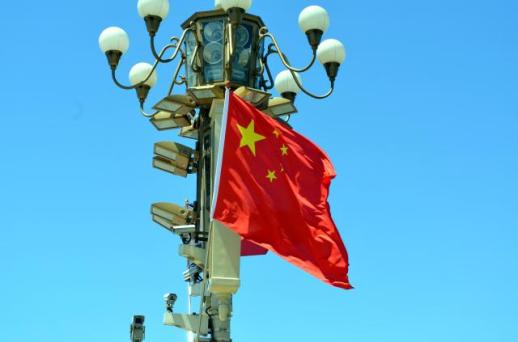 China’s March Power Use Rises 3.5% as EV Charging Demand Jumps China’s National Energy Administration said on the 20th that nationwide electricity consumption in March 2026 rose 3.5% from a year earlier to 859.5 billion kilowatt-hours. Demand for power used in charging and battery-swap services for electric vehicles and other “new energy vehicles” increased sharply. By sector, primary industry consumption rose 6.7% to 11.3 billion kWh, while secondary industry use increased 2.0% to 570.8 billion kWh. Tertiary industry consumption climbed 7.7% to 160.1 billion kWh. Within secondary industry, power use by high-tech and equipment manufacturing rose 5.6%. In the service sector, electricity used for charging and battery-swap services surged 51.3% to 13.0 billion kWh. Power consumption for internet data services also jumped 40.1% to 8.0 billion kWh. Household electricity use rose 5.2% to 117.2 billion kWh. For January through March, electricity consumption increased 5.2% from the same period a year earlier to 2.5141 trillion kWh. Primary industry use rose 7.1% to 33.6 billion kWh, secondary industry use increased 4.7% to 1.5987 trillion kWh, and tertiary industry use climbed 8.1% to 483.3 billion kWh. Household consumption rose 3.4% to 398.5 billion kWh.* This article has been translated by AI. 2026-04-22 11:29:25