
Journalist

Lee Hugh
=
-
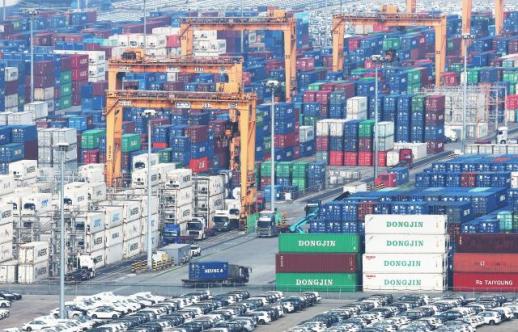 South Korea’s Exports Jump 49.4% in Early April on Chip Surge; Crude Imports Rise for Third Month Semiconductor strength pushed South Korea’s exports through mid-April to the highest level ever recorded for that point in the month, while crude oil imports rose for a third straight month amid the war in the Middle East. The Korea Customs Service said Monday that exports for April 1-20 totaled $50.4 billion on a customs-clearance basis, up 49.4% from a year earlier. With the same 15.5 working days as last year, average daily exports came to $3.25 billion. Semiconductors led the gains. Chip exports rose 182.5% to $18.3 billion, lifting their share of total exports to 36.3%, up 17.1 percentage points from a year earlier. Exports of petroleum products climbed 48.4%, and computer peripherals surged 399.0%. Passenger car exports fell 14.1%, and auto parts declined 8.8%. By destination, exports increased to China (up 70.9%), the United States (51.7%), Vietnam (79.2%), the European Union (10.5%) and Taiwan (77.1%). Imports for the period totaled $39.9 billion, up 17.7%. Imports rose for semiconductors (58.3%), crude oil (13.1%) and semiconductor manufacturing equipment (63.3%), while machinery slipped 0.6%. Energy imports — crude oil, gas and coal — increased 6.8%. Crude oil imports for April 1-20 rose to $4.8 billion, extending gains from February ($4.4 billion) and March ($4.6 billion). With exports exceeding imports, South Korea posted a $10.4 billion trade surplus for the period. 2026-04-21 13:46:25
 -
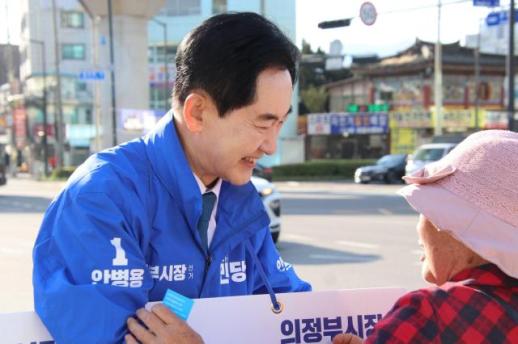 Uijeongbu mayoral hopeful Ahn Byeong-yong urges policy debate, warns against 'blind' runoff The Democratic Party’s primary for Uijeongbu mayor has narrowed to a runoff between preliminary candidates Kim Won-gi and Ahn Byeong-yong, with Ahn on Monday formally proposing a one-on-one policy debate and calling for a contest focused on issues. The party’s Gyeonggi provincial chapter said no candidate won a majority in voting held April 19-20, sending the top two finishers to a runoff. The final vote is scheduled for April 25-26. “Having reached the runoff with strong support from citizens and party members, it is time to prove, confidently and in front of the public, who is best suited to solve Uijeongbu’s many pending issues,” Ahn said in explaining the proposal. Ahn cited major local challenges including development of returned U.S. military base sites, attracting large companies, the proposed GTX-G line and an extension of Seoul Subway Line 8. He said the runoff should not become a “blind primary” driven by organizational mobilization, and argued that sharply testing candidates’ visions and policy capacity is the minimum owed to citizens and party members. Ahn said he would follow Kim’s side on practical details such as the debate format, time and venue. Transportation has been a central theme for Ahn and has also emerged in broader regional policy coordination. On April 20, Ahn signed a joint policy agreement with Kim Han-jung, a preliminary candidate for Namyangju mayor, calling for the extension of Line 8 — currently ending at Byeollae in Namyangju — to Uijeongbu’s Tapseok, Minrak and Gosan areas, and for the plan to be prioritized in the 5th National Rail Network Construction Plan. They also agreed to pursue a new GTX-G route linking Pocheon, Uijeongbu, Namyangju, Guri and Seoul; strengthen connections between the Seoul Metropolitan Area’s First and Second Ring Expressways; and build an advanced industry and economic belt connecting Uijeongbu’s returned base sites with Namyangju’s Wangsuk new town. At the time, Ahn said the large-scale national project to bring Line 8 into Uijeongbu “cannot be achieved by the strength of any one city alone,” and would require two local governments to unite and persistently persuade the government and the Ministry of Land, Infrastructure and Transport. Ahn has also emphasized economic recovery in the runoff. On April 20, he campaigned under the banner of “reviving Uijeongbu’s economy” at the underground shopping arcade at Uijeongbu Station with actor Lee Ki-young and Ahn Jin-geol, head of the People’s Livelihood Economy Institute. Earlier, he held a policy meeting with small business owners, pledging expanded issuance of local currency, tailored support by commercial district, and a regular channel for communication. “The essence of this election is ultimately a serious economic election asking, ‘Who will revive Uijeongbu’s stagnant economy and help citizens put food on the table?’” Ahn said. In a message to Kim, Ahn said, “Let’s proudly show citizens how healthy and capable our Democratic Party is,” adding that he hopes for Kim’s “generous and forward-looking” acceptance of the debate proposal. The party’s Uijeongbu primary, now in its runoff phase, could shift from a test of organization to a policy showdown over transportation, the economy and urban development solutions.* This article has been translated by AI. 2026-04-21 13:40:59
 -
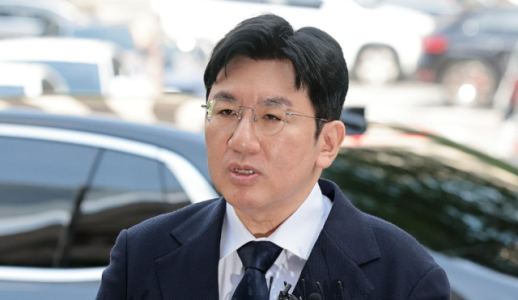 Police Seek Arrest Warrant for HYBE Chairman Bang Si-hyuk Over Alleged IPO Fraud Bang Si-hyuk, chairman of HYBE, is facing possible detention after police sought an arrest warrant over allegations he deceived investors during the company’s initial public offering process and gained about 190 billion won in illicit profits. Police moved to secure his custody about 18 months after opening the probe. The Seoul Metropolitan Police Agency’s Financial Crimes Investigation Unit said Monday it applied for a warrant for Bang on suspicion of fraudulent unfair trading under the Capital Markets Act. The request came about five months after his last questioning in November. Police suspect that in 2019, ahead of HYBE’s listing, Bang told existing investors the IPO was not planned or would be delayed, then steered them to sell their stakes to a specific private equity fund. After the company later went public and the value of those shares rose, investigators say Bang received a portion of the sale profits under a prior undisclosed agreement. Police said they believe Bang gained about 190 billion won. Some findings indicate a structure in which roughly 30% of the profit was to be shared with the private equity fund. An SPC set up by the fund was reportedly used in the stake transfers. The Capital Markets Act bans gaining profits in financial investment transactions through false information or deceptive schemes. If illegal gains exceed 5 billion won, the law allows a sentence of life imprisonment or at least five years in prison. The investigation began after police obtained a tip in late 2024. In June and July last year, police raided the Korea Exchange and HYBE headquarters to secure IPO-related materials and imposed a travel ban on Bang. From September to November, they questioned him five times and continued reviewing the legal issues. The case also involved legal disputes, with prosecutors reportedly rejecting initial search warrant requests twice. As the probe dragged on without additional questioning, police faced criticism for moving too slowly. The warrant request has drawn attention amid a recent diplomatic controversy. The U.S. Embassy in Seoul recently sent police a letter asking that Bang be allowed to travel to the United States. The letter reportedly cited his attendance at events marking the 250th anniversary of U.S. Independence Day in July and the need to support a BTS world tour. Police said they would review the request “in accordance with law and principle,” but the warrant application has effectively limited his ability to leave the country. Bang’s side has denied all allegations, saying he did not mislead investors, the share sales were made at investors’ request, and the IPO process complied with relevant laws and rules. Police said they plan to accelerate the investigation if the court grants the warrant and they take Bang into custody. * This article has been translated by AI. 2026-04-21 13:39:53
 -
 Trump Invokes Defense Production Act to Fund Energy Projects Amid Oil Price Pressure President Donald Trump, facing rising oil-price pressure tied to the Iran war, on Sunday issued measures allowing federal funding for energy-sector projects. Bloomberg News and other outlets reported that Trump released five presidential memorandums invoking the Defense Production Act, targeting U.S. oil production and refining, coal supply chains, natural gas transportation and power-grid infrastructure. The actions allow the Energy Department to direct federal funds to those areas. A White House official told Bloomberg the memorandums would let the administration use tools such as energy purchases and financial support to address delays, funding shortfalls and market barriers affecting industry. The funding is expected to come from a large spending package law passed last year under the Trump administration, according to the report. In the memorandums, Trump cited his declaration of a national energy emergency shortly after taking office, saying ensuring resilient domestic oil production and refining capacity is critical to U.S. defense readiness. He warned that without immediate federal action, U.S. defense capabilities would remain at risk of disruption. He also stressed that securing natural gas and liquefied natural gas is important to U.S. defense and allies’ energy security, adding that insufficient natural gas and LNG export capacity could expose the United States and its partners to danger in a crisis. The Defense Production Act was enacted in 1950 during the Korean War and gives the president authority to intervene to expand private-sector production. It was introduced as federal power to direct industry was strengthened after disruptions in military supplies, the report said. The move was widely interpreted as a response aimed at curbing oil-price increases following Iran’s blockade of the Strait of Hormuz. Trump has also faced pressure to push for an early end to the war as energy prices have surged. Trump has previously used the law for energy policy, including efforts to restart offshore crude production off Southern California. During the 2020 COVID-19 outbreak, he invoked it to expand ventilator production. The previous Joe Biden administration also used the act to boost production of energy technologies such as solar panels and transformers. 2026-04-21 13:39:22
 -
 New Bank of Korea Gov. Shin Hyun-song Faces Inflation, Debt Squeeze Shin Hyun-song’s inauguration as Bank of Korea governor is widely seen as an asset for South Korea’s economic policy establishment. He helped lead global central bank debates at the Bank for International Settlements and has rare experience spanning macro-finance theory and policymaking, fueling high expectations in markets and academia. But even a top economist is facing a difficult reality at the central bank. In his first remarks as governor, Shin said the bank must “promote price stability and financial stability through cautious and flexible monetary policy.” The diagnosis is straightforward. The problem is that the economy is presenting the most challenging mix for monetary policy at the same time: upward pressure on prices and downward pressure on growth. After the war in the Middle East, rising international oil prices have increased inflation risks even as the growth outlook has weakened. For a central bank, it is an uncomfortable moment — tighten to curb inflation, or ease to support the economy. Inflation risks may not have fully surfaced yet. If instability around the Strait of Hormuz persists, higher energy prices could spread across domestic prices with a lag. That is why the fact that inflation remains within the 2% target is not, by itself, a reason for complacency. To anchor inflation expectations, the bank may have to keep the option of raising rates on the table — but that is not a light choice because debt levels are high. Household lending at the five major banks has turned back to growth this month. Mortgage loans are rising with seasonal spring moving demand, and unsecured credit loans have increased for a second straight month. In particular, credit loans increasingly reflect leveraged stock investing as the Kospi sets record highs, suggesting part of the rally is supported by borrowing. As of the end of March, card loan balances also swelled to a record 43 trillion won. As borrowers shut out of banks shift to high-interest loans, concerns about credit quality are growing. Delinquency indicators are also worsening. The delinquency rate on won-denominated loans at domestic banks has climbed to its highest level since May last year, and new delinquencies have increased. It is a sign that repayment burdens are rising for both households and companies. Loans are growing while repayment capacity weakens; asset prices are rising while credit quality deteriorates. Market rates have already reflected those risks. Mortgage rates at commercial banks are running about 4.4% to 7.0% for fixed-rate loans and 3.6% to 6.0% for variable-rate loans. In that context, Shin’s emphasis on “caution” reflects not so much a virtue as a narrow set of options. In his inaugural address, he also stressed a new view of financial stability, arguing that blurred lines between banks and nonbanks, and between domestic and overseas markets, make it difficult to assess systemic risk using old frameworks. Funding flows that skirt regulatory boundaries — including card loans, off-balance-sheet transactions and nontraditional financial products — have already spread across the market. The core risk now is not a sudden explosion but a gradual buildup, not collapse but distortion. The challenge is what comes next. Setting a direction and delivering policy success are different matters. What markets are demanding now is less a refined diagnosis than a decision on priorities. 2026-04-21 13:30:20
 -
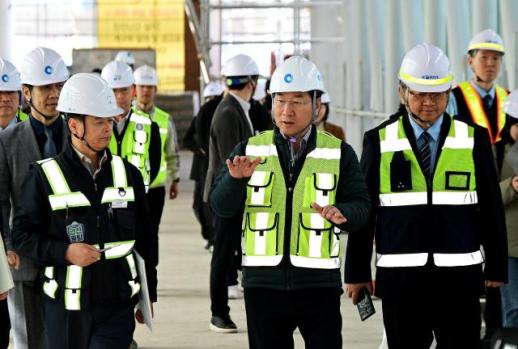 Incheon mayor inspects Songdo Station work for Incheon-origin KTX, set to open in 2026 Incheon city officials on the 21st inspected construction at Songdo Station, the starting point for the Incheon-origin KTX direct-connection project. Mayor Yoo Jeong-bok, city officials and representatives from the National Railroad Authority reviewed progress by major work stages, safety management and facilities being added as part of the Songdo Station expansion. The project will lay new track along a 3.19-kilometer (1.98-mile) section linking the Suin Line and the Gyeongbu high-speed line, while upgrading three stations: Songdo, Choji and Eocheon. Overall progress stands at about 71%. The National Railroad Authority plans to complete key work, including roadbed construction, by the first half of the year, begin integrated test runs in August and open the line in December 2026. The inspection was part of the city’s push to prepare for the year-end opening of the Incheon-origin KTX, one of the eighth elected administration’s core transportation pledges. Yoo called the Incheon-origin KTX “a key transportation infrastructure project that will dramatically improve residents’ mobility,” and urged thorough oversight to ensure the work proceeds safely and without delays. During a site visit to Songdo Station in July last year, Yoo said KTX service originating in Incheon was a long-held wish of residents and a turning point for transportation in the western Seoul metropolitan area, calling for tight schedule control and careful preparation so people can travel nationwide faster and more conveniently. Incheon views the project not as a single rail line but as a central pillar of broader metropolitan transportation expansion. In its major policy announcements this year for transportation, maritime and aviation, the city again listed the Incheon-origin KTX as a project targeting a 2026 opening. It also said it is seeking to have an extension to Incheon International Airport reflected in the fifth national rail network plan. At the time, the city presented the Incheon-origin KTX as part of a strategy to make nationwide travel possible within half a day, alongside the Wolgot-Pangyo double-track rail project, GTX-B, a western metropolitan express rail line and extensions of Seoul and Incheon urban rail lines. The city is also moving ahead with plans tied to development around Songdo Station. It said in December 2024 that differences between the Songdo station-area urban development project and the KTX direct-connection project had been adjusted, and it expected mixed-use development at the station to accelerate. Plans include a multi-level complex combining a transfer support facility in front of Songdo Station with parking, a park and cultural facilities. In addition to 175 existing on-street parking spaces, the city plans to add a transfer parking lot with about 150 spaces. It also outlined a plan to use an average 39-story residential-commercial complex as part of the transfer support facilities. After completing the Songdo Station expansion and opening the Incheon-origin KTX, the city said it plans to continue pushing a rail network expansion strategy that would extend service to Incheon International Airport.* This article has been translated by AI. 2026-04-21 13:21:19
 -
 Gyeonggi education superintendent hopeful Ahn Min-seok proposes training 100,000 AI, semiconductor students Ahn Min-seok, a preliminary candidate for Gyeonggi Province superintendent of education, on Monday unveiled a plan to shift Gyeonggi education to an artificial intelligence-centered system, marking Science Day. “AI is more than a simple technology; it is the infrastructure of our time that supports children’s dreams,” Ahn said, vowing to secure leadership in Gyeonggi education and make it a center for training South Korea’s future technology workforce. He said AI would be used to “substantially guarantee the rights of everyone in education,” citing data-based student growth records to narrow gaps in basic academic skills and administrative reforms to free teachers to focus more on students and instruction. Ahn said the core philosophy of his AI education system is people-centered AI education focused on “dignity and growth.” He pledged to pursue “training 100,000 Gyeonggi AI future talents,” build an AI and semiconductor talent belt, establish new AI and semiconductor high schools in northern Gyeonggi, and push to attract a KAIST northern campus to make the province a hub for future technology talent. As on-the-ground measures, he proposed operating AI-focused schools; building a “Gyeonggi-style AI curriculum” linking classes, elective subjects and assessment; project-based classes tied to universities and companies; school labs equipped with the latest devices; AI literacy training for all teachers and training specialist teachers; an AI-based career history system; and shifting vocational high schools toward an AI-convergence vocational education system. For teachers, Ahn promised to introduce an “AI administrative secretary system” to cut routine work and create conditions that allow educators to concentrate on teaching. The announcement follows a proposal Ahn made in February, when he called AI and semiconductor talent development “a future growth engine and a matter of survival” for South Korea. At the time, he presented a plan to establish 15 semiconductor future schools and a roadmap to train 100,000 people. He also said in February he would build a talent belt connecting elementary, middle and high schools with universities, companies and local communities, and that Gyeonggi education would take the lead in training 100,000 semiconductor workers. Monday’s Science Day pledge again highlighted AI and semiconductors as core industry and education priorities for Gyeonggi education. Ahn also included measures for vulnerable students, saying he would use AI as a “warm tool” for those left out. He pledged learning support for students from immigrant backgrounds through AI translation; distribution of customized assistive technology devices and AI programs for special education students; and an AI-based remote learning system and stronger learning-history management for students facing long-term hospitalization, including pediatric cancer patients. “For South Korea’s future survival, Gyeonggi education must become the center of the talent supply,” Ahn said, adding that every child in the province should be able to develop their abilities on an equal foundation of public education regardless of family background or where they live. He said he would not spare support for AI and science and technology education so that children raised in Gyeonggi can compete confidently on the global stage.* This article has been translated by AI. 2026-04-21 13:06:17
 -
 Daegu’s Nam District Expands Housing Aid for Newlyweds, Adds Jeonse Support Daegu’s Nam District said it will significantly expand its loan-interest support program for newlyweds buying homes by adding support for jeonse (lump-sum deposit leases) and easing eligibility rules. The district said it will increase the number of beneficiary households from 1,000 to 1,500 by adding 500 jeonse households. Nam District said it completed consultations with the Ministry of Health and Welfare on changes to the social security system, allowing the program—described by the district as the first of its kind in Daegu—to extend beyond home purchases to reflect newlyweds’ housing needs. The district said it will abolish the age limit, expand the definition of newlyweds to couples within 10 years of marriage from the current seven, and raise income and housing-price thresholds. For home purchases, the combined annual income cap will rise to 130 million won from 100 million won, and the home price limit will increase to 650 million won from 600 million won. Under the new jeonse category, eligible applicants are households living in homes with deposits of 300 million won or less and exclusive floor area of 85 square meters or less, with combined annual income of 75 million won or less. Applications will be accepted online through Daegu’s civil service and public contest home service from June, between the first and 15th of each month, excluding May and November. Selected households can claim interest support twice a year, receiving up to 250,000 won a month, or 3 million won a year, for up to three years, for a maximum of 9 million won. Nam District Mayor Cho Jae-gu said the expansion to jeonse and the eased standards reflect newlyweds’ varied housing situations. He said the district will continue refining the policy so that meaningful relief in housing costs can help attract residents and improve settlement conditions.* This article has been translated by AI. 2026-04-21 12:42:18
 -
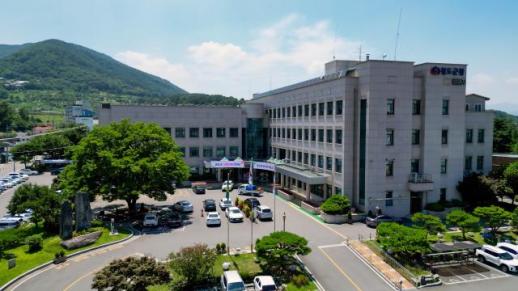 Cheongdo County Expands Child Allowance to Under Age 9, Up to 120,000 Won a Month Cheongdo County said it will expand eligibility for child allowance payments under the revised Child Allowance Act, aiming to ease families’ financial burden and strengthen a child-friendly environment. The county said the eligible age will rise to under 9 from under 8. It will also apply a special provision for depopulation areas, adding 20,000 won a month per eligible child. With the national benefit of 100,000 won, children in Cheongdo will receive up to 120,000 won per month. For 139 children born from January 2017 to March 2018 who have previously received the benefit, the county said the process will be handled through an ex officio application, with no separate request required. The expanded allowance is set to be paid for the first time on April 24 to 833 children. Payments will be deposited monthly on the 25th into an account in the guardian’s name, or the prior day if the 25th falls on a holiday. Under the government plan, the eligible age will increase by one year each year, expanding to under 13 by 2030. Acting Cheongdo County Mayor Kim Dong-gi said the move goes beyond simple cash support and is meant to be a policy families can feel, adding that the county will continue to strengthen child welfare policies to make Cheongdo a place where both children and parents can be happy.* This article has been translated by AI. 2026-04-21 12:37:11
 -
 President Lee Jae-myung Heads to Vietnam After India Trip, Eyes High-Tech Cooperation President Lee Jae-myung will leave India on April 21 after wrapping up a two-night, three-day trip and travel to Hanoi, Vietnam. The visit will be the first state event hosted by Vietnam’s new leadership, which took office earlier this month. It will also be a return visit, coming eight months after Communist Party General Secretary To Lam visited South Korea in August last year. After arriving in Hanoi, Lee will begin his schedule on April 22 with a meeting with members of the Korean community. He will lay flowers at the Ho Chi Minh Mausoleum and attend an official welcome ceremony with Vietnam’s leadership. Lee will then hold a summit with To Lam, followed by an exchange of memorandums of understanding, a joint press statement and a state banquet. On April 23, he is to meet with Prime Minister Le Minh Hung and have lunch with National Assembly Speaker Tran Thanh Man. Lee will also attend a Korea-Vietnam business forum to meet with business leaders from both countries and discuss ways to expand trade and investment. On April 24, he is to tour the UNESCO World Heritage site of the Thang Long Imperial Citadel with To Lam before returning home. Separately, Lee posted on Facebook on April 21 under the title, “Korea and India, walking together toward a better future,” reflecting on his India trip. “This summit was a place to discuss concrete and practical measures to take Korea-India cooperation to the next level,” Lee wrote. “We agreed to deepen cooperation in strategic core areas such as shipbuilding, finance, AI and the defense industry, and to create new growth opportunities together based on advanced technology and innovation.” He added, “Above all, I extend my deep gratitude for the warm welcome shown by Prime Minister Modi and the people of India,” and said he hoped to meet again in South Korea in the near future.* This article has been translated by AI. 2026-04-21 12:34:01