

SEOUL, May 16 (AJP) -The spring of 2026 may well be remembered as a turning point in the strategic history of Northeast Asia.
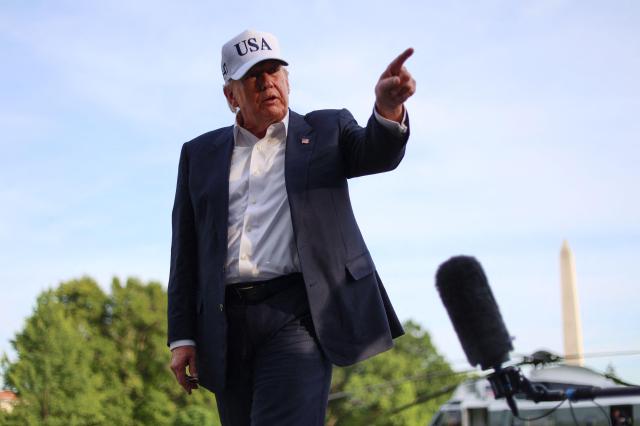
In Beijing’s Great Hall of the People, President Donald Trump and President Xi Jinping sat face to face once again, navigating the uneasy frontier between rivalry and coexistence. Beneath the ceremonial grandeur and diplomatic choreography lay a reality far more consequential: the North Korean question had returned to the center of global geopolitics.
After the summit, President Trump publicly confirmed that he and Xi had discussed North Korea. The remark was brief, almost casual in tone, yet within diplomatic circles it carried enormous weight. It signaled that the Korean Peninsula — long overshadowed by the wars in Ukraine and the Middle East, as well as mounting tensions surrounding Taiwan — had once again become one of the defining strategic issues of the 21st century.
For decades, North Korea has represented one of the world’s most dangerous geopolitical fault lines. To the United States, it has been a nuclear challenge. To China, it has been a question of regime stability and strategic buffer zones.
To South Korea, it has remained an existential matter of war and peace. Japan has viewed it through the lens of regional security anxiety, while Russia has regarded it as part of its broader Far Eastern calculus.
Against this backdrop, the recent visit by Chinese Foreign Minister Wang Yi to Pyongyang carried extraordinary symbolic significance. It marked the first visit by a Chinese foreign minister to North Korea in six years and seven months. In diplomacy, timing is often more important than words, and Beijing’s decision to send its top diplomat back to Pyongyang was itself a carefully crafted message.
Since the COVID-19 pandemic and the outbreak of the Ukraine war, relations between China and North Korea had shown visible strains beneath the surface. Pyongyang moved increasingly closer to Moscow, while Beijing appeared, at least outwardly, to maintain a degree of strategic distance.
The war in Ukraine accelerated that transformation. Relations between President Vladimir Putin and North Korean leader Kim Jong Un deepened rapidly, evolving into what many analysts now describe as a quasi-military alliance. Western intelligence agencies have repeatedly suggested that North Korea supplied artillery shells and military equipment to Russia, while Moscow, in turn, provided Pyongyang with energy assistance, food support, and potentially sensitive military technologies.
For North Korea, Russia became a critical geopolitical lifeline amid intensifying international sanctions. For Russia, isolated by the West and burdened by a prolonged war, North Korea emerged as a useful military supplier and strategic partner. Their interests converged naturally.
Yet from Beijing’s perspective, an excessively Russia-oriented North Korea was hardly an ideal outcome. North Korea has historically existed within China’s strategic orbit. Beijing has no desire to see instability or sudden collapse on the Korean Peninsula, nor does it wish to lose influence over a neighboring state central to China’s security architecture. Wang Yi’s visit, therefore, was widely interpreted as an effort to restore strategic equilibrium and reaffirm Beijing’s relevance in Pyongyang.
Equally intriguing is the still-unfinished relationship between Donald Trump and Kim Jong-un.
President Trump continues to emphasize that he maintains “a very good relationship” with Kim. The summits in Singapore and Hanoi, followed by the dramatic encounter at Panmunjom, produced scenes unprecedented in modern diplomacy. For a moment, it appeared as though decades of hostility might yield to an entirely new chapter.
Yet the collapse of the Hanoi summit plunged U.S.-North Korea relations back into paralysis. Kim Jong Un’s distrust of Washington deepened, while Trump, consumed by domestic political pressures and the escalating confrontation with
China, was forced to shift his strategic priorities.
Even so, Trump appears unwilling to abandon the possibility of a historic breakthrough. He still seems to believe that resolving the North Korean nuclear issue — or at least fundamentally reducing the threat — could become the defining diplomatic achievement of his presidency.
The reason is not difficult to understand. No American president has ever fully resolved the North Korean nuclear crisis. A meaningful agreement involving nuclear freezes, phased denuclearization, or a formal peace mechanism on the Korean Peninsula would rank among the most consequential diplomatic accomplishments since the end of the Cold War.
The challenge, however, lies in the transformed reality of North Korea itself.
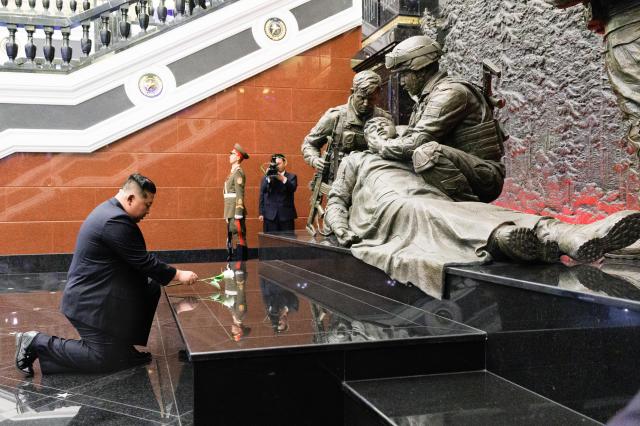
North Korea increasingly treats nuclear weapons not as bargaining chips, but as the ultimate guarantee of regime survival. Kim Jong Un has elevated nuclear power to a constitutional and ideological pillar of the state, while restructuring the country’s defense industry into one of the regime’s central economic engines.
Russia’s growing military cooperation with Pyongyang has further accelerated this transformation. Speculation regarding technology transfers — including satellite and missile technologies — has intensified among security analysts. North Korea seeks to build an asymmetric deterrence structure capable of withstanding overwhelming American military pressure.
In this environment, South Korea’s role becomes more crucial than ever.
President Lee Jae Myung has recently emphasized the necessity of rebuilding a gradual roadmap for inter-Korean peace. His approach prioritizes economic cooperation, military de-escalation, and humanitarian engagement as parallel tracks toward restoring dialogue.
Unlike purely ideological frameworks of the past, Lee’s perspective appears grounded in practical national interest. Heightened tensions on the Korean Peninsula directly threaten South Korea’s economy, financial markets, and long-term investment stability. Peace, in this sense, is not simply a moral aspiration; it is an economic imperative.
Yet the geopolitical environment surrounding the peninsula grows more complex by the day.
The United States is strengthening trilateral security cooperation with South Korea and Japan as part of its broader strategy to counter China. Japan, meanwhile, continues expanding its defense capabilities and long-range strike systems. On the other side, North Korea, Russia, and to a certain extent China are drawing closer strategically, giving rise to what some analysts increasingly describe as a new Cold War configuration in Northeast Asia.
Some observers even argue that the region is moving toward a de facto alignment resembling “U.S.-Japan-South Korea versus North Korea-China-Russia.” In such discussions, comparisons to NATO naturally emerge.
But Northeast Asia is not Europe.
Its history, economies, civilizations, and national identities are far more deeply intertwined. China and the United States remain fierce strategic rivals, yet they are simultaneously bound together by enormous economic interdependence. South Korea relies on the United States for security while depending heavily on China economically.
The Korean Peninsula itself is not merely a military issue, but a convergence point of history, ideology, nationalism, economics, and civilization.
Ancient wisdom offers an enduring perspective on these dilemmas.
In the Tao Te Ching (道德經), there is a profound passage: “A great nation should place itself low, like the waters beneath all streams.”
True strength, Laozi suggests, lies not in domination but in restraint and humility. It is a lesson that resonates powerfully in an era of nuclear rivalry and geopolitical competition.
The Analects (論語) of Confucius offer another timeless insight: “The noble man seeks harmony without uniformity; the petty man seeks uniformity without harmony.”
Civilizations need not become identical in order to coexist peacefully. Diversity and coexistence are not contradictions; they are the foundation of durable order.
The Buddhist Dhammapada (法句經) speaks even more directly to the modern world: “Hatred is never ended by hatred, but by compassion alone.”
Thousands of years after those words were first written, humanity still struggles to learn their meaning.
The path to peace on the Korean Peninsula will not be easy. Yet paradoxically, the greater tensions become, the more necessary dialogue itself becomes. Nuclear weapons, military alliances, and strategic deterrence alone cannot provide a permanent future for Northeast Asia.
Perhaps that is the deeper meaning behind Trump and Xi’s discussion of North Korea in Beijing. Great powers often rediscover the necessity of negotiation precisely when confrontation appears most dangerous.
Spring never arrives in a single day. It emerges slowly, almost imperceptibly, after a long and unforgiving winter.
Today, Northeast Asia stands beneath heavy geopolitical clouds. Yet even amid rivalry, sanctions, missile tests, and military alliances, the possibility of dialogue still survives. And perhaps that fragile possibility — the refusal to abandon coexistence — remains the true beginning of diplomacy itself.
Copyright ⓒ Aju Press All rights reserved.
