
Journalist

Lee Hugh
=
-
 Big Tech Earnings Beat Expectations, but AI Bubble Fears Persist; OpenAI Faces Financial Scrutiny Global Big Tech companies posted strong first-quarter results that underscored the potential to make money from artificial intelligence, but concerns about an AI bubble have not eased. With massive capital spending far outpacing revenue growth, stock-market reactions were mixed, and financial worries surrounding OpenAI — a symbolic name in the AI industry — have intensified. According to the IT industry on May 3, four major Big Tech companies — Alphabet, Meta, Microsoft and Amazon — released their first-quarter results after the market close late last month. The numbers beat expectations. Alphabet reported revenue of $109.9 billion, up 22% from a year earlier and above the market estimate of $107.2 billion. Google Cloud revenue rose 63% to $20.0 billion. Microsoft posted revenue of $82.9 billion, up 18%, with Azure growth reaching 40%. Meta’s revenue climbed 33% to $56.3 billion. Amazon reported revenue of $181.5 billion, up 17%, while AWS revenue grew 28% to $37.6 billion, its fastest growth rate in 15 quarters. Even with the earnings surprise, some stocks fell after companies raised capital spending plans alongside their results. Meta lifted its annual capital expenditure guidance to $125 billion to $145 billion, sending its shares down more than 8% in after-hours trading. Microsoft’s shares slipped about 4% after it reported first-quarter capital spending of $34.9 billion, a 74% jump from a year earlier. Alphabet raised its annual capital spending guidance to $180 billion to $190 billion, and Amazon pledged AI infrastructure investment totaling $200 billion. Estimated AI capital spending this year by the five largest hyperscalers combined is expected to exceed $650 billion. The sharpest focus is on privately held OpenAI. Analysts have said it is losing share to Anthropic in the coding market and to Google’s Gemini in the broader consumer market. Reports of missing revenue targets and internal conflict have added to unease. In particular, OpenAI’s unusually high share of capital spending compared with rivals has emerged as a key variable as it approaches a public listing.* This article has been translated by AI. 2026-05-05 13:40:07
 -
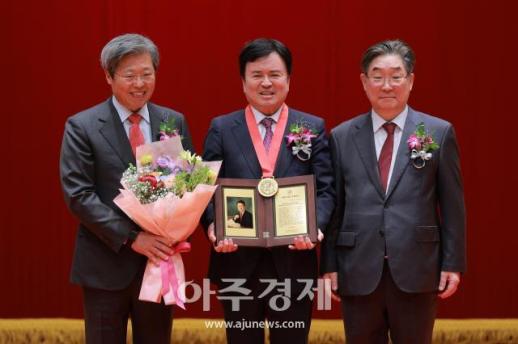 Aju News Corp. Chairman Kwak Young-gil Wins Korea University Alumni Award Kwak Young-gil, chairman of Aju News Corp., received Korea University’s “Proud Korea University Alumni Award” in recognition of raising the honor of his alma mater and contributing to social development. Korea University, led by President Kim Dong-won, presented the award to Kwak (English Language and Literature, class of ’74) during its 121st anniversary ceremony and anniversary events held May 5 morning at the Inchon Memorial Hall in Seongbuk-gu, Seoul. Also honored were Samyang International Chairman Heo Kwang-soo (Business, ’65) and Ace Bed CEO Ahn Sung-ho (Geology, ’87). The university said Kwak has “always looked at the world with a clear and upright eye” and devoted himself to delivering the truth, calling his work “a true guide” for society. It also cited his pioneering spirit, strong support for his alma mater and commitment to nurturing younger generations. In his remarks, Kwak said he learned not just language but a “humanities mindset” after entering the English department “without even knowing the difference between ‘camp’ and ‘English.’” He added, “For me, English literature was a ‘door to spirituality’ beyond language.” Kwak said that over the past five years he studied humanity’s classics and artificial intelligence and concluded that the essence of spirituality connects to the university’s motto of “freedom, justice and truth.” He said he reached the view that altruism — “public good first, private interest later” — is the door to spirituality. Calling spirituality a key driver in the AI era, Kwak said, “Ten years ago I thought about ‘human-centered AI,’ but now we must pursue ‘spirit-centered AI.’” He added, “If spirituality cannot govern AI, humans will inevitably be ruled by technology.” As a manager leading a global news media organization, Kwak said his company is using a multilingual news system to promote the global rise of “K-series,” including K-defense. He added, “If South Korea was once the ‘light of the East,’ now Korea University must become the ‘light of humanity’ in the AI era,” and said he hopes his efforts will help advance his alma mater. The event also honored K-Net Investment Partners CEO Kim Dae-young (Public Administration, ’81) and Eugene Investment & Securities CEO Yoo Chang-soo (Sociology, ’81) with the “Community Service and Development Merit Award.” 2026-05-05 13:39:14
 -
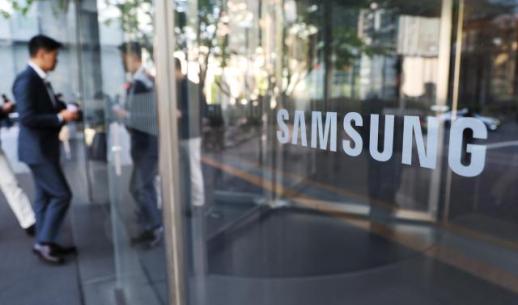 Samsung Electronics board chair urges talks to resolve labor dispute Shin Je-yoon, chairman of Samsung Electronics' board, posted a public message to employees urging management and labor to resolve their dispute through dialogue. In a post on the company's internal bulletin board on the 5th, Shin said he was concerned about the situation and felt a strong sense of responsibility. "Many people, including shareholders and customers, as well as the public, are deeply worried about the company's recent situation," he wrote. "As board chairman, I feel a heavy responsibility and I am sorry for causing concern." Shin warned that a worsening standoff could damage the company's overall competitiveness. "Both labor and management could lose their footing," he said, adding that the fallout could include weaker business competitiveness, loss of customer trust, losses for shareholders and investors, and "serious negative effects" on the national economy. He pointed to the semiconductor business as particularly vulnerable. "In semiconductors, a foundational national industry, timing and customer trust are key," Shin wrote. He said disruptions in development and production, or missed delivery deadlines, could undermine core competitiveness and lead customers to shift to rivals, eroding market dominance. Shin also warned of broader economic consequences if a strike leads to heavy losses and customer departures. If the company's value falls, he said, it would cause serious losses for shareholders, investors, employees and local communities. He added that exports could drop by "hundreds of billions of dollars" and tax revenue by "tens of trillions of won," and that a weaker currency could reduce GDP. Inside Samsung Electronics, tensions have continued over wages and the performance-based pay system, with some unions leaving open the possibility of labor action. The standoff has persisted as the sides have failed to narrow differences in negotiations. Shin called for cooperation and talks. "Now is the time for all employees to unite for sustainable growth amid relentless competition and to resolve issues through sincere dialogue," he wrote. He urged employees to work together so the current conflict can become a foundation for a more constructive labor-management relationship, adding that he would do his best to work with management to find a solution. The message is notable as a case of the board directly stating its position on the labor dispute, and it could influence the course of negotiations.* This article has been translated by AI. 2026-05-05 13:33:04
 -
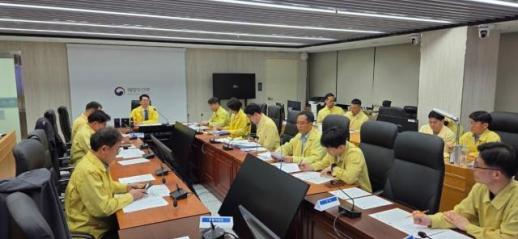 South Korea vows full response after fire on HMM NAMU cargo ship in Strait of Hormuz A blast and fire broke out on May 4 (local time) aboard the HMM NAMU, a cargo ship operated by a South Korean shipping company, while it was anchored in the Strait of Hormuz, prompting a government response. Maritime authorities said they are working to determine the cause and ensure the safety of the crew. The Ministry of Oceans and Fisheries said May 5 that it notified relevant agencies immediately after receiving the report and began an emergency situation review meeting chaired by the minister at about 10 p.m. Hwang Jong-woo instructed officials to “do their utmost to take necessary measures to protect the safety of our seafarers and vessels,” and ordered nearby South Korean ships to move to safer waters. Hwang chaired another situation review meeting at 9 a.m. May 5 to check developments. A ministry official said the government is in close contact with the shipping company and the vessel, and is working with related agencies, including the Foreign Ministry, to secure the safety of the ship and South Korean seafarers. As of May 5, a total of 160 South Korean seafarers were confirmed to be in the inner area of the Strait of Hormuz: 123 aboard South Korean vessels and 37 aboard foreign vessels. The ministry official said the government is communicating frequently with shipping companies to protect seafarers, adding that it will respect their wishes but will safely bring to South Korea those who choose to exercise their right to request disembarkation. 2026-05-05 13:27:13
 -
 Korea to Launch Public Zoo Safety Council After Wolf Escape The government will launch a consultative body to strengthen zoo safety management and improve animal welfare standards, following a recent wolf escape at Daejeon O-World that heightened calls for broader checks of zoo operations. The Ministry of Climate, Energy and Environment said it will hold the inaugural meeting of a nationwide council of public zoos on Tuesday at the Korea Public Institution Research Institute in Seoul. The council is intended to reinforce the leading role of public zoos as public concern grows over zoo safety after animal escape incidents. It will diagnose on-the-ground problems such as aging facilities, staffing shortages and weak safety systems, and discuss practical steps for improvement. The ministry also plans to review how public zoos are preparing for a shift to a permit-based system under the Act on the Management of Zoos and Aquariums. The system took effect in December 2023, but zoos already registered were granted a grace period through December 2028, allowing a phased transition. Through the council, the government plans to share difficulties reported by operators during implementation and develop support measures. Participants in the launch meeting will include Lee Chae-eun, director general for nature conservation at the ministry, along with officials from regional environment offices, the National Institute of Ecology, the Korea Association of Zoos and Aquariums, and representatives of public zoos nationwide. The ministry said it will use the council to build a standing cooperation framework among public zoos and jointly review implementation levels in key areas including facilities, staffing, safety management and animal welfare. It also said it will actively support the permit system so it can take root smoothly based on feedback from the field. Lee said the ministry will focus its policy efforts on encouraging the transition to the permit system while refining related standards to raise zoo safety and welfare levels. She added that the ministry will continue working with relevant agencies so public zoos can meet permit requirements in a substantive way. 2026-05-05 12:33:14
 -
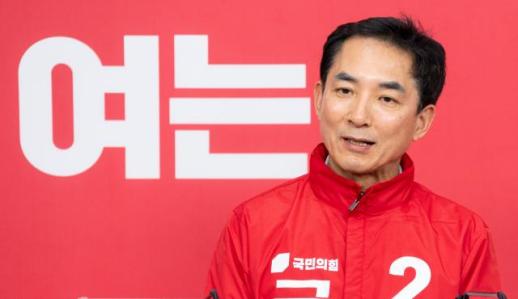 People Power Party Picks Park Min-sik for Busan Buk-gu Gap By-Election, Setting Three-Way Race The People Power Party’s nomination committee on May 5 confirmed Park Min-sik, described as a former minister of the Ministry of Patriots and Veterans Affairs, as its candidate in the June 3 parliamentary by-election in Busan’s Buk-gu Gap district. Park will face Ha Jeong-woo of the Democratic Party and independent candidate Han Dong-hoon. Park dismissed the possibility of unifying candidacies with Han as “zero.” After his nomination was finalized, Park held a news conference at the party’s headquarters in Yeongdeungpo-gu, Seoul, saying, “With the strength of Buk-gu alone, I will deliver victory for Buk-gu,” and adding that he was confident of winning “whether it’s a two-way race or a three-way race.” Park criticized what he called talk by people close to Han about unification or the party not fielding a candidate. “If you entered the race, you should stand tall and accept the residents’ judgment,” he said, adding, “Stop running ‘wishful thinking.’” He said the election was not simply about “one seat in the National Assembly,” but about developing Buk-gu and “retaking the Nakdong River front line,” arguing that political calculations such as unification or no nomination were neither fair nor consistent with the stated purpose. On a series of controversies involving Ha’s camp, including an issue referred to as “shaking off,” Park said he was “personally hurt” and viewed it as serious. He said it was not merely a mistake by a “political rookie,” but “an expression of elitism deeply rooted inside.” Asked about claims that his support lags behind rival candidates, Park said he would not be swayed by polls. He also said affiliations should not be presented ambiguously in surveys or media coverage, adding, “The People Power Party candidate is Park Min-sik, and Han is an independent,” and that candidates should campaign fairly with their ballot numbers. 2026-05-05 12:24:48
 -
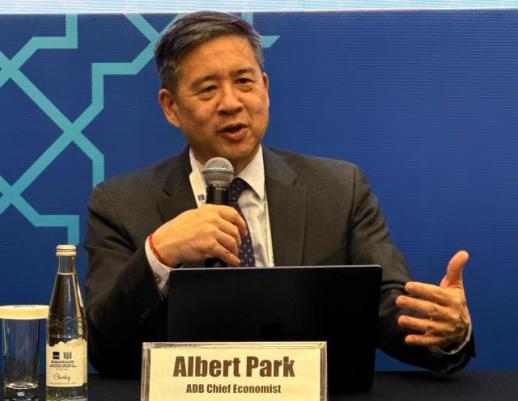 ADB Economist Warns Prolonged High Oil Prices Could Drag South Korea Growth Albert Park, chief economist at the Asian Development Bank, warned that prolonged disruption to energy supply chains from the Middle East conflict could keep oil prices elevated and weigh on South Korea’s economy. Speaking at a press briefing May 4 (local time) in Samarkand, Uzbekistan, Park said that even if the conflict ends, rebuilding damaged energy infrastructure could take years, locking in a “higher-for-longer” oil-price environment. Under that scenario, South Korea’s economic growth would be estimated to fall by 0.9 percentage points in 2026 and 0.5 percentage points in 2027. In April, the ADB projected South Korea’s growth at 1.9% in both 2026 and 2027. In a new baseline scenario, the ADB forecast average oil prices of $96 a barrel in 2026 and $80 in 2027. “This is not simply a matter of passing through a strait,” Park said, adding that key infrastructure for global production capacity has been damaged and could take three to five years to restore. Park said South Korea is a concern because it relies more heavily on energy imports than other Asian economies. He also warned of stronger upward pressure on inflation as higher energy costs spill over into other prices. Park said strong first-quarter semiconductor exports could partly offset slower growth, but he cautioned that Middle East-related disruptions in raw materials could also hinder expanded chip production. “Overall, the growth forecast is more likely to be revised downward,” he said. He stressed that the estimates were not an official revision to the ADB’s forecast. The figures, he said, were meant to gauge the pure impact of a negative external shock from the Middle East crisis, and actual growth could vary depending on offsetting factors such as semiconductor exports. The ADB plans to release an updated outlook for South Korea in its July ADO update, reflecting both chip performance and developments in the Middle East. On policy, Park advised against broad subsidies, saying they tend to concentrate benefits among higher-income households and increase fiscal burdens. Instead, he said, governments should allow higher energy prices to signal consumers and businesses to improve efficiency, while targeting support precisely to vulnerable groups. He also urged central banks to closely monitor second-round inflation effects, but not to raise rates too early in ways that could curb investment and growth. Park offered a positive view of the current semiconductor cycle, saying it is being driven by artificial intelligence. If AI delivers real productivity gains, he said, the cycle could have a relatively “long life.” Still, he noted data suggesting up to eight key materials used in semiconductor production are supplied from the Middle East, and warned that prolonged conflict could lift prices or disrupt supplies, limiting production expansion even if global demand remains strong. The briefing also addressed international use of the Korean won. Yuji Yamashita, an ADB official who attended with Park, said that “true” won internationalization should look beyond its use in payments for goods and services and include government bonds. He said Korean government bonds have become a liquid and trusted asset for global investors after being added to the World Government Bond Index. If those bonds can be used as collateral in cross-border transactions, he said, investors may view the currency and bonds as a package, expanding the won’s role beyond trade into broader financial transactions. 2026-05-05 12:12:16
 -
 Climate Ministry Approves 12 Circular Economy Sandbox Projects, Including Plastic Pyrolysis The Ministry of Climate, Energy and Environment said Tuesday it approved regulatory exemptions, or sandbox status, for 12 projects tied to circular-economy technologies and services. The ministry said the move is expected to significantly overhaul standards for recognizing recyclable resources, making chemical recycling such as pyrolysis easier to carry out. The ministry said it held a Circular Economy New Technology and Service Review Committee meeting on April 30 at Seoul Square and conducted the reviews there. The circular-economy regulatory sandbox, introduced in January 2024, allows companies to test new technologies and services within limited time, locations and scale; if safety and effectiveness are proven, related regulations can be improved or supplemented. The latest review focused largely on expanding chemical recycling of waste plastics through pyrolysis and reducing packaging waste, as part of a shift away from plastics. In South Korea, waste-plastic recycling currently consists of 58% thermal recycling and 41% material recycling, while chemical recycling through pyrolysis accounts for just 1%, the ministry said. Under the plan, waste-plastic projects will receive exemptions from waste-related regulations during the demonstration period. Based on the results, the ministry said it will revise standards for recognizing circular resources so that chemical recycling such as pyrolysis can be more readily used. It said most waste plastics generated at worksites are now sent to thermal recycling because collection systems are inadequate and treatment costs are an issue. Regulatory exemptions were also granted for a project to test whether solid fuel products can be used as pyrolysis feedstock. Solid fuel products made from combustible waste are currently limited to use in power generation facilities or industrial boilers. During the test period, the fuel will be fed into pyrolysis facilities to verify the volume and composition of pyrolysis oil produced, and the ministry said it will consider revising related rules. The ministry also said it will adjust regulations to test recycling options for pyrolysis residue. Because the residue has lacked a separate classification number, it has been disposed of in landfills. The ministry said it plans to allow various recycling uses, including as a soil conditioner and solid fuel, and to create new waste classification numbers and recycling categories. Other projects granted sandbox status include reducing packaging waste by improving labeling methods for household chemical products and producing leather and cosmetics materials using plant-based residues. Kim Go-eung, director general of the ministry's Resource Circulation Bureau, said the ministry will provide broad support to promote high-quality circular use of plastics and reduce plastic waste. He said the ministry will work with industry to improve the on-site applicability of recycling technologies so the circular economy can spread across society.* This article has been translated by AI. 2026-05-05 12:06:03
 -
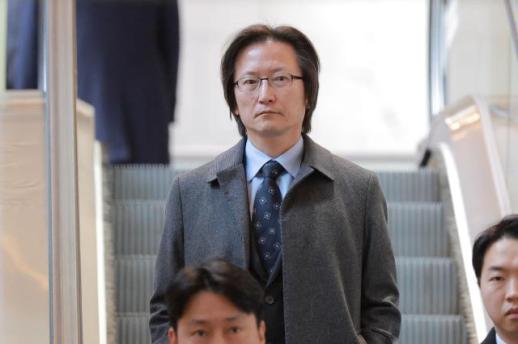 Korea Fair Trade chief to attend ICN annual meeting in Manila to discuss global cooperation South Korea’s Fair Trade Commission said Tuesday that Chairman Joo Byung-ki will attend the 25th annual conference of the International Competition Network, to be held in Manila from May 6-8. Hosted by the Philippine Competition Commission, the meeting is expected to focus on strategic planning and priority-setting; responses to algorithm-driven collusion in the digital environment; merger policy amid changing economic conditions; balancing effectiveness and predictability in enforcement against unilateral conduct; and new approaches to competition advocacy. The ICN, founded in 2001, is a forum of 148 competition authorities, including the U.S. Federal Trade Commission and Justice Department and the European Commission’s Directorate-General for Competition. The FTC is a founding member and serves on the ICN steering group. The agency sent a bureau director last year, but Joo will attend in person this year. On May 6, Joo is scheduled to join a plenary session on strategic planning and priority-setting to build agile, future-oriented competition authorities. The FTC said he plans to exchange views on challenges and responses with the heads of competition agencies from Greece, Hungary, the United Kingdom, Kenya and Poland. The FTC said Joo will present South Korea’s efforts to strengthen the effectiveness of enforcement tools, including reforms to its administrative fine system and easing criminal penalties. He also plans to highlight steps to expand judicial remedies, including introducing a Korean-style evidence-discovery system and widening the scope of injunctions available through consumer class actions and consumer group lawsuits. The FTC said Joo will also pursue bilateral cooperation during the conference, holding high-level talks with counterparts from the Australian Competition and Consumer Commission, Italy’s competition authority and the European Commission’s competition directorate. It said he will sign a memorandum of understanding with Philippine authorities to strengthen cooperation on competition-law enforcement and will meet with South Korean businesspeople in the Philippines to hear their concerns. “This visit will be a meaningful opportunity to seek response directions with the heads of competition authorities worldwide at a time when the competitive landscape is being rapidly reshaped by digital technology such as artificial intelligence,” Joo said. 2026-05-05 12:05:05
 -
 Korea Fair Trade Commission Fines SL 38 Million Won for Late Subcontract Documents A South Korean auto-parts maker has been sanctioned for issuing required subcontract documents late to its subcontractors. The Korea Fair Trade Commission said May 5 it will fine SL 38 million won for delaying written documents when outsourcing mold manufacturing to subcontractors. SL is a first-tier supplier to Hyundai Motor Co., providing automotive lamps and electronic parts. According to the commission, SL outsourced 328 cases of mold production for auto-parts manufacturing from May 2020 to May 2023, but issued subcontract-related documents only after work had begun, with delays ranging from at least eight days to as long as 605 days. The commission also said SL failed to pay 728,894,000 won in late-payment interest and promissory note discount fees across 342 contracts, even though more than 60 days had passed since the delivery date. The unpaid amounts included 509,651,000 won in late interest and 219,243,000 won in note discount fees. For violating its obligation to issue written documents, the commission ordered SL to prevent a recurrence and imposed the 38 million won fine. It issued a warning over the unpaid interest and discount fees, citing SL’s voluntary corrective action. A commission official said it will continue to address unfair trade practices that harm subcontractors’ rights and will impose strict penalties when violations are found to help establish fair subcontracting practices.* This article has been translated by AI. 2026-05-05 12:04:15