

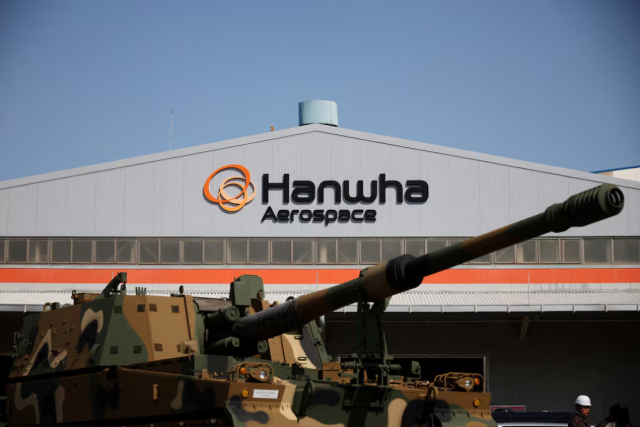
The group has recently secured more than a 5 percent stake in Korea Aerospace Industries, the country's aircraft-making monopoly, for the stated purpose of “management participation,” signaling that its long-rumored ambition to build a “Korean Lockheed Martin” is moving into clearer view.
Hanwha Aerospace and Hanwha Systems recently purchased additional KAI shares on the open market, raising their combined stake to 5.09 percent. The group is reportedly planning to invest an additional 500 billion won ($345 million) by the end of this year to lift its holdings further to 6.43 percent.
The move marks Hanwha’s return to possible management involvement in KAI roughly eight years after it sold its entire stake in 2018 to improve its financial structure.
Hanwha had quietly re-entered KAI’s shareholder base in March with a 4.99 percent stake, deliberately stopping just below the disclosure threshold that would have triggered stricter reporting requirements and intensified takeover speculation.
By crossing the 5 percent threshold, Hanwha has effectively shown its hand and will to bring KAI back home to complete its broader aerospace and defense ambitions.
KAI is de facto state-owned with the Export-Import Bank of Korea holding the largest 26.41 percent stake, followed by the National Pension Service with roughly 8 percent.
Hanwha would become the largest non-public shareholder in KAI once stake purchase is completed.
Hanwha itself has openly acknowledged the possibility of pursuing a larger role.
“If discussions on a government-led privatization of KAI become public, we plan to review whether to pursue an acquisition or integration in line with the government’s policy direction,” the group said.
Hanwha’s ties with KAI date back to 2015, when it acquired Samsung Techwin, now Hanwha Aerospace, and inherited Samsung Group’s roughly 10 percent stake in KAI. But the group sold the entire holding in 2018 as part of efforts to shore up its balance sheet.
Speculation over a renewed KAI bid intensified after Hanwha acquired Hanwha Ocean, formerly Daewoo Shipbuilding & Marine Engineering, in 2023, strengthening its ambition to build an integrated defense structure spanning land, sea, air and space. Since then, Hanwha has repeatedly emerged as the leading candidate whenever discussions resurfaced over the possible sale of the Export-Import Bank’s KAI stake.
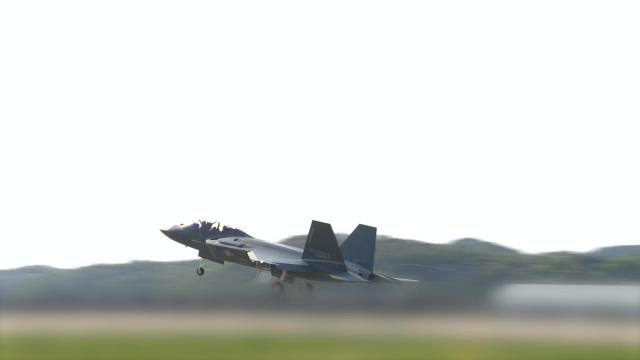
Hanwha Aerospace has strengths in fighter jet engines and space launch vehicles, while KAI specializes in aircraft manufacturing, satellite platforms and systems integration. A combination of the two could create South Korea’s first vertically integrated aerospace champion with the scale to compete more directly against global defense giants such as Lockheed Martin and Boeing.
“Hanwha’s grand ambition is ultimately to create Korea’s Lockheed Martin,” said Kim Houng-yu. “KAI could become a key pillar in completing that vision.”
The push is also viewed as a strategic investment in the emerging “new space” economy, where private companies are taking increasingly central roles in satellite development, launch systems and defense-related aerospace technologies.
Still, major obstacles remain before any actual takeover could materialize.
The most immediate issue is likely to be monopoly scrutiny. If Hanwha acquires KAI, the group would effectively control both fighter aircraft manufacturing and engine supply, a structure that could face close examination from the Fair Trade Commission.
Concerns over privatizing a strategically sensitive defense company, potential clashes in corporate culture and labor union opposition are also viewed as major hurdles.
“Defense is a special market, unlike ordinary industries, so the government could play some role in adjusting monopoly-related concerns,” Kim said. “Conditions could be attached during the acquisition process.”
Another defense industry expert argued that the emergence of a Korean version of Lockheed Martin could ultimately strengthen South Korea’s global competitiveness.
“South Korea still does not have a comprehensive defense company that covers everything from ground weapons and missiles to advanced weapons systems and aircraft platforms,” the expert said. “Rather than looking only at domestic competition, it could be positive to have a defense-specialized group like Korea’s Lockheed Martin when considering global competitiveness.”
Hanwha’s latest stake expansion also reflects how Chairman Kim Seung-youn’s aggressive mergers, acquisitions and restructuring efforts are increasingly translating into stronger profitability rather than simply a larger corporate footprint.
According to the Financial Supervisory Service, Hanwha Corp. posted 189.5 billion won in first-quarter operating profit on a standalone basis, up 24.8 percent from a year earlier, driven by improved operational efficiency and dividend income from key affiliates.
Core defense affiliates also posted strong results. Hanwha Aerospace and Hanwha Ocean recorded first-quarter operating profit increases of 20.6 percent and 70.6 percent, respectively, as exports of K9 self-propelled howitzers and Chunmoo multiple rocket launch systems expanded amid rising global defense demand following Russia’s invasion of Ukraine and ongoing instability in the Middle East.
Buoyed by growing confidence on land and at sea, Hanwha is now looking higher – toward aerospace.

Copyright ⓒ Aju Press All rights reserved.
