
Journalist

Lee Hugh
=
-
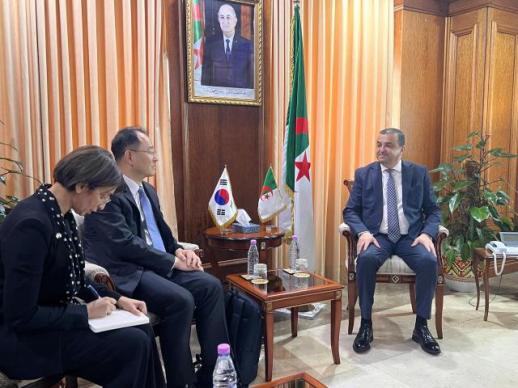 South Korea holds talks with Algeria, Libya to secure alternative oil supplies SEOUL, April 17 (AJP) - South Korea has discussed energy-related cooperation with Algeria and Libya, the Ministry of Foreign Affairs said on Friday. Park Jong-han, a ministry official, visited Algeria and Libya earlier this week to assess the possibility of securing emergency supplies of crude oil and naphtha, according to the ministry. His four-day trip, which began last Monday, was part of efforts to secure alternative supply routes that would remain unaffected by the closure of the Strait of Hormuz, a critical chokepoint for roughly one-fifth of global oil supply, amid the prolonged conflict in the Middle East. Park met several ministers and senior officials in both countries as well as the heads of state-run oil companies including Algeria's Sonatrach and Libya's National Oil Corporation (NOC). Their talks covered mid- to long-term cooperation in the energy sector, as Libya is the world's 10th-largest oil producer and holds Africa's largest oil reserves, estimated at about 48.4 billion barrels. Park asked the NOC to allocate some of its heavy crude to South Korea. The NOC replied that it could do so if technical conditions such as crude grades, delivery timing, and other requirements such as buyer reliability are met. Park told Algerian and Libyan officials that South Korea relies entirely on crude oil imports but exports petroleum products across the Asia-Pacific region thanks to its advanced refining facilities, adding that securing steady supplies is directly linked to maintaining stability in regional supply chains. Before returning home, Park also met with South Korean expatriates and businesspeople there to hear about their difficulties and discuss possible support measures. 2026-04-17 10:28:28
 -
 Callaway Golf Korea Launches Quantum Mini Series Clubs Callaway Golf Korea has introduced the new Quantum Mini Series, built on the technology of its Quantum lineup. The series includes three clubs: the Quantum Mini Driver, Quantum Mini Bertha and Quantum Mini Spinner. The company said the clubs are designed to close common distance gaps between a driver, fairway wood, hybrid and long iron, allowing more precise yardage control depending on course conditions. The Quantum Mini Driver is intended to blend driver distance with the stability of a fairway wood. A compact head and shorter shaft are meant to reduce pressure on tee shots. It uses the Step Sole structure found in fairway woods to reduce turf friction, enabling use on second shots from the fairway. The club also features a Tri-Force Face and a next-generation AI-optimized face design aimed at delivering consistent ball speed. The Quantum Mini Bertha is positioned as a 4-wood concept to bridge the gap between a 3-wood and 5-wood. A larger head and shorter shaft are designed to improve center-face contact. Its Speed Wave 2.0 structure places about 40 grams of weight low on the front of the head to maximize energy transfer efficiency. It also includes an OptiFit 4 hosel to adjust loft and lie angle. The Quantum Mini Spinner is designed for attacking greens with a higher launch and more spin. Callaway said a draw-biased AI face design, deep-face structure and higher center-of-gravity design increase spin. The club is about 0.5 inch shorter than a standard fairway wood to improve impact accuracy and control. A Callaway Golf Korea official said the Quantum Mini Series was developed to address the distance gaps and club-selection challenges golfers most often face during rounds. The official said the clubs, optimized for specific situations, are intended to help golfers deliver more consistent performance and play with greater confidence.* This article has been translated by AI. 2026-04-17 10:21:00
 -
 Stage Review: 'Record of Bones' Finds Humanity When Perfection Breaks “I will do my utmost to see you on your final journey.” The central figure in the play 'Record of Bones' is a funeral director robot named Robis. His service is flawless. In the way he handles the dead, he shows a calm, craftsmanlike precision. His gestures are delicate, his gaze steady. Robis carries out standardized procedures without a fraction of error — no mistakes, no hesitation, no complaints. Within a fixed system, his work can seem like the ideal. What changes is the body before him: a man in his 80s, a woman in her 20s, a 9-year-old child. Different lives leave different “records” in bone. Robis reads them evenly. A twisted ankle, head trauma — such traces intersect with a family’s memories and become grief. But for Robis, death is an area he cannot interpret — until the death of his only friend, Momi, a cleaner at the funeral home. The production has been described as a story of a robot “more human than humans,” echoing the robots in the Korean original musical 'Maybe Happy Ending,' which found success on Broadway. The play asks why audiences sense humanity in machines like Robis. Momi is human — and incomplete. Unable to speak, he communicates in sign language. He is not orderly. He likes to stare at a wall because its patterns have no obvious logic. What looks like the same wall and the same butterfly to Robis appears as different shapes to Momi. Unlike a machine that can mimic warmth through empathy-coded language, humans are full of contradictions: jealousy, guilt that keeps them awake, and feelings they cannot always explain even to themselves. Each person carries a distinct pattern. That is why the audience feels something human when Robis, who always stood in the same spot in the cold morgue, suddenly runs out the front door. He does more than read the record of bones: he remembers that Momi disliked hot things, and he misses Momi’s smile. In that moment, Robis breaks from strict procedure and the frame built for him. Devotion, the play suggests, comes from sincere communication and time spent together — something Robis demonstrates as he sees his friend off on his final journey. The show runs through May 10 at the Jayu Small Theater in the Opera House at the Seoul Arts Center. 2026-04-17 10:13:10
 -
 Samyang Foods' Buldak spice brand ventures into reality TV with dating show SEOUL, April 17 (AJP) - Samyang Foods has launched a reality dating show built around its Buldak spicy noodle brand, marking the company's latest push to embed the product into global youth culture beyond conventional food marketing. The South Korean food company announced Friday that it has partnered with U.S. media platform Nectar to produce "Heat Match," a dating show filmed against the backdrop of a major California music festival. The first episode aired April 11 on Nectar's official YouTube channel, with the finale set for release Saturday. The show features 10 single contestants board a Buldak-branded bus and travel to a desert party venue. A central conceit of the format is using Buldak's heat level as a compatibility test, with contestants gauging mutual tolerance for spice as a proxy for emotional chemistry. "This campaign is an elevation of the Buldak brand spirit into cultural entertainment," a Samyang Foods spokesperson said, adding that the company aims to offer young audiences worldwide a shared experience through the Buldak brand. Samyang said the initiative is part of a broader effort to position Buldak as a cultural icon woven into the lifestyles of young consumers globally. 2026-04-17 10:11:21
 -
 Uniwon to Hold ‘Dark Museum’ Tactile Art Exhibit in Yongsan for Disability Day Uniwon, a MICE industry company, is hosting a special exhibition titled “Dark Museum for the Visually Impaired” at the Yongsan Cultural Foundation’s pop-up hall in Seoul’s Yongsan district to mark Disability Day, highlighting exhibition content designed to broaden sensory experience. The show is billed as a “multi-sensory” exhibition that shifts art appreciation away from a primarily visual approach. In a darkened setting, visitors are guided to experience works mainly through touch and sound, offering both visually impaired and non-disabled audiences a different way to perceive and interpret art. A central feature is tactile reproduction technology. The exhibition includes well-known works such as Leonardo da Vinci’s “Mona Lisa,” Vincent van Gogh’s “Self-Portrait” and “Portrait of Dr. Gachet,” and Pablo Picasso’s “Portrait of Dora Maar.” Uniwon said an AI algorithm analyzed brushwork, texture and light-and-shadow data from the originals and rendered them in 3D form. Visitors can trace outlines and surface textures with their fingertips to better understand structure and technique. Audio is also integrated. Voice-based commentary is provided for each work so visitors can learn background and meaning without relying on sight. Organizers described the touch-and-audio format as an effort to expand, not just improve access to, the way art is experienced. The exhibition is free and does not require reservations, with visitor routes designed for safe movement in the dark. Organizers said the open, no-cost model is intended to reduce both physical and financial barriers for a wide range of visitors, including those with visual impairments. Uniwon said the project also reflects a “co-production” accessibility model. The Korea Federation of the Blind participated directly in the production process to review accessibility from the perspective of users, a step organizers said improved completeness and practical effectiveness. The company added that corporate sponsorship helped enable the technology and physical production, making it an example of public-private cooperation in culture. The exhibition uses a curation built around famous paintings, aiming to help visitors reconstruct familiar images through tactile experience and reinterpret prior encounters with art through different senses. Uniwon said it plans to continue developing sensory-based exhibition content and contribute to creating an environment where anyone can experience art on equal terms.* This article has been translated by AI. 2026-04-17 09:27:18
 -
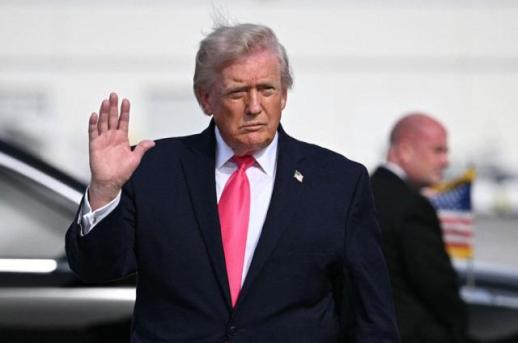 Washington 'very close' to deal with Iran as talks may resume this weekend, Trump says SEOUL, April 17 (AJP) - The U.S. is "very close" to reaching a deal with Iran to end the prolonged conflict in the Middle East, with talks between the two sides likely to resume as early as this weekend, U.S. President Donald Trump said on Thursday. Speaking to reporters at the White House before departing for Las Vegas, Trump suggested some progress has been made in negotiations, though Tehran has yet to comment. "The big thing we have to do is we have to make sure that Iran does not have a nuclear weapon," Trump said, adding "So, very important is that Iran does not have a nuclear weapon, and they've agreed to that." "We have a very powerful statement that they will not have beyond 20 years, that they will not have nuclear weapons," he also claimed. With these developments, another round of talks could be held in Pakistan this weekend after the first round of talks collapsed without a deal last week, signaling that Trump, who may want to save face and leave, is seeking a breakthrough before April 21, when a two-week ceasefire agreed earlier this month is set to expire. "If the deal is signed in Islamabad, I might go. They want me to go," he added. But it remains unclear whether Trump's remarks are accurate. Uranium enrichment is a make-or-break issue for Iran, which is unlikely to abandon it without major concessions. Trump also warned that failure to reach an agreement could lead to renewed confrontations. "I would say the fighting, if there's no deal, fighting resumes," he said. 2026-04-17 09:10:04
 -
 Korean Banks’ Loan Delinquency Rate Hits 0.62% in February, Highest in 9 Months Domestic banks’ loan delinquency rate rose in February to its highest level in nine months, as economic growth slowed and uncertainty at home and abroad increased. The Financial Supervisory Service said Friday that as of the end of February, the delinquency rate on won-denominated loans at domestic banks — based on principal and interest overdue by at least one month — stood at 0.62%, up 0.06 percentage point from 0.56% a month earlier. It was the highest since May last year, when it was 0.64%. New delinquencies totaled 3 trillion won in February, up 200 billion won from 2.8 trillion won the previous month. Over the same period, the amount of delinquent loans resolved held steady at about 1.3 trillion won. The new delinquency rate edged up to 0.12% from 0.11%. Household loan delinquencies rose to 0.45%, up 0.03 percentage point. Delinquencies on home mortgage loans increased 0.02 percentage point to 0.31%, while household loans excluding mortgages — including credit loans — climbed 0.06 percentage point to 0.90%. Corporate loan delinquencies rose to 0.76% from 0.67%. Delinquencies on loans to large companies increased 0.06 percentage point to 0.19%, and those to small and midsize firms rose 0.10 percentage point to 0.92%. The watchdog said delinquency rates are rising, particularly among smaller corporations, and warned the uptrend could continue amid domestic and external uncertainties. It said it will push banks to strengthen asset-quality management by setting aside sufficient loan-loss reserves and stepping up efforts such as selling delinquent loans to clean up their balance sheets.* This article has been translated by AI. 2026-04-17 09:05:08
 -
 South Korea Launches Copyright Protection Campaign for World Book and Copyright Day The Ministry of Culture, Sports and Tourism, the Korea Copyright Commission and the Korea Copyright Protection Agency said Thursday they will run a copyright protection campaign from April 17 to 30 ahead of World Book and Copyright Day on April 23. Events will be held online and in person, including talk concerts with writers and experts, advance promotion for a copyright awareness contest, and an on-site program at the National Library of Korea. Two talk concerts are scheduled for April 23. Writer Kim Gyeoul will meet readers at Kyobo Book Centre’s Gwanghwamun store under the theme “The future of books built through copyright protection.” Kim Seong-woo, identified as a doctor, will lecture at the Copyright Museum in Jinju, South Gyeongsang province, on “Artificial intelligence and copyright, literacy.” Ahead of the “copyright awareness contest” set for May, organizers will run an advance promotion event on the contest website from April 23 until entries open. Participants can register their intent to join and post comments about what they expect. This year’s contest will accept poems and essays promoting respect for and protection of copyright. Organizers plan to select 50 winning works and, in November, award prizes including the Prime Minister’s Award, the culture minister’s award, a special award from the World Intellectual Property Organization, and the Korea Copyright Commission chair’s award, along with total prize money worth 12.5 million won. Local communities and companies are also joining the campaign. One hundred bookstores nationwide, working with Kyobo Book Centre and the Korea Booksellers Association, will distribute 100,000 bookmarks from April 23 to 30 carrying the message, “A heart that loves books, a heart that respects copyright.” Kakao Corp. said it will run a World Book Day reading club through Kakao Brunch and spread messages encouraging respect for copyright. The National Library of Korea will hold a copyright quiz and a kiosk roulette event for visitors on April 23. Online, the commission and the protection agency will run four consecutive social media events: “Choose the correct passage” and “Fill in the blank” from April 17 to 23, followed by “Comment on the promotional video” and “Choose a character from a work” from April 23 to 30. * This article has been translated by AI. 2026-04-17 08:48:26
 -
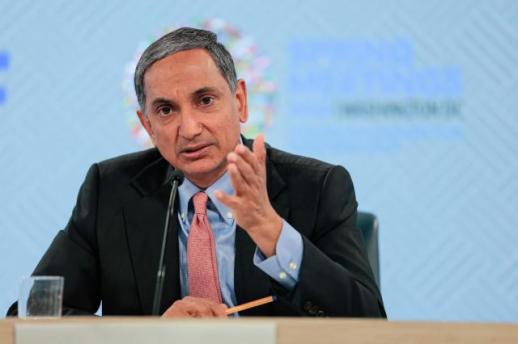 IMF keeps Korea growth view at 1.9% on 'energy buffers' despite Gulf shock SEOUL, April 17 (AJP) -The International Monetary Fund on Thursday maintained its growth outlook for South Korea at 1.9 percent for this year, holding steady from its January projection as it pointed to “sufficient buffers” to withstand energy shocks stemming from the Gulf conflict. The assessment came as the war-driven surge in oil and gas prices adds a fresh layer of uncertainty to the global economy, with Asia seen as particularly exposed due to its heavy reliance on imported energy. “Asia is significantly exposed to the energy shock,” Krishna Srinivasan, director of the IMF’s Asia and Pacific Department, said during a regional outlook briefing in Washington. “The scale and persistence of the shock remain uncertain.” The IMF expects regional growth to slow from 5.0 percent last year to 4.4 percent in 2026, while inflation is projected to rise from 1.4 percent to 2.6 percent over the same period, reflecting the pass-through of higher energy costs. The vulnerability stems from structural factors. Oil and gas consumption accounts for around 4 percent of Asia’s GDP — nearly double that of Europe — while limited domestic production leaves many economies dependent on imports. Net energy imports amount to roughly 2.5 percent of GDP across the region, rising to as high as 8 percent in some economies. Beyond direct fuel costs, the IMF warned of broader supply chain risks. Disruptions to petrochemical inputs such as helium and sulfur could amplify production bottlenecks if the conflict drags on. Despite these pressures, the Fund said Asia entered 2026 with stronger-than-expected momentum, supported by resilient exports — particularly in technology goods — and recovering consumption. That underlying strength is expected to partially offset the shock, keeping growth forecasts broadly stable under the IMF’s baseline scenario, which assumes the energy disruption remains limited in duration. For South Korea, the IMF struck a cautiously balanced tone. “Korea starts from a strong macroeconomic position,” said Thomas Helbling, deputy director of the Asia and Pacific Department. He cited the country’s solid growth momentum, supported by the tech cycle, and its proactive policy response to mitigate the impact of the shock. The IMF also highlighted Korea’s relatively strong energy buffers as a key advantage compared to other energy-importing economies in the region. Still, vulnerabilities remain. “Korea, like the rest of Asia, is an energy-importing economy,” Helbling said, noting that the outlook could deteriorate significantly under a more prolonged or severe energy shock scenario. Under the IMF’s adverse scenario, oil prices could rise as much as 60 percent above earlier forecasts this year and remain elevated into 2027, leading to broader output losses and more persistent inflation across the region. In such a case, the impact would extend beyond price increases. “This is a shock which has both a price impact and a quantity impact,” Srinivasan said, warning that prolonged disruptions could lead to shortages in energy-related inputs and amplify supply chain stress. “If you have both price shocks and shortages, the growth impact becomes much more acute,” he added. Against this backdrop, the IMF urged policymakers to avoid overreacting to short-term inflation spikes while remaining flexible. Most Asian central banks still have room to “look through” the initial surge in energy prices, as inflation expectations remain broadly anchored, the Fund said. However, it cautioned that monetary policy must remain agile if the shock proves more persistent. On the fiscal side, the IMF reiterated its long-standing stance against broad-based subsidies and price controls, calling instead for targeted and temporary support measures. “Generalized subsidies are costly, distortionary and very hard to unwind,” Srinivasan said, emphasizing the need to preserve fiscal buffers after years of repeated shocks. The Fund also framed the current crisis as a catalyst for longer-term structural adjustments. It called for greater investment in alternative energy, improved energy efficiency and stronger power infrastructure to reduce dependence on imported fuels. At the same time, it urged deeper regional trade integration to cushion external shocks and enhance resilience. “The near-term task is to absorb the shock while preserving policy credibility,” Srinivasan said. “The medium-term task is to build a more resilient, balanced and inclusive growth model.” 2026-04-17 08:33:52
 -
 KBS2’s “Music Bank” Announces Lineup Featuring TXT, ifeye and MODYSSEY KBS2’s music show “Music Bank” has announced its lineup for the episode airing Friday afternoon. The broadcast will feature 1000° (Cheondo), BE BOYS, cosmosy, hrtz.wav, ifeye, KEYVITUP, KickFlip, KISS OF LIFE and MODYSSEY. Also set to appear are RESCENE, SANTOS BRAVOS, VVS, Dayoung, AMPERS&ONE, All'N, Lee Ji-min and TOMORROW X TOGETHER. Lee Ji-min and MODYSSEY are scheduled to perform their debut stages on the show. ifeye and TOMORROW X TOGETHER will return with comeback performances. “Music Bank,” hosted by Kim Jae-won and Bang Ji-min, airs every Friday at 4:55 p.m.* This article has been translated by AI. 2026-04-17 08:12:15