
Journalist

Lee Hugh
=
-
 Shinhan Bank Tops South Korea’s Retirement Pension Market With 54.74 Trillion Won Shinhan Bank said it has become the top financial institution in South Korea’s retirement pension market. The bank said Tuesday that its retirement pension assets reached 54.7391 trillion won, based on disclosures on the Financial Supervisory Service’s Integrated Pension Portal. It said the figure is the largest across the financial industry, including banks, securities firms and insurers. Shinhan Bank said assets grew evenly across defined benefit (DB), defined contribution (DC) and individual retirement pension (IRP) plans. On returns, the bank said that as of the first quarter of this year, 10-year returns for its non-principal-protected products were 5.17% for DC plans and 4.78% for IRP plans. The bank said it is expanding its lineup of performance-linked products, including exchange-traded funds (ETFs) and target-date funds (TDFs), as customer demand rises. It said it currently offers 242 ETF products, the most among banks. To mark the No. 1 ranking, Shinhan Bank said it plans an event offering My Shinhan Points to customers enrolled in DC and IRP plans. “This achievement reflects the pension asset management capabilities we have built as an asset management-focused bank, along with competitive returns,” a Shinhan Bank official said. “We will continue to provide differentiated services as a pension specialist bank that customers can trust.”* This article has been translated by AI. 2026-04-15 09:12:00
 -
 French Cinema Week expands to nationwide scale as diplomatic milestone nears SEOUL, April 15 (AJP) - The French Embassy in Seoul launches its most ambitious cinema showcase to date on April 24, deploying 10 unreleased films across five major South Korean cities to commemorate the 140th anniversary of diplomatic relations between the two nations, the embassy said Tuesday. By expanding the festival footprint to Seoul, Busan, Gwangju, and Incheon, Paris is leveraging its cultural exports to deepen a strategic partnership that has evolved from a nineteenth-century treaty into a modern alliance of technology and art. This iteration of French Cinema Week serves as more than a seasonal festival; it is a calculated disruption of the traditional distribution model that often leaves independent European cinema sidelined in the South Korean commercial market. By securing venues such as the Busan Cinema Center and Seoul Art Cinema, the French government ensures that critically acclaimed works from Cannes, Berlin, and Locarno reach the South Korean public before they enter the standard theatrical window. The scale of the 2026 program reflects a heightened period of bilateral cooperation as Seoul and Paris navigate a complex geopolitical landscape through shared soft power initiatives. Central to this year's mission is the appointment of Kim Shin-rok as the official ambassador for the event. The actress, who gained international recognition through the series Hellbound, embodies the current synergy between the two film industries. Her upcoming appearance in Colony, directed by Yeon Sang-ho, is scheduled for a midnight screening at the 79th Cannes Film Festival, effectively positioning her as a bridge between the gritty realism of contemporary South Korean storytelling and the prestigious platforms of the French Riviera. The curated selection of 10 films provides a diverse cross-section of French society and aesthetic experimentation. The lineup includes Emma Benestan's Animal and Alexis Langlois's Queens of Drama, both carrying restricted ratings that signal a commitment to provocative, adult-oriented narratives. Other titles, such as Stéphane Demoustier's The Great Arch and Hafsia Herzi's The Little Sister, represent the latest wave of French directorial talent emerging in 2024 and 2025. Beyond the screenings, the festival will facilitate direct intellectual exchange through Guest Visit sessions featuring film professionals. These interactions are intended to provide South Korean audiences with specific context regarding the social and political undercurrents of the films, which include Tamara Stepanyan's In the Land of Arto and Hubert Charuel's Meteors. The festival is scheduled to run through May 10. Organizers have partnered with a broad coalition of corporate sponsors, including Renault Korea, Korean Air, and LVMH, to support the logistical demands of a four-city tour. Since its inception in 2021, the event has grown from a niche screening series into a cornerstone of the French cultural calendar in South Korea. Diplomatic relations between the two countries were first established via the Treaty of Friendship, Commerce and Navigation signed in June 1886. According to the National Museum of Korean Contemporary History, this treaty ended South Korea's isolationist policy toward France and laid the groundwork for modern diplomatic exchange. French Cinema Week 2026 is one of several events planned to mark this 140-year history. 2026-04-15 09:11:42
 -
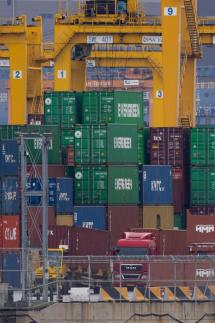 Korea's import-export prices surge to Asian crisis-era levels on Gulf shock SEOUL, April 15 (AJP) - South Korea's import prices jumped at the steepest pace in nearly three decades as the outbreak of a full-blown war in the Gulf triggered a sharp surge in energy prices and the U.S. dollar against the Korean won, but trade terms remained robust so far as export prices rose at a similar pace on strong global demand for refined fuels and memory chips. According to preliminary export and import price data for March released by the Bank of Korea (BOK) on Wednesday, import prices in won terms soared 16.1 percent from the previous month, the steepest increase since a 17.8 percent jump in January 1998. From a year earlier, they rose 18.4 percent. The primary catalyst for this surge was international oil prices. Dubai crude jumped 87.9 percent, rising from $68.40 per barrel in February to $128.52 in March, driven by actual supply disruptions amid escalating military tensions between the United States and Iran, combined with fears over a blockade of the Strait of Hormuz. During the same period, Brent crude and West Texas Intermediate (WTI) also breached the $100 and $90 levels, respectively. The dollar rose 2.6 percent from the February average of 1,449.32 won to 1,486.64 won. That translated into surges of 88.5 percent quarter on quarter and 76.9 percent year on year in crude import prices — levels not seen since records began in won terms in 1985. The gain of 83.8 percent on contract exchange rate term marked the biggest increase since a 98.3 percent jump in January 1974 during the first oil crisis. Jet fuel import prices soared 67.1 percent quarter-on-quarter and 81.8 percent year-on-year. Import prices of raw materials jumped 40.2 percent from the previous month and 40.0 percent from a year earlier. Coal and petroleum product import prices rose 37.4 percent month-on-month and 31.3 percent year-on-year. Export prices also rose 16.3 percent from the previous month in March, the biggest increase since 23.2 percent in 1998. Prices for coal and petroleum products surged 88.7 percent month-on-month, led by major fuels including diesel and jet fuel. Chemical product prices also turned upward, indicating that rising energy costs are spreading across intermediate goods. Korean refiners, which supply about 4 percent of global jet fuel, benefited from wider margins, partly supported by prewar inventories. The won weakened sharply following the outbreak of the war, delivering a double hit alongside rising oil prices. As won-denominated trade prices are directly affected by currency fluctuations, the higher exchange rate lifted import prices while also amplifying export price gains. The rise in export prices also reflected continued strength in semiconductor pricing. Prices for computers, electronic and optical devices rose 12.7 percent month-on-month. However, while the first two months of the year were characterized by demand-driven growth centered on chips, the March surge increasingly reflects cost-push pressure from higher energy prices. Trade terms remained solid for now. The net barter terms of trade index rose 22.8 percent year-on-year, while the income terms of trade index jumped 50.9 percent. The surplus largely reflects export prices for semiconductors and petroleum products rising faster than import prices. Market attention is now shifting to April data, as structural pressures from rising raw material and energy costs are expected to become more visible. In a scenario where energy prices and the exchange rate rise simultaneously, higher import costs are likely to spill over into consumer inflation. This could increase the cost burden for corporations and weigh on economic growth. If Middle East risks persist, there are concerns that energy price increases will become entrenched across production costs. The Hyundai Research Institute (HRI) projected that if oil prices remain above $100 per barrel throughout the year, South Korea’s economic growth rate would drop by at least 0.3 percentage points. French investment bank Natixis went further, cutting its growth forecast for South Korea from 1.8 percent to 1 percent — a reduction of 0.8 percentage points. 2026-04-15 09:08:44
 -
 South Korean engineers find better way to use light for AI SEOUL, April 15 (AJP) - Researchers in South Korea have created a new component that makes it easier to control light on a microchip, which could significantly boost the performance of artificial intelligence and quantum computers. The team, representing both the Korea Advanced Institute of Science and Technology and Hanyang University, designed a device that uses light interference to manage signals with much higher accuracy than current methods. The Korea Advanced Institute of Science and Technology said Wednesday. This technology focuses on Photonic Integrated Circuits (PIC), which use light to carry data at high speeds with low energy use. These circuits are essential for running the massive data centers that power AI, but they require very precise control over light waves. Standard devices usually rely on a single channel to move light, which makes it hard to change the shape or timing of the signal. The researchers introduced a dual-path system that allows light waves to interact with each other in a controlled way, effectively letting them program the light. Much of the work for the project was done by Kim Tae-won, an undergraduate student working through a specialized research program at KAIST. He worked alongside Professor Kim Sang-sik and Professor Yoon Jae-woong to prove the concept. "I was able to take the resonator principles I learned in my introductory photonics class and turn them into an actual device design and a published paper," Kim Tae-won said. The team found that this new layout allows for much better frequency conversion, which means they can change the color and properties of light more efficiently. This is expected to help AI accelerators and secure communication systems work faster while using less power. Professor Kim Sang-sik said, "this research goes beyond suggesting a new device by providing a detailed analysis of optical properties that were previously overlooked." He added that the team showed physical limits can be overcome through precise engineering. The findings were published in the journal Laser and Photonics Reviews on March 6, 2026. (Reference Information) Journal/Source: Laser and Photonics Reviews Title: Dual-bus resonator for multi-port spectral engineering Link/DOI: 10.1002/lpor.202502935 2026-04-15 09:01:54
 -
 BTS Places Six Songs on Billboard Hot 100 for Third Straight Week BTS extended its run on Billboard’s main singles chart, placing six songs on the Hot 100 for a third consecutive week. The group also appeared on Rolling Stone’s May special cover, underscoring its global profile. According to Billboard’s latest charts released April 14, “SWIM,” the title track from BTS’ fifth full-length album “ARIRANG,” ranked No. 5 on the April 18 Hot 100. Five other tracks from the album also charted: “Body to Body” at No. 52, “2.0” at No. 67, “Hooligan” at No. 72, “NORMAL” at No. 82 and “FYA” at No. 90. All six have now remained on the Hot 100 for three straight weeks. The album’s momentum continued across Billboard’s global rankings. “SWIM” held No. 1 for a third week on both the Global 200 and Global Excl. U.S. charts. All 13 vocal tracks from “ARIRANG” were also positioned within the top 50 of the Global 200 and within the top 40 of Global Excl. U.S., Billboard said. BTS also stayed atop the Billboard 200, Artist 100, Digital Song Sales and Top Album Sales charts for a third consecutive week. Billboard said the group’s three-week run at No. 1 on the Billboard 200 was the first such achievement by a K-pop act — and by a group overall — since 2012. BTS additionally ranked No. 1 on Vinyl Albums, No. 4 on Top Streaming Albums and No. 9 on Streaming Songs. In Japan, “ARIRANG” remained No. 1 for a second straight week on Oricon’s Weekly Streaming Ranking with about 8.55 million weekly plays. Oricon said it was the first time since November 2024 that an overseas artist led the chart for two consecutive weeks. Rolling Stone on April 14 released a group cover and an interview video tied to its May special issue. The project is being published simultaneously across 16 countries and regions, including the United States, the United Kingdom, France and Germany, with one group cover and seven individual member covers. In the interview, members spoke about their reflections and changes as they returned as a full group after a hiatus. RM said the album’s 14 tracks are “the answer to the question, ‘What is BTS in 2026?’” adding, “If we no longer challenge ourselves, there’s no reason to keep the team going.” Jin said, “I’ve always thought there’s no reason to continue if I’m not with the group.” J-Hope said, “As we filled in each other’s shortcomings, we realized again why we have to be seven.” Suga said he wanted to focus less on results and more on staying healthy and enjoying activities together. Jimin said he would push himself further to raise the team’s standing. V said he used his military service to reset physically and mentally while planning the next step. Jung Kook said his hunger for the stage grew during the break. BTS also completed the opening shows of its “BTS WORLD TOUR ‘ARIRANG’” on April 9 and April 11-12 at the main stadium of Goyang Sports Complex in Gyeonggi Province. About 132,000 people attended across three concerts, and fans in 194 countries and regions joined through live viewings and Weverse online streaming. The fifth full-length album “ARIRANG” is BTS’ first new release in three years and nine months. The album centers on universal emotions, and “SWIM” conveys determination to keep moving forward through life’s hardships. RM participated broadly in writing lyrics, reflecting the group’s current concerns and stories.* This article has been translated by AI. 2026-04-15 08:57:21
 -
 NH NongHyup Bank CEO Kang Tae-young Pledges More On-Site Support in South Gyeongsang Kang Tae-young, CEO of NH NongHyup Bank, visited key industrial sites in South Gyeongsang Province to review business strategy and discuss ways to expand what the bank called “productive finance.” NH NongHyup Bank said April 15 that Kang toured the region for two days, from April 13 to 14, to inspect major local industries and consider financial support measures. The bank said the trip aimed to strengthen support for the province’s core marine, aerospace and defense sectors and to improve customer-focused service through communication with frontline staff. On April 13, Kang attended the opening ceremony at the bank’s South Gyeongsang headquarters for the “Southeast NongHyup Financial Comprehensive Support Center for Marine, Aerospace and Defense Industries.” The center will provide tailored financial consulting and specialized products for companies in shipbuilding and marine industries, aerospace, and defense in the region. On April 14, Kang visited Samsung Heavy Industries’ Geoje shipyard and Hanwha Aerospace’s plant in Changwon. He met with company officials to discuss financial support and cooperation measures aimed at expanding exports and shifting toward higher value-added industries. “South Gyeongsang is a key hub of Korea’s manufacturing base, and sustained growth in marine, aerospace and defense industries will strengthen the nation’s economic competitiveness,” Kang said. “We will continue to expand NongHyup Bank’s productive finance by providing on-site, field-centered support and growing together with local communities.” 2026-04-15 08:54:00
 -
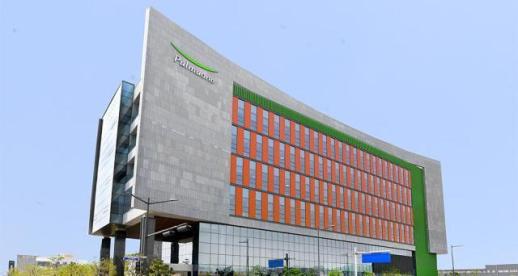 Pulmuone climbs to 3rd among global food firms in S&P sustainability ranking SEOUL, April 15 (AJP) - South Korean food maker Pulmuone announced it achieved its highest-ever ranking in S&P Global's Corporate Sustainability Assessment, climbing to third place among global food companies from fourth a year earlier. The result, based on the 2025 CSA and reflected in S&P Global's Sustainability Yearbook 2026 published in February, marks the third consecutive year Pulmuone has placed in the top five of the food products category. The assessment evaluated about 9,200 companies across 59 industries worldwide, with only 848 earning a place in the yearbook. In the food products segment, 241 companies underwent review. Pulmuone said it was the top-ranked South Korean food company among them, few points ahead of its domestic competitor CJ Cheiljedang, earning recognition for strengthened board independence, tighter environmental management and upgraded food safety systems. The company attributed the improvement to gains across all three ESG pillars. In governance, it bolstered independent oversight by raising the mandatory ratio of outside directors to one-third from one-quarter and linking board evaluations to executive compensation. On the environmental front, Pulmuone built a carbon footprint tracking system under the ISO 14067 standard and completed third-party verification for key products including tofu and udon noodles. Pulmuone has also pushed into food technology, entering the commercial verification stage for land-based seaweed aquaculture and developing a CRISPR-Cas-based diagnostic platform for pathogen detection, for which it has secured patents. "This result is an objective, global-level recognition of the sustainability efforts Pulmuone has pursued since its founding, rooted in our philosophy of love for neighbors and respect for life," said Lee Jung-eon, the company's head of sustainability management. "We will continue to advance Pulmuone's unique values into ESG management that meets global standards, under our mission of 'Creating a Healthy Tomorrow for People and the Earth through Wholesome Food,' and build an ever-stronger foundation for sustainable growth." 2026-04-15 08:37:09
 -
 Toss Signs MOU With Korea Franchise Association to Expand FacePay Viva Republica, the operator of Toss, is moving to expand use of its FacePay service. Toss said on 15일 it signed a strategic memorandum of understanding with the Korea Franchise Industry Association. Under the agreement, the two sides plan to roll out Toss’ facial-recognition payment service, FacePay, across franchise stores. The association will support adoption among its member companies, while Toss will provide the payment infrastructure and technology. FacePay is a simple payment service that allows customers to pay using facial authentication. It can be used without a separate card or smartphone and can reduce repetitive tasks caused by store staff operating point-of-sale systems. “FacePay is not just a convenient payment method, but an innovative tool that makes franchise owners’ daily lives easier,” Toss Vice President Kim Gyu-ha said. “Through cooperation with the Korea Franchise Association, we will work together so more small business owners can improve the payment experience.” Na Myeong-seok, chairman of the Korea Franchise Industry Association, said the agreement will make it easier for member companies to adopt new payment technology. He said the association will actively support franchise owners so they can run stores more easily and conveniently.* This article has been translated by AI. 2026-04-15 08:36:25
 -
 Korean Drugmakers Reshape R&D as Price Cuts and Commercial Law Changes Loom Korean drugmakers are reorganizing research and development around their headquarters and speeding up outside hiring and internal reshuffles as policy changes such as drug price cuts and revisions to the Commercial Act take shape. The moves are aimed at concentrating new-drug development and commercialization capabilities as profitability is expected to come under pressure. According to the industry on the 14th, Ildong Pharmaceutical decided the previous day to merge its R&D subsidiary Unovia into the parent company. Ildong cited a changing business environment and rising uncertainty, the need to strengthen competitiveness and the goal of operational stability. The company said it will integrate R&D functions into headquarters to improve management efficiency in line with institutional changes, including implementation of a revamped drug-pricing system. Unovia has led development of Ildong Pharmaceutical’s key pipeline. It has secured Phase 1 topline data for a GLP-1RA obesity drug candidate, and its P-CAB peptic ulcer treatment fadoprazan is in Phase 3 trials. Ildong said the reintegration will help speed technology licensing deals and commercialization. Industry officials view the decision as more than routine restructuring, describing it as a strategic response to pricing pressure and a broader push to overhaul corporate governance. The government is pursuing a plan to lower the pricing formula for generic drugs from 53.55% to about 45%, increasing downside pressure on earnings. At the same time, revisions to the Commercial Act are expected to add burdens related to treasury shares and governance responses. Across the pharmaceutical and biotech sector, companies are moving quickly on steps such as disposing of treasury shares, revising articles of incorporation and expanding independent directors. The revised Commercial Act includes a principle of mandatory cancellation of treasury shares, stronger board independence and changes to the structure for appointing audit committee members, affecting management strategies across the industry. Recruitment of outside specialists is also increasing. Ildong Pharmaceutical this month appointed Dr. Park Jae-hong as its new head of the R&D division. The company said Park will oversee Ildong’s overall R&D, including new-drug research and development, and that the hire will strengthen pipeline competitiveness and further raise R&D capabilities. SK Bioscience also hired Ma Sang-ho, a vice president and an infectious-disease research project management specialist, as head of the Research Support Office within its Bio Research Division. The company said it plans to strengthen R&D project management and open innovation, and to build a support system covering the full cycle from research planning to regulatory responses and operation of nonclinical and clinical sample analysis (GCLP). Yuyu Pharma hired Ryu Hyun-gi as head of its Development Division. Ryu has experience in development planning and business development after working at Kwangdong Pharmaceutical, Kyungnam Pharmaceutical, Korea Pharmbio and Hanwha Pharmaceutical. Yuyu said it aims to accelerate development of next-generation improved drugs and specialized formulations through the hire. The market expects the trend to continue for the time being. “Reorganizations centered on talent that understands clinical trials, regulatory approvals and business development are now in full swing,” a pharmaceutical company official said. “For companies seeking a breakthrough through R&D investment and securing specialized talent, it could instead become an opportunity to reset strategy.” Meanwhile, R&D spending in South Korea’s biohealth industry has continued to rise. According to the Korea Health Industry Development Institute’s “2025 Biohealth Industry Statistical Yearbook,” corporate R&D spending in the domestic biohealth industry increased from 3.4293 trillion won in 2020 to 4.4743 trillion won in 2024. * This article has been translated by AI. 2026-04-14 19:03:00
 -
 KBO Hits Leader Son Ah-seop Traded to Doosan for Lee Gyo-hoon, Cash KBO League career hits leader Son Ah-seop is leaving the Hanwha Eagles and joining the Doosan Bears in a trade. Hanwha announced on the 14th that it will send Son to Doosan in exchange for left-hander Lee Gyo-hoon and 150 million won in cash. Son, a veteran outfielder, was acquired by Hanwha in a trade from the NC Dinos in July last year. After about eight months with the Eagles, he will now wear a Doosan uniform. Since debuting in 2007, Son has played 20 seasons and owns a .319 career batting average in 2,170 games, with 2,618 hits, 182 home runs, 1,086 RBIs and a .842 OPS. Last year, he hit .288 in 111 games with one home run, 50 RBIs and 39 runs scored. A Doosan official said the club made the deal to strengthen its lineup, calling Son “a veteran hitter with experience among the best in the league.” The official added that the team believes Son still has “plenty of competitiveness” and expects both his precision at the plate and his role as a clubhouse leader. Lee, who will join Hanwha, is a left-handed pitcher drafted by Doosan in the third round of the second phase of the 2019 rookie draft. He is 2-1 with a 7.28 ERA in 59 career games. Last year, he posted a 1.17 ERA in 10 appearances. A Hanwha official said the team acquired Lee to bolster the depth of its left-handed bullpen. The official added that Lee has completed military service and is expected to help cover gaps created by left-handed pitchers on the roster fulfilling their service obligations.* This article has been translated by AI. 2026-04-14 18:06:00