
Journalist

Lee Hugh
=
-
 Trump hints at another round of talks with Iran 'over the next two days' SEOUL, April 15 (AJP) - U.S. President Donald Trump on Tuesday hinted at additional peace talks between the U.S. and Iran could take place in Pakistan within the next few days. Trump said in an interview with The New York Post, "You should stay there, really, because something could be happening over the next two days." "We are more inclined to go there. It's more likely, you know why? Because the field marshal is doing a great job," he added, referring to Pakistan's field marshal Asim Munir, one of the key negotiators pushing talks between the two countries. His remarks suggest the two sides may soon meet again in Islamabad, Pakistan after the first round of talks ended without a deal last weekend. Among the key issues is the U.S. demand that Iran should not have nuclear weapons at all, as Trump earlier said he was "not happy" with reports that Washington had called on Tehran to suspend uranium enrichment for two decades during marathon talks in Islamabad last Saturday and Sunday. "I've been saying they can't have nuclear weapons" he said, "So I don't like the 20 years." As Trump has increased pressure on Iran by imposing a naval blockade on its ports in the Strait of Hormuz, it remains uncertain whether both sides can narrow their differences and reach a breakthrough before their two-week ceasefire expires on April 22. 2026-04-15 09:26:19
 -
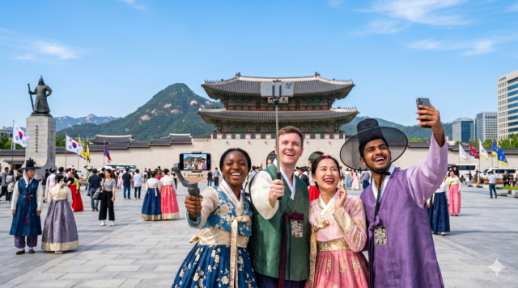 South Korea recruits foreign influencers as Seoul seeks to move beyond K-pop SEOUL, April 15 (AJP) - A group of 120 international content creators is set to fan out across the South Korean provinces this year, part of an aggressive push by the Ministry of Culture, Sports and Tourism to diversify the national brand, the ministry said Wednesday. Starting April 17 in the traditional stronghold of Jeonju, the project marks a calculated attempt to steer global attention away from the neon-lit aesthetics of K-pop and toward the historical substance of the rural interior. This strategic pivot reflects a maturing of the Korean Wave. While music and television dramas remain dominant, the government is betting that sustainable soft power requires a shift toward physical immersion in the country's traditional landscapes and regional traditions. By enlisting foreign residents as digital ambassadors, the ministry is decentralizing its cultural narrative, allowing a more organic view of life outside the capital to reach global social media feeds. The itinerary for the "2026 Senses of K-Culture" program covers six three-day expeditions through November. Participants will visit a shrine in Jeonju before moving to the Hantan River in Pocheon and the mountain retreat of Beopjusa Temple in Boeun for a period of Buddhist temple stays. The autumn schedule includes the fire festivals of Andong and Yeongju, coastal fishing in Dangjin, and the heavily fortified landscape of the demilitarized zone in Goseong and Sokcho. "Through this project, I hope people around the world will discover the diverse local cultures and hidden charms of Korea beyond 'K-pop' and 'K-dramas,'" a ministry policy official said. "The vivid experiences of foreign content creators residing in Korea and collaborations with overseas media will serve as an opportunity to effectively convey the specialness of 'K-culture.'" 2026-04-15 09:22:16
 -
 KLPGA Holds Youth Golf Volunteer Clinic With 2025 Money Leader Hong Jeong-min The Korea Ladies Professional Golf Association, or KLPGA, said it held its volunteer talent-sharing program, "KLPGA with YOU," on April 14 at Gamsung Elementary School in Sejong City with Hong Jeong-min, last season’s money leader. KLPGA with YOU is run for schools that received support through the KLPGA’s "Youth Golf Environment Project," which helps establish practice facilities and provides donated golf equipment. Hong, who won three titles on the 2025 KLPGA regular tour and finished as both the money leader and co-leader in wins, gave a special lesson to 20 students at the event. "At first I was nervous and worried because I was thinking about teaching youth students who are the future of Korean golf," Hong said. "They followed what I taught well and learned with passion, so I had a great time. I hope today helps them become more interested in golf. I will attend these meaningful events more often." The KLPGA said it is also working to broaden youth participation through programs including the "KLPGA Volunteer Talent Group," the "KLPGA Kidz Golf Camp" and the "Youth Golf Environment Project." It also said it is helping identify promising players by hosting events such as the "KLPGA President’s Cup Women’s Amateur Golf Championship" and the "KLPGA-Samchully Together Dream Tree Tournament."* This article has been translated by AI. 2026-04-15 09:21:00
 -
 Korea Tourism Organization to Pilot K League Train-and-Stay Travel Packages in May The Korea Tourism Organization said Tuesday it will pilot a stay-style travel product tied to professional soccer matches, called 'K League Trip Day,' in May with Korail Tourism Development and the Korea Professional Football League. The program is designed to encourage fans to travel by train as high fuel prices raise the cost of driving, and to turn large-scale matchday travel into longer stays that support local businesses. A same-day package aimed at away fans will be offered around Daejeon Hana Citizen home matches. For the May 5 match against Incheon United and the May 16 match against FC Seoul, trains will run from Yongsan Station to Seodaejeon Station. Two ITX cars will be set aside for away supporters, with cheering backdrops and team-character souvenirs to create a road-game atmosphere. The itinerary also includes visits to local shopping areas, including a bakery tour, to increase time spent in the region and local spending. Each trip will take 120 people on a first-come, first-served basis, for a total of 240. With discounts of up to 50,000 won per person, the price starts in the 80,000-won range. A flexible overnight package will also be sold for home fans who live outside the area. It will cover May home matches for clubs with strong KTX connections: Jeonbuk Hyundai, Ulsan HD, Daejeon Hana Citizen and Gangwon FC. The package includes round-trip KTX travel from Seoul, lodging and premium match tickets. Train schedules are set to allow time for local sightseeing before and after the game, and the program includes sports-focused options such as a player high-five event and a stadium tour. Customers can buy up to four tickets per person. Reservations and detailed schedules are available on the 'Korea Everywhere' website and the Korail Tourism Development website. Kang Yu-young, a team leader in the organization's regional tourism development unit, said the program is a new attempt to link match attendance with longer stays and spending at local businesses. She said the agency will expand similar stay-style travel projects that combine tourism with activities such as running trips and community sports.* This article has been translated by AI. 2026-04-15 09:12:27
 -
 Shinhan Bank Tops South Korea’s Retirement Pension Market With 54.74 Trillion Won Shinhan Bank said it has become the top financial institution in South Korea’s retirement pension market. The bank said Tuesday that its retirement pension assets reached 54.7391 trillion won, based on disclosures on the Financial Supervisory Service’s Integrated Pension Portal. It said the figure is the largest across the financial industry, including banks, securities firms and insurers. Shinhan Bank said assets grew evenly across defined benefit (DB), defined contribution (DC) and individual retirement pension (IRP) plans. On returns, the bank said that as of the first quarter of this year, 10-year returns for its non-principal-protected products were 5.17% for DC plans and 4.78% for IRP plans. The bank said it is expanding its lineup of performance-linked products, including exchange-traded funds (ETFs) and target-date funds (TDFs), as customer demand rises. It said it currently offers 242 ETF products, the most among banks. To mark the No. 1 ranking, Shinhan Bank said it plans an event offering My Shinhan Points to customers enrolled in DC and IRP plans. “This achievement reflects the pension asset management capabilities we have built as an asset management-focused bank, along with competitive returns,” a Shinhan Bank official said. “We will continue to provide differentiated services as a pension specialist bank that customers can trust.”* This article has been translated by AI. 2026-04-15 09:12:00
 -
 French Cinema Week expands to nationwide scale as diplomatic milestone nears SEOUL, April 15 (AJP) - The French Embassy in Seoul launches its most ambitious cinema showcase to date on April 24, deploying 10 unreleased films across five major South Korean cities to commemorate the 140th anniversary of diplomatic relations between the two nations, the embassy said Tuesday. By expanding the festival footprint to Seoul, Busan, Gwangju, and Incheon, Paris is leveraging its cultural exports to deepen a strategic partnership that has evolved from a nineteenth-century treaty into a modern alliance of technology and art. This iteration of French Cinema Week serves as more than a seasonal festival; it is a calculated disruption of the traditional distribution model that often leaves independent European cinema sidelined in the South Korean commercial market. By securing venues such as the Busan Cinema Center and Seoul Art Cinema, the French government ensures that critically acclaimed works from Cannes, Berlin, and Locarno reach the South Korean public before they enter the standard theatrical window. The scale of the 2026 program reflects a heightened period of bilateral cooperation as Seoul and Paris navigate a complex geopolitical landscape through shared soft power initiatives. Central to this year's mission is the appointment of Kim Shin-rok as the official ambassador for the event. The actress, who gained international recognition through the series Hellbound, embodies the current synergy between the two film industries. Her upcoming appearance in Colony, directed by Yeon Sang-ho, is scheduled for a midnight screening at the 79th Cannes Film Festival, effectively positioning her as a bridge between the gritty realism of contemporary South Korean storytelling and the prestigious platforms of the French Riviera. The curated selection of 10 films provides a diverse cross-section of French society and aesthetic experimentation. The lineup includes Emma Benestan's Animal and Alexis Langlois's Queens of Drama, both carrying restricted ratings that signal a commitment to provocative, adult-oriented narratives. Other titles, such as Stéphane Demoustier's The Great Arch and Hafsia Herzi's The Little Sister, represent the latest wave of French directorial talent emerging in 2024 and 2025. Beyond the screenings, the festival will facilitate direct intellectual exchange through Guest Visit sessions featuring film professionals. These interactions are intended to provide South Korean audiences with specific context regarding the social and political undercurrents of the films, which include Tamara Stepanyan's In the Land of Arto and Hubert Charuel's Meteors. The festival is scheduled to run through May 10. Organizers have partnered with a broad coalition of corporate sponsors, including Renault Korea, Korean Air, and LVMH, to support the logistical demands of a four-city tour. Since its inception in 2021, the event has grown from a niche screening series into a cornerstone of the French cultural calendar in South Korea. Diplomatic relations between the two countries were first established via the Treaty of Friendship, Commerce and Navigation signed in June 1886. According to the National Museum of Korean Contemporary History, this treaty ended South Korea's isolationist policy toward France and laid the groundwork for modern diplomatic exchange. French Cinema Week 2026 is one of several events planned to mark this 140-year history. 2026-04-15 09:11:42
 -
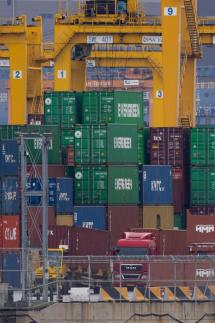 Korea's import-export prices surge to Asian crisis-era levels on Gulf shock SEOUL, April 15 (AJP) - South Korea's import prices jumped at the steepest pace in nearly three decades as the outbreak of a full-blown war in the Gulf triggered a sharp surge in energy prices and the U.S. dollar against the Korean won, but trade terms remained robust so far as export prices rose at a similar pace on strong global demand for refined fuels and memory chips. According to preliminary export and import price data for March released by the Bank of Korea (BOK) on Wednesday, import prices in won terms soared 16.1 percent from the previous month, the steepest increase since a 17.8 percent jump in January 1998. From a year earlier, they rose 18.4 percent. The primary catalyst for this surge was international oil prices. Dubai crude jumped 87.9 percent, rising from $68.40 per barrel in February to $128.52 in March, driven by actual supply disruptions amid escalating military tensions between the United States and Iran, combined with fears over a blockade of the Strait of Hormuz. During the same period, Brent crude and West Texas Intermediate (WTI) also breached the $100 and $90 levels, respectively. The dollar rose 2.6 percent from the February average of 1,449.32 won to 1,486.64 won. That translated into surges of 88.5 percent quarter on quarter and 76.9 percent year on year in crude import prices — levels not seen since records began in won terms in 1985. The gain of 83.8 percent on contract exchange rate term marked the biggest increase since a 98.3 percent jump in January 1974 during the first oil crisis. Jet fuel import prices soared 67.1 percent quarter-on-quarter and 81.8 percent year-on-year. Import prices of raw materials jumped 40.2 percent from the previous month and 40.0 percent from a year earlier. Coal and petroleum product import prices rose 37.4 percent month-on-month and 31.3 percent year-on-year. Export prices also rose 16.3 percent from the previous month in March, the biggest increase since 23.2 percent in 1998. Prices for coal and petroleum products surged 88.7 percent month-on-month, led by major fuels including diesel and jet fuel. Chemical product prices also turned upward, indicating that rising energy costs are spreading across intermediate goods. Korean refiners, which supply about 4 percent of global jet fuel, benefited from wider margins, partly supported by prewar inventories. The won weakened sharply following the outbreak of the war, delivering a double hit alongside rising oil prices. As won-denominated trade prices are directly affected by currency fluctuations, the higher exchange rate lifted import prices while also amplifying export price gains. The rise in export prices also reflected continued strength in semiconductor pricing. Prices for computers, electronic and optical devices rose 12.7 percent month-on-month. However, while the first two months of the year were characterized by demand-driven growth centered on chips, the March surge increasingly reflects cost-push pressure from higher energy prices. Trade terms remained solid for now. The net barter terms of trade index rose 22.8 percent year-on-year, while the income terms of trade index jumped 50.9 percent. The surplus largely reflects export prices for semiconductors and petroleum products rising faster than import prices. Market attention is now shifting to April data, as structural pressures from rising raw material and energy costs are expected to become more visible. In a scenario where energy prices and the exchange rate rise simultaneously, higher import costs are likely to spill over into consumer inflation. This could increase the cost burden for corporations and weigh on economic growth. If Middle East risks persist, there are concerns that energy price increases will become entrenched across production costs. The Hyundai Research Institute (HRI) projected that if oil prices remain above $100 per barrel throughout the year, South Korea’s economic growth rate would drop by at least 0.3 percentage points. French investment bank Natixis went further, cutting its growth forecast for South Korea from 1.8 percent to 1 percent — a reduction of 0.8 percentage points. 2026-04-15 09:08:44
 -
 South Korean engineers find better way to use light for AI SEOUL, April 15 (AJP) - Researchers in South Korea have created a new component that makes it easier to control light on a microchip, which could significantly boost the performance of artificial intelligence and quantum computers. The team, representing both the Korea Advanced Institute of Science and Technology and Hanyang University, designed a device that uses light interference to manage signals with much higher accuracy than current methods. The Korea Advanced Institute of Science and Technology said Wednesday. This technology focuses on Photonic Integrated Circuits (PIC), which use light to carry data at high speeds with low energy use. These circuits are essential for running the massive data centers that power AI, but they require very precise control over light waves. Standard devices usually rely on a single channel to move light, which makes it hard to change the shape or timing of the signal. The researchers introduced a dual-path system that allows light waves to interact with each other in a controlled way, effectively letting them program the light. Much of the work for the project was done by Kim Tae-won, an undergraduate student working through a specialized research program at KAIST. He worked alongside Professor Kim Sang-sik and Professor Yoon Jae-woong to prove the concept. "I was able to take the resonator principles I learned in my introductory photonics class and turn them into an actual device design and a published paper," Kim Tae-won said. The team found that this new layout allows for much better frequency conversion, which means they can change the color and properties of light more efficiently. This is expected to help AI accelerators and secure communication systems work faster while using less power. Professor Kim Sang-sik said, "this research goes beyond suggesting a new device by providing a detailed analysis of optical properties that were previously overlooked." He added that the team showed physical limits can be overcome through precise engineering. The findings were published in the journal Laser and Photonics Reviews on March 6, 2026. (Reference Information) Journal/Source: Laser and Photonics Reviews Title: Dual-bus resonator for multi-port spectral engineering Link/DOI: 10.1002/lpor.202502935 2026-04-15 09:01:54
 -
 BTS Places Six Songs on Billboard Hot 100 for Third Straight Week BTS extended its run on Billboard’s main singles chart, placing six songs on the Hot 100 for a third consecutive week. The group also appeared on Rolling Stone’s May special cover, underscoring its global profile. According to Billboard’s latest charts released April 14, “SWIM,” the title track from BTS’ fifth full-length album “ARIRANG,” ranked No. 5 on the April 18 Hot 100. Five other tracks from the album also charted: “Body to Body” at No. 52, “2.0” at No. 67, “Hooligan” at No. 72, “NORMAL” at No. 82 and “FYA” at No. 90. All six have now remained on the Hot 100 for three straight weeks. The album’s momentum continued across Billboard’s global rankings. “SWIM” held No. 1 for a third week on both the Global 200 and Global Excl. U.S. charts. All 13 vocal tracks from “ARIRANG” were also positioned within the top 50 of the Global 200 and within the top 40 of Global Excl. U.S., Billboard said. BTS also stayed atop the Billboard 200, Artist 100, Digital Song Sales and Top Album Sales charts for a third consecutive week. Billboard said the group’s three-week run at No. 1 on the Billboard 200 was the first such achievement by a K-pop act — and by a group overall — since 2012. BTS additionally ranked No. 1 on Vinyl Albums, No. 4 on Top Streaming Albums and No. 9 on Streaming Songs. In Japan, “ARIRANG” remained No. 1 for a second straight week on Oricon’s Weekly Streaming Ranking with about 8.55 million weekly plays. Oricon said it was the first time since November 2024 that an overseas artist led the chart for two consecutive weeks. Rolling Stone on April 14 released a group cover and an interview video tied to its May special issue. The project is being published simultaneously across 16 countries and regions, including the United States, the United Kingdom, France and Germany, with one group cover and seven individual member covers. In the interview, members spoke about their reflections and changes as they returned as a full group after a hiatus. RM said the album’s 14 tracks are “the answer to the question, ‘What is BTS in 2026?’” adding, “If we no longer challenge ourselves, there’s no reason to keep the team going.” Jin said, “I’ve always thought there’s no reason to continue if I’m not with the group.” J-Hope said, “As we filled in each other’s shortcomings, we realized again why we have to be seven.” Suga said he wanted to focus less on results and more on staying healthy and enjoying activities together. Jimin said he would push himself further to raise the team’s standing. V said he used his military service to reset physically and mentally while planning the next step. Jung Kook said his hunger for the stage grew during the break. BTS also completed the opening shows of its “BTS WORLD TOUR ‘ARIRANG’” on April 9 and April 11-12 at the main stadium of Goyang Sports Complex in Gyeonggi Province. About 132,000 people attended across three concerts, and fans in 194 countries and regions joined through live viewings and Weverse online streaming. The fifth full-length album “ARIRANG” is BTS’ first new release in three years and nine months. The album centers on universal emotions, and “SWIM” conveys determination to keep moving forward through life’s hardships. RM participated broadly in writing lyrics, reflecting the group’s current concerns and stories.* This article has been translated by AI. 2026-04-15 08:57:21
 -
 NH NongHyup Bank CEO Kang Tae-young Pledges More On-Site Support in South Gyeongsang Kang Tae-young, CEO of NH NongHyup Bank, visited key industrial sites in South Gyeongsang Province to review business strategy and discuss ways to expand what the bank called “productive finance.” NH NongHyup Bank said April 15 that Kang toured the region for two days, from April 13 to 14, to inspect major local industries and consider financial support measures. The bank said the trip aimed to strengthen support for the province’s core marine, aerospace and defense sectors and to improve customer-focused service through communication with frontline staff. On April 13, Kang attended the opening ceremony at the bank’s South Gyeongsang headquarters for the “Southeast NongHyup Financial Comprehensive Support Center for Marine, Aerospace and Defense Industries.” The center will provide tailored financial consulting and specialized products for companies in shipbuilding and marine industries, aerospace, and defense in the region. On April 14, Kang visited Samsung Heavy Industries’ Geoje shipyard and Hanwha Aerospace’s plant in Changwon. He met with company officials to discuss financial support and cooperation measures aimed at expanding exports and shifting toward higher value-added industries. “South Gyeongsang is a key hub of Korea’s manufacturing base, and sustained growth in marine, aerospace and defense industries will strengthen the nation’s economic competitiveness,” Kang said. “We will continue to expand NongHyup Bank’s productive finance by providing on-site, field-centered support and growing together with local communities.” 2026-04-15 08:54:00