
Journalist

Lee Hugh
=
-
 KOSPI rises on easing Middle East tensions, but falls short of 6,000 threshold SEOUL, April 14 (AJP) - The South Korean stock market closed higher on Tuesday, lifted by easing oil prices and signs of diplomatic progress between the U.S. and Iran, though tensions in the Strait of Hormuz kept investors cautious. The country's benchmark KOSPI rose 2.7 percent to close at 5,967.8 after briefly breaking above the 6,000 level in early morning trade. The index repeatedly hovered around the threshold throughout the session but failed to sustain its gains, losing momentum to finish below the psychologically important level. Elsewhere in Asia, markets also closed higher in line with the improved global sentiment. Japan's Nikkei 225 rose 2.4 percent to 57,877.4, while China's Shanghai Composite gained 0.7 percent to 4,016.7. Hong Kong’s Hang Seng Index advanced 0.7 percent to 25,827.9. Investor sentiment was supported by signs of continued talks between Washington and Tehran. While the first set of negotiation over Iran's uranium enrichment program remain unresolved, disagreemtns between the two sides appeared to narrow, with the U.S. proposing a 20-year suspension and Iran countering with a five-year halt. Oil prices declined despite heightened supply risks. Brent crude fell 1.2 percent to US$98.19 a barrel and West Texas Intermediate dropped 3 percent to $96.1, even as U.S. naval forces enforced a blockade in the Strait of Hormuz, forcing at least two China-bound oil tankers to turn back. The divergence suggests markets are pricing in a contained conflict scenario rather than an immediate supply disruption. Volatility indicators also pointed to stabilizing risk conditions. The Volatility Index (VIX) edged down 0.6 percent to 19.12, while the dollar index slipped 0.2 percent to 98.2. The Philadelphia Semiconductor Index (SOX) rose 1.7 percent, reinforcing strength in technology shares globally. Institutional and foreign investors drove the rally on the KOSPI, buying a combined 2.08 trillion won ($1.41 billion) worth of shares, while retail investors sold 2.39 trillion won, suggesting profit-taking into strength and contributing to the late-session fade. Among large-cap stocks, Samsung Electronics rose 2.7 percent to 206,500 won, while SK hynix surged 6.1 percent to 1,103,000 won, extending gains on expectations for strong earnings and continued AI-driven demand. Hyundai Motor gained 2.7 percent to 491,500 won, and Kia rose 1.2 percent to 149,200 won. In contrast, battery and defensive shares lagged. LG Energy Solution fell 0.4 percent to 400,000 won, while Samsung Biologics and Hanwha Aerospace declined 0.9 percent to 1,536,000 won and 0.5 percent to 1,523,000 won, respectively. The junior KOSDAQ rose 2.0 percent to 1,121.9, though gains were driven primarily by retail investors, who bought 116.5 billion won, while institutions and foreigners were heavy sellers, offloading 128.9 billion won and 6.7 billion won, respectively, suggesting a more speculative tone. The Korean won strengthened modestly to 1,478.9 per dollar. Overnight, U.S. equities closed higher, with the Dow Jones Industrial Average rising 0.6 percent, the S&P 500 gaining 1.0 percent and the Nasdaq advancing 1.2 percent, as markets continued to price in the possibility of further diplomatic progress despite the absence of a formal agreement. 2026-04-14 17:58:06
 -
 War resilience draws Korean retail money home, but sustainability in question SEOUL, April 14 (AJP) -South Korean equities have shown surprising resilience so far against the backdrop of escalating geopolitical tensions, helping to bring home retail capital previously deployed in U.S. markets. Yet how durable — and how deep — this reshoring trend will prove remains uncertain. “Tax incentives can act as a supporting factor, but not the primary driver,” said Shin Hyun-han, a finance professor at Yonsei University’s School of Business. “Funds tend to return when domestic equities become more attractive, not simply because of policy benefits.” He added that the long-term trajectory hinges more on corporate competitiveness than on the Reshoring Investment Account (RIA) scheme itself. According to Shinhan Investment & Securities on Tuesday, proceeds from overseas stock sales within RIA accounts are being funneled primarily into large-cap Korean equities and index-tracking exchange-traded funds (ETFs). As of April 3, Nvidia accounted for the largest share of overseas withdrawals at 19.1 percent, followed by Apple (7.8 percent), Tesla (7.4 percent), Alphabet Inc. Class A (6.8 percent) and Palantir Technologies (5.4 percent) — pointing to profit-taking in global AI and big tech leaders. On the domestic side, SK hynix led purchases with a 15.7 percent share, closely followed by Samsung Electronics (15.4 percent). Benchmark ETFs such as KODEX 200 ETF (4.1 percent) and TIGER 200 ETF (2.5 percent), along with Hyundai Motor (3.6 percent), also ranked among the top destinations — underscoring a rotation into semiconductor heavyweights and broad market exposure. The RIA framework allows investors to reinvest proceeds from overseas stock sales into domestic equities or hold them in won, with phased tax relief on capital gains depending on the timing of liquidation. Shinhan Investment & Securities said the program applies to overseas holdings acquired before Dec. 23, 2025. The government has positioned the scheme as part of a broader strategy to encourage the repatriation of overseas investment gains, offering targeted tax incentives. Participation data suggest the trend is being driven less by short-term trading than by profit realization among seasoned investors. The average amount transferred into RIA accounts stood at around 30 million won — about 60 percent of the 50 million won cap. Among participants, 43.7 percent liquidated overseas holdings, booking an average gain of roughly 13 million won per person. Demographically, men accounted for 65.3 percent of participants, compared with 34.7 percent for women. Investors in their 40s made up the largest cohort at 31.4 percent, followed by those in their 50s (26.2 percent) and 30s (23.4 percent), while those aged 60 and above — and under 30 — comprised smaller shares. The data point to a structural shift led by middle-aged investors with accumulated gains, rather than momentum-driven retail flows. Importantly, the movement does not signal a wholesale exit from U.S. technology stocks, but rather a reallocation within the same AI-driven investment theme — locking in profits from earlier winners and redeploying capital domestically. Expectations for Korea’s semiconductor sector are reinforcing this rotation. Samsung Electronics reported record preliminary first-quarter results on April 7, with revenue of 133 trillion won and operating profit of 57.2 trillion won. SK hynix, ahead of its earnings release later this month, has also seen rising expectations, with its shares trading around 1.115 million won on Tuesday. Brokerages say surging demand for high-bandwidth memory (HBM) and server DRAM — fueled by the rapid buildout of AI data centers — is positioning the two firms as key beneficiaries of the U.S.-led AI value chain. Analysts have been steadily raising target prices for SK hynix, citing sustained long-term demand from global tech firms securing memory supply. The growing share of ETF allocations further underscores a shift in strategy. The prominence of KODEX 200 and TIGER 200 among top buys suggests investors are not simply chasing individual winners, but increasingly diversifying across benchmark KOSPI constituents to manage risk. Given that a portion of the flows is being channeled through the Reshoring Investment Account (RIA), tax incentives appear to be playing a facilitating role rather than acting as the primary catalyst. Whether these inflows translate into sustained, long-term allocations to Korean equities once the program expires remains an open question. “The key variable is corporate fundamentals. Without sustained earnings growth and competitiveness, such flows are unlikely to persist,” said Shin Hyun-han of Yonsei University. He added that investors could readily pivot back to overseas assets once the policy window closes. Shin also cautioned against overinterpreting the current movement, characterizing it as cyclical rather than structural, and underscoring the importance of maintaining diversified portfolios. “From an asset allocation perspective, maintaining exposure to global markets remains important, particularly for institutional investors,” he said. The recent shift, in this view, reflects a confluence of factors — stretched valuations in U.S. AI stocks, currency dynamics and improving expectations for Korea’s semiconductor cycle — rather than a decisive turning point.Distinguishing between temporary rebalancing and a structural reallocation will ultimately hinge on whether Korea’s equity market can sustain earnings momentum and close its longstanding competitiveness gap. 2026-04-14 17:50:43
 -
 Streamers Gwajuseyeon and BJ K confirm relationship in live broadcast Streamer Gwajuseyeon and BJ K have drawn attention after publicly confirming they are dating. On the 13th, K hosted a live broadcast titled “K’s major announcement” on his SOOP channel. Gwajuseyeon appeared alongside him during the stream. “We’re dating,” K said, making their relationship official. K said they first met at an after-party following an acquaintance’s wedding in July last year. He said they stayed in touch, spent about a month in an early stage of getting to know each other, and began dating in August. Throughout the broadcast, the two held hands and kissed, openly showing affection. Gwajuseyeon, born in 2000, is a popular BJ with about 350,000 YouTube subscribers. In 2024, she drew attention after being spotted with HYBE Chairman Bang Si-hyuk on a street in Beverly Hills, Los Angeles. K, born in 1989, is considered a first-generation BJ who began internet broadcasting in 2012. He has about 690,000 subscribers and has built a sizable fan base over years of activity. Their public announcement has drawn added interest because both have large followings, and because they disclosed the relationship directly on air while showing affection naturally. 2026-04-14 17:42:18
 -
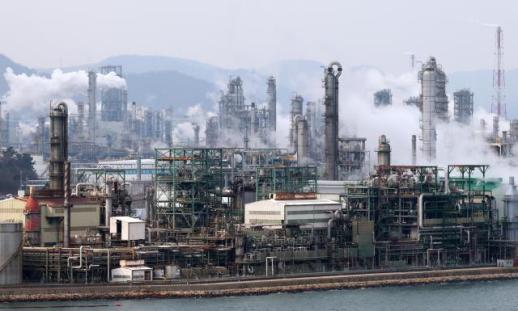 South Korea's refining edge turns Achilles' heel in Gulf shock SEOUL, April 14 (AJP) — South Korea’s world-class oil refining industry — long a pillar of its export strength — is fast turning into a structural vulnerability as the Gulf crisis disrupts energy flows and exposes the economy’s deep dependence on imported crude. Global investment banks are rapidly turning cautious. French lender Natixis on Monday slashed its 2026 growth forecast for South Korea to 1 percent from 1.8 percent, marking one of the steepest downgrades so far. The revision follows a broader wave of cuts, including the OECD’s late-March downgrade to 1.7 percent from 2.1 percent. Natixis singled out Korea’s heavy reliance on imported energy as the key risk, having already flagged the country in March as the most exposed among major economies. Since the conflict erupted, oil prices have surged by as much as 70 percent from recent lows. West Texas Intermediate is hovering near $96 per barrel, while Dubai crude has climbed above $100. Meanwhile, 26 South Korean vessels remain stranded, unable to pass through the blocked Strait of Hormuz. The shock cuts deeper in Korea than elsewhere. The country’s refining model — importing crude, processing it, and exporting high-value petroleum products — has become a double-edged sword. Petrochemicals and refined oil products ranked as the third- and fourth-largest export items last year, trailing only semiconductors and automobiles. Combined, they generated $88.5 billion in exports, surpassing automobiles at $76.5 billion and accounting for 14 percent of total outbound shipments. Korea’s dominance in refined fuel is as formidable as its leadership in semiconductors. As of 2025, the country’s four major refiners — SK Energy, GS Caltex, S-OIL and HD Hyundai Oilbank — exported 86 million barrels of jet fuel, accounting for roughly 4 percent of global supply, the largest share worldwide. “South Korea is one of the top five exporters of petroleum products globally,” said Chang Tae-hun, an associate research fellow at the Korea Energy Economics Institute. “If this disruption persists, the impact on growth will be significant.” The ripple effects are already global. Despite being the world’s largest oil producer, the United States remains structurally dependent on Korean refined fuel. Korean shipments accounted for 71 percent of U.S. jet fuel imports last year — equivalent to about 7 percent of total supply. In western regions such as Washington and California, dependence rises to as high as 85 percent of imports. The imbalance reflects structural differences. While the U.S. dominates crude output following the shale revolution, much of its production is light crude, which yields lower refining margins. South Korea, by contrast, imports heavier Middle Eastern crude — particularly from Saudi Arabia — to produce higher value-added fuels. As Korean jet fuel exports stall, the impact is cascading through aviation markets. Fuel surcharges have surged. Korean Air has seen its maximum surcharge jump from around 99,000 won to over 300,000 won. Delta Air Lines is expected to incur an additional $300 million in fuel costs in the second quarter alone, potentially tipping the carrier into losses. In the base oil market — a key input for engine lubricants — South Korea holds a dominant 38 percent global market share, supplying roughly 28 million barrels. Any sustained disruption risks forcing cutbacks in industrial operations worldwide. “Prices have not spiked immediately due to inventories, but once reserves are depleted, increases will be unavoidable,” a domestic refiner said. “This level of volatility is unprecedented.” The strain is already visible in trade data. In March, export volumes of petroleum products fell 5 percent for gasoline, 11 percent for diesel and 12 percent for jet fuel. While export value rose 18 percent on higher prices, a prolonged blockade would inevitably drag down both volume and earnings as shipments become physically constrained. That leaves South Korea increasingly reliant on its remaining export pillars — semiconductors and automobiles. According to the Ministry of Trade, Industry and Energy, March exports reached a record $86.1 billion despite the Gulf shock. Semiconductor shipments surged more than 150 percent year-on-year to $26.5 billion, accounting for 30 percent of total exports. Yet even these sectors face mounting risks. The Bank of Korea warned that the semiconductor cycle could cool if China ramps up production of legacy DRAM and tighter U.S. credit conditions curb Big Tech investment. The auto sector is also under pressure, as BYD overtook global rivals to become the world’s top EV seller in 2025 with more than 2.25 million units sold. The message from economists is increasingly clear: unless oil-linked industries stabilize, South Korea’s export-driven growth model will remain exposed. What was once a strategic strength is now a fault line. 2026-04-14 17:41:24
 -
 Seoul-born, 1955: two women set to anchor U.S.-Korea diplomacy SEOUL, April 14 (AJP) - Two women born in the same year, in the same city — Seoul in 1955 — are poised to represent Washington and Seoul in each other’s capitals, an unlikely symmetry that underscores the increasingly transnational nature of modern diplomacy. The White House on Monday (local time) nominated Michelle Steel, a former California congresswoman, as ambassador to South Korea, formally requesting Senate confirmation. If confirmed, Steel would return to her birthplace as Washington’s top envoy. Her counterpart, Kang Kyung-wha, has been serving as South Korea’s ambassador to the United States since December. Kang is President Lee Jae Myung’s first envoy to Washington, while Steel is Donald Trump’s first pick for Seoul in his second term after leaving the post vacant for more than a year. The overlap is more than anecdotal. Both women were born into a Korea emerging from the devastation of the 1950–53 war. Decades later, they return to the same alliance — now as its diplomatic stewards — armed with careers built across borders rather than within the confines of traditional state bureaucracies. Neither followed the conventional path of elite foreign service grooming. Steel, a Korean American politician whose Korean name is Park Eun-joo, emigrated to the United States in her 20s and climbed through local and state politics in California before serving two terms in Congress from 2021 to 2025. Kang began in English-language broadcasting in Seoul before moving into international organizations and later the foreign ministry, rising to become South Korea’s first female chief in 2017. Their appointments also mark a milestone for gender representation. Kang broke ground as South Korea’s first female foreign minister and later its first female ambassador to Washington. Steel, pending confirmation, would become the second Korean American to serve as U.S. ambassador to South Korea, following Sung Kim. Both embody transnational identities — but in different ways. Steel’s trajectory reflects the Korean diaspora experience. Having spent her youth in Korea and Japan, she built her political base within immigrant and Asian American communities in the United States. The 1992 Los Angeles riots served as a turning point, shaping her political awakening and eventual entry into public service. Kang’s path, while rooted in South Korea, is no less global. She spent decades within the United Nations system, including as deputy high commissioner for human rights, operating at the intersection of global governance, diplomacy and humanitarian affairs. Both bring bicultural fluency — linguistic, cultural and political — to the alliance. Steel speaks Korean, English and Japanese, while Kang is widely recognized for her command of English and her experience navigating multilateral diplomacy. That is where the symmetry ends. Steel is a political appointee shaped by partisan U.S. politics. A Republican aligned with former President Trump, she has taken conservative positions on security, trade and China, advocating a tougher stance on North Korea and human rights. Her nomination reflects not only her heritage and language skills, but also her political network and access to Trump’s inner circle. Kang, by contrast, represents a hybrid model — a career diplomat with political experience at the highest level. As foreign minister from 2017 to 2021 under President Moon Jae-in, she was at the center of a volatile period of summit diplomacy involving North Korea and the United States. Her approach has been defined less by ideology than by multilateral engagement, particularly in human rights and international cooperation. The contrast is not merely biographical. It could shape how each side approaches core issues — from North Korea policy to alliance burden-sharing and the broader Indo-Pacific strategy. Steel’s nomination also comes at a delicate moment. The U.S. ambassadorial post in Seoul has remained vacant for more than a year following the departure of Philip Goldberg, raising concerns about gaps in alliance coordination at a time of mounting geopolitical strain. Acting envoys have cycled through the role as tensions surrounding North Korea’s nuclear program and regional security architecture continue to intensify. Steel’s confirmation, once secured, is expected to restore a measure of stability to diplomatic channels and reinforce coordination with Seoul. South Korea’s presidential office struck a cautious but positive tone, expressing expectations that Steel would help strengthen bilateral ties and deepen people-to-people exchanges. Steel must pass a Senate confirmation hearing and secure approval — a procedure that typically takes several months — before formally assuming her post. 2026-04-14 17:38:42
 -
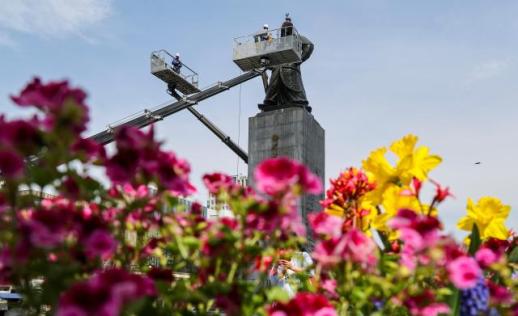 Statue of Joseon-era war hero gets bathed SEOUL, April 14 (AJP) - The landmark statue of Admiral Yi Sun-shin, one of the key attractions in central Seoul, was washed down on Tuesday. The cleaning work on the statue of the naval commander who repelled Japanese invaders in a famous 16th-century maritime battle during the Joseon Dynasty came a day after the nearby statue of King Sejong the Great in Gwanghwamun was also cleaned, as part of regular maintenance and preservation efforts with the arrival of spring. Dust and other stains that had accumulated on these statues over the long winter months were washed away. The Seoul Metropolitan Government said it will keep maintaining key landmarks to ensure a pleasant urban environment for citizens. 2026-04-14 17:36:01
 -
 JW Pharmaceutical to Distribute Hemophilia Comic for Women; MFDS Issues Atopic Dermatitis Injection Guidance JW Pharmaceutical to distribute educational comic for women with hemophilia for World Hemophilia Day JW Pharmaceutical said Tuesday it will produce and distribute an educational comic book for women with hemophilia and carriers ahead of World Hemophilia Day on April 17. Titled “It’s OK to Be a Little Different, Because We’re Together,” the comic is part of the company’s annual hemophilia support program, the Bravo Campaign. The company said it aims to improve public understanding of women with hemophilia and carriers, and to help families explain the condition to children. The story follows “Bomin,” a fourth-grade girl with a younger brother who has hemophilia, as she learns she is a carrier and comes to understand the disorder. The book introduces symptoms women patients or carriers may experience, including heavy menstrual bleeding, bruising under the skin and nosebleeds, and outlines precautions for higher-risk situations such as surgery and childbirth. It also stresses early diagnosis, including clotting factor activity tests and genetic testing. MFDS issues spring guidance on safe use of injectable atopic dermatitis drugs South Korea’s Ministry of Food and Drug Safety on Tuesday issued guidance on safe use and precautions for injectable treatments for atopic dermatitis, citing an increase in skin problems in spring due to pollen, fine dust and wider day-to-night temperature swings. The agency said basic care includes using a moisturizer at least twice a day regardless of symptom severity. Treatments include topical steroids, oral antihistamines and immunomodulators, and wet-wrap therapy and antibiotics may be used together during acute flare-ups. For severe cases that are difficult to control with existing treatment, self-injectable biopharmaceuticals are used. The agency said these drugs suppress substances that trigger inflammation, improving itching and skin symptoms. Patients should use self-injectors only after receiving sufficient training from medical staff and should follow storage and disposal instructions. Single-use injectors must not be reused, and used syringes and needles should be sealed in a disposal container before being discarded. The agency said patients should consult medical staff if a parasitic infection is suspected before or during treatment. It also advised avoiding live vaccines — including measles, mumps and rubella, rotavirus and shingles — while using the injections, and said inactivated vaccines should be discussed with medical staff before vaccination. Hecto Group says it is strengthening workplace culture through “evolving” employee benefits Hecto Group said Tuesday it is boosting competitiveness in organizational culture by improving benefits around employee experience through what it calls “evolving welfare.” The company said it is building a participation-based culture and pursuing benefits that continue to develop rather than a fixed model, an approach reflected in its cafeteria, “Chaeum.” Chaeum provides free breakfast, lunch and dinner and is operated with employees’ condition and work efficiency in mind. Breakfast features simple options and balanced meals, while lunch offers a choice through A and B stations. Hecto Group said it recently revamped menus and services based on employee feedback, adding a summer-focused salad menu and setting up a self-serve hot pot station at dinner so employees can cook a range of items themselves. The company said it is also working to expand meals from a “benefit” into an “experience,” offering premium monthly specials and running menu collaborations with restaurants featured on the recently popular program “Black and White Chef.” It also said its ramen corner, previously centered on popular Korean brands, has added global options to broaden choices. Cha Bio F&C launches PetSeven probiotic supplement for dogs Cha Bio F&C, an affiliate of Cha Bio Group, said Tuesday its pet supplement brand PetSeven has launched “PetSeven Gut Care Probiotics,” a new product aimed at supporting dogs’ intestinal health. The company said the supplement was designed with dogs’ gut and pancreatic health and immune balance in mind. It contains selected probiotics with a guaranteed count of 5 billion CFU per stick, and applies a special coating technology intended to improve survival and colonization in the gut. It also combines prebiotics and probiotics. Key ingredients include a seven-strain probiotic blend from Lallemand’s Rosell, chicory extract as a prebiotic, postbiotic ingredients including Epicor Pet and yeast, and a plant-based enzyme blend, DigeZyme, the company said. Cha Bio F&C said it excluded 15 potentially harmful ingredients, including silicon dioxide, preservatives, sweeteners, colorants, artificial flavors and gluten, and that all products undergo safety testing before shipment. Seoul National University Hospital and Harvard Medical School team unveils “virtual hospital simulator” to evaluate medical AI A joint research team led by Kim Seong-eun, a research professor at Seoul National University Hospital’s specialized research institute, and collaborators at Harvard Medical School on Tuesday announced a “Clinical Environment Simulator (CES)” to dynamically evaluate large language model-based medical artificial intelligence. The study was published in the latest online edition of the international journal Nature Medicine. The researchers said existing medical AI evaluations rely on static, historical data and do not reflect real clinical effects such as changes in a patient’s condition over time. The team said medical AI should be assessed on how it responds under time pressure and resource constraints. In the system, a “patient engine” uses an LLM to generate diverse virtual paths of symptoms and treatment responses to simulate changes in patient status. A “hospital engine” tracks beds, staff and equipment status in real time. AI decisions are scored using a “dual-metric composite score” combining patient outcomes — survival, time required for treatment and adherence to guidelines — and hospital operational efficiency, including total length of stay, emergency room throughput, and bed and equipment utilization. The researchers said the system rewards improvements in care that do not damage hospital operations, but penalizes decisions that focus on one patient at the expense of others’ access to care. It also runs adversarial stress tests under extreme scenarios such as network outages and multiple simultaneous emergencies. The team said the work provides a “zero-risk preclinical test environment” that can demonstrate system safety without exposing patients to harm. With thoroughly validated AI taking on complex operational tasks, the researchers said, physicians could focus more fully on empathy and judgment.* This article has been translated by AI. 2026-04-14 17:33:27
 -
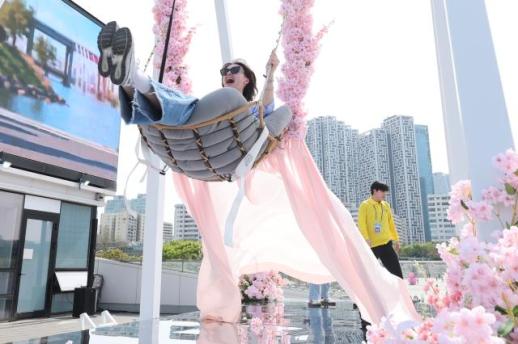 Seoul spring festival turns Han river into a theme park SEOUL, April 14 (AJP) - Seoul's signature spring festival, the "Seoul Spring Festival," has transformed the Han River into a vibrant cultural hub. Running from April 10 to May 5, the iconic seasonal festival is Seoul's premier culture and tourism event that offers visitors trendy experiences involving K-Beauty, K-Fashion, K-Pop, K-Food, and K-Art all in one place. This year's festival takes place along the Han River, featuring diverse programs including a drone light show, the Wonder Show, a large-scale performance combining traditional Korean music, classical music, dance, and K-pop, a Han River carousel, Han River swings installed on building rooftops, and water playgrounds. 2026-04-14 17:32:28
 -
 Doosan E&C We’ve Golf Team Gets Early 2026 KLPGA Win as Kim Min-sol Goes Wire-to-Wire Doosan E&C’s We’ve golf team has opened the 2026 season with an early victory on the Korea Ladies Professional Golf Association tour, signaling momentum at the start of the year. Kim Min-sol, who plays for Doosan E&C, won the iM Financial Open, which ended April 12, delivering the team’s first win of the season. She led from the opening round through the final round for her second career wire-to-wire victory, never giving up the lead. The win was notable because it came in just the second event after the domestic season opener. Last year, the team’s first win did not come until July, more than three months later. With an early breakthrough, expectations have risen that the team can surpass its combined four wins from last season. For Kim, the title was her third career win and her second wire-to-wire victory. Afterward, she said, “Since I’ve built a good flow early in the season, I want to try challenging for multiple wins this year. I’ll keep up good performance consistently.” The team credited its fast start to its culture and support system. Ahead of this season, Doosan E&C added Lee Se-young to form an eight-player roster, aiming to create synergy by sharing experience between veterans and younger players. Led by general manager Oh Se-uk, the club said it is providing customized management tailored to each player’s routine, including structured winter training and mental-care support for psychological stability. The team said that attention to detail has helped players maintain performance early in the season. A Doosan E&C official said, “With the season’s first win coming earlier than last year, the mood across the team is very good,” adding, “We plan to keep working to create an environment where players can focus only on performance so we can carry the strong early flow forward.”* This article has been translated by AI. 2026-04-14 17:27:00
 -
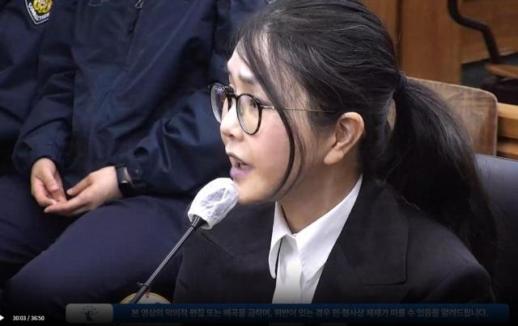 Disgraced former first couple reunite in rare court appearance together SEOUL, April 14 (AJP) - Kim Keon Hee, the wife of disgraced former President Yoon Suk Yeol on Tuesday appeared as a witness in Yoon's trial over election-related violations. Tuesday's hearing at the Seoul Central District Court in southern Seoul drew particular attention as it was the couple's first court appearance together, also marking their first encounter in several months since being held in separate remand prisons. After taking an oath, Kim answered only a few questions related to her identity and otherwise repeatedly said she would refuse to testify on most issues, claiming she had no knowledge of or involvement in the allegations. Prosecutors suspect that Yoon, along with Kim, was involved in interfering with candidate nominations during the 2022 by-elections through dubious political broker Myung Tae-kyun, who allegedly influenced state affairs by offering advice on various matters. Yoon and Kim were indicted on charges of receiving opinion polls worth 270 million Korean won (US$183,000) free of charge from Myung in exchange for securing the nomination of Kim Young-sun, the former lawmaker of the main opposition People Power Party (PPP), while Kim was found not guilty on that charge among a slew of other charges at the first-instance trial in January. During their 50-minute court appearance, Yoon gazed at Kim as she took to the witness stand, whispering to his lawyers. He also kept his eyes on her as she left the courtroom. Meanwhile, the court plans to hold the case's final hearing in mid-May, with a verdict expected sometime in June. 2026-04-14 17:13:59