SEOUL, April 14 (AJP) -South Korean equities have shown surprising resilience so far against the backdrop of escalating geopolitical tensions, helping to bring home retail capital previously deployed in U.S. markets.
Yet how durable — and how deep — this reshoring trend will prove remains uncertain.
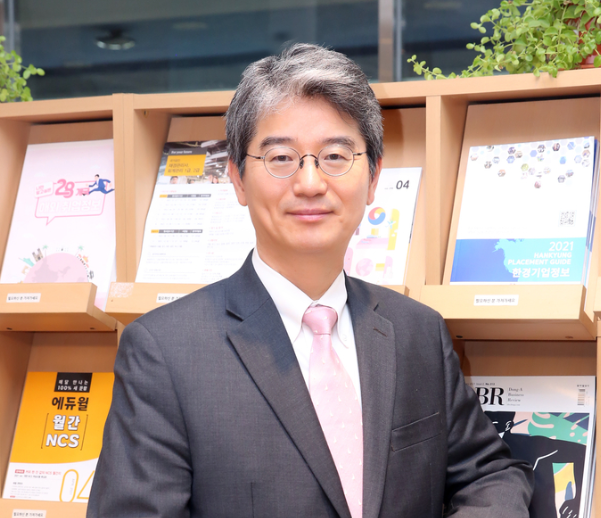
“Tax incentives can act as a supporting factor, but not the primary driver,” said Shin Hyun-han, a finance professor at Yonsei University’s School of Business. “Funds tend to return when domestic equities become more attractive, not simply because of policy benefits.”
He added that the long-term trajectory hinges more on corporate competitiveness than on the Reshoring Investment Account (RIA) scheme itself.
According to Shinhan Investment & Securities on Tuesday, proceeds from overseas stock sales within RIA accounts are being funneled primarily into large-cap Korean equities and index-tracking exchange-traded funds (ETFs).
As of April 3, Nvidia accounted for the largest share of overseas withdrawals at 19.1 percent, followed by Apple (7.8 percent), Tesla (7.4 percent), Alphabet Inc. Class A (6.8 percent) and Palantir Technologies (5.4 percent) — pointing to profit-taking in global AI and big tech leaders.
On the domestic side, SK hynix led purchases with a 15.7 percent share, closely followed by Samsung Electronics (15.4 percent). Benchmark ETFs such as KODEX 200 ETF (4.1 percent) and TIGER 200 ETF (2.5 percent), along with Hyundai Motor (3.6 percent), also ranked among the top destinations — underscoring a rotation into semiconductor heavyweights and broad market exposure.
The RIA framework allows investors to reinvest proceeds from overseas stock sales into domestic equities or hold them in won, with phased tax relief on capital gains depending on the timing of liquidation. Shinhan Investment & Securities said the program applies to overseas holdings acquired before Dec. 23, 2025.
The government has positioned the scheme as part of a broader strategy to encourage the repatriation of overseas investment gains, offering targeted tax incentives.
Participation data suggest the trend is being driven less by short-term trading than by profit realization among seasoned investors. The average amount transferred into RIA accounts stood at around 30 million won — about 60 percent of the 50 million won cap. Among participants, 43.7 percent liquidated overseas holdings, booking an average gain of roughly 13 million won per person.
Demographically, men accounted for 65.3 percent of participants, compared with 34.7 percent for women. Investors in their 40s made up the largest cohort at 31.4 percent, followed by those in their 50s (26.2 percent) and 30s (23.4 percent), while those aged 60 and above — and under 30 — comprised smaller shares.
The data point to a structural shift led by middle-aged investors with accumulated gains, rather than momentum-driven retail flows.
Importantly, the movement does not signal a wholesale exit from U.S. technology stocks, but rather a reallocation within the same AI-driven investment theme — locking in profits from earlier winners and redeploying capital domestically.
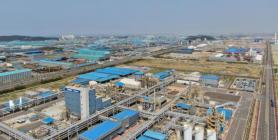
Expectations for Korea’s semiconductor sector are reinforcing this rotation. Samsung Electronics reported record preliminary first-quarter results on April 7, with revenue of 133 trillion won and operating profit of 57.2 trillion won. SK hynix, ahead of its earnings release later this month, has also seen rising expectations, with its shares trading around 1.115 million won on Tuesday.
Brokerages say surging demand for high-bandwidth memory (HBM) and server DRAM — fueled by the rapid buildout of AI data centers — is positioning the two firms as key beneficiaries of the U.S.-led AI value chain. Analysts have been steadily raising target prices for SK hynix, citing sustained long-term demand from global tech firms securing memory supply.
The growing share of ETF allocations further underscores a shift in strategy. The prominence of KODEX 200 and TIGER 200 among top buys suggests investors are not simply chasing individual winners, but increasingly diversifying across benchmark KOSPI constituents to manage risk.
Given that a portion of the flows is being channeled through the Reshoring Investment Account (RIA), tax incentives appear to be playing a facilitating role rather than acting as the primary catalyst. Whether these inflows translate into sustained, long-term allocations to Korean equities once the program expires remains an open question.
“The key variable is corporate fundamentals. Without sustained earnings growth and competitiveness, such flows are unlikely to persist,” said Shin Hyun-han of Yonsei University. He added that investors could readily pivot back to overseas assets once the policy window closes.
Shin also cautioned against overinterpreting the current movement, characterizing it as cyclical rather than structural, and underscoring the importance of maintaining diversified portfolios.
“From an asset allocation perspective, maintaining exposure to global markets remains important, particularly for institutional investors,” he said.
The recent shift, in this view, reflects a confluence of factors — stretched valuations in U.S. AI stocks, currency dynamics and improving expectations for Korea’s semiconductor cycle — rather than a decisive turning point.Distinguishing between temporary rebalancing and a structural reallocation will ultimately hinge on whether Korea’s equity market can sustain earnings momentum and close its longstanding competitiveness gap.

Copyright ⓒ Aju Press All rights reserved.