

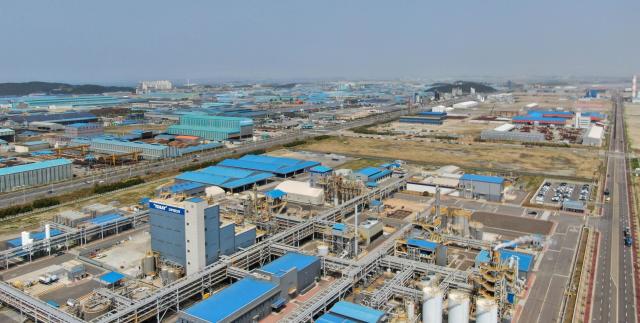
SEOUL, April 14 (AJP) -South Korea will channel around 10 trillion won ($7.4 billion) into a new slate of strategic industries from high-value OLED displays to sovereign artificial intelligence and AI infrastructure belt along the southern coast in a bid to widen its technological edge over fast-following rivals and anchor future growth engines.
The second round of “mega projects” under the 150 trillion won National Growth Fund spans six areas — next-generation bio and vaccines, OLED displays, future mobility and defense, sovereign AI, renewable energy infrastructure and a large-scale industrial hub in Saemangeum.
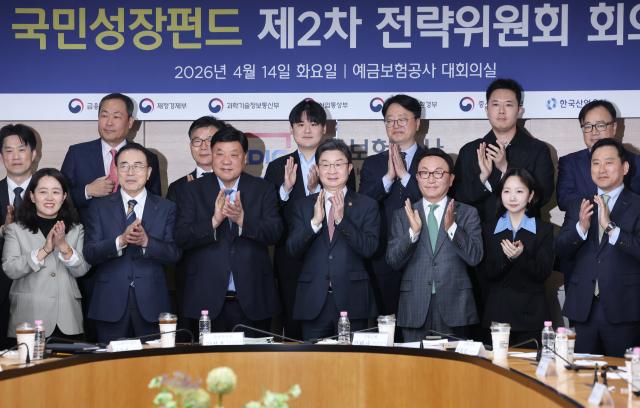
Financial Services Commission Chairman Lee Eog-weon announced the plan Tuesday after chairing the fund’s second strategy committee meeting, describing the selections as sectors “where Korea can further expand its super-gap over latecomers.”
The most immediate deployment of capital is expected in bio and vaccines, targeting firms that have entered global Phase 3 clinical trials — the final and most capital-intensive stage before commercialization.
The fund will provide low-interest loans for facility investment tied to new drug development, alongside direct investments through joint ventures. Initial approvals could come as early as May.
In displays, the government is moving to reinforce Korea’s dominance in premium OLED, as Chinese competitors rapidly narrow the gap. Samsung Display and LG Display are expected to be among key beneficiaries, with policy financing aimed at supporting large-scale capital expenditures needed to push into higher value-added segments.
Future mobility and defense projects will focus on unmanned systems — including drones, UAVs and autonomous helicopters — covering the full spectrum from airframes to electronic systems and propulsion.
Officials emphasized the broad industrial spillovers, noting the sector’s deep linkages with materials, components, batteries, semiconductors and engines.
The fund will also invest in large-scale renewable energy projects, including solar and offshore wind farms in regions such as Haenam and Gochang. Beyond energy transition goals, the projects are designed to secure stable power supplies for energy-intensive AI data centers, increasingly seen as critical national infrastructure.
Another flagship investment targets Hyundai Motor Group’s planned industrial complex in Saemangeum. The project envisions a cluster integrating robotics, AI and hydrogen energy, backed by roughly 9 trillion won in private investment. The fund will provide tailored support through a mix of direct investment, infrastructure financing and loans aligned with project milestones.
The government expects to mobilize more than 50 trillion won over the next five years to support the broader advanced industry ecosystem, combining 35 trillion won in indirect investment through public-private funds and 15 trillion won in direct financing.
The structure is designed to address persistent “investment blind spots” in areas where private capital alone has been insufficient, while also expanding participation to new fund managers and incorporating entrepreneurial track records — including failed ventures — into selection criteria.
The first round of mega projects, announced in December, included offshore wind, next-generation batteries and AI semiconductor production bases. Of the 6.6 trillion won approved so far, funding has already begun flowing into projects such as the Shinan offshore wind farm, a Pyeongtaek AI chip cluster and Rebellions’ capital increase.
The government plans to begin executing initial investments for the second-round projects as early as next month.
Copyright ⓒ Aju Press All rights reserved.
