
Journalist

Lee Hugh
=
-
 KOSPI tests 6,000 on Iran deal hopes; Asia stocks broadly higher SEOUL, April 14 (AJP) - Asian markets were broadly upbeat Tuesday after U.S. President Donald Trump hinted at renewed negotiations with Iran, raising hopes for a diplomatic breakthrough before the two-week ceasefire ends next Tuesday. South Korea’s benchmark KOSPI led the gains, rising 3.2 percent to 5,993.59 after flirting with 6,000. The KOSDAQ gained 2.3 percent to 1,125.03 as of 11:15 a.m. Japan’s Nikkei 225 rose 2.55 percent to 57,943.50, while Hong Kong’s Hang Seng Index advanced 0.90 percent to 25,891.28, and China’s Shanghai Composite Index was up 0.33 percent at 4,001.65. Semiconductors led gains, with SK hynix soaring 7 percent to 1,113,000 won and testing a new record high on expectations for stellar first-quarter earnings. Samsung Electronics rose 3.6 percent to 208,500 won. Automakers also advanced, as Hyundai Motor gained 4.28 percent to 499,000 won and Kia rose 2.24 percent to 150,700 won. Among biopharmaceutical stocks, Celltrion rose 2.72 percent to 200,500 won, supported by news that the company completed a record-scale treasury share retirement, cancelling about 4 percent of its outstanding shares — equivalent to roughly 1.78 trillion won. Strong earnings also supported the stock, with the company posting 4.16 trillion won in revenue and 1.17 trillion won in operating profit last year, as profit jumped 137.5 percent from a year earlier and margins improved. Industrial and defense stocks were mixed, with HD Hyundai Heavy Industries adding 1.51 percent to 470,000 won, while Hanwha Aerospace slipped 1.50 percent to 1,507,000 won. Among battery shares, LG Energy Solution edged down 0.12 percent to 401,000 won and Samsung SDI fell 1.20 percent to 471,750 won. Financials moved higher overall, with KB Financial Group gaining 0.45 percent to 157,300 won, Shinhan Financial Group rising 1.12 percent to 99,400 won, and Mirae Asset Securities surging 11.64 percent to 72,900 won. On the KOSDAQ, biopharmaceutical and healthcare stocks showed broadly positive momentum, with Alteogen rising 2.26 percent to 361,500 won and Samchundang Pharm adding 0.19 percent to 527,000 won. ABL Bio gained 1.94 percent to 158,000 won, while HLB surged 8.40 percent to 63,200 won and LigaChem Biosciences jumped 4.40 percent to 197,100 won. Caregen also advanced 1.74 percent to 93,600 won. Defense and industrial-related names traded mixed, with LIG Nex1 climbing 0.96 percent to 94,600 won, while Rino Industrial slipped 1.50 percent to 111,700 won. Robotics and tech-related stocks were strong, as Rainbow Robotics surged 3.75 percent to 608,000 won and Peptron gained 2.69 percent to 267,000 won. In the currency market, the won strengthened slightly, with the dollar trading at 1,479.50 won, compared with the previous close of 1,489.30. Overnight on Wall Street, all three major indexes closed higher as investors leaned toward optimism over a potential de-escalation. The Dow Jones Industrial Average rose 0.63 percent to 48,218.25, the S&P 500 gained 1.02 percent to 6,886.24, and the Nasdaq Composite advanced 1.23 percent to 23,183.74. The gains were driven by a continued rally in technology stocks, with Oracle surging 12.69 percent. 2026-04-14 11:20:27
 -
 North Korean leader again oversees test-firing of missiles from naval destroyer SEOUL, April 14 (AJP) - North Korean leader Kim Jong-un has inspected again the test-firing of missiles from a naval destroyer, state media reported Tuesday. "Two strategic cruise missiles and three anti-warship missiles were test-fired" last Sunday from the 5,000-ton multipurpose destroyer Choe Hyun to assess its "operational efficiency," with Kim observing it, according to the state-run Korean Central News Agency. Kim's latest inspection of the destroyer comes about a month after he observed similar tests on March 4 and March 10. They flew along preset trajectories over the West Sea, hitting their targets with "ultra-precise" accuracy. Kim was quoted as expressing "great satisfaction over the fact that the preparedness of our army's strategic action has been strengthened in a qualitative way with various achievements recently made in the field of defense science." Stressing it as the country's "most important priority," he urged officials to "steadily and unlimitedly bolster up the powerful and reliable nuclear war deterrent." "Kim's remarks on strengthening the country's 'strategic and tactical attack capability' appear to be an attempt to show off the North's nuclear weapons, which could be mounted on any weapons system," said Lim Eul-chul, a professor at Kyungnam University's Institute for Far Eastern Studies. "Strategic cruise missiles are a type of weapons for which nuclear warheads are easier to miniaturize. Tactical nuclear weapons mounted on cruise missiles launched from a destroyer could pose a significant threat to South Korea," he warned. The Choe Hyon, named after a comrade of regime founder Kim Il Sung during his days as a partisan fighter, was first unveiled in April last year. The destroyer is believed to be capable of carrying nuclear weapons, with North Korea building another vessel expected to be completed by early October. 2026-04-14 11:05:21
 -
 Korea’s Traditional Soban Tables Get Modern Showcase at Milan Design Week Korea’s traditional soban, a small low table, will be presented in new forms at Milan Design Week, one of the world’s largest design events. The Seoul Design Foundation said Monday it will stage an international exhibition, “Seoul Life 2026 Milan: Heritage Reimagined, Soban,” from April 20 to May 10 at Italy’s ADI Design Museum. The project is hosted and organized by the Seoul Metropolitan Government and the Seoul Design Foundation, with cooperation from the ADI Design Museum. It aims to introduce “Seoul lifestyle and design identity” by combining the soban — a symbol of Korea’s traditional everyday culture — with contemporary design. The soban reflects Korea’s floor-seating tradition and single-diner table culture. Its low, portable structure, balanced proportions and curved legs are presented as distinctive features of Korean furniture design shaped by that lifestyle. Seventeen designers and teams from Korea and abroad are taking part, each reinterpreting the soban in their own design language. The works combine Korean craft techniques with contemporary technologies such as 3D printing and AI-based design, the foundation said. Participants include Korean designer Kim Jinsik of Studio JINSIK KIM, known internationally for work emphasizing minimal forms and material qualities; Korean designer Son Donghoon of Atelier SOHN, whose designs combine function and form through experiments with materials and structure; and Andy&Jong, a Korean-French design duo focused on human-scale work including furniture and lighting based on spatial experience. They are joined by global designers including Italian designer Stefano Giovannoni of Giovannoni Design Studio, known for signature products for Alessi; Italian designer Anna Gili of Anna Gili Design Studio, who gained international recognition through collaborations with Cassina and Alessi; and French architect Odile Decq of Studio Odile Decq, who has won the Golden Lion at the Venice Biennale. The exhibition space is inspired by the daecheongmaru, the open wooden hall of a traditional Korean house. A long platform structure is placed at the center so visitors can move through the gallery as if walking along a wooden floor while viewing the works. Soban products reflecting “Seoul Color,” described as expressing the city’s identity, will also be shown. The works presented in Milan will later be added to the DDP collection, with a follow-up exhibition planned in Seoul within the year, the foundation said. “This exhibition shows how Seoul’s daily life and culture — and traditional and contemporary design — can meet through the traditional soban,” said Seoul Design Foundation CEO Cha Kang-hee.* This article has been translated by AI. 2026-04-14 10:39:51
 -
 KB Kookmin Bank Tightens Oversight of Loan Process to Strengthen Consumer Protection KB Kookmin Bank said on the 14th it will strengthen internal management standards across the entire loan process to bolster financial consumer protection. The measures include monitoring using the Consumer Protection Quality Index (CPQI), tighter management of loans to vulnerable groups, and an overhaul of a pre-review checklist for consumer protection. Within this month, the bank will add key credit indicators to CPQI — including the status of new loans to older customers and first-time workers, and changes in delinquency rates — to step up monitoring for warning signs. CPQI is a data-based management index designed to assess consumer protection levels and support rapid responses when irregularities are detected. The bank also plans to strengthen loan management for financially vulnerable customers. It will expand verification of borrowers’ actual repayment capacity, rather than relying mainly on collateral, to help prevent excessive borrowing, and will operate a tailored management system that reflects customer characteristics. At the pre-consultation stage for consumer protection, KB Kookmin will revamp its checklist to reinforce advance screening. It will improve related processes so headquarters departments can review, in advance and from the customer’s perspective, key considerations when setting loan products and interest rate and fee policies. “Maintaining a balance between stronger consumer protection and expanding inclusive finance is important,” a KB Kookmin Bank official said. “We will continue to do our best to ensure meaningful consumer protection from the customer’s point of view.”* This article has been translated by AI. 2026-04-14 10:15:00
 -
 Seoul shares details of Korean vessels with Iran amid Hormuz transit talks SEOUL, April 14 (AJP) - South Korea has shared information on its vessels stranded near the Strait of Hormuz with Iran as part of ongoing negotiations over maritime transit, government sources said Tuesday. Jeong Byeong-ha, special envoy of the foreign minister, reportedly provided details about South Korean ships and crew members during talks with senior Iranian officials, focusing on the safety of vessels currently unable to pass through the strategic waterway. Iran had previously indicated that information on South Korean vessels would be necessary to coordinate any potential transit arrangements, officials said. According to the Ministry of Oceans and Fisheries, a total of 26 South Korean vessels and 173 crew members remain unable to pass through the Strait of Hormuz. Seoul had previously maintained that all vessels, including those of South Korea, should be allowed to transit freely and had taken a cautious stance toward bilateral negotiations focused solely on Korean ships. Observers are now watching whether the latest information-sharing signals a shift in the government's approach. However, prospects for near-term progress remain uncertain following the collapse of ceasefire negotiations between the United States and Iran, which analysts say could delay any meaningful resolution to the transit issue. 2026-04-14 10:13:30
 -
 South Korea shares information with Iran on stranded vessels in Strait of Hormuz SEOUL, April 14 (AJP) - South Korea has reportedly shared information on its vessels stranded in the Strait of Hormuz with Iran, multiple government sources said on Tuesday. The development comes just a day after special envoy Chung Byung-ha arrived in Tehran the previous day to request that some 173 crew members aboard about a dozen South Korean vessels stranded in the strait, a critical chokepoint for roughly one-fifth of the world's oil supply, be allowed to pass through the strategic waterway amid heightened tensions in the region. During discussions with Iranian officials, he appeared to provide details on South Korean vessels to ensure their safety. Seoul had previously resisted providing such details, maintaining that all vessels, regardless of nationality, should be allowed free passage. However, Iran has insisted that any talks on ship transit would require Seoul to provide specific information about its vessels, as it seeks to coordinate and approve passage under its own security framework. According to the Ministry of Oceans and Fisheries, 26 South Korean vessels carrying 173 crew members remain stranded in or near the strategically vital waterway. South Korea had been cautious about engaging in bilateral negotiations with Iran solely applying to South Korean ships, prompting pundits to speculate the latest move could signal a shift from that stance. But prospects for a near-term breakthrough in reopening the strait remain uncertain, as recent ceasefire talks between U.S. and Iran have collapsed, raising concerns that the prolonged conflict in the Middle East could be further dragged out. 2026-04-14 09:38:58
 -
 Gyeongbokgung to Host King Danjong-Themed Programs Tied to Royal Tomb Sites As the film 'The Man Who Lives With the King' draws audiences, visitors will be able to follow the traces of King Danjong and Queen Jeongsun through programs at major heritage sites including Gyeongbokgung, Jangneung, Sareung and Jongmyo. According to the Korea Heritage Service on the 14th, a special program will run at Gyeongbokgung's Saenggwabang from April 27 to May 3, three times a day for seven days. Each session lasts 70 minutes. The program, held 18 times in total, features a hands-on experience with simple foods made using ingredients linked to Danjong, along with stories from his childhood. It includes segments titled Meeting Danjong, Being With Danjong (a simple meal experience using wild greens), Connecting With Danjong (writing a letter) and Returning to Everyday Life. Participation is free by advance reservation. Starting at noon on April 20, applicants can reserve up to two tickets per Ticketlink account on a first-come, first-served basis. A separate two-day, one-night field trip program will be offered three times — in April, May and October — tracing what organizers described as the tragic yet affectionate path of Danjong and Queen Jeongsun. The itinerary begins at Changdeokgung and continues to Cheongnyeongpo and Jangneung in Yeongwol, then to Sareung in Namyangju, and ends at Yeongnyeongjeon Hall at Jongmyo, where the couple's spirit tablets are enshrined. From April 20 to April 30, a quiz will be held on the Royal Culture Festival's official Instagram account asking participants to identify the name of the Gyeongbokgung building where Danjong stayed in the film. Twenty winners will be selected by drawing to receive a coupon for the K-Heritage online mall and tickets to the closing ceremony of the 2026 fall Royal Culture Festival. In July, organizers will also hold a public contest seeking videos and photos that use generative artificial intelligence to reinterpret 'life with the king' in a modern way. Detailed schedules and participation instructions for each program will be announced in stages on the websites of the Royal Tombs and Palaces Heritage Headquarters and the Korea Heritage Agency Foundation.* This article has been translated by AI. 2026-04-14 09:21:36
 -
 KakaoBank, Busan Bank sign MOU for joint lending to small businesses KakaoBank and Busan Bank are teaming up to boost regional economic activity and expand financial support. KakaoBank said it signed a memorandum of understanding with Busan Bank on April 13 at Busan Bank’s headquarters to pursue a joint lending program for small and midsize businesses. Under the agreement, the two lenders will work on launching joint loan products for small businesses and sole proprietors, expanding financing support and rolling out related financial services. They said the effort is aimed at improving local companies’ access to funding and strengthening “productive financing.” KakaoBank plans to combine its platform reach, built on 27 million customers, and digital technology with Busan Bank’s regional corporate-finance infrastructure, creating a cooperation model in which an internet-only bank and a regional bank grow together. “This agreement will be an example of broadening the inclusiveness of regional finance and contributing to the expansion of productive financing,” KakaoBank CEO Yoon Ho-young said. “We will work in mutual growth with the regional economy based on technology and data.” Busan Bank CEO Kim Seong-ju said the bank will continue expanding digital-based financial services for sole proprietors and small and midsize businesses.* This article has been translated by AI. 2026-04-14 09:12:00
 -
 China’s Biotech Pipeline Nears U.S. Share, Driving Big Pharma and Korean Partnerships China’s biotech sector is rapidly closing the gap with the United States, reshaping global collaboration in drug discovery, licensing and co-development. As China’s share of new drug candidates rises, global pharmaceutical giants such as AstraZeneca and Pfizer — along with major South Korean drugmakers — are stepping up partnerships with Chinese companies. McKinsey & Company said on the 13th that last year’s global share of new drug candidates was led by the United States at 33%, followed by China at 30.5% and South Korea at 6%. The gap between the United States and China narrowed to 2.5 percentage points in just one year. McKinsey also said Asia, as of 2024, was driving the global pipeline for innovative drugs, highlighting China’s surge. In 2023, China’s share was 23% versus 36% for the United States, a 13-point gap. At the current pace, some forecasts say China could overtake the United States in global share of new drug candidates as early as next year. AstraZeneca last March signed a strategic collaboration with Beijing-based Sineron Bio, an artificial intelligence-driven peptide drug startup, to develop a first-in-class macrocyclic peptide for chronic disease treatment. Under the deal, AstraZeneca gained access to Sineron Bio’s Synova platform. The platform is designed as an intelligent, high-throughput, large-scale macrocyclic peptide R&D system to support research programs exploring future treatment options for chronic diseases, including rare diseases, autoimmune disorders and metabolic diseases. Pfizer is also using an AI model from China’s CrystalPi to advance small-molecule drug research. The deals underscore that China’s biotech industry is emerging not only as a manufacturing base but also as a source of early-stage discovery and platform technologies. Market observers describe the partnerships as evidence that global drugmakers are increasingly recognizing Chinese firms’ technical capabilities. Some also say the rise in global dealmaking involving China’s AI-biotech sector reflects growing technological maturity. South Korean companies are also bringing in promising Chinese candidates and expanding development ties. JW Pharmaceutical on April 8 signed an exclusive license-in deal with China’s Gan & Lee Pharmaceuticals for the GLP-1 receptor agonist candidate “bofanglutide” in South Korea. JW Pharmaceutical secured exclusive rights for development, regulatory approval, marketing and commercialization in the country. Gan & Lee agreed to provide regulatory data needed for clinical trial plan approval and product authorization in South Korea. HK inno.N last year acquired South Korean development and commercialization rights from China’s Sciwind Biosciences for the GLP-1 analog “ecnoglutide.” The candidate is in Phase 3 clinical trials in China for type 2 diabetes and obesity. HK inno.N is pursuing development in South Korea for obesity and diabetes treatments. Samsung Bioepis also signed a joint research partnership with Chinese biotech Frontline Biopharma to develop, manufacture and commercialize candidates in the antibody-drug conjugate, or ADC, field. A biotech industry official said South Korea’s industry long focused on catching up with U.S. and European technologies, but is now moving to secure next-generation modalities through co-development with China. The official said China’s biotech sector is growing quickly, supported by its large population and active government policies.* This article has been translated by AI. 2026-04-14 08:30:00
 -
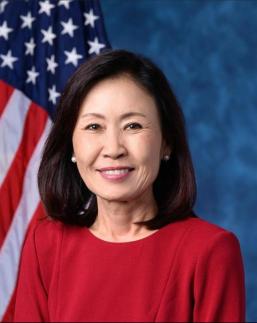 Korean-American former Rep. Michelle Steel tapped as US ambassador to South Korea SEOUL, April 14 (AJP) -Korean-American former California congresswoman Michelle Steel (Park Eunjoo in Korean) has been nominated as Ambassador Extraordinary and Plenipotentiary to South Korea, the White House said Monday as President Donald Trump finally moves to fill the post that has remained vacant throughout much of his second term. The nomination, which requires Senate confirmation, was submitted to Congress as Washington seeks to restore a formal diplomatic channel in Seoul after more than a year without a Senate-approved envoy. The ambassadorship has been vacant since the departure of Philip Goldberg, who was appointed by former President Joe Biden. Senior State Department official Kevin Kim has been serving as chargé d’affaires since October, following an earlier interim role by Joseph Yun. Steel, a Korean American Republican, served two terms in the U.S. House of Representatives, representing California districts covering Orange County from 2021 to 2025. She narrowly lost her reelection bid in 2024 to Democrat Derek Tran. Born in Seoul in 1955, Steel emigrated to the United States in her early twenties after spending part of her youth in Japan. Her political career began in California, where she served on the State Board of Equalization and later as an Orange County supervisor before entering Congress. She was also part of the House Republican leadership’s whip team under Steve Scalise. Her nomination had been widely anticipated since the early days of Trump’s second term, with Republican leaders including Mike Johnson and Kevin McCarthy reportedly backing her as a Korea-savvy figure within the party. If confirmed, Steel would become the second Korean American to serve as U.S. ambassador to South Korea after Sung Kim, and one of the few political appointees with both linguistic and cultural fluency in Korea. Her appointment is expected to restore high-level diplomatic bandwidth between Washington and Seoul, where the absence of a permanent envoy had raised concerns about Korea’s standing in U.S. foreign policy priorities. Observers say Steel’s direct political ties to Trump, combined with her Korean heritage and language skills, could position her as a more effective conduit between the two governments compared with career diplomats. The nomination also opens the possibility of a historic alignment, with both Seoul and Washington potentially represented by female ambassadors in each other’s capitals for the first time. 2026-04-14 07:41:12