
Journalist

Lee Hugh
=
-
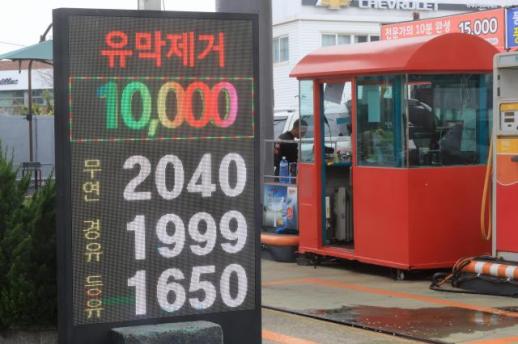 KDI warns of downside risks to economy as Gulf crisis clouds recovery SEOUL, April 7 (AJP) - South Korea's governmental Korea Development Institute think tank warned on Tuesday that the nascent economic recovery is facing increased downside risks as the conflict in the Middle East disrupts global supply chains and triggers a spike in energy prices. In the April edition of its "KDI Monthly Economic Trends," the institute said that while domestic demand and exports had been showing signs of gradual improvement, the "volatility stemming from the Middle East war, combined with surging international oil prices, is expanding downward pressure on the economy." ICT-led export boom hampered by soaring oil prices Economic indicators through February remained generally positive, KDI reported. On the production side, the service sector maintained steady growth, and the manufacturing sector expanded its gains, bolstered by a surge in semiconductor output. Exports continued a robust upward trajectory, particularly in ICT items such as semiconductors (140.5 percent) and computers (176.6 percent), driven by strong demand related to artificial intelligence (AI). Consumption also showed a moderate recovery, with average retail sales for January and February rising 2.7 percent year-on-year, excluding the seasonal distortion of the Lunar New Year holiday. Facility investment also performed well, increasing by an average of 9.3 percent in the first two months, centered on the semiconductor industry. The landscape, however, shifted abruptly in March following the outbreak of the conflict. The price of Dubai crude, South Korea’s benchmark, skyrocketed from $68.4 per barrel in February to $128.5 in March. Consequently, consumer prices in March rose 2.2 percent year-on-year – up from 2.0 percent in February – with petroleum product prices jumping 9.9 percent. Sinking sentiment and financial market volatility These escalating uncertainties are weighing heavily on economic sentiment, KDI said. The Composite Consumer Sentiment Index (CCSI) plummeted to 107.0 in March from 112.1 in February, while the Business Survey Index (BSI) also retreated across the manufacturing and non-manufacturing sectors. Financial market volatility has intensified as well. Driven by safe-haven demand and concern over the country’s reliance on Middle Eastern oil, the won-dollar exchange rate climbed into the 1,500 won range. Meanwhile, the benchmark KOSPI index dived from 6,244.1 at the end of February to 5,052.5 by the end of March. While the labor market showed some relief as the number of employed persons increased by 234,000 in February following the resumption of government job programs, employment among people in their 20s remained sluggish. "The inflationary pressure and global economic instability caused by the Middle East war could worsen export conditions and constrain investment," the report said. The think tank warned that increased costs for building materials are emerging as a significant headwind, likely delaying new projects, and hindering a rebound in construction investment. 2026-04-07 15:58:42
 -
 Court grants bail to far-right pastor in courthouse intrusion case SEOUL, April 7 (AJP) - Pastor Jeon Kwang-hoon, who had been detained for allegedly instigating a courthouse intrusion, is set to be released on bail Tuesday. The Seoul Western District Court granted bail after the outspoken far-right pastor cited health reasons in his request. The court said the pastor of Sarang Jeil Church, a presbyterian church in northern Seoul, needs regular hospital visits to treat a urological condition related to diabetes, adding that "his face is widely known, so the risk of flight is low." It also said that a travel ban would prevent him from fleeing overseas. Once he fulfills the bail conditions set by the court, which require him to pay 100 million Korean won and bar him from any direct or indirect contact with people connected to the intrusion, he will be released. Jeon has been accused of inciting the incident in January last year in an attempt to prevent the arrest of disgraced former President Yoon Suk Yeol over his botched declaration of martial law on Dec. 3, 2024. He allegedly encouraged his church members and Yoon's diehard supporters to storm the Seoul Western District Court in search of the judge who issued the arrest warrant, damaging court property and assaulting police and others. 2026-04-07 15:37:23
 -
 Korea’s Mortgage Curbs Hit Policy Loans as Didimdol, Bogeumjari Lending Slumps The government’s continued tightening of mortgage lending has sharply reduced the volume of policy loans such as Didimdol and Bogeumjari, with lending down by about half. With authorities capping this year’s growth in household lending — including policy loans — at 1.5%, the lending squeeze is expected to deepen. According to the financial sector on Monday, 4,567 first-time homebuyer Didimdol loans were issued from November through February. That was down 57.9% from 10,844 in the same period a year earlier. The total amount also fell 67.8%, to 651.8 billion won from 2.0212 trillion won. The drop is widely attributed to tighter eligibility rules introduced last year under the government’s household lending cap. Under the June 27 measures, the loan-to-value ratio for first-time home purchase mortgages in the Seoul metropolitan area and other regulated zones was lowered to 70% from 80%, and the change was applied to policy loans as well. The maximum Didimdol loan limit for first-time buyers was also cut to 240 million won from 300 million won. Didimdol loans for general households and newlyweds have also weakened. Applications for general-household Didimdol loans averaged 1,424 a month in 2023 during the Yoon Suk Yeol administration, but fell to a monthly average of 528 in the second half of last year after President Lee Jae-myung took office. Newlywed Didimdol applications were 2,493 in 2023 and 3,798 in 2024, then dropped to 2,067 in the second half of last year. The loan amount rose from 588 billion won in 2023 to 960.5 billion won in 2024, before sliding to 382.8 billion won in the second half of last year. Analysts say funding options for end users are narrowing as borrowing hurdles rise under the current government, including a cut in the loan limit for newlywed Bogeumjari loans to 150 million won from 200 million won and a reduction in the guarantee ratio for jeonse loans in the Seoul metropolitan area and other regulated zones to 80% from 90%. Bogeumjari loans have also declined. Last year, applications — including special programs for newborns — totaled 135,043 cases, down 46% from a year earlier. The loan amount, which was 12.3288 trillion won in 2022, surged to 26 trillion won in 2023 but fell to 13.5043 trillion won last year. A financial industry official said the lower guarantee ratio reduced loan limits, contributing to the decline in policy lending. The official added that while standards such as home price and floor area remain unchanged, faster home price increases have also played a role. Policy lending is likely to shrink further this year. The Financial Services Commission has limited annual growth in household lending, including policy loans, to 1.5%, leaving banks little choice but to scale back policy-finance products. 2026-04-07 15:27:00
 -
 North's Kim makes a rare approving remark on South's Lee SEOUL, April 07 (AJP) - North Korean leader Kim Jong-un on Monday made a rare approving remark about his South Korean counterpart, according to his sister Kim Yo-jong, who serves as vice department director of the Workers’ Party of Korea. Earlier in the day, South Korean President Lee Jae Myung expressed regret during a Cabinet meeting over a cross-border drone incident. Hours later, Kim Yo-jong said “our leader” viewed Lee’s response as stemming from an “honest and broad-minded” character. In a statement carried by the Korean Central News Agency (KCNA), Kim Yo-jong said Pyongyang regarded Lee as “wise” for directly expressing regret and pledging steps to prevent a recurrence. She added that Kim Jong-un had taken note of Lee’s response in a positive light. Pyongyang nevertheless warned against any provocative acts and ruled out any immediate effort to resume inter-Korean contact. 2026-04-07 15:24:06
 -
 Celltrion’s Truxima Tops U.S. Rituximab Prescriptions, a First for a Korean Biosimilar Celltrion’s blood cancer treatment Truxima (rituximab) has ranked No. 1 in prescription share in the United States, the world’s largest pharmaceutical market, the company said. It is the first such milestone for a biosimilar from South Korea. According to IQVIA, a pharmaceutical market research firm, Truxima held a 35.8% share in the U.S. in February, based on prescription volume, placing it first. The result comes about six years and three months after Truxima entered the U.S. market in November 2019. It has become the most-prescribed rituximab product locally, surpassing the original drug and other major global pharmaceutical products. The performance gives Truxima the distinction of being the first Korean biosimilar to lead the U.S. market by share. Sales have also climbed. Truxima posted more than 300 billion won in revenue in North America last year, up more than 40% from the previous year, making it a key revenue driver for Celltrion. Celltrion said the business environment has improved after the U.S. government decided to exclude biosimilars from pharmaceutical tariffs. It added that its new drug Zymfentra (the U.S. product name for Remsima SC) is also set to be produced at its Branchburg plant in the United States, a structure the company said would largely shield it from tariff effects. Other products are also gaining traction. The autoimmune disease treatment Inflectra (infliximab) holds a 30.5% share in the United States, maintaining the highest prescription share among biosimilars, the company said. Zymfentra’s prescription volume in January rose more than threefold from a year earlier, supporting expectations for stronger synergy across the portfolio.* This article has been translated by AI. 2026-04-07 15:21:00
 -
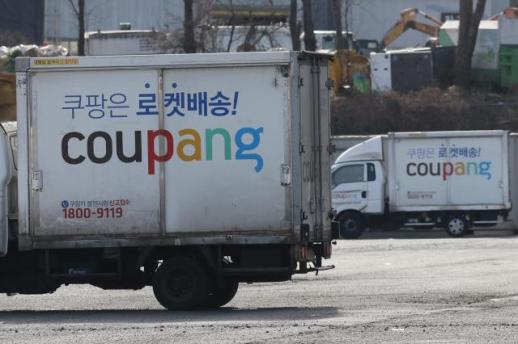 Coupang reclaims e-commerce dominance in South Korea as Chinese rivals gain ground SEOUL, April 07 (AJP) - Coupang, South Korea's largest online retailer, has effectively shaken off the fallout from a massive data breach that exposed the personal information of about 33.7 million users late last year, with its monthly active user base and estimated transaction volume rebounding to pre-crisis levels in March. Data from IGAWorks MobileIndex on Monday showed Coupang's monthly active users (MAU) reaching 35.03 million in March, up from 33.64 million in February and 34.01 million in January. The figure marks a decisive rebound from a three-month slide that began after the New York-listed company disclosed the breach in late November 2025. Coupang's estimated monthly payment volume also recovered. The platform's transaction value climbed to about 4.62 trillion won ($3.06 billion) in March, a 12.22 percent increase year-on-year, accumulative transaction value for the whole of the first quarter also rising 11.26 percent to 13 trillion won. Even with the info leak crisis, the gap between Coupang and its domestic competitors still remained vast. The nearest Korean rivals in March were 11st with 8.15 million monthly users, Naver Plus Store with 7.77 million and Gmarket with 6.81 million, according to MobileIndex. Among domestic platforms, Naver Plus Store posted the sharpest gains behind Coupang, with its March MAU hitting a record 7.77 million — a 9 percent jump from 7.1 million the previous month, the shopping app's momentum reported to be bolstered by an AI-powered counterfeit monitoring system and a one-strike seller removal policy. "This is a leading case in which platform self-regulation has simultaneously achieved consumer protection and merchant growth," Naver's user protection committee chairman Kwon Hun-yeong said. Chinese-backed platforms continued to tighten their grip on the market. Temu, operated by PDD Holdings, drew 7.42 million monthly users in March, while Alibaba Group's AliExpress recorded 7.12 million. Their combined user base of about 14.54 million outstripped every individual domestic rival except Coupang. Temu also topped all shopping apps in new installations for a second consecutive month, logging about 749,000 fresh downloads in March, followed by Naver Plus Store at about 674,000. Coupang trailed with 461,000 new installations, a sign that its commanding market share rests more on the loyalty of its existing user base than on fresh customer acquisition. Industry observers said the data underscored an increasingly bifurcated market: Coupang's entrenched logistics network and same-day delivery infrastructure continue to lock in existing users, while Chinese platforms are leveraging ultra-low prices and aggressive marketing to capture price-sensitive newcomers at a pace domestic rivals have struggled to match. 2026-04-07 15:17:01
 -
 Korea Medical Sector Warns of Supply Risks as Middle East War Drags On The prolonged war in the Middle East is raising concerns that disruptions in raw materials and shipping could spill over into unstable supplies of medical products in South Korea. With early signs of shortages in medical disposables and pharmaceutical packaging, hospitals and pharmacies are stepping up vigilance. Industry officials said the conflict has made supplies of petrochemical feedstocks such as naphtha and bunker fuel less reliable, disrupting production of drug packaging and medical consumables. Naphtha is a key material for PVC and plastic pill bottles, IV and injection containers, and dispensing paper used for prescriptions. A pharmaceutical distribution official said volatility in raw material prices and uncertainty in ocean freight rates have led some suppliers to adjust shipments. Another pharmaceutical company official said there has not yet been major disruption to production and packaging lines, but added the company is closely watching the situation as the war drags on. Hospitals are already hearing talk of price increases for medical disposables. Suppliers of single-use items such as syringes, needles and sanitary gloves are said to be considering price hikes of about 10% to 20%. An official at a major hospital said suppliers began discussing price adjustments as early as last month, adding that the industry expects prices could rise in the first half of the year. Concerns are also spreading to neighborhood pharmacies, which rely on steady supplies of packaging materials such as dispensing paper, roll paper, dosing bottles and plastic pill containers. Some packaging firms have been partially controlling volumes or delaying deliveries since March, according to industry sources. A pharmacy owner in Seoul’s Jongno district, identified only as A, said any disruption in packaging supplies would immediately make it difficult to dispense and package medicines. Some pharmacies are also showing signs of stockpiling. A wholesaler said orders for dispensing paper and plastic pill containers have increased over the past month or two compared with usual levels, attributing the rise to growing anxiety. The government plans to inspect distribution, pricing and supply chains to prevent broader instability in supplies of medical products and medicines. The Ministry of Food and Drug Safety and the Ministry of Health and Welfare said they will update their response manual for drug and medical device supply and take strong action against market-disrupting practices such as hoarding. Related agencies said they are continuously monitoring supplies of medical disposables and pharmaceutical packaging and preparing stockpiling and alternative production plans for items expected to face disruptions.* This article has been translated by AI. 2026-04-07 15:12:00
 -
 Seoul Design Award 2026 Accepting Entries Through June 30; New designboom Prize Added The Seoul Design Foundation said Monday it is accepting entries for the Seoul Design Award 2026 through June 30. Now in its seventh year, the Seoul Design Award is a public global award focused on sustainable design aimed at addressing social problems. The foundation said the competition has expanded from 75 entries at its first event in 2019 to 941 projects from 74 countries in 2025, a 1,100% increase over six years. The foundation said it has broadened the award this year by adding new categories, including a designboom special prize. The global design media outlet will judge and select three winners, who will receive global promotion opportunities, including a featured article on designboom’s platform. A new ESG Design Impact Prize will also spotlight companies and institutions practicing sustainable design. The foundation said the category is intended to identify strong projects and show how design can serve as a practical tool for advancing ESG values. The foundation also expanded opportunities for young designers. The existing Concept Prize has been renamed the Young Designer Prize, and participation has been widened for undergraduate and graduate students in South Korea and abroad, the foundation said. Entries will be accepted in four categories based on the United Nations Sustainable Development Goals: Health & Peace, Equal Opportunities, Energy & Environment, and Cities & Communities. Applications will be accepted only in English via the Seoul Design Award website from March 30 through 3 p.m. on June 30. An awards ceremony and an international conference are scheduled for October at DDP, the Dongdaemun Design Plaza. 2026-04-07 14:51:20
 -
 Nearly 3 million barrels delivered to refiners in first week of oil swap program SEOUL, April 7 (AJP) - About 2.8 million barrels of crude oil have been supplied to refiners just a week after the launch of an "oil swap" program, which lends government-owned stockpiles to help them secure alternative supplies, the Ministry of Trade, Industry and Energy said on Tuesday. At a daily briefing at the government complex in the administrative city of Sejong, Yang Gi-uk, a ministry official, said the country's four major refiners had applied to swap more than 30 million barrels of crude oil, with two deals completed under which about 2.8 million barrels have already been delivered. "With at least four additional contracts scheduled for this week, total swapped volumes are expected to reach about 8 million barrels by the end of the week," Yang added. The program was launched on March 31 to ease supply disruptions by lending government oil reserves to refiners, who will be required to replenish them once they have secured their own supplies. Under the program, refiners who have faced difficulties importing Middle Eastern crude due to the closure of the Strait of Hormuz is able to secure substitute supplies. The program was launched on March 31 to ease supply disruptions by lending government oil reserves to refiners, which are required to replenish them once they secure their own supplies. Under the program, refiners facing difficulties importing Middle Eastern crude due to the closure of the Strait of Hormuz can secure alternative supplies. Meanwhile, the government has secured about 50 million barrels of alternative oil supplies for April and about 60 million barrels for May, equivalent to roughly 60 percent and 70 percent of typical levels, with supplies sourced from countries including Australia, Brazil, Saudi Arabia, the United Arab Emirates and the U.S. Naphtha supplies are also at about 70 percent of normal levels. "Imports of light naphtha stood at roughly 1.16 million tons last year, while expected imports for April are about 770,000 tons. Factoring in approximately 1.1 million tons produced domestically, overall supply is at more than 80 percent of typical levels," Yang said. Stressing the need to ensure a steady naphtha supply, he said the ministry will seek additional sources through measures financed by a supplementary budget. The ministry, however, said that key raw materials are being supplied stably despite surging petroleum prices and shortages of some packaging materials, pledging to keep monitoring high-demand items such as packaging for instant noodles and powdered milk, as well as trash bags. 2026-04-07 14:45:30
 -
 BOK, BdF address central bank role in tokenized environment SEOUL, April 07 (AJP) -South Korea and France’s central banks discussed stablecoins and the evolving role of banks in a tokenized financial system during a joint session in Seoul, the Bank of Korea said Tuesday. The Bank of Korea (BOK) and the Banque de France (BdF) are holding a two-day meeting from Tuesday through Wednesday as part of a regular academic exchange launched in 2024 to address shifts in the global economic landscape. This year’s session coincided with French President Emmanuel Macron’s state visit and a summit with President Lee Jae Myung, where the two leaders agreed to deepen cooperation in economic and security sectors last Friday. Talks focused on the implications of stablecoins and central bank digital currencies (CBDCs) for the international monetary system, as well as the changing roles of central and commercial banks in a tokenized environment. The Banque de France has been among Europe’s most active advocates of CBDCs, leading pilot programs on wholesale CBDCs (wCBDCs) to enhance cross-border payments and test their use as settlement assets for tokenized securities. These efforts are seen as helping shape the European Central Bank’s digital euro project. The BOK has also been advancing its own CBDC framework under “Project Han River,” launched in 2023, with real-transaction testing now entering a second phase last month. The latest discussions are expected to deepen policy coordination between the two sides. The session also examined how climate change is feeding into inflation dynamics and posing broader macroeconomic challenges for financial institutions. Participants include BOK Deputy Governor and Chief Economist Lee Jae-won and Na Seung-ho, deputy director general at its Economic Research Institute. The French delegation is led by Deputy Governor Agnès Bénassy-Quéré and Stéphane Latouche, the bank’s Asia-Pacific chief representative. 2026-04-07 14:40:21