
Journalist

Lee Hugh
=
-
 LG's clothing-care machine surpasses 2 million units in cumulative global sales SEOUL, April 5 (AJP) - LG Electronics' clothing-care contraption, called the LG Styler, has sold over 2 million units in cumulative global sales, the home-appliance giant said on Sunday. The milestone comes just five years after over 1 million units were sold in 2021, about a decade after its release in 2011. The machine, which resembles a combination of a wardrobe and a fridge, removes odors, dust, and wrinkles while sterilizing clothes, all without the time-consuming effort of washing. It is now sold in 27 countries worldwide. Sales have surged particularly in Asia and North America, with revenue in China, Taiwan, and the U.S. jumping more than 30 percent last year. LG credited its popularity in Asia to clothing habits involving uniforms and suits that aren't washed often, combined with keen interest in hygiene. LG said the machine, built on advanced technology with more than 200 patents, sanitizes 99.99 percent of harmful bacteria and viruses and removes over 99 percent of 18 types of everyday odors. It added that a moving hanger inside the LG Styler rotates up to 350 times per minute to reduce dust and wrinkles, with the latest version adding a feature that analyzes garment weight and suggests the optimal styling. "We will further strengthen our position in the global market by integrating artificial intelligence (AI) into core components and technologies," said Son Chang-woo, a manager in LG's home appliance division. 2026-04-05 12:31:21
 -
 Refiners hit by avalanche of woes as crude volatility, supply risks mount SEOUL, April 5 (AJP) - A surge in oil prices has given domestic refiners a short-term boost, but industry watchers warn that their gains may quickly evaporate as market volatility and supply constraints are expected to continue amid the prolonged conflict in the Middle East. At least until last month, refiners managed to keep operations steady by relying on existing inventories and alternative supplies, but risks are rising as crude prices swing sharply and securing feedstock becomes increasingly difficult. As of March, exports of petroleum products including gasoline, diesel, and naphtha surged to US$5.11 billion, with an average unit price of $925 per ton, up 33.3 percent from the same period last year. Dubai crude, which accounts for the largest portion of South Korea's crude imports, soared to $128.5 a barrel last month, up from $72.5 a year earlier. Over the same period, international gasoline prices rose to $128.8 from $79.6, while diesel jumped to $192.8 from $86.5. The country's four major refiners - GS Caltex, HD Hyundai Oil Bank, SK Innovation, and S-Oil - which earn over half their revenue from overseas sales, are expected to post stronger first-quarter results thanks to rising exports. Refining margins, which measure the profit from turning crude oil into products like gasoline and diesel, also jumped to $29.3 a barrel in March from $11.8 in February, further boosting their sales, according to Hana Securities. They were able to maintain operations at certain levels as tankers that had left the Persian Gulf before the Middle East crisis arrived. However, after a 2-million-barrel shipment reached South Korea on March 20, supplies under long-term contracts that usually pass through the Strait of Hormuz reportedly stopped. Refiners are now turning to spot purchases of Middle Eastern crude that bypasses the Strait of Hormuz, a critical chokepoint for roughly one-fifth of the world's oil supply, while also seeking alternative supplies from the U.S. and Africa. But intensifying competition among Asian refiners is pushing prices even higher. Some of them are reportedly considering temporary shutdowns, adjusting scheduled maintenance, or cutting operations to minimum levels. "Until March, we were able to manage with our inventories, but crude and petroleum prices are now highly volatile, making it difficult to predict what comes next," said an industry insider. "The uncertainty is so severe that we can't even see a day ahead." 2026-04-05 11:40:42
 -
 Korea Bio, Health Exports Top $4.16B in Q1 Despite War-Driven Uncertainty South Korea’s bio and health exports topped 6 trillion won in the first quarter, extending growth despite external uncertainty including war in the Middle East. The Korea Biopharmaceutical Association said Sunday that exports from January through March totaled $4.16 billion (about 6.3 trillion won). March exports rose 6.3% from a year earlier to $1.5 billion (about 2.3 trillion won). February increased 7.1% to $1.31 billion (about 2 trillion won), and January climbed 18.3% to $1.35 billion (about 2.035 trillion won). The association said biosimilars drove the gains, citing expanding demand in major markets including the United States and the European Union. It said exports have risen for five straight months. In the United States, about 90% (106) of biopharmaceuticals scheduled to lose patent protection from 2025 to 2034 have no biosimilar candidates in development, the association said, adding that Europe faces a similar situation. South Korean companies are expanding their presence on the back of those opportunities. Korea was named the country with the most U.S. Food and Drug Administration biosimilar approvals for two consecutive years in 2024 and 2025, the association said. Biosimilar exports rose 50% to $1.47 billion (about 2.2 trillion won) in 2022 from $980 million (about 1.4 trillion won) in 2021. The association forecast bio and health exports will rise 9% this year to $30.4 billion (about 46 trillion won), topping last year’s record $27.87 billion (about 42 trillion won).* This article has been translated by AI. 2026-04-05 11:15:00
 -
 Trump ratchets up 'hell' threat against Iran as his ultimatum deadline looms SEOUL, April 5 (AJP) - U.S. President Donald Trump made yet another ominous threat to Iran on Saturday, saying Tehran has 48 hours to make a deal or reopen the Strait of Hormuz. In a post on his social medial platform Truth Social, Trump said, "Remember when I gave Iran ten days to MAKE A DEAL or OPEN UP THE HORMUZ STRAIT. Time is running out - 48 hours before all Hell will reign down on them." The fresh threat was a reminder of his earlier ultimatum to Tehran, just one day ahead of his April 6 deadline, extended for the Easter weekend from an initial March 27 deadline, when he had threatened to bomb Iranian power plants if Tehran failed to meet U.S. demands. Trump has ratcheted up his threats almost every other day, further escalating tensions with Iran. Earlier last week, he warned, "If the Hormuz Strait is not immediately open for business, we will conclude our lovely stay in Iran by blowing up and completely obliterating all of their-electric generating plants, oil wells and Kharg Island." The warning was followed by another threat during a televised prime-time address just two days later. "We are going to hit them extremely hard over the next two to three weeks. We are going to bring them back to the Stone Age, where they belong," he said. With the April 6 deadline now hours away, the world is watching nervously. Iran has shown no sign of backing down, and the strait - a vital chokepoint for about 20 percent of the global oil supply, remains largely closed, continuing to strain energy supplies, drive up oil and gas prices, and fuel financial market uncertainty. Iran has selectively allowed certain vessels - especially those carrying essential or humanitarian goods - to pass through the waterway, but Western tankers remain largely blocked or restricted. The Middle East crisis is worsening with no end in sight, as U.S. special and ground forces have reportedly crossed into Iran following the downing of a fighter jet last Friday, engaging in high-risk missions including searching for missing personnel, raising fears that the conflict could become prolonged and far more costly. Meanwhile, Trump said a U.S. crew member who went missing after the F‑15 fighter jet carrying a two-person crew was shot down by Iranian forces was saved early Sunday morning, two days after the jet's pilot was rescued. Hailing the operation as one of the "most daring search and rescue missions in U.S. history," he said, "The U.S. Military sent dozens of aircraft, armed with the most lethal weapons in the World, to retrieve him. He sustained injuries, but he will be just fine." 2026-04-05 09:55:39
 -
 SBS "Inkigayo" Announces Lineup Featuring IRENE, Kep1er, Park Jae-jung and OWIS SBS has announced a packed lineup for its music show "Inkigayo," airing the afternoon of the 5th. The episode will feature Kang Min, DIGNITY, Min Ji-woon, Park Jae-jung, Baby DONT Cry, V01D, Seo EVE, SLAY, IRENE, AtHeart, S2IT, OWIS, ALL(H)OURS, Yuna (ITZY), Jang Han-eum, CSR and Kep1er. Several artists will stage comebacks, including IRENE, Kep1er, Park Jae-jung, Jang Han-eum and Seo EVE. SLAY will deliver a solo "hot debut" stage, while virtual girl group OWIS will also present a "hot debut" performance. "Inkigayo," hosted by Eui-ju, Lee Hyun and Shin Yu, airs every Sunday at 3:20 p.m. * This article has been translated by AI. 2026-04-05 00:03:17
 -
 Actor Song Il-gook Says Son Mingu “Scoffed” at His ‘Immortal Songs’ Appearance Actor Song Il-gook shared an update on his triplets. Song appeared on KBS2’s “Immortal Songs — 2026 Entertainment Industry King of Kings Special, Part 2,” airing on Friday afternoon. Song said it was his first time singing on a broadcast. He added that his wife is president of a court band club and that his son Mingu is preparing to study composition. Song said that when he told Mingu he would be appearing on “Immortal Songs,” his son responded, “What? Dad?” and then scoffed, drawing laughter. When Lee Chan-won asked whether the boys were at the age for adolescence, Song said it was “intense” and that he lives “praying day by day.” He said his wife works at a court, so the boys’ teenage frustrations are directed at him rather than their mother, which he described as difficult. Comedian Kim Jun-hyun said the boys probably would not like their father talking about them on TV during adolescence. Song replied, “Kids, please understand. I have to make a living.” * This article has been translated by AI. 2026-04-04 20:51:14
 -
 Ryu I-seo Says IVF Hormone Shots Led to Weight Gain as She Prepares for Pregnancy Shinhwa member Jun Jin’s wife, Ryu I-seo, has shared details of her pregnancy preparations, including plans for in vitro fertilization. A video titled “First look at Jun Jin and Ryu I-seo’s love house, packed with must-haves from 1,000 won to 2 million won” was posted Thursday on the YouTube channel “Nae Sarang Ryu I-seo.” Asked by the production team about a pill case, Ryu said she carries supplements in it and that she and her husband take “at least 10 kinds a day.” When the team mentioned IVF preparations, she said she thought she had gained some weight because of hormone shots. “It can’t be helped,” she added. “I can lose it later.” Ryu said she considers it natural for the process to be physically difficult and that it is something she must endure for a child. She has previously said she is preparing for IVF, recalling that last year her husband suddenly became seriously ill and went to the hospital. She said she thought, “How would I live alone if this person were gone?” and decided to talk seriously with him about trying to conceive, saying she felt she could endure if she had a child who resembled him.* This article has been translated by AI. 2026-04-04 19:48:14
 -
 S.Korea civil service exam attendance slips to 75 percent, competition intensifies SEOUL, April 04 (AJP) - The attendance rate for South Korea's national Grade 9 civil service written exam edged down to 75 percent this year, while overall competition continued to climb, the government said Saturday. Out of 108,578 eligible applicants, 81,479 took the 2026 exam held across 17 cities and provinces, according to the Ministry of Personnel Management. The 75 percent turnout marks a slight decrease from 75.2 percent last year and 75.8 percent in 2024. Despite the lower attendance, competition for the entry-level government positions rose to 28.6 applicants per opening, extending an upward trend from the previous year. 2026-04-04 17:56:46
 -
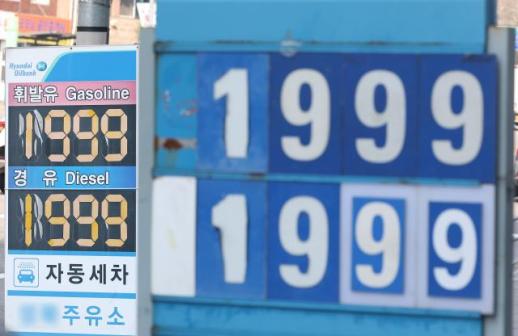 S. Korea pump prices extend gains on prolonged Middle East conflict SEOUL, April 04 (AJP) - Retail gasoline and diesel prices in South Korea continued their upward trajectory on Saturday, driven by concerns over a prolonged conflict in the Middle East. The national average price of gasoline stood at 1,938.6 won ($1.28) per liter as of 9 a.m., up 6.8 won from the previous day, according to Opinet, the Korea National Oil Corp.'s price information portal. The average price of diesel also rose, climbing 6.3 won to 1,929.4 won per liter. Prices in Seoul, typically the most expensive region for fuel in the country, saw even steeper increases. The capital's average gasoline price jumped 9.2 won to 1,976.7 won per liter, while diesel rose 8.4 won to 1,952.3 won per liter. The sustained price hike at domestic pumps reflects the recent surge in global oil prices. International markets have reacted to the growing likelihood of a protracted war in the Middle East, fueled by U.S. President Donald Trump's announced plans to intensify military actions against Iran. Fluctuations in international oil prices typically take two to three weeks to be fully reflected in South Korea's domestic retail prices, indicating that the upward trend at local pumps is likely to continue in the near term. 2026-04-04 17:25:51
 -
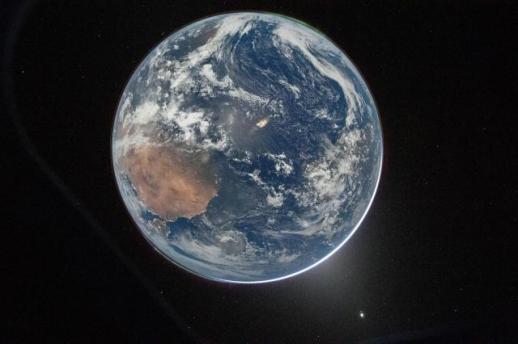 OPINION: April remains the cruelest month T.S. Eliot once called April the cruelest month, for it forces life out of dead land. There is something unsettling about renewal. Beauty, when it returns too quickly, exposes what has been lost. This April, the world stands once again before that line. War is no longer a distant headline. In Iran and across the Middle East, conflict spills beyond borders, touching countries that once stood at the periphery. In Ukraine, now in the fourth year of war, cities, power grids, hospitals and homes remain targets. War is not simply about territory. It is about the quiet dismantling of ordinary life — losing a home, losing a family member, wondering whether there will be electricity tonight or fuel to cook tomorrow. The numbers tell the story with cold precision. According to the United Nations Human Rights Monitoring Mission in Ukraine, 2,514 civilians were killed and 12,142 injured in 2025 alone — a 31 percent increase from the previous year. Long-range weapons and drone strikes have expanded the battlefield into entire cities. Civilian infrastructure is no longer collateral damage; it is the target. On April 3, another wave of Russian strikes killed civilians and destroyed residential and administrative buildings. Even a veterinary hospital near Kyiv was hit, killing dozens of animals. War does not stop at human life; it erodes the entire fabric of living systems. In the Middle East, even the numbers resist clarity. That, too, is part of the story. Reuters’ March 31 compilation shows at least 1,368 deaths in Lebanon and 19 in Israel, with additional casualties reported across Iraq, Kuwait, Bahrain, Oman, Saudi Arabia and the United Arab Emirates. Iran’s toll is more uncertain. The International Federation of Red Cross and Red Crescent Societies estimates over 1,900 dead and around 20,000 injured. A U.S.-based rights group, HRANA, places the figure closer to 3,500. When numbers diverge this widely, it does not suggest fewer deaths — it suggests a war that cannot be fully counted. South Korea, for now, remains outside the direct line of fire. There are discussions of emergency fiscal spending, vehicle rationing and energy contingency measures. Northeast Asia is not under bombardment. But distance does not equal detachment. The shock travels through other channels — oil prices, exchange rates, inflation and supply chains. The Middle East crisis is, in many ways, an Asian crisis. According to the U.S. Energy Information Administration, 84 percent of crude oil and condensate and 83 percent of liquefied natural gas passing through the Strait of Hormuz in 2024 were bound for Asia. Roughly one-fifth of global LNG trade flows through that narrow passage. When Hormuz falters, the effects do not remain at sea. They ripple outward — into fuel prices in Seoul, fertilizer costs in Southeast Asia and power shortages in South Asia. The strait is not just a geographic chokepoint. It is a lifeline. This is not merely an oil price spike. Across Southeast Asia, governments are already deploying familiar emergency measures — expanding fuel subsidies, cutting budgets, adjusting fuel standards, shifting energy sources. The sequence is recognizable. First comes the energy shock. Then inflation spreads through transportation, electricity and agriculture. Governments intervene to cushion the blow, straining public finances. Eventually, the pressure reaches food systems and social stability. This pattern has repeated itself before — in the oil shocks of the 1970s, the Asian financial crisis of 1997, the food crisis of 2007–08. There is little reason to assume this time will be different. When fuel becomes scarce, what breaks first is not strategy but routine. Bus schedules falter. Fishing boats stay docked. Refrigerated logistics grow more expensive. Fertilizer prices rise, pushing up the cost of food. What appears in headlines as an “energy crisis” manifests in daily life as skipped meals, lost wages and mounting uncertainty. War travels. It does not respect distance. And yet, in the midst of this brutal spring, there is another image. On April 3, astronauts aboard NASA’s Artemis II mission released the first images of Earth taken from beyond its orbit. The photographs show a blue sphere edged with auroras, with faint zodiacal light glowing as the Earth eclipses the Sun. Commander Reid Wiseman described seeing the planet from pole to pole. Astronaut Victor Glover offered a simple message: “You are beautiful.” From that vantage point, humanity appears as a single presence — without borders, without divisions, without the language of conflict. Seen from space, the Earth is whole. Seen from the ground, the sky is beautiful too. This weekend, cherry blossoms scatter in the spring wind, falling like pale snow. This year they bloomed early and faded quickly, not lasting even a full week at their peak. We often say that flowers are beautiful because they are fleeting. But there is something uneasy about how quickly they vanish. The brevity of the bloom mirrors a deeper fragility — of peace, of stability, of the ordinary rhythms we assume will endure. So April must be seen through two lenses. One is the distant view, from above, where humanity appears unified, where the lines we draw seem temporary and small. The other is the grounded view, from beneath the blossoms, where life is lived day by day — where a meal, a home, a night’s sleep are not abstractions but necessities. War, in the end, is not geopolitics. It is the erosion of these small certainties. April is cruel. In Iran, in Ukraine, and across parts of Asia absorbing the shock of energy and food disruption, people lose homes, families and the ability to sustain daily life. South Korea is not at the center of this destruction. But it is not outside it either. We inhabit the same planet. What this moment demands is not only awareness of beauty, nor only attention to statistics, but the capacity to hold both at once — to recognize the elegance of the Earth from afar while refusing to ignore the devastation unfolding upon it. The Earth, seen from space, is beautiful. The sky, seen beneath the blossoms, is beautiful. And still, April remains the cruelest month. *The author is the managing editor of AJP 2026-04-04 15:47:58