
Journalist

Lee Hugh
=
-
 S.Korea civil service exam attendance slips to 75 percent, competition intensifies SEOUL, April 04 (AJP) - The attendance rate for South Korea's national Grade 9 civil service written exam edged down to 75 percent this year, while overall competition continued to climb, the government said Saturday. Out of 108,578 eligible applicants, 81,479 took the 2026 exam held across 17 cities and provinces, according to the Ministry of Personnel Management. The 75 percent turnout marks a slight decrease from 75.2 percent last year and 75.8 percent in 2024. Despite the lower attendance, competition for the entry-level government positions rose to 28.6 applicants per opening, extending an upward trend from the previous year. 2026-04-04 17:56:46
 -
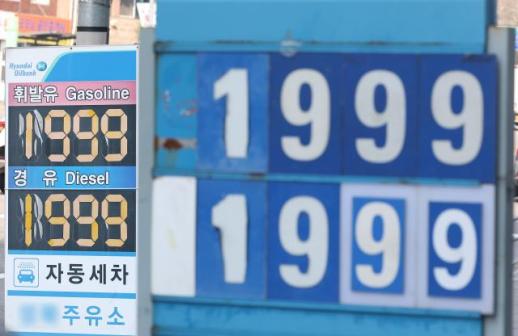 S. Korea pump prices extend gains on prolonged Middle East conflict SEOUL, April 04 (AJP) - Retail gasoline and diesel prices in South Korea continued their upward trajectory on Saturday, driven by concerns over a prolonged conflict in the Middle East. The national average price of gasoline stood at 1,938.6 won ($1.28) per liter as of 9 a.m., up 6.8 won from the previous day, according to Opinet, the Korea National Oil Corp.'s price information portal. The average price of diesel also rose, climbing 6.3 won to 1,929.4 won per liter. Prices in Seoul, typically the most expensive region for fuel in the country, saw even steeper increases. The capital's average gasoline price jumped 9.2 won to 1,976.7 won per liter, while diesel rose 8.4 won to 1,952.3 won per liter. The sustained price hike at domestic pumps reflects the recent surge in global oil prices. International markets have reacted to the growing likelihood of a protracted war in the Middle East, fueled by U.S. President Donald Trump's announced plans to intensify military actions against Iran. Fluctuations in international oil prices typically take two to three weeks to be fully reflected in South Korea's domestic retail prices, indicating that the upward trend at local pumps is likely to continue in the near term. 2026-04-04 17:25:51
 -
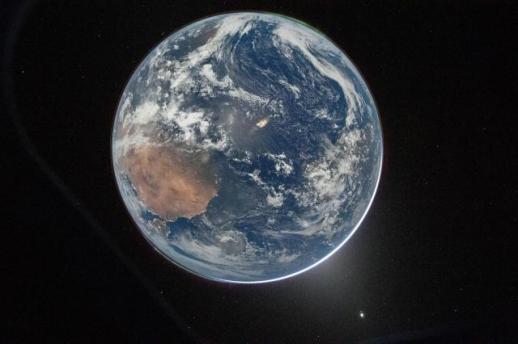 OPINION: April remains the cruelest month T.S. Eliot once called April the cruelest month, for it forces life out of dead land. There is something unsettling about renewal. Beauty, when it returns too quickly, exposes what has been lost. This April, the world stands once again before that line. War is no longer a distant headline. In Iran and across the Middle East, conflict spills beyond borders, touching countries that once stood at the periphery. In Ukraine, now in the fourth year of war, cities, power grids, hospitals and homes remain targets. War is not simply about territory. It is about the quiet dismantling of ordinary life — losing a home, losing a family member, wondering whether there will be electricity tonight or fuel to cook tomorrow. The numbers tell the story with cold precision. According to the United Nations Human Rights Monitoring Mission in Ukraine, 2,514 civilians were killed and 12,142 injured in 2025 alone — a 31 percent increase from the previous year. Long-range weapons and drone strikes have expanded the battlefield into entire cities. Civilian infrastructure is no longer collateral damage; it is the target. On April 3, another wave of Russian strikes killed civilians and destroyed residential and administrative buildings. Even a veterinary hospital near Kyiv was hit, killing dozens of animals. War does not stop at human life; it erodes the entire fabric of living systems. In the Middle East, even the numbers resist clarity. That, too, is part of the story. Reuters’ March 31 compilation shows at least 1,368 deaths in Lebanon and 19 in Israel, with additional casualties reported across Iraq, Kuwait, Bahrain, Oman, Saudi Arabia and the United Arab Emirates. Iran’s toll is more uncertain. The International Federation of Red Cross and Red Crescent Societies estimates over 1,900 dead and around 20,000 injured. A U.S.-based rights group, HRANA, places the figure closer to 3,500. When numbers diverge this widely, it does not suggest fewer deaths — it suggests a war that cannot be fully counted. South Korea, for now, remains outside the direct line of fire. There are discussions of emergency fiscal spending, vehicle rationing and energy contingency measures. Northeast Asia is not under bombardment. But distance does not equal detachment. The shock travels through other channels — oil prices, exchange rates, inflation and supply chains. The Middle East crisis is, in many ways, an Asian crisis. According to the U.S. Energy Information Administration, 84 percent of crude oil and condensate and 83 percent of liquefied natural gas passing through the Strait of Hormuz in 2024 were bound for Asia. Roughly one-fifth of global LNG trade flows through that narrow passage. When Hormuz falters, the effects do not remain at sea. They ripple outward — into fuel prices in Seoul, fertilizer costs in Southeast Asia and power shortages in South Asia. The strait is not just a geographic chokepoint. It is a lifeline. This is not merely an oil price spike. Across Southeast Asia, governments are already deploying familiar emergency measures — expanding fuel subsidies, cutting budgets, adjusting fuel standards, shifting energy sources. The sequence is recognizable. First comes the energy shock. Then inflation spreads through transportation, electricity and agriculture. Governments intervene to cushion the blow, straining public finances. Eventually, the pressure reaches food systems and social stability. This pattern has repeated itself before — in the oil shocks of the 1970s, the Asian financial crisis of 1997, the food crisis of 2007–08. There is little reason to assume this time will be different. When fuel becomes scarce, what breaks first is not strategy but routine. Bus schedules falter. Fishing boats stay docked. Refrigerated logistics grow more expensive. Fertilizer prices rise, pushing up the cost of food. What appears in headlines as an “energy crisis” manifests in daily life as skipped meals, lost wages and mounting uncertainty. War travels. It does not respect distance. And yet, in the midst of this brutal spring, there is another image. On April 3, astronauts aboard NASA’s Artemis II mission released the first images of Earth taken from beyond its orbit. The photographs show a blue sphere edged with auroras, with faint zodiacal light glowing as the Earth eclipses the Sun. Commander Reid Wiseman described seeing the planet from pole to pole. Astronaut Victor Glover offered a simple message: “You are beautiful.” From that vantage point, humanity appears as a single presence — without borders, without divisions, without the language of conflict. Seen from space, the Earth is whole. Seen from the ground, the sky is beautiful too. This weekend, cherry blossoms scatter in the spring wind, falling like pale snow. This year they bloomed early and faded quickly, not lasting even a full week at their peak. We often say that flowers are beautiful because they are fleeting. But there is something uneasy about how quickly they vanish. The brevity of the bloom mirrors a deeper fragility — of peace, of stability, of the ordinary rhythms we assume will endure. So April must be seen through two lenses. One is the distant view, from above, where humanity appears unified, where the lines we draw seem temporary and small. The other is the grounded view, from beneath the blossoms, where life is lived day by day — where a meal, a home, a night’s sleep are not abstractions but necessities. War, in the end, is not geopolitics. It is the erosion of these small certainties. April is cruel. In Iran, in Ukraine, and across parts of Asia absorbing the shock of energy and food disruption, people lose homes, families and the ability to sustain daily life. South Korea is not at the center of this destruction. But it is not outside it either. We inhabit the same planet. What this moment demands is not only awareness of beauty, nor only attention to statistics, but the capacity to hold both at once — to recognize the elegance of the Earth from afar while refusing to ignore the devastation unfolding upon it. The Earth, seen from space, is beautiful. The sky, seen beneath the blossoms, is beautiful. And still, April remains the cruelest month. *The author is the managing editor of AJP 2026-04-04 15:47:58
 -
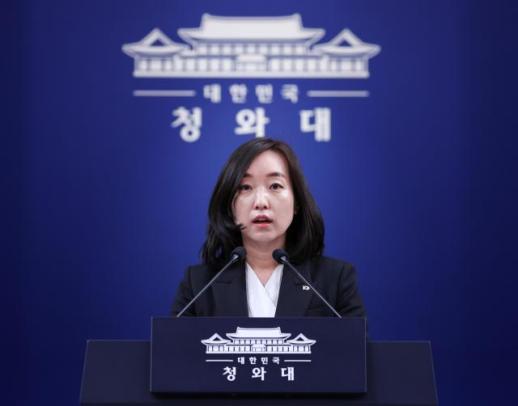 S. Korea to offer incentives for off-peak public transport use amid energy crunch SEOUL, April 04 (AJP) - South Korea’s presidential office said on Friday it will provide incentives for citizens who use public transportation during off-peak hours, part of a strategy to manage a surge in demand and energy supply uncertainties triggered by the conflict in the Middle East. The measure aims to encourage a voluntary shift in commuting patterns as rising oil prices drive more people toward public transit, Blue House spokesperson Jun Eun-su said during a briefing. "With the sharp rise in oil prices, we are seeing a rapid increase in public transportation users," Jun said. "To disperse demand during peak commuting hours, an emergency meeting was held yesterday, chaired by Ha Joon-kyung, Senior Secretary for Economic Growth." As part of the initiative, the public sector will lead the way by implementing staggered commuting hours. The government plans to establish these flexible working arrangements as a model within public institutions before exploring ways to expand the practice to the private sector. Furthermore, the Ministry of Land, Infrastructure, and Transport will design a "smart system" to develop tailored transportation policies for various crisis scenarios. "We will eliminate barriers between government departments and provide a total response to ensure citizen safety," Jun emphasized. "Our priority is to ensure all citizens can commute safely while easing the burden of transportation costs." The presidential office also clarified that it is not considering any restrictions on the existing policy of free public transport for the elderly to reduce congestion. The clarification follows a statement the previous day which suggested that measures for elderly passengers might be included in the congestion relief plan. A Blue House official confirmed on Friday that such options are not being evaluated. 2026-04-04 15:33:05
 -
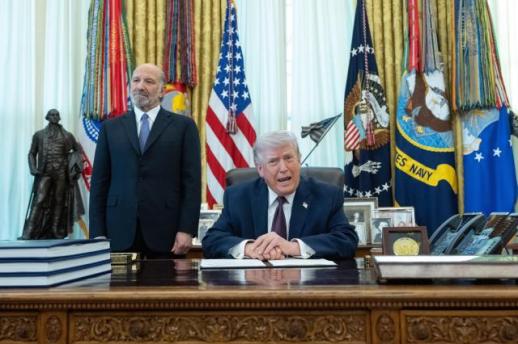 S.Korea to announce major US investment project within weeks, US official says SEOUL, April 04 (AJP) - South Korea is finalizing a major investment plan for the United States, a senior Trump administration official said, as Washington rolls out a new wave of tariffs on metals and pharmaceuticals. During a telephone briefing on Thursday, the senior U.S. official stated that Seoul is expected to unveil a significant investment project in the U.S. within the coming weeks. The official's remarks came after highlighting recent investment commitments from Japan, which include natural gas facilities in Ohio, artificial diamond production, and small modular reactors (SMRs) in Tennessee and Alabama. Seoul and Washington are currently in the final stages of coordinating the details of the investment. While the U.S. has reportedly requested investments in a liquefied natural gas (LNG) export terminal in Louisiana, the South Korean government is leaning toward sectors such as artificial intelligence (AI) data centers and nuclear power plant construction, citing stronger business viability and existing expertise. The upcoming investment announcement coincides with President Donald Trump signing an executive order that revises the imposition of tariffs under Section 232 of the Trade Expansion Act. Under the new rules taking effect on April 6, a blanket 25 percent tariff will be applied to derivative products containing more than 15 percent of steel, aluminum, or copper. The administration maintains a 50 percent tariff on the raw materials themselves. The official explained that this streamlined process will make it easier for companies to handle administrative work, noting that the previous system failed to generate the expected tariff revenue. Additionally, the executive order introduces a new 100 percent tariff on pharmaceutical products. However, South Korea, Japan, the European Union, and Switzerland will be subject to a reduced rate of 15 percent, while the U.K. will face a 10 percent rate. The U.S. official noted that these allied nations are granted lower rates because they have broader trade agreements with Washington, allowing them to maintain their domestic production facilities. 2026-04-04 13:42:10
 -
 Flutist Jihee Han's musical journey: A culmination of heritage and artistry SEOUL, April 04 (AJP) - In the world of classical music, a debut album often serves as an introduction to a young artist's potential. However, flutist Jihee Han’s recently released album under the prestigious Deutsche Grammophon label feels more like a profound culmination of a lifelong dedication to her craft. Han’s artistic foundation was deeply influenced by her family environment. Her late father, Sang-bum Han, a respected senior executive at Korean Air, was known for his integrity and the deep trust he cultivated. This profound trust was evident when the late Yang-ho Cho personally arranged for him to receive medical treatment in the United States after his cancer diagnosis. Raised in a household anchored by her father's values and her mother, In-gyeom Kim, who ran a French restaurant and managed the home with grace, Han grew up in an atmosphere where discipline, art, and warmth coexisted. Her musical journey spans across continents—from studying the Viennese tradition in Vienna to mastering the elegant French school of flute in Paris. She later attended the Oberlin Conservatory under the tutelage of Michel Debost, a defining figure in the French lineage. Returning to Seoul, she earned her doctorate from Seoul National University, establishing herself as both a performer and a scholar. Her Deutsche Grammophon debut, The Flute Works of Carl Reinecke, firmly situates her on the international stage. Collaborating with the Royal Philharmonic Orchestra under Vasily Petrenko and world-renowned pianist Lang Lang for the Sonata Undine, Han’s distinct, clear, and assured voice shines through. Rather than relying on mere display, her performance offers a transparent and deeply interpretive musical experience. As she has noted, her connection to Reinecke’s work dates back to her youth, making her performances a genuine reflection of her long-standing passion. Beyond the stage, Jihee Han balances her artistic career with her life as the wife of Yong-jin Chung, Chairman of Shinsegae Group, raising a family within the orbit of one of Korea's most prominent business conglomerates. The equilibrium she maintains between her prominent public role and her art is a testament to her composed nature. Ultimately, Han's music is not just a display of technical mastery. Her flute carries the legacy of her family, translating time, memory, and dedication into an enduring sound. 2026-04-04 12:19:37
 -
 BTS’ ‘ARIRANG’ Tops Spotify Weekly Global Charts for Second Straight Week BTS’ new release, “ARIRANG,” held the top spot on Spotify for a second consecutive week. Spotify’s latest weekly charts covering March 27 to April 2 showed BTS again leading the global rankings for Weekly Top Albums, Weekly Top Songs and Weekly Top Artists. The group also ranked No. 1 for 14 straight days, from March 20 through April 2, on the Daily Top Artists Global and Daily Top Songs Global charts. According to the group’s agency, the title track “SWIM” also topped YouTube Music’s weekly charts, ranking No. 1 on both the global and U.S. Weekly Top Songs lists with about 83 million and 6.2 million weekly streams, respectively. BTS also posted strong results on major charts in Europe and Australia. Australia’s ARIA charts released April 3 showed “ARIRANG” again at No. 1 on the Top 50 Albums chart, marking a second straight week at the top. On Germany’s official music charts, “ARIRANG” and “SWIM” placed No. 2 on the albums chart and No. 3 on the singles chart. In France, the National Syndicate of Phonographic Publishing (SNEP) Top Albums chart listed “ARIRANG” at No. 2.* This article has been translated by AI. 2026-04-04 11:21:15
 -
 S.Korea's diversified LNG supply chain mitigates risks amid Australia's potential export limits SEOUL, April 04 (AJP) - South Korea is facing potential supply chain disruptions for liquefied natural gas (LNG) as Australia, its largest LNG supplier, considers prioritizing domestic demand amid growing global uncertainties driven by the Middle East conflict. While the government expects limited near-term impacts, broader concerns over global energy supply stability remain. In response, proactive measures by South Korean private energy firms, such as SK Innovation E&S and POSCO International, to diversify their supply chains are highlighting the country's crisis resilience. Earlier this year, SK Innovation E&S began directly importing LNG from Australia's Barossa gas field, establishing a long-term supply base. Following a 1.6 trillion won equity investment, the company secured an annual supply of 1.3 million tons for the next 20 years, which accounts for about 3 percent of South Korea's total annual LNG imports. This marks the first instance of a South Korean private firm independently managing the entire LNG value chain, from exploration to import. POSCO International is also expanding its long-term supply base, primarily focusing on North America. In 2024, the company secured a combined 1.1 million tons annually through 20-year contracts signed with Mexico Pacific (700,000 tons) and Cheniere Energy (400,000 tons). Deliveries from Cheniere, utilizing POSCO's dedicated LNG carrier, will begin in the second half of this year. Furthermore, POSCO is strengthening its global LNG value chain. The firm invested 926 billion won in 2024 for the phase 4 development of a Myanmar gas field, which allocates 80 percent of its output to China. In Australia, Senex Energy—acquired by POSCO in 2022 for about 400 billion won—recently increased its annual output to 1.2 million tons. This shift toward diversified private procurement is restructuring South Korea's LNG market. Currently, private companies handle about 30 percent of the country's 45 million tons of annual LNG imports, mostly for their own power generation, while the state-run Korea Gas Corp. handles the remaining 70 percent. Industry officials note that compared to past structures reliant solely on state-run enterprises, this diversification shields South Korea from policy shifts in major supplier countries like Australia and Qatar. An industry official emphasized that for heavily import-dependent countries like South Korea, "early investments and expanded direct imports by private companies are becoming increasingly crucial in times of crisis." * This article, published by Aju Business Daily, was translated by AI and edited by AJP. 2026-04-04 10:25:22
 -
 Macron Visits Pompidou Center Hanwha in Seoul, Calls It a Bridge Between France and Korea Hanwha Foundation said Friday that French President Emmanuel Macron visited Pompidou Center Hanwha in Seoul’s Yeouido district on Thursday during his state visit to South Korea. The visit was arranged to highlight cultural cooperation between the two countries ahead of the museum’s planned opening in June, marking the 140th anniversary of diplomatic ties between South Korea and France. Macron and his wife, Brigitte Macron, toured major areas of the museum with Catherine Pégard, France’s minister of culture; Philippe Bertoux, France’s ambassador to South Korea; and Laurent Le Bon, president of the Pompidou Center, along with other French government and cultural figures. They were joined by Lee Seong-su, chairman of the Hanwha Foundation, and Kim Dong-won, CEO of Hanwha Life. Pompidou Center Hanwha was created by remodeling an annex of the 63 Building in Yeouido. It was designed by French architect Jean-Michel Wilmotte and built as a four-story museum with a total area of 11,000 square meters. Macron also met with South Korean artists, including internationally recognized figures Kimsooja and Lee Bae, as well as emerging artists such as Kim Heecheon and Yoo Jun-young. “Pompidou Center Hanwha will serve as a bridge between France and Korea and become a platform that leads dialogue between the art communities of both countries,” Macron said. He added that he hoped the two sides would expand artist exchanges and residency programs to build a closer creative partnership. Lee said the visit “once again confirms the meaning of cooperation the two countries have built through culture and the arts” as they mark 140 years of diplomatic ties. He said Pompidou Center Hanwha will work as a cultural platform linking South Korea and France and will broaden international cultural exchanges through a range of programs.* This article has been translated by AI. 2026-04-04 09:54:17
 -
 Mortgage Rates Hit 7% in South Korea, Raising Repayment Pressure for Borrowers After moving in step with expectations of U.S. rate cuts, the broader downtrend in interest rates has been jolted by the unexpected shock of the Iran war. With hopes fading for policy-rate cuts by central banks at home and abroad, and market rates — a key benchmark for lending — rising quickly, borrowers are facing tougher choices. As of Thursday, five-year fixed-rate mortgage loans at South Korea’s five major commercial banks — KB Kookmin, Shinhan, Hana, Woori and NH NongHyup — were quoted at annual rates of 4.42% to 7.02%, according to the financial industry on April 3. The top end of the fixed-rate range rising above 7% marks the first time since October 2022, about three years and five months ago. Compared with mid-January (4.13% to 6.29%), the upper bound is up 0.72 percentage points and the lower bound up 0.29 points. Experts say the upswing is unlikely to reverse sharply in the near term and advise consumers to adjust their financial plans accordingly. With interest burdens rising, managing debt to reduce repayment pressure is emerging as the immediate priority. Borrowers who bought homes in 2020 and 2021 by maximizing loans in a low-rate environment — and who are now renewing five-year fixed-rate mortgages — are entering a period of full rate resets starting this year. In many cases, monthly interest payments are expected to rise by hundreds of thousands of won or more. Borrowers should consider using the right to request a rate cut when their circumstances qualify. Those whose loans are more than three years old may also want to use rules that waive early repayment fees, allowing them to respond more quickly as market rates move. When choosing between fixed and variable rates, borrowers should factor in the possibility that rates may stay elevated rather than fall. For customers with heavy principal-and-interest payments or high debt relative to income, a fixed rate may be more stable by reducing exposure to rate swings. By contrast, higher-income borrowers with smaller loans and a strong likelihood of early repayment may find a variable rate — with a lower initial burden — more practical. “If the war drags on and oil prices stay above $100, the Fed could raise its policy rate, and the Bank of Korea could respond with hikes,” said Choi Ji-hoon, a gold private banker team leader at Hana Bank’s Club1 Hannam PB Center. “If the policy rate rises, loan rates have no choice but to rise as well.”* This article has been translated by AI. 2026-04-04 07:03:40