
Journalist

Lee Hugh
=
-
 Prain Sports golfers target new-season wins after 63 tour victories, 36.8 billion won in prize money Prain Sports golfers are gearing up for the start of South Korea’s men’s and women’s tours, with 22 players set to begin their push for titles. Active players under the management company have combined for 63 wins on the top-tier KLPGA and KPGA tours and about 36.8 billion won in career prize money — an unusually large total for a single agency. Sixteen players are preparing to compete on the KLPGA Tour this season: Lee Jeong-min, Lee Ju-mi, Park Ji-young, Park Gyeol, Han Jin-seon, Park Bo-gyeom, Kim Sae-ro-mi, Ma Da-som, Seong Eun-jeong, Im Hee-jeong, Lee Seul-gi2, Kim Ga-hee2, Kim A-ro-mi, Bong Seung-hee, Jo Ian and Jeong Min-seo. Park Bo-gyeom (Samchully), the winner of last year’s Blue Canyon Ladies Championship, is aiming for a fourth straight season with a victory. “Winning the season opener last year helped me finish the season with good momentum,” she said. “This year, too, I want to win and show fans a good side of me.” Im Hee-jeong (Doosan E&C), who returned from injury and posted eight top-10 finishes last season, trained in Melbourne, Australia, with Shin Ji-ae. “I focused on improving my putting and course management,” Im said. “I have five career wins now, and I want to get my sixth and keep my promise to give gifts to six fans.” Others are looking to rebound. Ma Da-som (Samchully) and Park Ji-young (Korea Land Trust), who each won three times in 2024, are seeking to rejoin the title race. “There were moments last year that left me disappointed, but it was also time to reflect and improve,” Ma said. “I want to bring back the good flow I showed in 2024 and contend with steady play.” Seong Eun-jeong, a former national team player, is set to debut on the KLPGA regular tour as a late-starting rookie and will compete for rookie of the year honors. On the men’s side, Song Min-hyeok (Dong-A Pharmaceutical), the KPGA rookie of the year for the 2024 season, and former national team player Park Jun-hong are targeting their first career wins. On the LPGA Tour, Lim Jin-hee (Shinhan Financial Group) is aiming for another victory after finishing third at the Fortinet Founders Cup, which ended March 23. Amateur prospects have also posted notable results. Oh Su-min (Hana Financial Group) finished runner-up at the Ford Women’s NSW Open on the Ladies European Tour in March. Park Seo-jin (Korea Land Trust) and Ahn Hae-cheon (Woori Financial Group) won together at the Taiwan Amateur Championship. Prain Sports CEO Kim Pyeong-gi said results come from sustained effort over time. “Just as people say investment is not about timing but about time, in sports it’s not a single result — effort and experience accumulated over time ultimately create performance,” he said. “The records of 63 wins and 36.8 billion won are also the result of each player’s time.” He added, “This year as well, we will stay with them to the end so they can keep building their time and produce meaningful results.”* This article has been translated by AI. 2026-04-02 17:45:47
 -
 ILLIT to Hold Seoul Children’s Grand Park Festival for ‘MAMIHLAPINATAPAI’ Release 그룹 아일릿(ILLIT)이 미니 4집 '마밀라피나타파이'(MAMIHLAPINATAPAI) 발매를 기념해 오는 5월 5일 서울어린이대공원에서 축제를 연다. 빌리프랩은 2일 "일명 '아일릿 서울 어린이대공원 페스티벌'"을 소개하며 "이 행사는 아일릿의 신보 타이틀곡인 '잇츠 미(It's Me)'를 메인 테마로 꾸며진다. 가족과 친구 단위의 방문객이 함께 즐길 수 있는 다양한 체험 부스가 마련되고 아일릿은 신곡 무대로 열기를 더할 예정"이라고 밝혔다. 이어 "'아일릿 서울 어린이대공원 페스티벌'은 더 많은 분들이 아일릿의 음악을 여러 방식으로 체험하며 아티스트와 가까이 호흡할 수 있도록 기획됐다. 컴백을 기다려온 글릿(GLLIT, 팬덤명)은 물론 방문객 모두에게 소중한 추억을 선물하고 싶은 마음을 담았으니 즐겁고 신나는 시간이 되길 바란다"라고 전했다. 공연 관람을 제외한 모든 페스티벌 프로그램은 별도의 응모 절차 없이 현장을 방문하는 누구나 자유롭게 참여할 수 있다. 페스티벌과 관련된 자세한 사항은 추후 위버스에 공지될 예정이다. 한편 아일릿의 미니 4집 '마밀라피나타파이'는 4월 30일 발표된다. 앨범 타이틀곡 '잇츠 미'는 첫 데이트 이후 좋아하는 상대와 관계 정의에 대한 고민이 깊어지는 찰나, "너의 최애는 바로 나야!"라고 당돌하게 외치는 노래다. 개성 강한 싱어송라이터 유라(youra)와 더 딥(The Deep)이 작사에 참여해 아일릿과 시너지를 냈다. * This article has been translated by AI. 2026-04-02 17:45:18
 -
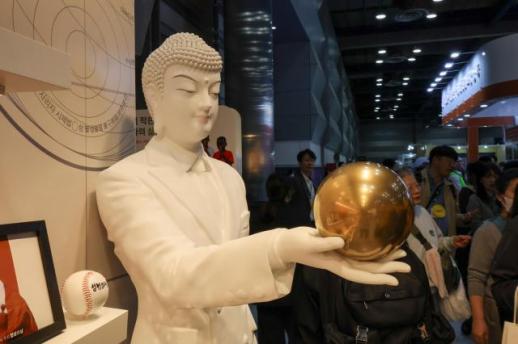 Who says religion can't be cool? Buddhism expo SEOUL, April 02 (AJP) - Crowds poured into COEX in Seoul’s Gangnam District on Thursday as the Seoul International Buddhism Expo opened, with visitors lining up from the morning to enter one of the city’s most unconventional cultural events. Hosted by the Jogye Order of Korean Buddhism, the annual expo — running through April 5 — has been held since 2013 to showcase traditional Buddhist culture and its evolving industries. Inside, long lines quickly formed at booths that had gone viral on social media, with some areas restricting entry by the afternoon as visitor numbers surged. Young attendees moved from stall to stall, browsing Buddhist-themed goods, art and meditation programs, often treating the space less as a place of worship than as an immersive cultural experience. The shift reflects the rise of so-called “hip Buddhism,” a trend that blends spirituality with lifestyle and design. Organizers said about 200,000 people visited last year’s expo, with 77.6 percent from the MZ generation and more than half — 52.1 percent — identifying as having no religious affiliation. This year’s event, themed “The Play You Love: Form Is Emptiness, Emptiness Is Form,” features some 430 booths. Programs range from the Buddhist Cultural Industry Exhibition and Buddha Art Fair to Relax Week sessions and an International Meditation Competition, all centered on healing, mindfulness and contemporary interpretations of Buddhist practice. Amid the hum of conversation and camera shutters, the expo unfolded less like a traditional religious gathering and more like a festival of experience — where belief, curiosity and culture quietly intersect. 2026-04-02 17:45:18
 -
 Korea Pharmaceutical and Bio-Pharma Association Holds Emergency Meeting on Drug Price Cuts The Korea Pharmaceutical and Bio-Pharma Association said it will focus on limiting the impact on the industry from the government’s drug pricing system overhaul. The association said it held an emergency meeting of its board on April 2 to discuss a response plan to the overhaul, which was recently approved by the Health Insurance Policy Deliberation Committee. The government last month announced the plan, including cutting prices for generic drugs to 45% of the original drug price, down from 53.55%. At the meeting, the association agreed to draw up specific measures to reduce the hit from the price cuts. It said it will compile member companies’ questions about the overhaul to reduce uncertainty in the field. It also plans to hold two briefings for member companies this month, one online and one in person. The association said participants also agreed that the response should include a close review of strengths and weaknesses in the domestic pharmaceutical industry and industry-led efforts to support sustainable growth. They also said the need is growing for steps such as research on industrial promotion policies, including drug pricing rules, measures to support industry growth, and structural improvements such as establishing a sound order in pharmaceutical distribution. The association said it is also considering converting its emergency task force into a consultative body to discuss the industry’s sustainable development. It plans to hold a full meeting on April 14 at the association auditorium with representatives of participating groups in the “Emergency Task Force on Drug Pricing System Reform for Industry Development.” If the consultative body is launched, it is expected to help identify and deliver key agenda items for a future public-private consultative group involving the Ministry of Health and Welfare and the industry, the association said. The association said the April 14 meeting is also expected to gather a wide range of views on setting the agenda for the public-private group, proposals to the government, industry innovation and advancement, and ways to establish a sound distribution order.* This article has been translated by AI. 2026-04-02 17:42:00
 -
 S. Korea to join UK-led virtual meeting on Hormuz as US shift burden on allies SEOUL, April 02 (AJP) -South Korea will join a U.K.-hosted virtual foreign ministerial meeting Thursday aimed at coordinating international efforts to secure the Strait of Hormuz, as Washington signals that responsibility for safeguarding the core oil route should fall on its primary dependents. Chung Eui-hae, deputy foreign minister for political affairs, will participate via video link in the meeting involving 35 countries that have backed a joint statement condemning attempts to block the vital shipping lane. The talks, scheduled for 8 p.m. Seoul time, come amid growing pressure on energy-importing nations after U.S. President Donald Trump urged them to take the lead despite the conflict being triggered by U.S.-Israeli military action. “Build up some delayed courage,” Trump said Wednesday, addressing countries dependent on Gulf oil. “They should have done it before, should have done it with us, as we asked. Go to the strait and just take it, protect it.” His remarks — coupled with earlier comments that securing the waterway is “not America’s job” — underscore a shift toward burden-sharing that has unsettled markets and allies alike. British Prime Minister Keir Starmer said the meeting, hosted by Foreign Secretary Yvette Cooper, will assess “all viable diplomatic and political measures” to restore freedom of navigation, ensure the safety of trapped vessels and seafarers, and resume the flow of critical commodities. “We expect there will be broad discussions regarding the current situation and the need to secure the safety of vessels and crew stranded in the strait, and freedom of navigation,” Foreign Ministry spokesperson Park Il said at a regular briefing on Thursday. Park stressed that ensuring maritime security aligns with the interests of all nations and expressed hope for a swift normalization of global logistics networks based on international law. "Safety of international sea lanes and freedom of navigation serve the interests of all countries and are protected under international law. We hope global maritime logistics will be normalized as soon as possible,” he said. The Strait of Hormuz — a chokepoint for roughly a fifth of global oil and LNG trade — remains effectively paralyzed amid more than a month of conflict involving Iran, raising concerns over prolonged supply disruptions and price volatility. Park described the situation as “extremely grave” and “highly fluid,” saying Seoul would avoid premature judgments while closely monitoring developments. “The government will continue to closely monitor developments in the Middle East and explore various measures to protect our citizens and ensure the safety of energy transport routes,” he said. Seoul has already participated in prior international efforts, including a joint statement on the Strait and a recent meeting of military chiefs hosted by France, and will continue engaging in coordinated discussions. “By taking part in today’s meeting and other international discussions, we will carefully review global trends and consider how we can contribute,” Park added. 2026-04-02 17:37:59
 -
 Jeju Bank Launches DJ Bank Brand, Expands ERP-Based Corporate Finance Jeju Bank has launched DJ Bank, a digital brand focused on corporate finance, and is moving ahead with enterprise resource planning, or ERP-based, business banking. Jeju Bank said it unveiled DJ Bank’s first set of solutions on April 2 at Douzone Eulji Tower in central Seoul. Attendees included Shinhan Financial Group Chairman Jin Ok-dong, Jeju Bank CEO Lee Hee-soo and Korea Federation of Banks Chairman Cho Yong-byeong, the bank said. DJ Bank is a digital corporate-finance brand developed by Jeju Bank in cooperation with Douzone Bizon, a company specializing in business software. The solutions introduced include an alternative credit-scoring strategic model; “DJ The Ju” corporate parking account; loans to support artificial intelligence transformation, or AX solutions; and ERP-linked accounts receivable secured loans. ERP systems integrate management functions such as accounting, human resources, purchasing, inventory and sales. Jeju Bank said it aims to reduce paperwork, delays and information gaps in corporate finance, which it described as heavily reliant on in-person processes. The alternative credit-scoring model combines ERP data with other alternative information to refine standardized credit assessments. The bank said it will use the model to better identify strong customers and potential risks, while expanding productive financial support and strengthening risk management. It also plans to broaden inclusive finance for small business customers, which it said have high closure rates. With the new offerings, corporate customers can use key financial services within their ERP systems without moving to separate channels, the bank said. Jeju Bank also outlined a longer-term vision for DJ Bank, including building an autonomous financial system that links forecasting, recommendations and execution through tools such as an AI chief financial officer that combines ERP data and AI. “ERP banking is a business we have considered for a long time to connect companies’ real work with finance and move beyond the limits of traditional corporate finance that has evaluated today’s companies using past data,” Jin said. He added that he hopes it will become “a starting point for a new corporate finance model” and help the regional bank “make a bigger leap.” Lee said DJ Bank is “a new starting point where finance works within a company’s workflow.” He said the ERP data-based model will make risk identification more precise and help find strong customers who previously received too little attention, while pursuing both productive and inclusive finance.* This article has been translated by AI. 2026-04-02 17:15:00
 -
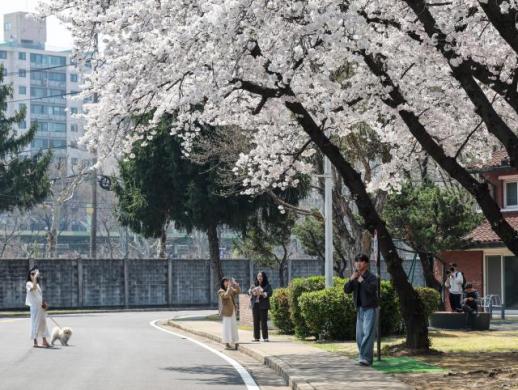 Spring in full bloom across Seoul SEOUL, April 02 (AJP) -Spring has burst into full bloom in Seoul, with magnolia, fosythia, and cherry blossoms painting the city in soft shades of white, yellow, and pink. Citizens enjoyed the mild weather at the former officers’ housing complex in Yongsan Park in Seoul’s Yongsan District on Wednesday, strolling along tree-lined paths and pausing beneath clusters of blossoms that have reached their peak. The site, once part of a U.S. military residential area, was returned to the South Korean government in 1986. It was later redeveloped by the former Korea National Housing Corporation and opened to the public in July 2020. Today, it serves as a transitional space where visitors can glimpse the evolving vision of Yongsan Park ahead of the full return of the Yongsan Garrison. Morning temperatures ranged from 2 to 9 degrees Celsius, while daytime highs climbed to between 14 and 21 degrees, hovering around or slightly above seasonal norms. The wide temperature gap — reaching up to 15 degrees in inland areas — added a crisp edge to otherwise gentle spring air. Still, the warmth of the afternoon drew crowds outdoors. Visitors walked, sat on benches, and lingered under blooming trees, taking in a brief but vivid moment of seasonal change as spring settled across the capital. 2026-04-02 17:10:37
 -
 Seoul leads Asian selloff as Trump speech lacks Hormuz roadmap SEOUL, April 02 (AJP) -Asian stocks sank Thursday, with Seoul bearing the brunt after U.S. President Donald Trump’s primetime address on the Iran war failed to offer clarity on the endgame or a strategy to restore traffic through the Strait of Hormuz, a critical artery for global oil trade. Japan’s Nikkei 225 fell 2.38 percent to 52,463.27, reversing earlier gains as selling accelerated in the afternoon. Hong Kong’s Hang Seng Index dropped 0.83 percent to 25,085.28, while China’s Shanghai Composite declined 0.74 percent to 3,919.29. South Korea’s benchmark KOSPI tumbled 4.47 percent to 5,234.05, erasing most of the previous session’s rally. The tech-heavy KOSDAQ slid 5.36 percent to 1,056.34, with a sharp afternoon drop triggering a sell-side sidecar after simultaneous declines in KOSDAQ 150 futures and the underlying index at 2:34 p.m. Despite declaring Iran’s military capabilities “neutralized,” Trump warned of potential large-scale attacks within two to three weeks. Markets, which had priced in a signal toward de-escalation, instead reacted to renewed uncertainty and the absence of a clear reopening timeline for Hormuz by unloading risk assets. The reaction underscored Seoul’s vulnerability to energy shocks and external demand swings, given its heavy reliance on Middle East crude and export-driven tech sector. Tech shares led the decline. Samsung Electronics fell 5.91 percent to 178,400 won, while SK hynix plunged 7.05 percent to 830,000 won. Samsung Electronics preferred shares dropped 6.98 percent to 118,600 won. Automakers also retreated, with Hyundai Motor down 4.61 percent at 465,500 won, Kia falling 3.03 percent to 150,600 won, and Hyundai Mobis losing 4.77 percent to 389,500 won. Battery and energy stocks were mixed. LG Energy Solution edged down 0.61 percent to 404,500 won and SK Square dropped 6.29 percent to 469,500 won, while Samsung SDI rose 2.55 percent to 443,000 won. In biopharma, Samsung Biologics gained 0.83 percent to 1,585,000 won, while Celltrion fell 4.51 percent to 196,700 won. Defense and heavy industry names showed divergence. Hanwha Aerospace surged 6.30 percent to 1,417,000 won, supported by expectations of prolonged geopolitical tension, while HD Hyundai Heavy Industries fell 2.77 percent to 439,000 won, Hanwha Ocean dropped 6.06 percent to 119,300 won, and Doosan Enerbility declined 6.02 percent to 93,600 won. Financials were broadly weaker, with KB Financial down 1.21 percent to 146,500 won, Shinhan Financial slipping 1.71 percent to 91,700 won, Samsung Life falling 4.41 percent to 217,000 won, and Mirae Asset Securities plunging 7.51 percent to 61,600 won. The Korean won weakened sharply, with the dollar rising to 1,515.90 won from 1,501.3 won, reflecting heightened risk aversion and dollar demand tied to energy imports. 2026-04-02 17:02:31
 -
 Seoul forced to swallow Trump's call, increase US share in energy SEOUL, April 02 (AJP) - South Korea is scrambling to shore up dwindling energy supplies and diversify away from the Middle East after U.S. President Donald Trump ruled out an immediate end to the Iran war, vowing instead to hit Iran "extremely hard over the next two to three weeks." In a primetime address from the White House on Thursday, Trump made clear the operation would last through April, destabilizing not just Iran's military infrastructure but also the core Middle East shipping pipeline — and, by extension, the global energy market. For South Korea — Asia's fourth-largest economy, which imports over 90 percent of its energy from abroad — the message was blunt. Rather than pledging to reopen the chokepoint through which about 20 percent of the world's oil and liquefied natural gas flows, Trump offered fuel-starved nations two options: buy American oil or secure the strait themselves. The remarks are reinforcing a structural shift already underway in Seoul's energy sourcing, with U.S. crude emerging as a key alternative. A senior trade official said domestic refiners are "scouring global markets" to secure replacement cargoes, adding that U.S. oil is taking up a growing share of substitute supply. The United States has rapidly gained ground in Korea's import mix, rising from just 0.2 percent in 2016 to over 16 percent last year, as Seoul has pushed to diversify away from Middle Eastern dependence. Industry sources say refiners including GS Caltex, HD Hyundai Oilbank and SK Energy are actively expanding U.S. procurement. Trump has been blunt in his message to allies that failed to support the U.S. war effort and are now grappling with supply disruptions. "So to those countries that can't get fuel, many of which refused to get involved in the decapitation of Iran, I have a suggestion," Trump said. "Number one, buy oil from the United States of America. We have plenty. And number two, build up some delayed courage. Go to the Strait and just take it, protect it, use it for yourselves." Seoul sources roughly 70 percent of its crude oil and 20 percent of its LNG from the Middle East, with virtually all of it transiting the now-blocked strait. Brent crude surged back above $105 a barrel after the speech, up from about $70 before the conflict erupted on Feb. 28. The Korean won hovered near 1,510 per dollar on Thursday, close to its weakest since 2009. The cascading damage to South Korea's industrial base is already severe. Naphtha, the petrochemical feedstock used in everything from plastics to automotive parts, has surged about 60 percent since February, while ethylene costs have doubled. Several naphtha crackers have gone into shutdown, requiring weeks to restart. Following shortages, Seoul has imposed a temporary ban on naphtha exports and designated the material as an "economic security" item. "Supply itself has been cut off, halting production entirely," said Jung Jun-hwan, a senior researcher at the Korea Energy Economics Institute. "Shutdowns could cascade across manufacturing sectors where raw material costs account for a large share of total expenses." The government has responded with a 26.2 trillion won ($17.2 billion) supplementary budget targeting fuel price caps, expanded subsidies, cash handouts for about 70 percent of the population and industrial support. Seoul has also lifted the 80-percent operating cap on coal-fired power plants, raised nuclear utilization rates above 80 percent and pledged to release 22.46 million barrels from its strategic petroleum reserve in coordination with the International Energy Agency. Officials said alternative supply is being secured at a pace that could cushion the immediate shock, albeit below normal levels. "Alternative supply for April is estimated at around 50 million barrels, and a significant volume for May is also being secured," Yang Ki-wook, deputy minister for energy security at the Ministry of Trade, Industry and Energy, said at a briefing on Thursday. That compares with a typical monthly import level of around 80 million barrels, but Yang stressed that the gap is manageable under current demand conditions. "The 80 million barrels is a normal benchmark, not an absolute requirement," he said, noting that lower refinery utilization and demand management measures limit the immediate impact. He added that remaining shortfalls can be bridged through stockpile swaps, allowing refiners to draw on government reserves before incoming cargoes arrive. With Russian crude emerging as a stopgap — made possible by a U.S. sanctions waiver issued in mid-March — Seoul is exploring supply routes it had abandoned after the invasion of Ukraine. However, industry experts say most Russian crude already has committed destinations and imports carry various restrictions, dimming the option. Even if the Strait of Hormuz were to be reopened tomorrow, experts say industry recoveries would come slowly. "Fully loaded tankers must first pass through, and empty vessels must then enter and drain the stockpiles before oil-producing states can resume output," said Yoon Jae-sung, an analyst at Hana Securities. "Given that a voyage to Asia takes four weeks and that 30 to 40 percent of Gulf refining capacity has been damaged — with normalization expected to take at least three months — restoring the supply chain will require considerable time. Crude oil and gas would take priority, pushing petrochemical products and naphtha further down the queue." 2026-04-02 16:25:57
 -
 Korea’s National Growth Fund faces criticism over bank sales channel selection The Financial Services Commission’s retail-focused National Growth Fund is drawing criticism over how its sales channels were chosen. Although the policy fund is designed to combine public money with household investment to foster advanced strategic industries, some banks were left out as distributors, raising questions about fairness. At the same time, because policy funds typically depend on fast fundraising and efficient sales early on, asset managers may have prioritized channels with stronger distribution capacity. According to the financial industry on Wednesday, iM Bank, Jeonbuk Bank, Suhyup Bank and Jeju Bank were not included among banks set to sell the fund starting in May. The five major commercial banks — KB Kookmin, Shinhan, Hana, Woori and NH NongHyup — secured sales rights, along with Busan Bank, Kyongnam Bank and Gwangju Bank. The retail National Growth Fund will total 600 billion won, with 120 billion won in government fiscal funds structured to absorb losses first. The goal is to share investment gains from advanced strategic industries with the public. Three managers — Mirae Asset Global Investments, Samsung Asset Management and KB Asset Management — were selected and will determine sales channels. Critics say excluding some regional and specialty banks could create blind spots in policy finance. While iM Bank has converted into a commercial bank, it still has more branches outside major cities. The fund is being promoted as part of balanced national development, but residents in rural and mountainous areas could be left out of policy benefits. Others note that expanding non-face-to-face sales may limit the impact on access. Some in the industry also say managers screened sales channels using criteria tied to their own performance — such as the share of their funds sold and overall fund sales volume — rather than the capabilities of the banks themselves. “They allocated channels while looking at the sales-share rankings,” an asset management industry official said. Still, analysts say it is common for policy funds to favor financial firms with broad sales networks and strong investor reach to build early momentum and raise money quickly. Another official said the three managers coordinated “so their sales outlets would not overlap,” adding that they could add more selling banks later. Some banks excluded from the sales list have expressed disappointment. The fund is seen as likely to sell well because it offers tax benefits, including an income deduction of up to 18 million won and a dividend income tax rate of about 9.9%. With the added symbolism of participating in a government-backed initiative, many financial firms are said to have wanted to join. Meanwhile, even banks selected as sellers are uneasy that the sales schedule is moving ahead before the product structure and tax requirements are finalized. Concerns have also been raised about transparency in the selection process and the need for prior consultation. Kim Dae-jong, a professor at Sejong University, said the fund must emphasize stability and verification given the risk of mis-selling, and called for clear guidelines on selection standards and internal control requirements. 2026-04-02 16:18:00