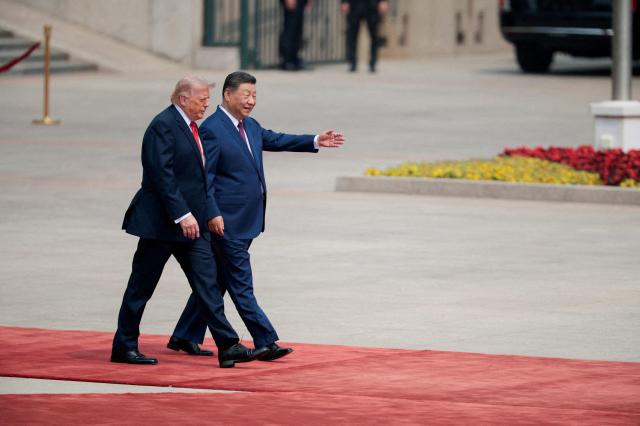
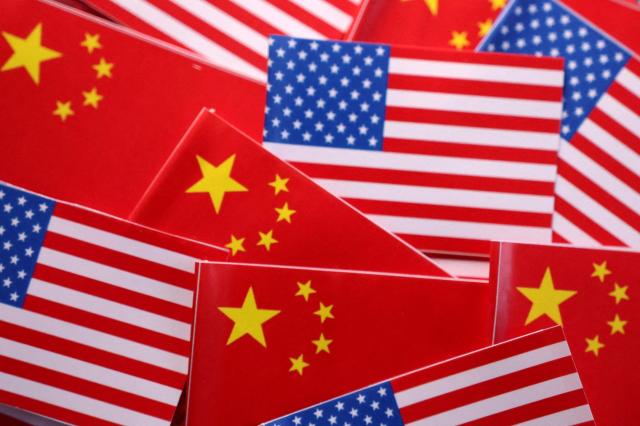
Yet the true significance of this summit lay far beyond the choreography of diplomacy. What unfolded in Beijing was, in effect, the formal opening act of a new era of geopolitical rivalry centered on artificial intelligence, semiconductors, energy, manufacturing, supply chains, data and digital platforms.
If the Cold War between the United States and the Soviet Union was defined by nuclear weapons, the emerging struggle between Washington and Beijing is increasingly being defined by AI and semiconductor supremacy.
Perhaps the most symbolic moment of the summit came before the talks even began. President Trump reportedly made a stop en route to China in order to bring Nvidia chief executive Jensen Huang aboard Air Force One. This was not a mere anecdote.
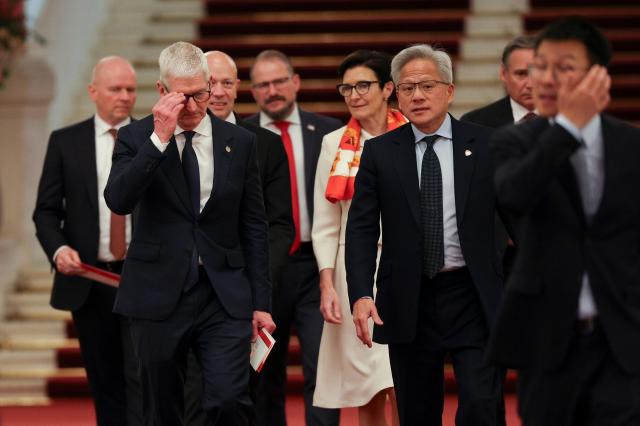
It revealed where Washington’s strategic priorities now truly lie. Elon Musk, Tim Cook and other leading figures from the American technology industry were already part of the economic delegation. Yet the last-minute inclusion of the world’s most influential AI chip executive underscored a deeper reality: advanced semiconductors are no longer simply commercial products. They have become instruments of national strategy.
The global AI race is now fundamentally about who can secure the largest supply of AI accelerators, build the most powerful AI data centers and process the greatest volume of data at scale. Artificial intelligence is no longer a narrow software industry. It is rapidly becoming the operating infrastructure of modern civilization itself, linking together energy systems, semiconductor manufacturing, cooling technologies, cloud networks and industrial automation.
During the summit, Xi Jinping invoked the notion of the “Thucydides Trap,” warning that the world had reached a historic crossroads. This was not a casual historical reference. It was a carefully calibrated strategic signal directed at Washington. Beijing was effectively cautioning that continued military, economic and technological pressure against China could push both powers into a destabilizing cycle of confrontation.
At the heart of China’s thinking lies what may be described as the framework of the “Three Ts”: Taiwan, Trade and Technology.
On Taiwan, Beijing made unmistakably clear that it would not retreat from what it views as a core sovereignty issue. Any significant escalation of American military involvement in the Taiwan Strait, from China’s perspective, risks becoming the direct trigger for a major geopolitical collision.
On trade, China no longer sees itself merely as the world’s low-cost factory. In sectors such as electric vehicles, batteries, solar energy, drones, telecommunications equipment and portions of the AI ecosystem, Chinese firms have already become globally competitive. Washington’s attempt to restrict China’s rise increasingly carries the unintended consequence of limiting American companies’ own access to one of the world’s largest markets.
Technology, however, was the true center of gravity of the summit.
For years, the United States has attempted to slow China’s AI advancement through export controls on semiconductor manufacturing equipment and advanced AI chips. Yet China’s drive toward technological self-reliance has accelerated far more rapidly than many in Washington anticipated.
Huawei stands as the clearest example. Once viewed primarily as the target of American sanctions, the company has instead become a symbol of China’s determination to build an indigenous technology ecosystem. Through its Ascend AI processors and CloudMatrix architecture, Huawei is attempting to construct a distinctly Chinese AI infrastructure.
To be sure, Nvidia’s H200 and next-generation Blackwell systems still maintain substantial advantages in raw chip performance, memory bandwidth, power efficiency and software ecosystems. But China has adopted a different strategic philosophy. Rather than competing chip by chip, Beijing is increasingly focused on scaling systems by clustering hundreds or thousands of processors together to maximize overall computational throughput.
In simple terms, China’s strategy prioritizes scale over elegance. Even at the cost of lower efficiency and higher power consumption, Beijing is willing to deploy enormous state-backed capital to achieve strategic autonomy.
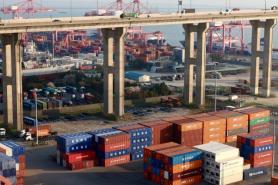
More importantly, China’s ambitions extend far beyond consumer-facing AI chatbots. Beijing aims to integrate AI across the entirety of industrial civilization itself — what Chinese strategists increasingly describe as manufacturing AX, or AI transformation. From automobile production and robotics to logistics, ports, smart grids, industrial automation and defense systems, AI is being embedded into the physical economy.
This is not merely industrial upgrading. It is an attempt to redefine the architecture of modern industry.
Equally significant is the issue of cost. Chinese AI firms are rapidly driving down the cost of AI inference and token generation through a combination of state subsidies, inexpensive infrastructure, abundant data and aggressive optimization. This dramatically lowers the barrier for Chinese startups and manufacturers to deploy AI at scale.
The United States, of course, remains the world’s dominant AI superpower. Nvidia, OpenAI, Google, Microsoft, Amazon and Meta continue to lead the world in advanced AI models, semiconductor design, cloud infrastructure and global digital platforms.
Yet Washington faces a growing strategic dilemma.
China remains too large a market for American technology firms to ignore. The more aggressively the United States tightens export restrictions, the more rapidly China accelerates domestic substitution. Over time, this could produce a scenario in which American firms find themselves structurally excluded from the Chinese market altogether.
That, ultimately, may be the scenario Jensen Huang fears most. Today, Nvidia remains indispensable. But if China succeeds in building a sufficiently mature domestic AI ecosystem, future generations of Chinese developers and enterprises may no longer depend on American chips at all. In this sense, American sanctions risk unintentionally strengthening the very technological self-sufficiency they were designed to prevent.
The world is therefore moving steadily toward technological decoupling.
In the age of globalization, American technology, Korean memory chips, Taiwanese foundries and Chinese assembly lines formed a deeply integrated supply chain. Today, however, that architecture is beginning to fracture into competing geopolitical blocs centered around Washington and Beijing.
History offers repeated warnings about the dangers of excessive concentration of power. As the Tao Te Ching observed, “What is overly strong cannot endure forever.” Sun Tzu likewise argued that “the supreme art of war is to subdue the enemy without fighting.” The ultimate outcome of the U.S.-China technology rivalry may therefore depend less on outright victory than on whether the two powers can avoid allowing competition to harden into irreversible fragmentation.
For South Korea, this emerging order presents profound challenges.
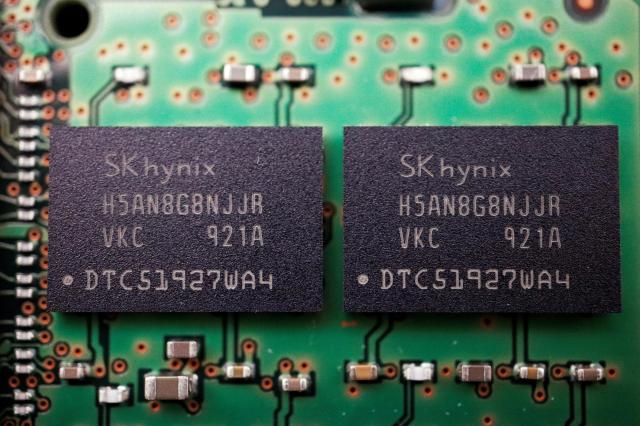
South Korea remains one of the world’s leading semiconductor powers. Samsung Electronics and SK hynix dominate much of the global HBM market, a critical foundation of the AI era. Yet Korea does not possess America’s platform dominance or China’s vast domestic scale and state-driven industrial system.
Recent rhetoric in Seoul about becoming an “AI G3” power reflects understandable national ambition. But realistically speaking, overtaking the United States or China in overall AI dominance is extraordinarily difficult. America commands unmatched global capital and digital ecosystems, while China possesses enormous scale and centralized strategic mobilization capacity.
South Korea therefore requires a different strategy.
First, Korea must establish itself as a core AI infrastructure power. Its greatest strengths lie in memory semiconductors and advanced manufacturing. In the emerging era of inference AI, energy efficiency and memory optimization may become even more important than sheer GPU horsepower. Korea should aim to lead the next generation of memory architectures, advanced packaging and low-power AI semiconductor systems.
Second, Korea should position manufacturing AX as a national strategic priority. The country already possesses world-class industrial capabilities across automobiles, shipbuilding, steel, semiconductors, batteries and biotechnology. In integrating AI into manufacturing, Korea may in fact enjoy advantages that even the United States lacks.
Third, Seoul must maintain strategic balance between Washington and Beijing. Korea’s economy remains deeply connected to both American technology and Chinese markets. A rigid alignment with either side risks destabilizing the foundations of Korean industry itself.
Fourth, Korea’s sovereign AI strategy should focus less on competing directly in giant foundation models and more on sector-specific vertical AI applications in manufacturing, medicine, finance, defense, robotics and logistics.
The Beijing summit may have appeared subdued on the surface. But beneath the diplomatic calm, a vast technological cold war is already taking shape. The United States seeks to contain China’s rise. China seeks to overcome dependence through self-reliance. And caught between them, South Korea is entering one of the most consequential strategic periods in its modern history.
The Thucydides Trap is no longer defined by battleships and missiles alone. It is now being shaped by GPUs and HBM memory, AI data centers and electrical grids, large language models and industrial AI transformation.
The coming decade will not simply determine which nation develops better technology. It may determine which country defines the operating standards of the next industrial civilization itself.
South Korea now faces a defining question: will it remain merely a supplier of critical components, or can it emerge as a central architect of the AI-powered manufacturing age?
The answer to that question may shape not only Korea’s future, but the future balance of power across Asia and the world.
*The author is a senior columnist of AJP.
Copyright ⓒ Aju Press All rights reserved.