
Journalist

Lee Hugh
=
-
 Hanmi Pharmaceutical CEO Hwang Sang-yeon makes first official visits to plants, R&D center Hanmi Pharmaceutical said Thursday that its new CEO, Hwang Sang-yeon, carried out his first official schedule by visiting the company’s production plants in Paltan and Pyeongtaek, Gyeonggi Province, and its research and development center in Dongtan. Hwang on Tuesday visited the Paltan Smart Plant, the Pyeongtaek Bio Plant and the Dongtan R&D Center in sequence, inspecting production lines and listening to employees at research sites. He arrived at the Paltan site at about 7:30 a.m., greeting employees as they came to work. He then checked the information and communications technology-based drug manufacturing process and the radio-frequency identification logistics and delivery system. At the Pyeongtaek Bio Plant, he toured manufacturing facilities with capacity of up to 12,500 liters and a production line that makes more than 24 million prefilled syringes a year. At the Dongtan R&D Center, he held a meeting with researchers. Hanmi said Hwang also attended an event on the evening of March 31, his first day in office, for outstanding employees from Beijing Hanmi Pharmaceutical. After completing his first official schedule, Hwang emphasized to employees his commitment to continuing R&D and quality management based on the late founder and former chairman Lim Seong-gi’s management principles of “respect for humanity” and “value creation.” “As CEO of Hanmi Pharmaceutical, I will focus on management grounded in law and common sense, and I will do my utmost to ensure we can establish our standing as a global Hanmi,” Hwang said. He pledged “open management centered on the workplace and employees,” and “organic, active discussions among the group’s holding company and affiliates” to pursue advanced management practices.* This article has been translated by AI. 2026-04-02 15:52:09
 -
 Violinist Pinchas Zukerman Returns to Korea for Beethoven Concert With KG Philharmonic World-renowned violinist Pinchas Zukerman will return to the Korean stage for the first time in about eight years. KG Philharmonic Orchestra said it will present “KG Philharmonic Orchestra with Pinchas Zukerman — Masterpiece Series: Beethoven” on May 31 at the Seoul Arts Center Concert Hall. Ticket sales begin April 2 with a presale for paid Seoul Arts Center members, followed by general sales on April 3. The one-day performance pairs Zukerman with the KG Philharmonic (KG Philharmonic), a young orchestra that has been drawing attention as a rising ensemble. The concert launches KG Philharmonic’s first Masterpiece Series and features major works by Ludwig van Beethoven. In the first half, Zukerman will perform Beethoven’s only violin concerto, the Violin Concerto in D major, Op. 61. In the second half, the orchestra will play Symphony No. 7 in A major, Op. 92. KG Philharmonic was founded in 2025 by the Kwak Jaesun Cultural Foundation, based on KG Group’s sustainable management philosophy, and is made up of young musicians who graduated from leading music universities in Korea and abroad. Zukerman said of the collaboration, “Playing with an orchestra made up of young musicians is always my pleasure.” A foundation official said, “The depth of a master and the drive of a young orchestra will come together to deliver an unforgettable experience for audiences.” Tickets range from 40,000 won to 150,000 won and are available through the Seoul Arts Center website and NOL Interpark. The program is expected to draw interest from newcomers to classical music as well as longtime listeners. 2026-04-02 15:39:19
 -
 Korean Banks Shift From Household Loans to Corporate Lending as Rules Tighten Banks are rapidly reshaping lending strategies toward corporate credit and away from household loans as tighter financial rules make it harder to expand consumer lending. With regulators planning to further rein in this year’s overall growth in household lending, the shift into business finance is expected to accelerate. As of the end of last month, outstanding corporate loans at the five major banks — KB Kookmin, Shinhan, Hana, Woori and NH NongHyup — totaled 859.7737 trillion won, up 5.4449 trillion won from 854.3288 trillion won a month earlier, the financial sector said Wednesday. Loans to large companies rose 3.4270 trillion won to 179.0119 trillion won by the end of March. Small- and midsize-business lending increased 2.0179 trillion won to 680.7618 trillion won. Household lending moved the other way. Outstanding household loans, including mortgages and unsecured credit, fell about 136.4 billion won from the prior month to 765.7290 trillion won. The decline was attributed to the government’s push for a “productive finance” shift that prioritizes corporate lending. Industry officials largely expect business lending to keep growing after regulators set this year’s household loan growth target at 1.5% and began separate oversight of mortgage lending, raising the bar for new consumer loans. Banks must manage annual lending volumes within the target, and violations bring strong penalties. Companies, meanwhile, are leaning more on bank loans as the bond market tightens. The Korea Financial Investment Association said the three-year government bond yield, a benchmark for corporate bonds, climbed from 2.953% at the end of last year to 3.370% as of April 1. Banks have responded by offering preferential rates and setting up dedicated teams to attract corporate clients. KB Kookmin Bank recently decided to expand its productive-finance preferential-rate program to 6 trillion won from 3 trillion won. Combined with its existing 4 trillion won branch-level preferential-rate program, the bank would provide a total of 10 trillion won in support. Shinhan Financial Group said it launched a “Seongguan Team” to strengthen execution of productive finance through an industry value chain-based sales system. Woori Financial Group recently formalized plans to create a 500 billion won “Woori Regional Development Infrastructure Fund” to expand investment in renewable energy and national strategic infrastructure. Hana Financial Group raised its productive-finance supply target to 17.8 trillion won earlier this year and has also moved to create a 500 billion won infrastructure fund. A financial industry official said household lending will be difficult to expand as before now that the government has announced tighter rules, while deposits are also harder to attract as their appeal fades. “From a bank’s perspective, there is little choice but to turn to corporate lending, so this trend is likely to continue for the time being,” the official said. 2026-04-02 15:27:00
 -
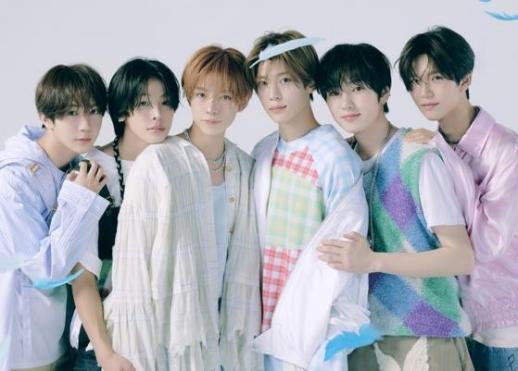 NCT WISH to release first studio album 'Ode to Love' on April 20 SEOUL, April 02 (AJP) -K-pop boy band "NCT WISH" will release its first studio album "Ode to Love" on April 20, marking a key milestone for the rookie act as it continues to build its presence in the global market, its agency SM Entertainment said Thursday. NCT WISH, a six-member boy group consisting of Sion, Riku, Yushi, Jaehee, Ryo and Sakuya, debuted in 2023 under SM Entertainment. The group has been recognized for its refreshing, youth-driven concept and performance-focused identity, with tracks such as "Wish," "Songbird," and "Steady." The group kicked off its comeback rollout by unveiling a schedule video titled “WISH Upon A Dream” at midnight through its official social media channels. The video features illustrated visuals reflecting the group’s signature kitsch and playful aesthetic, alongside a timeline of upcoming promotional content. According to the agency, teaser materials will begin rolling out on April 6, including concept images, a promotional website titled "Ode Diary," a music video for the track "Sticky," and teaser content for the title track, "Ode to Love." The 10-track album is set for release at 6 p.m. (0900 GMT) on April 20 across major music platforms, with a physical version also scheduled for the same day. Pre-orders are currently available through online and offline music retailers. 2026-04-02 15:20:55
 -
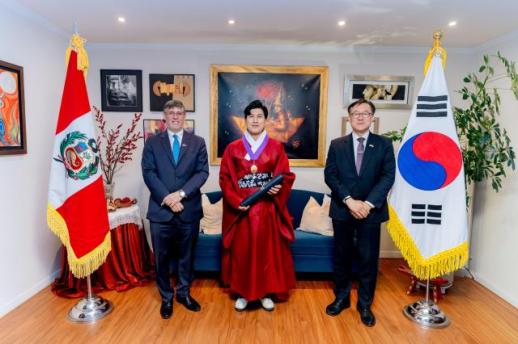 Peru honors Samuel Chung for contributions to Korea–Peru ties SEOUL, April 02 (AJP) - The Peruvian government has awarded Samuel Chung, president of the Korea Culture Association, the Order of Merit at the Comendador level in recognition of his contributions to strengthening ties between South Korea and Peru. The decoration was presented Wednesday by Peruvian Ambassador to Korea H.E. Paul Duclos at his residence in Seoul, on behalf of the president of Peru. The award coincided with the inaugural “Korea–Peru Friendship Day,” established by the Peruvian Congress in 2025 to commemorate diplomatic relations between the two countries, first forged on April 1, 1963. Chung has long been engaged in promoting cultural exchanges between Korea and Peru, working closely with the Peruvian Embassy in Seoul on a range of bilateral programs. His activities have included events linked to the 2024 APEC summit in Peru and celebrations marking the 60th anniversary of diplomatic ties, including a reception for the Peruvian naval training ship B.A.P. Unión. Ambassador Duclos praised Chung’s sustained efforts, saying he has “served as a bridge between the two countries over many years,” helping to boost interest in Korean culture among younger generations in Peru. Choi Joon-ho, director-general for Latin American affairs at South Korea’s foreign ministry, also congratulated Chung, expressing hope that bilateral cooperation would continue to expand. “This honor does not belong to me alone, but to everyone who has worked to promote cultural diplomacy between Korea and Peru,” Chung said. “I will continue to support exchanges that deepen mutual understanding.” Established in 1950, the Order of Merit is awarded to individuals — civilian or military, domestic or foreign — who have made distinguished contributions to the nation or demonstrated excellence in fields such as the arts, science, industry and commerce. 2026-04-02 15:20:47
 -
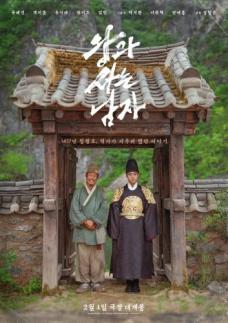 IBK Bank Eyes Potential 400% Return as 'King and the Man Who Lives With Him' Tops 15 Million Viewers As the film 'King and the Man Who Lives With Him' ("Wangsanim") passed 15 million moviegoers, attention has turned to the investment results of IBK Industrial Bank of Korea, one of its main backers. Industry watchers are cautiously raising the possibility that its return could surpass the current No. 1, 'Extreme Job.' According to the Korean Film Council’s integrated box office system, Wangsanim had drawn a cumulative 15.78 million viewers as of April 1. At the current pace, it is expected to top 16 million after the weekend. Cumulative revenue was tallied at 152.2 billion won. With a net production cost of 10.5 billion won and a break-even point of about 2.6 million admissions including marketing, the film recouped its investment early in its run, and most additional revenue is being booked as profit. With the film posting standout box-office results, investors’ profit expectations have also risen. IBK invested 1 billion won in the project, and the industry estimates the final rate of return could be around 400%. IBK’s previous best performer was 'Extreme Job.' The bank invested 790 million won and posted a 337% return. The film’s revenue was 15.5 times its total production cost, the highest ratio on record for a Korean film. Wangsanim’s total production cost has not been finalized, but the industry puts it at about 13 billion won. On that basis, revenue would be about 11.7 times production cost. The film is still in theaters, and additional income remains from overseas sales and OTT rights, which could lift the final return. For Korean films, theater revenue typically accounts for 60% to 70%, while exports and ancillary rights distribution make up 30% to 40%. That is why expectations are growing that Wangsanim could overtake 'Extreme Job' as the top-returning film. As IBK-backed films continue to succeed, the bank’s investment approach is also drawing renewed attention. The bank is known for closely reviewing production structure and risk factors rather than relying only on budget size or star casting. It is reported to consider whether small and midsize firms participate in production, whether the film contains political or religious elements, and whether the director or actors have a history of controversy. In the final adjustment stage, IBK applies unusual criteria, including a 10% deduction if the director is 60 or older, a 10% deduction if the director has had three consecutive hits, and a 10% addition if the director’s previous film failed to break even. In that sense, director Jang Hang-jun’s prior film 'Rebound' failing to reach break-even is described as having helped lead to IBK’s investment. Based on these standards, IBK has directly or indirectly invested in 13 of the 16 Korean films that have surpassed 10 million admissions, including 'The Admiral: Roaring Currents,' 'Ode to My Father' and 'Along With the Gods.' The average return on the bank’s investments in those 10-million-viewer films stands at 172%. 2026-04-02 15:09:00
 -
 Who Is Park Seo-hwi? Former Girl Group Member and Announcer Shares Shamanism Story Park Seo-hwi has drawn attention for an unconventional resume that spans a girl group, broadcast work and, most recently, shamanism. On April 1, MBN’s official channel posted a teaser titled, “Announcer Park Seo-hwi, formerly of a girl group, on why she underwent a spirit-receiving ritual for her family.” In the video, Park said she repeatedly dreamed that members of her family were dying. She said that when she went to get a fortune reading, the first words she heard were, “You’re full of spirits, aren’t you?” Park said she struggled with the decision. “What if I don’t receive it?” she said, referring to the ritual. “My family is everything to me. I’ve lived for my family.” She added, “I want to live my life as I used to, working in broadcasting. But I have to go, so I’m taking this path,” describing her feelings about entering a shaman’s life. Park worked in 2013 as a member of the girl group LPG under the stage name Ayul. In 2015, she worked as a reporter for SPOTV Games and took on drama appearances and hosting roles. In 2016, she appeared on tvN’s “Society Game” Season 1 under the stage name Park Ha-el. The report said Park can speak five languages, citing her experience living in places including the United States and France, and that she gained popularity as a SPOTV announcer. Her account of why she became a shaman will be aired on “Unusual World Exclusive” at 9:10 p.m. on April 2. 2026-04-02 15:06:23
 -
 ANALYSIS: Korea inflation enters war-driven upcycle SEOUL, April 02 (AJP) - South Korea’s inflation is beginning to turn upward, but March’s data likely understates the scale of price pressure building beneath the surface as the Middle East war feeds through oil, exchange rates and expectations. Consumer prices rose 2.2 percent in March from a year earlier, accelerating from 2.0 percent in the previous two months, according to data released Thursday. On the surface, the increase appears modest — still within the Bank of Korea’s comfort range. But the composition tells a different story. Energy has re-emerged as the dominant driver, now compounded by a structurally weakening won, and the pressure is only just starting. The Korean currency has extended its slide from last year, losing an additional 6 percent amid capital outflows. The dollar is hovering above 1,520 won — its highest level since March 2009 during the global financial crisis — amplifying imported price pressures. Petroleum product prices surged 9.9 percent, contributing 0.39 percentage point to headline inflation. Diesel jumped 17 percent and gasoline 8 percent, marking the sharpest energy-driven impulse since the early phase of the Ukraine war. Without fuel price caps and tax measures, the headline figure would have printed significantly higher. March captures only the initial shock. The war entered its first full month, but the key macro channels — oil, the dollar and the exchange rate — have yet to fully transmit into domestic prices. That pass-through is now beginning. U.S. President Donald Trump’s prime-time address on Wednesday sharpened that trajectory. While projecting the war could end within “two to three weeks,” he simultaneously reframed the Strait of Hormuz as a responsibility for energy -dependent countries and openly promoted U.S. oil as the alternative. Markets read through the optimism. Oil prices firmed, the dollar strengthened and the won weakened — a combination that mechanically raises Korea’s import costs. For an economy that imports the bulk of its energy, this is the classic setup for imported inflation. President Lee Jae Myung on Thursday called for “emergency measures,” urging bipartisan support to fast-track a 26.2 trillion won supplementary budget framed as a wartime response. But fiscal expansion at a time of rising price pressure risks offsetting monetary tightening and entrenching inflation expectations. The bond market is already adjusting. The 10-year government bond yield, after briefly easing on expectations of index inflows tied to Korea’s inclusion in the World Government Bond Index (WGBI), has resumed its climb, reflecting rising inflation and supply concerns. The government’s supply-side response remains tactical. Officials say roughly 50 million barrels of alternative crude have been secured for April, compared with a typical monthly intake of 80 million barrels. The shortfall is being managed through demand restraint, lower refinery utilization and strategic stockpile swaps. This may stabilize flows. It does not stabilize prices. What matters for inflation is not physical availability, but the marginal cost of replacement supply — and that cost is rising structurally. Even in a best-case scenario, the Korea Institute for International Economic Policy estimates oil will settle around $90 per barrel, 43 percent above prewar levels, as damage to energy infrastructure delays normalization. A prolonged disruption of the Strait of Hormuz could push prices to $117 as global supply falls by around 10 percent. In a broader escalation, prices could reach $174 — a level consistent with a full-scale external shock. The transmission mechanism is already visible. Higher oil prices feed into producer prices, which pass through with a lag into transportation, food and services. Authorities have warned that restaurant and processed food prices will reflect the shock in the coming months, particularly as the weaker won amplifies import costs. History suggests the first-round impact is only the beginning. KIEP estimates supply-related oil shocks lift inflation by about 0.12 percentage point immediately, with larger cumulative effects as second-round pressures take hold. Policy buffers are limited. Administrative controls can delay adjustments but cannot suppress them indefinitely without distortion. Fiscal measures can cushion households but erode policy space. Monetary policy faces a dilemma: tightening into an external supply shock risks further weakening domestic demand. The Bank of Korea is widely expected to hold the base rate at 2.5 percent at its April 10 meeting — the final one under Governor Rhee Chang-yong — stretching a near year-long pause, with incoming governor Shin Hyun-song set to inherit dwindling policy firepower to rein in dollar demand and inflationary pressures. 2026-04-02 15:04:21
 -
 Han Kang’s ‘I Do Not Bid Farewell’ Draws New Attention After U.S. Critics Award Han Kang’s novel I Do Not Bid Farewell is drawing renewed attention after news it won the National Book Critics Circle Award. Kyobo Book Centre said Thursday that the title ranked No. 12 on its overall bestseller list for the fourth week of March. An analysis of buyers from March 27 to April 1, after the award news broke, showed the largest shares came from readers in their 40s (27.3%) and 50s (24.7%). Purchases by men in their 50s (10.7%) and 60s (10.4%) stood out. A Kyobo official said the award appears to have sparked interest among middle-aged male readers. Online bookseller Yes24 also reported a sharp rise. After the award announcement on March 27, the book climbed to No. 7 overall. Sales over the following five days (March 27-31) rose 284.6% from the previous five-day period, with buyers in their 50s making up the largest share at 35.6%. Overall No. 1 went to Project Hail Mary, which topped both Kyobo and Yes24 as its film release boosted demand. Sales have risen for two straight weeks since the movie opened on March 18. At Yes24, the same author’s space-themed novels Artemis and The Martian also gained, up 45.8% and 31.1% from the previous week, respectively. Yoo Si-min’s autobiography, I Live Because There Is Love, ranked No. 2 overall. * This article has been translated by AI. 2026-04-02 15:00:13
 -
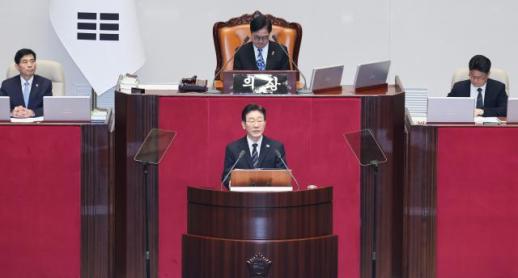 South Korea seeks emergency funds as war in Middle East threatens economy SEOUL, April 02 (AJP) - South Korea's President Lee Jae Myung called for the immediate passage of a massive supplementary budget on Thursday, characterizing the current economic climate as a wartime state. Addressing the National Assembly, the president argued that the 34-day conflict in the Middle East necessitated a total mobilization of government resources. During his speech at the National Assembly, Lee called for a 26.2 trillion-won ($17.2 billion) supplementary budget, warning that any delay in fiscal intervention would cause economic damage to grow exponentially. The president urged lawmakers not to miss the golden time for recovery, emphasizing that taxpayer money must be deployed at the most critical juncture to protect the people's livelihoods. The escalating war in Iran has cornered South Korea, forcing Seoul into a defensive crouch as global energy supply chains fracture. South Korea remains precariously dependent on the Middle East for more than 70 percent of its crude oil imports. This reliance makes the domestic industrial base uniquely vulnerable to disruptions in the Strait of Hormuz, which has now become a no-trespassing zone for cargo and oil carriers. According to data from the Korea Energy Economics Institute, any prolonged instability in the Persian Gulf creates a direct threat to the price of daily essentials. With the conflict showing no signs of abatement, the administration has moved to prioritize energy sovereignty over standard fiscal restraint. This crisis interrupts a period of record-breaking growth for the South Korean industry. The KOSPI index recently breached the 5,000-point threshold on the back of strong semiconductor and shipbuilding exports. However, a sudden lack of raw materials now threatens to stifle that momentum and extinguish the hard-won sparks of national growth. Shortages of naphtha and urea have already begun to impact the production of plastics and fertilizers. This creates a ripple effect touching everything from heavy manufacturing to local agriculture. The president noted that these shortages represent an unexpected, complex crisis that requires an immediate and coordinated response. Seoul has responded by transitioning the entire government apparatus into an emergency economic response system. This includes the implementation of a maximum oil price cap for the first time in 29 years. The move is designed to shield consumers from the surging costs of gasoline and diesel. To mitigate the loss of Iranian supply, the administration has secured 24 million barrels of crude oil through a strategic partnership with the United Arab Emirates. These multi-faceted policies, including financial support for affected businesses, are part of a proactive strategy to guard against the worst-case scenario. "In a state of emergency, literally extraordinary measures are needed," Lee said, adding: "Our government is putting all its effort into overcoming the current crisis with a solemn perception that the livelihood economy is in a wartime situation." The 26.2 trillion won budget is notable for being a debt-free proposal. The government plans to utilize 25.2 trillion won in excess tax revenue—largely generated by the recent boom in the stock and semiconductor markets—alongside 1 trillion won from existing funds. The National Assembly is scheduled to begin its review of the supplementary budget proposal immediately following the presidential address. 2026-04-02 14:38:45