
Journalist

Lee Hugh
=
-
 Korean Banks’ BIS Capital Ratios Edge Down on Bigger Dividends, Weaker Won At the end of last year, South Korean banks’ capital ratios under the Bank for International Settlements framework slipped slightly from the previous quarter, reflecting larger dividends tied to expanded shareholder returns and the impact of a weaker currency. The Financial Supervisory Service said on Monday that banks’ total capital ratio stood at 15.83% at the end of 2025, down 0.09 percentage point from the end of the previous quarter. The common equity Tier 1 ratio was 13.51% and the Tier 1 capital ratio was 14.80%, down 0.12 percentage point and 0.08 percentage point, respectively. The leverage ratio was 6.76%, down 0.07 percentage point. BIS capital ratios measure capital relative to risk-weighted assets and are a key gauge of banks’ financial soundness. The FSS said net profit remained solid, but year-end dividends tied to expanded shareholder returns reduced common equity. It added that rising exchange rates increased risk-weighted assets for foreign-currency loan portfolios. Regulators require banks to keep the common equity Tier 1 ratio above 8.0%, the Tier 1 ratio above 9.5% and the total capital ratio above 11.5%. All domestic banks exceeded those thresholds. By bank, KB, Woori, Citi, SC, the Export-Import Bank of Korea, Suhyup, Kakao Bank and Toss Bank each posted total capital ratios above 16.0%, which the FSS described as very stable. BNK remained below 14%, a relatively low level. Among the five major financial holding groups, total capital ratios were KB at 16.16%, Woori at 16.13%, Shinhan at 15.92%, NongHyup at 15.63% and Hana at 15.61%. Common equity Tier 1 ratios were above 14% at Citi, SC, the Export-Import Bank of Korea, Suhyup, Kakao Bank and Toss Bank. KB, Hana, Shinhan and Korea Development Bank were above 13%, indicating generally sound levels. Thirteen banks saw their common equity Tier 1 ratios fall from the previous quarter, including Citi (-2.67 percentage points), SC (-1.62), Kakao Bank (-0.70), Korea Development Bank (-0.61) and K Bank (-0.48). Four banks posted increases: Suhyup (3.98), the Export-Import Bank of Korea (0.66), Hana (0.05) and iM (0.03). An FSS official said banks should prepare for the possibility of larger credit losses and weaker capital ratios amid heightened geopolitical risks, including the situation in the Middle East, as well as high oil prices and elevated exchange rates. The official said the watchdog will strengthen monitoring of capital adequacy and continue to encourage banks to bolster loss-absorbing capacity so they can maintain soundness while carrying out plans for “productive and inclusive finance.”* This article has been translated by AI. 2026-03-31 09:00:00
 -
 Korea to Provide 69 Billion Won in New Loan Guarantees for K-Content Firms Korea Creative Content Agency and the Korea Credit Guarantee Fund said they signed separate financial support agreements on the 30th with NH Bank and Hana Bank to ease funding strains and support growth for K-content companies. The agreements will provide a total of 69 billion won in new guarantees. Under the deals, NH Bank will make a special contribution of 2 billion won. Hana Bank will contribute 700 million won and separately provide 300 million won to support guarantee fees. Based on the banks’ contributions, the Korea Credit Guarantee Fund plans to supply agreement-backed guarantees totaling 69 billion won, or 20 times the contributed amount, to content companies. That includes 40 billion won through NH Bank and 29 billion won through Hana Bank. Eligible firms include those recommended by KOCCA for content planning, production and commercialization, as well as companies using intellectual property. Selected companies will receive preferential terms aimed at lowering financing costs. For companies using the program, the fund will apply a 100% guarantee ratio for the first three years and cut guarantee fees by 0.5 percentage points. NH Bank and Hana Bank also plan to offer additional preferential interest rates, based on internal standards, tied to transaction performance for borrowers using the guarantees. KOCCA said it will further strengthen its content finance support system starting with this cooperation. It said that in early April, NH Bank will also join a specialized guarantee interest-subsidy program, completing a content finance support network covering all six major domestic banks. KOCCA has operated a Content Value Assessment Center since 2016 to help content companies raise funds, including through content valuation and pitching platforms in and outside South Korea. More information is available on KOCCA’s website.* This article has been translated by AI. 2026-03-31 08:57:17
 -
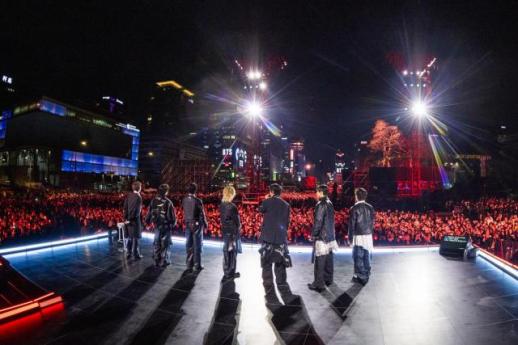 BTS' 'Swim' hits No. 1 on Billboard's top 100 song chart SEOUL, March 31 (AJP) - BTS has topped the Billboard Hot 100, the weekly top 100 song chart compiled by the prominent American music and entertainment magazine, on Monday (local time) with the band's new song "Swim," released on March 20. While BTS reached its seventh No. 1 on Billboard's most popular song chart, the seven-member band also dominated other global rankings across major Billboard charts. According to Billboard, "Swim" debuted at No. 1 on the Hot 100, driven by a combined performance of streaming, radio airplay and digital sales in the United States. The latest result places BTS among the top five groups with the most Hot 100 No. 1 hits in history, trailing legendary bands such as The Beatles, The Supremes, Bee Gees and The Rolling Stones. The track’s debut extends BTS’ Hot 100 leadership streak that began with “Dynamite” in 2020, followed by successive chart-toppers including "Savage Love (Laxed – Siren Beat)," "Life Goes On," "Butter," "Permission to Dance" and "My Universe." The group’s latest achievement comes in tandem with strong album performance. The band's new album "Arirang" entered at No. 1 on the Billboard 200, the weekly top 200 albums chart, completing a simultaneous sweep of Billboard’s two primary charts. This achievement is widely regarded as a key indicator of both consumption scale and market impact in the U.S. music industry. Beyond the U.S., BTS delivered an unprecedented showing on global charts. "Swim" debuted at No. 1 on both the Billboard Global 200, the weekly top 200 global song chart, and the Billboard Global Excl. U.S., the weekly popular song chart based on digital sales and streamings, becoming the group’s eighth leader on each ranking and extending its own record for the most No. 1 songs on the charts. Tracks from BTS' album "Arirang" occupied the entire top nine positions on the Global 200, matching the record set by American pop-singer Taylor Swift, while BTS became the first act to monopolize the top 10 and top 13 on the Global Excl. U.S. chart. The concentration of entries underscores the scale of coordinated global streaming and purchasing activity following the album’s release. "Swim" led the performance with 108.8 million streams and 221,000 units sold worldwide in the tracking week ending March 26, according to data compiled by Luminate. Eight additional tracks from the album followed in sequence on the Global 200, each surpassing 40 million streams, reflecting unusually high depth of consumption across the full album rather than a single-track concentration. The official Hot 100 chart is set for release Tuesday, with market attention focused on how many additional tracks from “Arirang” will enter the ranking, potentially extending BTS’ multi-chart dominance further. 2026-03-31 08:55:07
 -
 National Institute of Korean Language releases six datasets to boost AI Korean understanding The National Institute of Korean Language said on the 31st it has released six language resources on “Everyone’s Corpus” that can be used for artificial intelligence development and language research. The newly released materials include four datasets: an “argumentative writing summary corpus” that summarizes newspaper editorials; a “collaborative dialogue summary corpus” that summarizes conversations; and separate evaluation corpora for each set of summaries. The institute also released two additional resources: a “context inference corpus,” which contains inference statements written based on context or common sense, and a “knowledge graph” that structures dialogue context. The institute said the resources can help AI better understand context embedded in Korean, produce summaries and make inferences grounded in common sense and Korean culture. Including the six released this time, the institute has made public 140 Korean-language resources for AI training to date. Anyone seeking to use the corpora for AI development and research or Korean-language studies can download them from the Everyone’s Corpus website. An institute official said it plans to release a total of 36 Korean language-and-culture knowledge resources this year to support development of AI specialized for Korean. * This article has been translated by AI. 2026-03-31 08:42:16
 -
 Korea's Feb factory output gain strongest in 6 yrs, record construction recovery *Updated with additional information and market response SEOUL, March 31 (AJP) -Before the sudden war in the Middle East, South Korea’s industrial front had shown a sanguine face, with manufacturing posting its strongest growth in nearly six years, facility investment surging to a more than decade high and construction activity hitting a record, data showed Tuesday. Mining and manufacturing output rose 5.4 percent from a month earlier, sharply reversing a 2.4 percent drop in January, as chip production surged 28.2 percent, according to the Ministry of Data and Statistics. It marked the strongest increase since a 6.6 percent gain in June 2020. Domestic demand, however, remained subdued. Retail sales were flat from the previous month, while services output edged up just 0.5 percent, highlighting still-weak private consumption. Overall industrial output, which includes services, rose 2.5 percent in February, rebounding from a 0.9 percent contraction in January. Investment was a key pillar of the rebound. Facility investment jumped 13.5 percent on-month, the fastest increase since November 2014, driven by strong demand in semiconductors and automobiles. Transport equipment, particularly autos, surged 40.4 percent, while machinery including electrical equipment rose 3.8 percent. The data provided little relief to the market since the upbeat numbers come before the war hit the economy heavily reliant on the Gulf Strait shipping route for energy and raw material imports for manufacturing from petrochemicals to chips. The main KOSPI lost 1.3 percent, while the dollar added 7.60 won to 1,525.10 won as of 11:00 a.m. The three-year government bond yields at 3.54 percent. Construction activity delivered an even stronger boost. Construction completed, measured in constant prices, soared 19.5 percent from the previous month — the largest increase since records began in July 1997 — rebounding sharply from a 7.8 percent fall in January. Both building construction and civil engineering expanded, rising 17.1 percent and 25.7 percent, respectively. Forward-looking indicators also pointed to sustained momentum. Construction orders rose 6.7 percent from a year earlier, extending gains to a fourth consecutive month, led by a 24.2 percent jump in building construction, including housing. Consumption indicators showed a mixed picture. While service output inched up 0.5 percent, the retail sales index was unchanged. Semi-durable goods such as clothing fell 5.4 percent and durable goods including communication devices and computers declined 1.5 percent, while non-durable goods such as food and beverages rose 2.6 percent. Broader indicators suggested improving economic conditions. The cyclical component of the coincident composite index rose 0.8 point, the biggest gain in more than 15 years, while the leading composite index, which signals future activity, increased by 0.6 point. Still, the data do not reflect the impact of the Middle East crisis that erupted on Feb. 28, casting uncertainty over the durability of the recovery. The output scorecard on first-month war impact will be released on April 30. 2026-03-31 08:18:21
 -
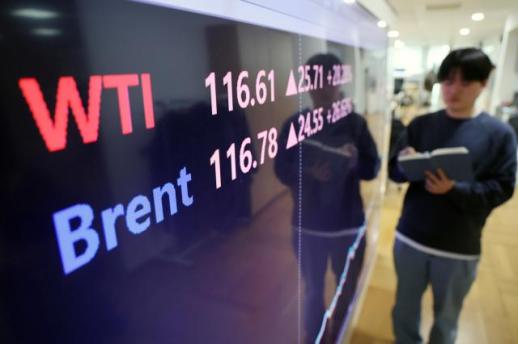 Korean banks' BIS ratio turn lower as weak won inflates FX assets SEOUL, March 31 (AJP) - South Korean banks’ capital buffers edged lower at the end of last year as the won’s sharp weakening inflated foreign-currency assets, underscoring growing pressure from exchange-rate-driven balance sheet expansion, data showed Tuesday. The common equity Tier 1 (CET1) ratio of domestic banks stood at 13.51 percent at end-2025, down 0.12 percentage point from the previous quarter, according to the Financial Supervisory Service. The decline came despite steady earnings, as a weaker won boosted the value of foreign-denominated loans and assets, increasing risk-weighted assets and diluting capital ratios. Other key capital metrics also slipped. The Tier 1 capital ratio fell 0.08 percentage point to 14.80 percent, while the total capital ratio dropped 0.09 percentage point to 15.83 percent. The leverage ratio edged down to 6.76 percent. The data highlights how currency-driven balance sheet effects — rather than credit deterioration — are emerging as a key variable for capital adequacy, particularly as Korean lenders maintain sizable foreign-currency exposure. Still, overall capital levels remained comfortably above regulatory thresholds, indicating that the banking sector retains solid loss-absorbing capacity. By bank, most major lenders maintained strong buffers, with several including KB, Woori, Citi and SC posting total capital ratios above 16 percent, reflecting ample resilience. However, the downward drift was broad-based. Thirteen banks saw their CET1 ratios decline from the previous quarter, while only a handful posted gains. Supervisors warned that risks could intensify as geopolitical tensions and a prolonged strong dollar environment lift both funding costs and credit risks. Authorities said they would step up monitoring of capital adequacy and encourage banks to bolster loss-absorbing buffers to navigate potential shocks from high oil prices and currency volatility. 2026-03-31 07:58:19
 -
 BTS’ ‘SWIM’ Debuts at No. 1 on Billboard Hot 100 as ‘ARIRANG’ Tops Billboard 200 BTS swept Billboard’s two main charts, with its fifth full-length album, ‘ARIRANG,’ reaching No. 1 on the Billboard 200 and its title track, ‘SWIM,’ debuting atop the Hot 100. Billboard said in a chart preview posted on its website on March 31 that ‘SWIM’ is No. 1 on the April 4-dated Hot 100. It is the group’s seventh Hot 100 leader, following ‘Dynamite,’ ‘Savage Love (Laxed - Siren Beat) (BTS Remix),’ ‘Life Goes On,’ ‘Butter,’ ‘Permission to Dance’ and ‘My Universe.’ Billboard said ‘SWIM’ is the 1,190th No. 1 song in Hot 100 history and the 89th to debut at No. 1. The outlet also said BTS ranks fifth among groups for the most Hot 100 No. 1 hits. The Beatles lead with 20, followed by the Supremes with 12, the Bee Gees with nine and the Rolling Stones with eight. Released on March 20, ‘SWIM’ logged 15.3 million streams, 25.8 million radio audience impressions and 154,000 in combined digital and physical single sales in tracking through March 26. The song entered Billboard’s Streaming Songs chart at No. 2, a new best for the group, and debuted at No. 18 on Radio Songs. It topped Digital Song Sales, becoming BTS’ 13th No. 1 on that chart. Billboard previously reported in a March 30 chart preview that ‘ARIRANG’ is No. 1 on the April 4-dated Billboard 200. The album debuted with 641,000 album units, the best weekly total for a group album since Billboard began tracking units in December 2014. Pure album sales were 532,000, and streaming equivalent album units totaled 95,000. The results give BTS another week leading both the Billboard 200 and Hot 100, after doing so in 2020 with ‘BE’ and ‘Life Goes On.’ With ‘ARIRANG,’ BTS has seven No. 1 albums on the Billboard 200, following ‘LOVE YOURSELF 轉 ‘Tear’,’ ‘LOVE YOURSELF 結 ‘Answer’,’ ‘MAP OF THE SOUL : PERSONA,’ ‘MAP OF THE SOUL : 7,’ ‘BE’ and ‘Proof.’ In a statement released through BigHit Music, BTS said it was “a great honor” to earn a Billboard No. 1 with an album released after “a long wait of three years and nine months.” The group thanked ARMY and “everyone who listened to our music and shared their feelings with us.” BTS said it worked to capture “universal emotions” that many people could relate to while preparing the new release, adding that it hoped ‘SWIM’ would offer “a small measure of courage and comfort” to listeners beyond borders. ‘ARIRANG’ is BTS’ fifth full-length album and was executive produced by HYBE Chairman Bang Si-hyuk. BigHit Music said the album reflects the group’s identity and shared emotions, while ‘SWIM’ sings of pressing forward without stopping amid life’s waves.* This article has been translated by AI. 2026-03-31 07:54:39
 -
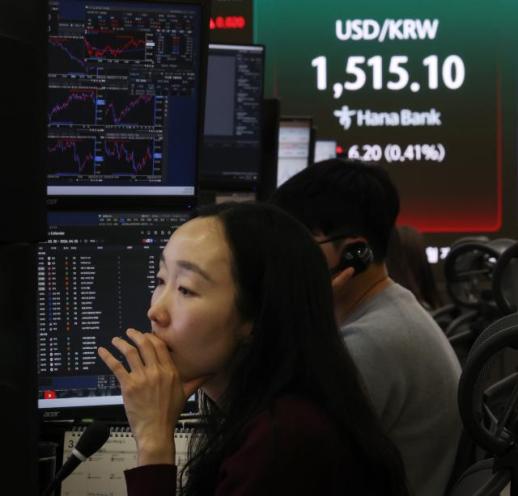 Korea's postwar securities issues rise modestly on frontload demand amid rising yields SEOUL, March 31 (AJP) -South Korea’s corporate direct financing rose in February, with stock and bond issuance climbing 8.5 percent from a month earlier, buoyed by a pre-war equity rally and a rush to secure funding ahead of further rate increases, data showed Tuesday. Total public offerings of stocks and corporate bonds reached 19.25 trillion won ($14.2 billion), up 1.5 trillion won from January, according to the Financial Supervisory Service. Equity financing led the increase, surging 215.6 percent on-month to 341.5 billion won, driven by a rebound in initial public offerings and rights issues. IPOs totaled three deals, with proceeds jumping 265.8 percent to 290.8 billion won, while rights offerings rose 76.7 percent to 50.7 billion won. Debt issuance remained robust, rising 7.2 percent to 18.9 trillion won. The increase was led by financial bonds, which jumped 37.6 percent, signaling a flurry of preemptive borrowing as issuers moved to lock in funding before yields climb further. By contrast, general corporate bonds and asset-backed securities declined 28.7 percent and 42.6 percent, respectively, pointing to a more selective risk appetite. Issuance was heavily skewed toward high-grade borrowers. Investment-grade bonds accounted for 65.6 percent of total issuance, while lower-rated bonds below BBB made up just 3.6 percent, underscoring a clear market bias toward safer credits. Refinancing dominated funding activity. About 76 percent of bond issuance was used to roll over existing debt, reflecting expectations that borrowing conditions will tighten further. Short-term funding markets showed mixed trends. Combined issuance of commercial paper and short-term bonds rose 3.1 percent to 159.6 trillion won. Commercial paper issuance fell 19.3 percent to 37.9 trillion won, while short-term bonds rose 12.9 percent to 121.7 trillion won, suggesting a shift toward more structured and flexible instruments. Outstanding corporate bonds stood at 748.4 trillion won at end-February, down 0.6 percent from the previous month, as net redemptions extended for a second straight month. The cautious funding stance is likely to harden further, with the Middle East conflict in March jolting markets and pushing yields back toward levels seen during the post-pandemic tightening cycle. 2026-03-31 07:47:07
 -
 BTS’ ‘SWIM’ Debuts at No. 1 on Billboard Hot 100, Marking Group’s Seventh Top Spot BTS has taken the top spot on Billboard’s main singles chart, the Hot 100, following its No. 1 showing on the Billboard 200 with its fifth album, “ARIRANG.” Billboard said in a chart preview article on March 30 (local time) that the album’s title track, “SWIM,” rose to No. 1 on the Hot 100, beating Ella Langley’s “Choosin’ Texas” and Olivia Dean’s “Man I Need,” among others. It is BTS’ seventh time at No. 1 on the Hot 100. The group first topped the chart in 2020 with “Dynamite,” the first K-pop song to reach No. 1. BTS later returned to the top with “Savage Love,” “Life Goes On,” “Butter,” “Permission to Dance” and “My Universe.” So far, the only Korean artists to reach No. 1 on the Hot 100 are BTS and members Jimin and Jungkook. In K-pop, another No. 1 came last year when “Golden,” from the original soundtrack of the Netflix animated series “K-pop Demon Hunters,” topped the Hot 100. 2026-03-31 06:03:17
 -
 Hana Bank Partners With Public Delivery App Meokkabi, Plans Card and Low-Rate Loans Hana Bank is entering the food delivery app market through a partnership with the public delivery app Meokkabi. According to the financial industry on the 30th, Hana Bank signed a strategic alliance with Meokkabi and agreed to pursue joint projects. Meokkabi promotes what it calls the industry’s lowest commission rate, about 1.5%. It charges no advertising, exposure or fixed fees. Some delivery apps charge brokerage commissions of about 9% to 10% and add advertising fees. Rather than operating its own delivery app like Shinhan Bank’s Ttaenggyeoyo, Hana Bank plans to expand market share by supporting Meokkabi. To boost usage, Hana Bank plans to launch a Meokkabi-branded Hana Card in the first half of the year. It will also promote and market Meokkabi through Hana Financial Group platforms such as Hana 1Q. As part of efforts to strengthen inclusive finance, Hana Bank will provide low-interest loans to Meokkabi merchants through contributions to the Incheon Credit Guarantee Foundation.* This article has been translated by AI. 2026-03-30 18:30:00