
Journalist

Lee Hugh
=
-
 Cliché or not, BTS "Arirang" rework delivers globally SEOUL, March 30 (AJP) - RM winces. When the first draft of “Body to Body” lands with a bold Arirang sample layered toward the end, the BTS leader isn’t convinced. It feels, he says, almost too obvious — like “mixing bread, pork cutlets and kimchi” into one plate, a blend leaning too heavily on sentiment. Jimin laughs it off. Strange as it sounds, he says, the mix “may taste very good.” J-Hope leans further in: if they’re going to borrow Arirang, why not go all the way? That tension — between subtlety and statement, between global polish and unmistakable roots — sat at the heart of BTS’ return, captured in a Netflix documentary released last Friday. The boys, now men after completing full military service, are shown grappling with a quieter anxiety: how they would be received after a nearly four-year hiatus. With ARIRANG, the K-pop juggernaut doesn’t just stage a comeback. It recalibrates. The idea of Arirang, Korea’s most enduring folk song, emerged during a creative bottleneck as the group camped in Los Angeles for two months, searching for direction. Its weight was immediate. One of the earliest known recordings dates back to 1896, when Korean students at Howard University etched the melody onto a wax cylinder. That moment resurfaces in the album’s animated teaser — those students now mirrored by a global audience listening to BTS sing in Korean more than a century later. Still, the debate lingered. Was it too nationalistic? Too deliberate? Hybe chairman Bang Si-hyuk pushed back. An act like BTS, he reminded them, comes once in decades — and there is no escaping identity. “You’re Korean,” he said, plainly. What emerges is less a nostalgic return than a layered reexamination. If “Body to Body” wears its Arirang sample openly, other tracks take a quieter route. In “Aliens,” RM invokes Kim Gu — the independence-era leader who envisioned Korea as a cultural power rather than a military one — not as a history lesson, but as a question. How would that vision read today? Even musically, tradition is reframed rather than reproduced. Elements of jungmori jangdan are woven into contemporary structures — not quoted, but translated. “Body to Body” itself operates on multiple levels. On the surface, it’s built for the stage — “I need the whole stadium to jump” — a call to collective movement. Beneath that, the imagery expands: bodies gathering, standing together, responding. References to “guns, knives and keyboards” blur physical conflict with digital confrontation, reflecting a world where connection — and tension — unfold both online and off. The song resists a fixed meaning, allowing contradictions to coexist. That duality shapes the album. At its center is the resonant toll of the Bell of King Seongdeok, dividing the record into two halves. The first leans outward — performance-driven, built for crowd response. The second turns inward, lingering in unresolved emotion. Tracks like “Body to Body,” “Hooligan” and “FYA” pulse with repetition and shared energy. Others — “SWIM,” “Merry Go Round,” “NORMAL” — resist resolution, allowing tension to remain. The contrast is deliberate. It traces the gap between performance — and what performance cannot resolve. The timing matters. During BTS’ hiatus, the global music landscape shifted. New acts emerged, and competition within K-pop intensified. Against that backdrop, ARIRANG does not attempt to reclaim old ground. It redraws it. Some critics see the album’s emphasis on Korean identity as a clearer articulation of origin in a global arena. Others view it as selective — a strategic layering rather than a constant thread. Even the visuals reflect that balance: a comeback staged at Gwanghwamun, a performance video filmed at a historic hanok once tied to the founding family of SK Group. Calculated — or simply intentional. On the charts, the response is unequivocal. ARIRANG debuts at No. 1 on the Billboard 200, marking BTS’ seventh chart-topper. The album opens with 641,000 equivalent units — the biggest week for a group in over a decade, including more than half a million in pure sales. For a group returning after years of individual pursuits and an industry that has moved on without them, the heritage-driven pivot appears to have paid off. 2026-03-30 15:55:09
 -
 Asian Culture Calendar SEOUL, March 30 (AJP) - South Korea Mar. 27 - Apr. 5 64th Jinhae Gunhangje Festival Apr. 9, 11-12 BTS ARIRANG World Tour Apr. 3 - 7 Yeongdeungpo Yeouido Spring Flower Festival Apr. 4 - 12 Wangin Festa Apr. 30 - May. 6 Seoul Spring Festa Japan Apr. 4 Japan Fireworks Expo in Osaka Mar. 19 - Apr. 19 Nijo Castle Sakura Festival Apr. 1 - 5 Beppu Onsen Festival Apr. 9 - 17 Nagahama Hikiyama Festival Hong Kong Apr. 11 - 30 Global Sources Hong Kong Show Apr. 1 - 12 50th Hong Kong International Film Festival Mar. 15 - Apr. 19 Entertainment Expo 2026 Apr. 17 - 19 Hong Kong Sevens 2026 Singapore Apr. 22 - May. 2 Roald Dahl's THE BFG 2026-03-30 15:42:07
 -
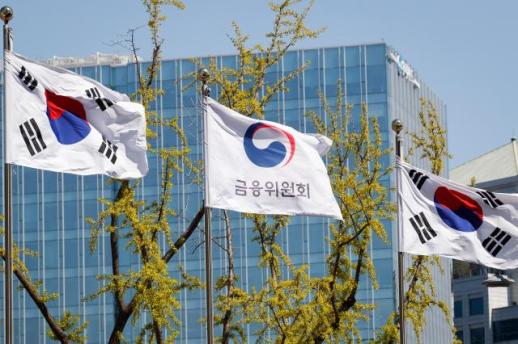 Korea to adopt a new overnight repo benchmark SEOUL, March 30 (AJP) -South Korea will overhaul its benchmark interest rate system, phasing out vulnerable quote-based rates and shifting to a transaction-based standard to prevent manipulation risks and strengthen market credibility. The Financial Services Commission (FSC) finalized the reform plan Monday at a joint meeting with the Bank of Korea (BOK) and the Financial Supervisory Service (FSS), marking one of the most comprehensive changes to the country’s rate-setting framework in decades. At the center of the reform is the transition to the Korea Overnight Financing Repo Rate (KOFR), a risk-free benchmark based on actual overnight repo transactions backed by government securities. Unlike existing quote-based rates, KOFR is calculated from real trades, making it more transparent and resistant to manipulation. The move reflects lessons from the 2012 global LIBOR scandal, when major banks were found to have manipulated benchmark rates used to price trillions of dollars in loans and derivatives. South Korean authorities see structural similarities in their own system, where the Korea Interbank Offered Rate (KORIBOR) is also based on bank-submitted quotes rather than transactions. “If we remain complacent with familiar practices, it could eventually lead to financial accidents,” FSC Vice Chairman Kwon Dae-young said, stressing that maintaining trust in benchmark rates is a core responsibility of the financial sector. Under the plan, banks will in principle stop issuing new KORIBOR-based loans starting in April 2027. Existing loans will remain valid until maturity, but borrowers will be encouraged to switch to alternative benchmarks such as COFIX or bank bond rates when renewing contracts. The CD rate, another widely used benchmark, will also be gradually phased out. Authorities plan to remove its designation as a “key benchmark” under relevant law by the end of 2030, signaling a clear shift away from legacy pricing standards. Both KORIBOR and CD rates have been criticized for relying on limited or non-transactional data, making them vulnerable to distortions and declining in relevance as market structures evolve. The government aims to establish KOFR as the core benchmark across financial markets, from derivatives to bonds and lending. To accelerate adoption, authorities raised the target share of KOFR-based transactions in the Overnight Index Swap (OIS) market to 70 percent by 2030, up from the previous 50 percent goal. In the floating-rate note (FRN) market, banks will aim to issue 50 percent of new products based on KOFR by mid-2031. Policy lenders such as Korea Development Bank and Industrial Bank of Korea will lead the transition by launching a combined 1 trillion won ($730 million) in KOFR-linked loan products in the second half of this year. Authorities also plan to provide incentives, including incorporating KOFR-based activity into central bank operations assessments, to encourage faster market adoption. Officials framed the reform as a preemptive move to strengthen financial infrastructure before risks materialize. Benchmark rates serve as the backbone of financial markets, underpinning loans, bonds and derivatives. When their credibility is compromised, the impact can spread quickly across the entire system, ultimately affecting consumers. The reform also comes amid heightened market volatility linked to geopolitical tensions, reinforcing the urgency of building a more resilient and globally aligned rate system. BOK Deputy Governor Park Jong-woo described the clear timeline for phasing out legacy benchmarks as “a significant milestone” in aligning Korea’s financial markets with global standards. While the transition is expected to take several years, authorities signaled that this marks the beginning — not the end — of broader efforts to modernize Korea’s financial infrastructure. 2026-03-30 15:40:47
 -
 Chicken prices surge as prolonged avian flu cuts supply SEOUL, March 30 (AJP) - Surging chicken prices are putting South Korea's poultry industry on alert. The spread of highly pathogenic avian influenza has cut broiler supplies, while a weaker won has added to feed-cost burdens, increasing pressure for broader price hikes. According to market insiders on Monday, major poultry producers, including Harim, Allpum, and Maniker, have recently raised prices to large retailers by about 5 to 10 percent. The increase comes amid a supply shortage caused by the outbreak of avian influenza, which typically occurs in winter but has persisted into spring this year, leading to larger-than-usual culls. About 440,000 chickens were culled, roughly 3.7 times the 120,000 culled a year earlier, accounting for about 5 percent of the total broiler breeders raised last year (9.22 million). Production costs have also risen, as the ongoing conflict in the Middle East has pushed up the won's exchange rate and driven sharp increases in prices for feed additives including amino acids. According to data from the Korea Institute for Animal Products Quality Evaluation, the average retail price of chicken in the fourth week of March rose to 6,612 won per kilogram, up 10.6 percent from 5,976 won in the first week of January, the highest level this year. Over the same period, the wholesale price climbed 12.9 percent from 3,857 won to 4,353 won. The impact is already being felt in restaurants. Some chicken franchise stores have faced delivery delays and difficulties securing steady supplies. Despite the government repeatedly urging restaurants not to raise prices in order to curb inflation, many say increases will be unavoidable if supply disruptions and cost pressures persist. Some franchises were quick to move, with KFC recently raising prices on about two dozen menu items, reversing its earlier stance that it had no plans to do so. With most signature menu items at major chicken brands priced between 26,000 and 27,000 won, costing almost 30,000 won once delivery fees are included, many consumers are hesitant to place orders. Citing a spike in raw material costs ahead of months of increased outdoor activity, an industry insider said, "If supply instability persists, we will have no choice but to consider raising prices." Meanwhile, the Ministry of Agriculture, Food and Rural Affairs said it plans to import 8 million eggs and gradually distribute them starting this month to respond to expected demand during the summer months. 2026-03-30 15:40:12
 -
 Damien Hirst's first Seoul solo draws crowds in awe SEOUL, March 30 (AJP) - Damien Hirst (b. 1965) is one of the most influential — and controversial — figures in contemporary art. He rose to prominence in the late 1980s as a leading member of the Young British Artists (YBAs), a group known for pushing boundaries with shock, spectacle and conceptual rigor. His works grappling with death and mortality drew strong public interest in Seoul as visitors filled the National Museum of Modern and Contemporary Art, Seoul on a weekday afternoon, where the exhibition “Damien Hirst: Truth Is Not Absolute, Everything Is Possible” is on view. The exhibition, held at MMCA Seoul, feartures around 50 works spanning more than four decades. It is Hirst’s first solo exhibition in Asia and runs from March 20 to June 28. The show traces the artist’s practice from early experimental works to recent paintings. Major series on display include the Natural History series, featuring animals preserved in formaldehyde, spot paintings composed of repeated dots, and installations resembling medicine cabinets. Works such as a shark suspended in formaldehyde, rows of pharmaceutical objects and canvases filled with colored dots explore themes of life and death, desire and consumption. Inside the gallery, visitors are seen engaging with the works in different ways. Some pause to observe the artworks closely, while others take photographs. The coexistence of viewing and recording has become a common sight. This pattern has been observed in recent exhibitions as well. A similar scene appeared during last year’s exhibition of Ron Mueck, which attracted more than 530,000 visitors. Visitors are increasingly choosing their own pace and method of engagement. MMCA has also expanded its “Culture Day” program. Starting in April, MMCA Seoul and Deoksugung will offer free admission every Wednesday from 6 p.m. to 9 p.m. While Hirst’s works continue to address themes of mortality and contemporary society, audiences are engaging with them in varied ways. Some spend time contemplating the works, while others capture them as images. The exhibition reflects a broader shift in museum-going. Visitors from different generations and nationalities share the same space, each experiencing the exhibition differently. The show not only presents Hirst’s works, but also reveals how audiences interact with art today. 2026-03-30 15:32:28
 -
 Samsung Fire & Marine Names Tommy Tiilikainen as New Head Coach Samsung Fire & Marine, which finished last in the men’s V-League this season, has appointed Finnish coach Tommy Tiilikainen as its new head coach. The club announced the hire on March 30, signing Tiilikainen to a two-year contract. The team said detailed terms would not be disclosed by mutual agreement. Samsung Fire & Marine has won a men’s-record eight championship titles, but has not won since the 2014-2015 season. Its last postseason appearance was in 2017-2018. During the season, coach Kim Sang-woo stepped down amid poor results. Under interim coach Ko Jun-yong, the team struggled, including a 13-match losing streak, the longest since the club’s founding. Samsung Fire & Marine ended the season 6-30, in last place. In a bid to rebuild, Samsung Fire & Marine decided to hire a foreign head coach for the first time in team history. The club said it sought a leader to drive fundamental change and cited Tiilikainen’s experience, data-analysis approach suited to modern volleyball, and communication skills with young players. Tiilikainen began his coaching career in 2012 and has worked in leagues in Europe, Japan and South Korea. While leading Korean Air, he won three straight combined titles from the 2021-2022 season through the 2023-2024 season. After parting ways with Korean Air at the end of the 2024-2025 season, he returns to the V-League after one year. “It is a great honor to join Samsung Fire & Marine, a club with a proud tradition, and I feel a strong sense of responsibility,” Tiilikainen said. “Samsung Fire & Marine has many young players with great potential. Together, we will do our best to rebuild the club through cohesive, dynamic volleyball.” The club said Tiilikainen will enter South Korea after completing administrative procedures and begin preparations for the new season.* This article has been translated by AI. 2026-03-30 15:09:52
 -
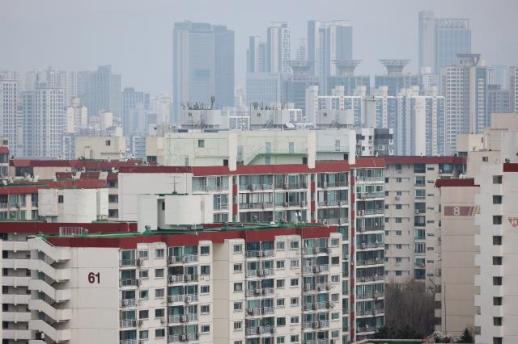 South Korea to Bar Loan Maturity Extensions for Multi-Homeowners, Tighten Household Debt Growth Financial regulators are set to announce new measures this week aimed at curbing household lending, including a plan to generally bar extensions of loan maturities for borrowers who own multiple homes. The steps are expected to align with tighter real estate rules by sharply lowering the target growth rate for total household debt and setting a separate target for mortgage lending. According to the financial sector on March 30, the Financial Services Commission will hold a household debt review meeting on April 1 chaired by FSC Chairman Lee Eok-won and will 발표 its household debt management plan for this year. The plan had been scheduled for late February but was delayed by more than a month as issues involving multi-homeowners moved to the forefront. The measures are expected to include a principle of not allowing maturity extensions on mortgages held by multi-homeowners. The aim is to encourage repayment of principal and interest when loans come due, increasing pressure on owners to put homes on the market. An exception is expected for homes under ongoing jeonse or monthly-rent contracts, with extensions allowed until the lease ends to protect tenants’ housing stability. Regulators expect the move could bring about 10,000 homes owned by multi-homeowners onto the market in Seoul and the surrounding capital region. Rental business operators hold about 12,000 apartments in the capital region, and more than 80% are estimated to reach maturity this year. The total could rise further when including second-tier financial institutions and individual multi-homeowners. Measures related to what President Lee Jae-myung described as speculative, nonresident single-homeowners are likely to be announced after additional review. The report said it is difficult to separately classify speculative borrowers because nonresident ownership can stem from various reasons, including caring for parents or children’s education. Total household debt growth this year is expected to be reduced further from last year’s 1.8%. Authorities are widely considering setting the target growth rate at around 1%, and they have not ruled out presenting a target in the 0% range. Financial Supervisory Service Gov. Lee Chan-jin said at a news briefing on March 26, “It will be difficult to expect (the total target) to increase by financial sector,” adding that the target would be tightened and managed at “no more than half” the nominal GDP growth rate. For mortgages, which have led the rise in household lending, regulators are expected to issue more specific guidance. While rules have focused on overall household lending, officials are considering setting a separate target for total mortgage lending and raising the minimum risk weight from 20% to 25%. In the second-tier financial sector, lending standards are expected to tighten, particularly at mutual financial institutions. Household loans at Saemaul Geumgo exceeded the previous year’s target by four times last year, and regulators are requiring this year’s loan balance to be managed at or below the level at the end of last year. The steps are seen as an effort to decisively slow household loan growth and cut off funding flowing into the real estate market. Household loans across the financial sector rose 37.6 trillion won last year, with the increase narrowing by about 4 trillion won from the previous year. This year, however, loans rose 1.4 trillion won in January and 2.9 trillion won in February, posting increases for two straight months. 2026-03-30 14:54:00
 -
 Ex-PM Kim Boo-kyum declares bid for Daegu mayor SEOUL, March 30 (AJP) - Former Prime Minister Kim Boo-kyum on Monday declared his bid for Daegu mayor in the upcoming local elections slated for early June. At a press conference at the National Assembly, the ruling Democratic Party (DP)'s key hopeful said he will run for the mayoral post of the southern city, a traditional stronghold of the main opposition People Power Party (PPP). The four-term lawmaker, who also served as interior minister under former President Moon Jae-in, said Daegu should "take the lead in abandoning" the PPP, arguing that breaking from the party is the "only way real conservatives can survive." He added that the PPP "is not a proper conservative party" in its current form. Kim blamed the PPP for Daegu's stagnation, saying the party has monopolized local power for decades while neglecting regional development. He said the city's worsening situation ultimately prompted his decision to run, after months of deliberation since being asked last fall. "I thought it would be shameful to avoid it," he said. "The responsibility I have to bear is ultimately Daegu's." "Overcoming regionalism and achieving balanced regional development is my final calling. I will find hope for Daegu's future together with Daegu citizens." 2026-03-30 14:38:39
 -
 TWS Builds Momentum With Seoul Fan Meeting and Sold-Out VR Concert Ahead of April 27 Comeback Group TWS has extended its momentum from a fan meeting to a successful VR concert as it heads toward a comeback on April 27. Moving between live venues and movie theaters, the group has expanded its presence in the first quarter of 2026. TWS met fans from March 27-29 at Ticketlink Live Arena at Olympic Park in Seoul’s Songpa district, holding its second fan meeting, “42:CLUB” in Seoul (2026 TWS 2ND FANMEETING “42:CLUB” IN SEOUL). The three-day event ended to strong crowd response, underscoring the group’s drawing power. That interest carried into its first VR concert, produced with AMAZE. “TWS VR CONCERT : RUSH ROAD” sold out key sessions soon after ticket sales opened. During a second round of ticket sales, heavy traffic briefly brought down the server, organizers said. “RUSH ROAD” has continued to perform strongly. Based on high viewer satisfaction, it posted a perfect audience rating on Megabox and ranked No. 1 on the overall movie chart in its fourth week of release. With an extended run confirmed, it has been cited as an unusual box-office case for a VR concert release. The project is TWS’ first VR concert and has been described as combining the group’s fanbase with AMAZE’s production capabilities. TWS also took part in pre-shoot camera rehearsals, an uncommon step for VR concert artists, to improve the final result. TWS is set to continue fan meetings in April at Pia Arena MM in Yokohama, Japan, as it broadens overseas activities. The group previously released “YOU LIKE IT I LOVE IT,” a new song made in collaboration with U.S. artist 24kGoldn, and won two awards at the 40th Japan Gold Disc Awards. With a comeback scheduled for April 27, attention is on whether the momentum from the fan meeting, the VR concert’s performance and overseas activities will carry into the group’s next album. Meanwhile, “TWS VR CONCERT : RUSH ROAD” is being shown exclusively at Megabox COEX and will be available to watch through April 12.* This article has been translated by AI. 2026-03-30 14:36:15
 -
 Netflix’s April Lineup: 7 New Releases From “Bloodhounds 2” to “Man on Fire” Netflix is expanding its April lineup with seven releases, led by returning series, a franchise spinoff and new genre titles. Early in the month brings a light romance and a Korean action series, followed midmonth by the return of an Emmy-winning show. The back half includes an animated “Stranger Things” spinoff, Netflix’s first Korean YA horror series, a star-driven survival thriller and an action-thriller series to close the month. First up is “XO, Kitty” Season 3, arriving April 2. The school romance series, set in South Korea, follows Kitty in her final year, with Lana Condor also set to appear. On April 3, “Bloodhounds” Season 2 premieres, reuniting Woo Do-hwan and Lee Sang-yi. The new season widens its scope to a global illegal boxing league, raising the scale of the action. “BEEF” Season 2 arrives April 16, bringing back the Emmy-winning series with a new conflict. The cast includes Oscar Isaac, Carey Mulligan, Charles Melton, Cailee Spaeny, Youn Yuh-jung and Song Kang-ho. On April 23, “Stranger Things: Tales From ’85” expands the “Stranger Things” universe with an animated spinoff set in Hawkins in 1985, featuring new monsters and adventures. Two titles follow on April 24. “Girigo” is Netflix’s first Korean YA horror series, centered on an app that grants wishes but leads to a deadly curse. The cast includes Jeon So-young, Kang Mi-na, Baek Sun-ho, Hyun Woo-seok, Lee Hyo-je, Jeon So-nee and Noh Jae-won. Also debuting April 24, “Apex” is a survival thriller starring Charlize Theron and Taron Egerton, built around a chase in the Australian wilderness. Jeremy Robbins contributed to the script, and Baltasar Kormákur — who directed “Everest,” “Contraband” and “2 Guns” — is attached to the project. The month ends April 30 with “Man on Fire,” an action-thriller series starring Yahya Abdul-Mateen II as John Creasy. It is based on the novel by A.J. Quinnell. 2026-03-30 14:27:20