
Journalist

Lee Hugh
=
-
 CRAVITY’s Hyeongjun to Star in Interactive Short-Form Drama ‘Kill the Romeo’ on KITS CRAVITY’s Hyeongjun is set to show a new side as an actor in a first-person interactive short-form drama, built around viewer choices that determine his fate. Global K-pop short-form platform KITS said on the 27th it will exclusively release the interactive series “Kill the Romeo” starring Hyeongjun at 1 p.m. “Kill the Romeo” is an interactive, multi-ending romantic comedy in which the protagonist — “you” — lives a double life: a killer by trade and a devoted fan by persona. The story begins when your next target is named as your favorite idol, Hyeongjun. A newly released main poster heightens the premise with an on-screen prompt from the viewer’s perspective: “Do you want to eliminate the target?” The series uses the FMV (Full Motion Video) format, letting viewers choose options that drive the plot. Depending on whether the viewer carries out the mission to eliminate Hyeongjun or protects him out of fandom, the ending changes. Viewers can also collect Hyeongjun digital photo cards as the story unfolds. After a shared storyline, the drama branches at four decision points, leading to four endings: two versions of a happy ending, a bittersweet ending and a bad ending. Reaching one ending takes about 45 minutes, while seeing all outcomes takes about 90 minutes. The project marks Hyeongjun’s first lead role in a drama. Despite filming in a setup that required direct, one-on-one eye contact with the camera, he handled a wide emotional range spanning comedy, romance and action, earning positive feedback on set, according to the release. It also said he created choreography himself for a dance scene. KITS, which recently released “Wind Up” starring NCT’s Jeno and Jaemin and “Jumpboy LIVE” starring VERIVERY’s Kangmin, said it plans to further strengthen its interactive content lineup with “Kill the Romeo.” All episodes of “Kill the Romeo” will be released exclusively on KITS at 1 p.m. on the 27th. Episodes 1 through 6 will be available for free, with later episodes accessible via membership or paid purchase. * This article has been translated by AI. 2026-03-27 11:09:20
 -
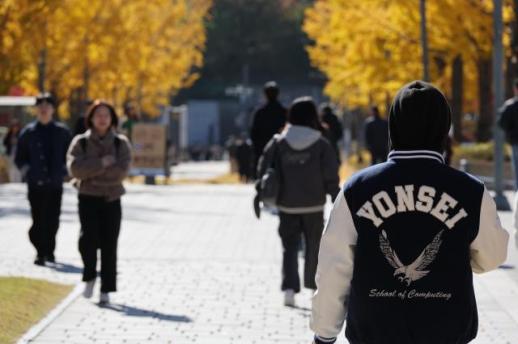 AI beginning to crowd out young Koreans from elite professions SEOUL, March 27 (AJP) – Jenny Kim, 23, a senior at Yonsei University, had thought finding a job would be secure once she entered a top Seoul university majoring in engineering, but many of her peers are now despondent. “There may not be much left to do in computer engineering,” she said, as artificial intelligence has already replaced much of the entry-level back-office corporate work. Sophomore Kim S.H., studying structural engineering, also said he and his peers are increasingly exploring career paths unrelated to their majors as the field is rapidly being reshaped by AI. College graduates in Korea now vie against AI in an already tight job market, with the average time to land a first job stretching to nearly nine months — the longest in 20 years, according to a recent survey as of May 2025. Even degrees from top universities or STEM majors no longer guarantee employment. “Many returning from military service delay graduation as long as possible to buy time to apply for jobs,” said J.W. Park, 29, a Yonsei graduate who landed a job 18 months after submitting nearly 100 applications. The employment ratio of Yonsei University graduates fell to 46.6 percent last year from 51 percent in 2024. AI is now cutting into hiring across South Korea’s traditionally secure professions, with entry-level roles shrinking in law, accounting and technology — forcing young graduates to compete not only with each other, but increasingly with machines. The strain is already visible in the labor market. Employment among those aged 25 to 29 fell to 2.346 million in February, the lowest for the month since 2017, while the employment rate slipped to 70.4 percent. Youth unemployment rose to 7.1 percent, with underemployment reaching 17.4 percent, the highest February level in three years. Losses have been concentrated in white-collar sectors. Employment in information and communications fell by 52,000 — the steepest drop since 2014 — while professional, scientific and technical services, including legal and accounting, declined by 29,000. Studies point to AI as a key driver. The Korea Employment Information Service found white-collar jobs more exposed to AI-driven displacement, identifying lawyers, accountants and journalists among the most at risk. A Bank of Korea report showed that of 211,000 youth jobs lost between July 2022 and July 2025, about 208,000 were in highly AI-exposed sectors such as programming. “AI can relatively easily replace routine tasks typically performed by less-experienced workers,” the central bank said. That shift is most visible at the bottom of the hiring ladder. “We received around 120 applications for just two positions,” said Rhee Jay Jun, managing director at Young & Jin Tax Consulting Corp. “Whether they stay depends on how well they can filter out AI errors,” he added, noting that junior roles are shifting from execution to verification. The pressure is compounded by a bottleneck in certification. Of 12,263 candidates who sat for this year’s CPA preliminary exam, only around 1,200 are expected to pass, and even fewer will secure the mandatory training positions required to qualify fully. Yet even as AI displaces routine work, its limits remain clear. In one tax appeal involving hundreds of billions of won, an AI system cited a non-existent Supreme Court ruling — a so-called “hallucination” — nearly leading to a flawed argument. “We have to fact-check everything again,” Rhee said. A similar tension is playing out in the legal sector, where AI is lowering barriers while intensifying competition. Nearly 90 percent of civil first-instance cases in 2024 involved at least one self-represented party, according to the Supreme Court of Korea, with generative AI increasingly used to draft complaints and briefs. At the same time, the number of registered lawyers has surged to 38,123, up 76 percent from 2016. “Giving the same materials to a junior associate and to Gemini, Gemini often does a better job,” said Kim Woong, managing partner at Namdang Law Firm. But within the legal profession, views diverge on how far AI will reshape hiring. Ko Eunyoung, a lawyer at Barun Law, said AI cannot replicate “practical experience” and “judgment,” stressing that strategic decision-making in complex cases remains firmly within the domain of human lawyers. She noted that large firms are better positioned to continue hiring. “Hiring a few junior lawyers is less financially burdensome for bigger firms,” she said, allowing them to maintain recruitment even as smaller firms scale back. Ko emphasized that legal work requires judgment at every stage of a case. While AI can assist with document review and analyzing opposing arguments, overall case management still depends on human experience, strategy and real-time decision-making. She also warned of longer-term risks. Reduced hiring at the junior level could weaken the profession’s pipeline, leaving fewer lawyers able to develop into mid-level practitioners. Academic experts share a similar view. “Because law is as much about persuasion and judgment as it is about raw information review and analysis, I am confident that it will survive this technological change,” said Brendan Ballou-Kelley of Stanford Law School, a former U.S. federal prosecutor. He cautioned, however, that AI remains less reliable in drafting briefs and should not replace judicial reasoning. Mark A. Lemley of Stanford Law School said AI adoption in U.S. legal practice has already expanded rapidly, with litigators using it to draft briefs and corporate lawyers to prepare contracts. But he warned of growing risks tied to AI errors. “We have seen over 800 cases in which lawyers have been caught filing briefs that use hallucinated citations,” he said. Experts say the broader question is no longer whether AI will reshape jobs — but how far it will go. Some warn that rapid AI adoption could deepen inequality and trigger economic disruption, as gains concentrate among those who control capital and technology, while others point to risks of overinvestment and asset bubbles. For young professionals in Korea, however, the disruption is already here and for jobseekers, the real task would be not just beating other candidates, but avoiding areas machines can do better. Business-major 21-year-old Gonhee says she would settle for any big-company job that won't be affected by AI. 2026-03-27 11:00:20
 -
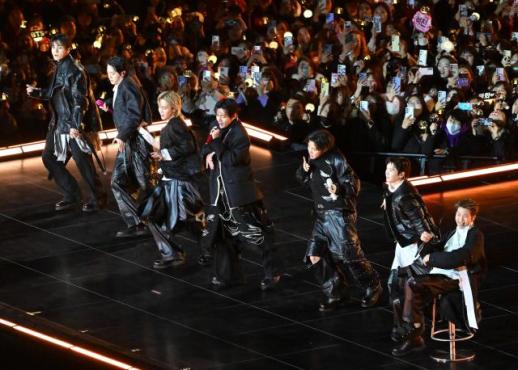 Foreign attendees account for 25% at BTS comeback show in Seoul SEOUL, March 27 (AJP) - About one in four attendees at BTS’ comeback performance in central Seoul on March 21 were foreign nationals, according to city data on Friday. The Seoul Metropolitan Government estimated that 75,927 people were present in the Gwanghwamun, Deoksugung and City Hall station areas between 8 p.m. (1100 GMT) and 9 p.m. during the concert, including 19,170 foreign nationals, or roughly 25 percent. By nationality, Thai nationals made up the largest group at 1,740, followed by Vietnamese (1,184), Indians (1,126) and Japanese (1,098). Among foreign nationals, long-term residents, defined as those staying in Korea for over 91 days, accounted for 13,889 people, outnumbering short-term visitors at 5,281. The figures were derived from the city’s "Living Population" dataset, which estimates the number of people in a given area using aggregated mobile network data in 250-square-meter units, combined with immigration records to assess the scale and nationality of foreign residents and visitors. Separate estimates from the city’s real-time urban data platform placed the number of people in the area at between 46,000 and 48,000 at around 8:30 p.m. on the day of the event. The real-time figures exclude foreign visitors not using roaming services and are therefore less comprehensive than the delayed living population dataset. 2026-03-27 10:58:50
 -
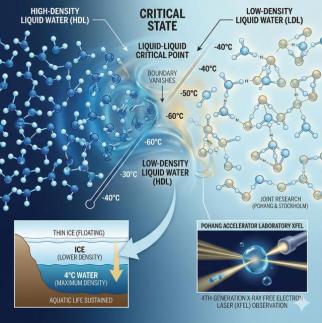 Joint team unlocks engine of water anomalies as supercooled mystery dissolves SEOUL, March 27 (AJP) - Water remains the only liquid on Earth that grows lighter as it freezes, a strange physical defiance that prevents the planet’s oceans and lakes from freezing into solid blocks of ice. By capturing the elusive liquid-liquid critical point of supercooled water, a joint research effort has finally explained the 4-degree density anomaly that has served as a biological necessity for life for millennia. The discovery provides the first experimental proof that water fluctuates between two distinct liquid states, effectively solving a thirty-year mystery that had split the scientific community. This breakthrough represents a fundamental shift in molecular physics, opening a new door for research into everything from climate patterns to the preservation of biological tissues and the fundamental stability of proteins. Ministry of Science and ICT said Friday that the results, published in the journal Science, were the product of a decade-long partnership between a team led by Kim Kyung-hwan at the Pohang University of Science and Technology and a team led by Anders Nilsson at Stockholm University. To reach this conclusion, the researchers had to peer into "No Man's Land," a temperature range between minus 40 and minus 70 degrees Celsius where water was long considered unobservable. In this extreme environment, water typically crystallizes into ice so rapidly that its liquid properties vanish in an instant. The joint team utilized the fourth-generation X-ray Free Electron Laser at the Pohang Accelerator Laboratory to bypass this barrier. The facility generates light billions of times brighter than the sun, allowing the researchers to capture molecular movement in a millionth of a second. By spraying microscopic droplets into a vacuum and using a laser to melt ice into liquid for a fleeting moment, the team pinpointed the critical point near minus 60 degrees Celsius. This is the exact coordinate where the distinction between high-density and low-density liquid phases vanishes. The existence of these two phases explains why water reaches its heaviest state at 4 degrees Celsius before expanding, a quirk that ensures ice floats and warmer water remains at the bottom to shelter aquatic ecosystems. "When temperature reaches minus 45 degrees, water freezes faster than any available measurement method could previously track," Kim Kyung-hwan said during a briefing at the ministry in Sejong. "This has been called 'No Man's Land' because it was considered experimentally inaccessible. We have challenged this for ten years with persistence, and currently, our team is the only one in the world capable of measuring this region," the professor added. The roadmap to the announcement began in 2017 when the researchers first proved they could measure unfrozen water below the freezing threshold. In 2020, the team confirmed that two different liquid phases coexist at minus 70 degrees. While the findings provide a definitive answer to a historical mystery, the work serves as a starting point for further precision in how Seoul and international partners map the most essential substance in the universe. The current data carries a margin of error of 8 degrees, which the researchers intend to refine in a new round of experiments scheduled for May at the facility. Yu Sun-ju, the first author of the study and a doctoral candidate at the university, noted that achieving something never done before was incredibly difficult. "I realized how incredibly difficult it is to achieve something no one else has done," the researcher said. The experimental results provide the necessary evidence to settle the debate over the liquid-liquid critical point of water. 2026-03-27 10:35:24
 -
 Han Kang’s ‘We Do Not Part’ wins National Book Critics Circle Award Han Kang, who won the 2024 Nobel Prize in Literature, has received the National Book Critics Circle Award for her novel We Do Not Part, the English-language edition of her Korean novel Jakbyeolhaji Anneunda. It is the first Korean-language novel to win an NBCC award. The National Book Critics Circle said it selected We Do Not Part, translated by E. Yaewon and Paige Morris, as the winner in the fiction category at its awards ceremony for books published in 2025, held March 26 local time in New York. It is the second time a work by a South Korean author has won an NBCC award, following poet Kim Hyesoon’s 2024 win for her collection Phantom Pain Wing. The NBCC award is considered one of the leading U.S. literary prizes, along with the Pulitzer Prize and the National Book Award. Critics working in U.S. media and publishing select the best books published in English each year across six categories: fiction, nonfiction, biography, autobiography, poetry and criticism. Announcing Han’s win, the NBCC cited the novel’s delicate portrayal of trauma left by the Jeju April 3 incident and called it “a meditation on creation and truth amid loss.” It added, “This artistic novel conjures a strange atmosphere and leaves an overwhelming, dreamlike afterimage.” Han did not attend the ceremony. In remarks read by her publisher’s editor, she thanked the translators “for creating an astonishing connection from my mother tongue, Korean, into English.” She added, “I still want to believe there is a flickering light within us,” and said she hopes people “hold fast to that light and move forward.” Heather Scott Partington, chair of this year’s fiction judging panel, told The New York Times the novel stands out for its “dazzling melancholy, desolate weather and whisper-like prose,” adding that it “lingers for a long time like an intense dream.” Major U.S. outlets also highlighted the win and described the Jeju April 3 incident as a democratization movement on Jeju Island, south of the Korean Peninsula, in which thousands were killed, while noting the historical context behind the novel. Jakbyeolhaji Anneunda is Han’s first novel in five years since she won the International Booker Prize in 2016 for The Vegetarian. Along with The Vegetarian and Human Acts, it is considered one of her signature works. The novel depicts the tragedy of the Jeju April 3 incident through the perspectives of three women, following the protagonist, Gyeongha, as she visits a friend, Inseon, at her home on Jeju after Inseon suffers an accident in which a finger is severed, and traces the painful past of Inseon’s mother, Jeongsim. The novel won the Medicis Prize for foreign literature in November 2023, the first time a Korean work received the award, and also received the Emil Guimet Prize for Asian Literature. The Japanese edition’s translator and poet, Mariko Saito, won the Yomiuri Prize in the research and translation category. Publishers said Han’s latest award could help sustain a surge of interest in literature following her Nobel win, with expectations that fiction will continue to gain ground. Kyobo Book Centre said Han’s novel Human Acts ranked No. 1 overall on its bestseller list for two consecutive years, 2024 and 2025, as sales of fiction rose sharply. Han is also set to take part in the Korean Pavilion at the Venice Biennale in May. Invited as a fellow, she will present a sculpture. Artist Noh Hyeri, one of the participating artists, said Han created a sculpture titled “Funeral” that is scheduled to be shown with her work, adding, “A community not only saved people, it also killed many people. We will talk about that.” Noh said “Funeral” is a sculptural realization of a dream scene that became a motif for We Do Not Part. Two anthologies to be published in place of a catalog will include Han’s writing, including pages 1 and 2 of We Do Not Part. Han is not expected to attend the exhibition opening, the report said. 2026-03-27 10:34:17
 -
 KBS ‘Music Bank’ Announces Lineup Featuring Kangmin, Yuna, Baby DONT Cry and Moon Byul KBS has announced the lineup for its music show “Music Bank.” The KBS2 program airing Friday afternoon will feature AB6IX, ALL(H)OURS, AmbiO, AtHeart, Baby DONT Cry, cosmosy, CSR and DIGNITY. Also set to appear are H1-KEY, NouerA, ODD YOUTH, RED OOPART, V01D, YENA (Choi Ye-na), Gamseong Dansokban, Kangmin, Moon Byul, S2IT and Yuna (ITZY). Kangmin and Yuna are scheduled to perform their “hot debut” stages on the show. Baby DONT Cry and Moon Byul will return with comeback performances. Hosted by Kim Jae-won and Bang Ji-min, “Music Bank” airs every Friday at 5:05 p.m. * This article has been translated by AI. 2026-03-27 10:12:09
 -
 Korean Inc. gloom deepens under war-driven scourges SEOUL, March 27 (AJP) - Pessimism deepened across the Korean Inc. in March as businesses grappled with worsening trade conditions, a sharply weaker won and rising energy costs stemming from the monthlong conflict in the Middle East. According to the Bank of Korea on Friday, the all-industry composite business sentiment index (CBSI) stood at 94.1 in March, down 0.1 point from the previous month. A reading below 100 means pessimists outnumber optimists. The reading also fell far short of the BOK's February projection of 97.6, missing the forecast by 3.6 points. Manufacturing sentiment was unchanged at 97.1, but still below the expected 98.9. More worrying was the outlook for April, which fell 3 points to 95.9, the steepest monthly drop in 14 months since January 2025. The deterioration was more pronounced among small and medium-sized enterprises. While the outlook for large firms edged down 0.9 point to 98.7, sentiment among SMEs plunged 2.7 points, underscoring their greater vulnerability to rising costs and supply-chain disruptions. The BOK said gains of 0.6 point each in production and new orders were offset by a 0.6-point drop in inventory conditions and a 0.4-point decline in funding conditions. The data also showed a widening gap between exporters and domestic-oriented firms. Sentiment among exporters rose 1.2 points to 103.1, staying above 100 for a third straight month. By contrast, sentiment among import-reliant domestic businesses stood at just 94.5. "Exports of semiconductors, automobiles and steel products remained solid in the first 20 days of March, partially offsetting the initial impact of the Iran war," Lee Heung-hoo, head of the BOK's economic sentiment survey team, said. He warned, however, that the impact of the Middle East conflict is likely to become more visible in April, further darkening the manufacturing outlook. Non-manufacturing sentiment stood at 92.0, well below the February projection of 96.8, while the April outlook came in even lower at 91.2. Services were hit particularly hard, with the transportation and warehousing sector posting a CBSI of 93.4, far below the earlier projection of 99. "The blockade of the Strait of Hormuz has caused major disruptions in global logistics, dealing a severe blow to the transportation and warehousing sectors," Lee said. Among manufacturers, the most frequently cited business difficulty was "uncertain economic conditions," at 22.1 percent, up 2.8 percentage points from the previous month. Concern over rising raw material prices more than doubled to 21.0 percent, reflecting higher energy and commodity costs linked to the conflict. While weak domestic demand remained a major complaint at 19.0 percent, it lost its position as the top concern from February's 24.6 percent as geopolitical risks moved to the forefront. The broader economic sentiment index (ESI), which combines business and consumer confidence, fell 4.8 points to 94.0, wiping out all gains made in February and marking the sharpest drop since September 2023. Still, the ESI cyclical indicator — which strips out seasonal and irregular external shocks — edged up 0.4 point to 96.6, suggesting the underlying trend may have improved absent the sudden geopolitical escalation. The survey was conducted from March 12 to 19 among 3,524 companies nationwide, with responses from 3,223 firms, including 1,799 manufacturers and 1,433 non-manufacturers. 2026-03-27 10:05:45
 -
 ADC Drug Development Shifts to Platforms as Linker Technology Becomes Key Edge Antibody-drug conjugate (ADC) development is increasingly shifting from individual drug candidates to platform-based approaches, as companies seek technologies that can be scaled across multiple programs in cancer drug development, where costs and timelines are heavy. According to global market research firm Grand View Research, the ADC market is projected to grow from about $12 billion in 2024 to about $32 billion in 2033. As the market expands, companies that control core technology platforms are gaining value. With tumor-killing efficacy reaching a certain level, precise design to reduce toxicity and improve stability in the body has emerged as a key differentiator. Pfizer moved to secure an ADC platform by acquiring Seagen, an ADC leader, for about $43 billion in 2023. The goal was to obtain an integrated technology system that includes linkers, payloads and manufacturing know-how, rather than a single candidate. Pfizer expects more than $10 billion in revenue from the business by 2030. A platform strategy can also reduce development risk. An industry official said that even if clinical results for a specific candidate fall short, a platform makes it possible to switch to other targets, creating a structural advantage. South Korean drugmakers are also pursuing platform access. Chong Kun Dang Pharmaceutical followed joint ADC discovery research with Netherlands-based Synaffix by securing nonexclusive rights to related platform technology in 2023 for about $132 million. While other companies can also use the platform under a nonexclusive deal, the move is seen as a way to speed development by adopting a validated technology. Synaffix is known for linker technology that precisely attaches payloads at specific sites, and it has signed multiple technology-transfer agreements with global drugmakers including Janssen and Amgen. Chong Kun Dang's candidate CKD-703 targets the hepatocyte growth factor receptor (c-Met) and has received U.S. Food and Drug Administration approval to begin a Phase 1 clinical trial. Dong-A ST acquired ADC specialist Aptis to secure its third-generation linker platform, AbClick. The company aims to accelerate ADC development by combining its antibody research capabilities with Aptis' linker technology. Previously, attaching drugs effectively often required genetically modifying antibodies. AbClick is designed to selectively connect drugs at specific sites without antibody modification. DA-3501, an ADC candidate targeting gastric and pancreatic cancers that applies the platform, is scheduled to enter Phase 1 trials in the first half of this year. Samjin Pharm has also built in-house platforms for ADC development, including OncoStab and OncoFlame, and plans to improve research efficiency through open innovation with Novelty Nobility and APT Bio, companies specializing in antibody drug development. Its gastric and breast cancer treatment candidate SJA21 and immuno-oncology ADC candidate SJA71 are in preclinical stages. As technology advances, competition is also shifting. Han Yong-hee, a researcher at Growth Research, wrote in an ADC industry report that biotech companies with platforms can secure stable cash flow through technology transfers and royalties, while global drugmakers can speed development and diversify portfolios by licensing platforms. He said the ADC market is evolving from competition over new drugs to competition over platforms.* This article has been translated by AI. 2026-03-27 09:57:03
 -
 Nobel laureate Han Kang wins prestigious American literary award SEOUL, March 27 (AJP) - Han Kang, South Korea's first Nobel laureate in literature, has won another prestigious award for her novel "We Do Not Part." Han took home an award at the annual awards ceremony of the National Book Critics Circle (NBCC) in New York on Thursday, which "presents awards for the finest books published in English in six categories" - fiction, nonfiction, biography, autobiography, poetry, and criticism. The fiction honor adds to her growing collection of accolades, which includes the 2024 Nobel Prize in Literature and the 2016 International Booker Prize for "The Vegetarian." "We Do Not Part," first published in 2021 and translated into English by e. yaewon and Paige Aniyah Morris in 2024, tells the story of a woman confronting the emotional scars left by a bloody anti-communist crackdown on Jeju Island in 1948. About 10 percent of islanders were killed during the uprising, many of them civilians with little or no connection to insurgents. Shortly after its release in September 2021, Han described the novel as both a historical account of what occurred on April 3, 1948, and an "intense tale of love." In 2023, the novel already won the Prix Médicis, one of France's most prestigious literary awards, making Han the first novelist to receive the prize, which has recognized foreign works published in translation since 1970. 2026-03-27 09:55:16
 -
 Dongkook Pharm Moves to Develop Generic of Chong Kun Dang Diabetes Drug Duvie Dongkook Pharmaceutical has begun developing a generic version of Chong Kun Dang Pharmaceutical’s diabetes drug Duvie (lobeglitazone). According to the Ministry of Food and Drug Safety on the 27th, Dongkook Pharmaceutical on March 13 received approval to conduct a bioequivalence study for “DKF-457.” Duvie, developed by Chong Kun Dang, is described as South Korea’s first thiazolidinedione (TZD) class diabetes treatment, with annual prescriptions totaling about 20 billion won. TZD drugs once led the diabetes market in the 2000s, but their use declined after cardiovascular side-effect concerns emerged over GlaxoSmithKline’s Avandia (rosiglitazone). Dipeptidyl peptidase-4 (DPP-4) inhibitors later took the lead, and the market is now dominated by DPP-4 inhibitors and sodium-glucose cotransporter-2 (SGLT-2) inhibitors. While TZDs represent a smaller segment today, they continue to be prescribed for certain patients, including those with high insulin resistance or fatty liver disease. Interest has recently returned to combining TZDs with SGLT-2 inhibitors, and the move into TZD generics is being viewed as part of a strategy to broaden options for combination prescribing. Dongkook Pharmaceutical has been seeking to expand its share of the diabetes market in prescription drugs since 2023. It said it has 15 diabetes-related products, including Tenelican, Daplejin, Sitakan and the insulin injection Glazia, along with treatments for chronic conditions that often accompany diabetes, such as hypertension and high cholesterol. A company official said, “At the research stage, the flagship pipeline is DKF-447, a diabetes treatment that has completed product approval, and we plan to continue expanding the diabetes pipeline.” Competition in the Duvie generic market has already begun. Shin Poong Pharmaceutical started development first last year, setting up a race for generics. The substance patent is set to expire March 21 next year. A pharmaceutical industry official said competition is already overheated in markets centered on blockbuster products, adding that companies are expected to keep focusing strategies on areas where they can secure clear market share.* This article has been translated by AI. 2026-03-27 09:45:21