
Journalist

Lee Hugh
=
-
 Korea turns to coal, nuclear and diversification to improvise vs Gulf shock SEOUL, March 25 (AJP) - As the Middle East war grinds deeper and energy lifelines fray one by one, South Korea finds itself staring down a crisis it long feared but never quite prepared for — the real prospect of running short on the gas that powers homes and electricity grids, keeping Asia's fourth-largest economy running. QatarEnergy, the Gulf state's national energy company, announced Tuesday it would suspend LNG deliveries to South Korea, China, Italy and Belgium, citing severe damage to production facilities at the Ras Laffan industrial complex from Iranian missile strikes on March 18 and 19. The company's CEO Saad al-Kaabi said about 17 percent of Qatar's LNG export capacity had been knocked out, with repairs expected to take three to five years. The force majeure strikes at a critical artery of the South Korean economy, while rippling across Asia's tightly linked gas market. Natural gas accounted for about 20 percent of the country's primary energy consumption in 2024, roughly 56 million to 61 million metric tons of oil equivalent. Gas-fired plants generated about 26 percent of the nation's electricity last year, burning an average of 69,000 tons of LNG per day for power generation alone. Matching its needs, South Korea is the world's third-largest LNG importer behind China and Japan, bringing in about 46.7 million tons in 2025. Qatar supplied about 14.9 percent of that total, ranking as the third-largest source after Australia at 31.4 percent and Malaysia at 16.1 percent, according to the Korea International Trade Association. While the Qatari share is far from dominant, the knock-on effects of its withdrawal threaten to reshape the entire global supply landscape. Ras Laffan handles about 20 percent of the world's total LNG supply, and spot prices in Northeast Asia have already surged roughly 88 percent in under a month, climbing from $10.73 per million British thermal units in late February to $20.18 by mid-March. "This is no longer a matter of spot price spikes. The structural premise that long-term Middle Eastern contracts offer the cheapest and most reliable gas has been shaken at its foundation," said Lee Dong-wook, an analyst at IBK Securities. "What we are witnessing is a signal that Asia's entire gas procurement framework may need to be redrawn." With markets rattled and winter stockpiling season approaching, Seoul has moved swiftly. President Lee Jae Myung ordered a government-wide emergency response at a cabinet meeting on Tuesday. "The escalation and prolongation of the Middle East war are intensifying supply instability in crude oil and natural gas," Lee said, adding that "a preemptive emergency response system must be activated at the government level." The Ministry of Climate, Energy and Environment rolled out a sweeping energy conservation plan the same day. Starting at midnight Tuesday, about 1.5 million vehicles belonging to public institutions and their employees face mandatory weekday driving restrictions in a rotational system — the first such measure in 15 years, since the Middle East oil supply scare of 2011. The government's most aggressive move targets the power mix itself. Five nuclear reactors currently undergoing maintenance will be brought back online by May to lift the national utilization rate from 73 percent to above 80 percent. Coal-fired power plants will also be given greater latitude, with seasonal fine dust restrictions that cap output at 80 percent set to be eased on days when air quality permits. The government is further considering extending the lifespan of three coal plants slated for decommissioning this year. The Gulf-triggered LNG crunch is expected to leave a deeper carbon footprint across Asia, as countries are forced to fall back on fossil fuels to replace natural gas. In South Asia, Bangladesh is increasing coal-fired generation and imports, while Pakistan is leaning more heavily on domestic energy sources to avoid a repeat of LNG-driven power shortages seen during past supply shocks. Across Southeast Asia, the Philippines and Thailand are boosting coal-fired output, while Vietnam is negotiating additional coal supply to offset reduced LNG usage. Like Korea, Japan's major utilities are maintaining high coal utilization rates and ramping up nuclear output. Korea's ministry projects the recalibrated energy mix would cut daily LNG consumption in the power sector by up to 20 percent. The Gulf crisis has also accelerated Korea's push to wean itself off Middle Eastern fuel. It is expected to lend fresh momentum to the $44 billion Alaska LNG project, which Washington has been pitching to Seoul and Tokyo as a geopolitically secure alternative to Gulf supplies. POSCO International has already taken a stake in Glenfarne Alaska Partners, the project's lead developer, and U.S. Energy Secretary Chris Wright has said he is in discussions with Korean and Japanese firms over participation. Broader U.S. LNG imports are also gaining appeal. South Korea has steadily raised its American share to about 9.4 percent of total purchases, and a deal struck last year commits Korea Gas Corp. to an additional 3.3 million tons per year from U.S. terminals. But since new supply projects will take years to bear fruit, Seoul must navigate the immediate shortfall with the tools at hand. "Even if the Alaska LNG project is a full go, it will be at least 2040 before any results materialize. The Qatar cut will likely push Korea to seek extra supply from other contractors, including Canada and the United States," said Kim Seon-yong, a gas policy researcher at the Korea Energy Economics Institute. Kim noted that unlike crude oil, LNG is difficult to store for extended periods — but added that the timing offers a narrow window of relief, as peak winter demand is still months away. "The government can diversify its energy portfolio to cope with certain shortages from the Middle East conflict, but every energy source has an irreplaceable purpose," Kim said. "If geopolitical difficulties prevent Korea from stacking a full load by October, we may have to resort to expensive spot LNG options." 2026-03-25 15:36:36
 -
 South Korea Game Industry Revenue Tops 23.85 Trillion Won, Ranks No. 4 Globally South Korea’s game industry continued to grow in 2024, with revenue topping 23.85 trillion won, according to a government-backed report released Tuesday. The Ministry of Culture, Sports and Tourism and the Korea Creative Content Agency said in the “2025 Korea Game White Paper” that 2024 domestic game-industry revenue totaled 23.8515 trillion won, up 3.9% from a year earlier. Exports came to $8.50346 billion (about 11.5985 trillion won), a 1.3% increase year over year, the report said. By segment, 2024 sales were led by mobile games at 14.0710 trillion won (59.0%), followed by PC games at 6.0094 trillion won (25.2%), console games at 1.1836 trillion won (5.0%) and arcade games at 275.9 billion won (1.2%). Mobile games accounted for more than half of total revenue. The global game market in 2024 was estimated at about $220.071 billion, up 0.7% from the previous year. South Korea’s share was 7.2%, holding fourth place behind China, the United States and Japan, the report said. By destination, exports were concentrated in China (29.7%), Southeast Asia (20.6%), North America (19.5%) and Japan (8.3%). The shares for North America and China rose from a year earlier, up 4.7 and 4.2 percentage points, respectively. Imports fell 3.2% to $245.574 million (about 334.9 billion won). KOCCA Acting President Yu Hyeon-seok said the white paper “will serve as a central milestone” for closely assessing the industry’s current state and designing future strategies. He said KOCCA would continue providing “systematic, data-based support” to help Korean games strengthen competitiveness in global markets. The “2025 Korea Game White Paper” is available for free download on KOCCA’s website.* This article has been translated by AI. 2026-03-25 15:24:15
 -
 TWS VR Concert Film ‘Rush Road’ Draws Fans With Quiet Energy and Meticulous Prep Every production holds countless perspectives. People may share the same place and time, yet a director and performers can experience it in very different ways. looks beyond the on-screen “A-cut” to the vivid record of what happened off camera. By weaving interviews with directors and actors, it reconstructs “B-cut” moments that were often more intense than the finished frame. Among K-pop fans, the group TWS is often seen as “introverted,” known for soft-spoken interviews and a shy, rookie image. But in the close-up frame of a VR concert — where even a breath can feel inches away — the group showed a different side in the VR concert film “Rush Road,” which has continued to sell out. Director Kim Ji-ae, who helmed “Rush Road,” said the members’ focus stood out even on a set that could easily become dominated by technology. She said the shy boys carefully calculated their blocking in front of the camera and even adjusted choreography angles themselves. In an interview with this outlet, Kim described TWS and its fandom, SAI, as “above all, a big healing.” She said it was restorative to see the worries poured into the project — and the artists’ effort — turn into fans’ happiness. “These days, I take my vacation at the theater,” Kim said. “When I see people who came to watch a project we worked so hard on really loving it, it’s overwhelming. Being in the energy of people who came to see someone they like is healing. I had something stressful recently and went to the theater, and I came back healed after seeing SAI.” Watching “Rush Road” alongside SAI, this reporter noticed a contrast with other idol-fandom screenings. Where loud cheers often erupt the moment an artist appears close, SAI tended to respond differently. Even when a member reached out and stepped toward the viewer, the theater filled less with shouting than with quiet, bashful reactions. Kim said she saw the same pattern. “I felt like the fandom really takes after the artists,” she said. “Maybe because it’s an introverted group and an introverted fandom, they seemed embarrassed even while watching the film. Even with life-size standees, instead of taking photos up close, they zoom in from far away — it looked cute and shy. But on site they’re shy, and online they’re very active. When I read reactions on Twitter or communities, the feedback is so thoughtful, and I’m grateful. Some of the songs they suggested for the set list overlapped with songs we also regretted not being able to include, and I found it interesting — like, ‘We don’t think that differently.’” What drew that reserved fandom into the experience, Kim said, was the members’ relentless preparation. Amaze CEO Lee Seung-jun and Kim both praised the group for going beyond simply performing assigned choreography and instead working to find the best angles for VR. “TWS participated very actively in the preparation,” Kim said. “They kept studying how they should look by watching senior artists’ VR videos, and they practiced in a planned way down to fingertip details. Jihoon, Kyungmin and Youngjae — the so-called ‘Jakduz’ — are members who are very interested in performance directing. Even during choreography test shoots, Jihoon was watching the directing very closely, and the members all shared opinions, so it really felt like we were making it together. They were a team that thought through how each scene would look and what blocking would be better. Among the artists we’ve filmed so far, it’s rare to see anyone give input while even checking camera guides in such detail. It was a project filled with thought in every part, and it was my first time with artists like this.” Kim said it is not easy for artists to speak up on a set packed with technical staff. But she said TWS monitored rehearsal footage through VR headsets and traded immediate feedback. Even after realizing that a hand-holding jump move was hard to execute at “full power” because of the VR camera’s characteristics, she said, the group refused to coast. “It could have turned into a tech-driven set, but TWS never let go of their ambition for the stage,” Kim said. “They went into filming shouting, ‘This moment will never come back.’” Kim said the members’ off-camera shyness was matched, on camera, by a persistent drive to get the performance right. In the end, she said, the film’s impact was not only the novelty of VR but the clear connection left on screen between the artists and the fans who resemble them in temperament.* This article has been translated by AI. 2026-03-25 15:16:17
 -
 2026 Seoul International Buddhism Expo to Open April 2 at COEX With ‘Emptiness’ Theme Bongeunsa Temple will become a playground for young people, while COEX will serve as a venue where visitors can engage with the Buddhist idea of emptiness, organizers said. Seongwon, director of cultural affairs at the Jogye Order’s administrative headquarters, said at a news conference Tuesday at the Korean Buddhist History and Culture Memorial Hall in Seoul that the 2026 Seoul International Buddhism Expo in April “will be not just a hot expo, but a ‘so hot’ expo.” The Jogye Order of Korean Buddhism will hold the 2026 Seoul International Buddhism Expo at COEX for three days starting April 2. The event marks its 14th edition. Seongwon said the order will work to broaden the reach and popularity of Buddhist culture to help improve people’s inner peace and encourage social harmony, adding that it will offer more ways for the public to experience Buddhist teachings. About 200,000 people visited last year’s expo, with 77.6% from the MZ generation. Organizers are introducing paid admission for the first time this year but still expect about 250,000 visitors, about 50,000 more than last year. This year’s expo will feature 286 companies and 435 booths. Exhibits will focus on participatory content that lets visitors experience the core Buddhist concept of emptiness through ball-play activities, linking the wordplay between “emptiness” and “ball” ahead of the North and Central America World Cup. Organizers said they will set up spaces across the venue where visitors and monks can talk about emptiness, encouraging what they described as natural “counseling to share life’s concerns.” Those who complete missions will receive sponsored items, including “gapi bags.” A party-style program aimed at connecting with the MZ generation will also be held. At Bongeunsa’s Iljumun gate, organizers will stage the “Heart Sutra Emptiness Party,” a program combining tradition and K-pop. They described it as a Buddhist performance that reinterprets the Heart Sutra’s message — that all things are interdependent and empty — through contemporary music culture. Artist Woo Won-jae and others, along with monks, will chant the Heart Sutra, and attendees will experience “emptiness” through rhythm. An organizer said more than 400 people registered in advance and that those without advance registration can also join the event. Other programs include “Gyeonsimsa (Dog Mind Temple),” a collaboration between creator Yang Gyeong-su and veterinarian Choi In-young, which will release 10 vegan pet food products and present a lifestyle of practice with companion animals. Visitors can also see the “Scent Project,” which recreates the distinctive fragrance of temples as modern incense products, as well as brands such as “Buddha Land” and “Haetal Four Cuts.” Wonheo, president of the Buddhist Newspaper, said the expo will serve as a venue to discover and support creators and emerging brands that reinterpret tradition, adding that it will create new value inspired by Buddhism and traditional culture and expand the potential of Korean traditional culture.* This article has been translated by AI. 2026-03-25 15:13:18
 -
 S.Korea says U.S. cleared sanctions risk on Russian naphtha imports amid Middle East supply crunch SEOUL, March 25 (AJP) - South Korea said it had secured confirmation from the U.S. Treasury Department that domestic companies face no secondary sanctions risk when purchasing Russian crude oil and petroleum products using non-dollar currencies, clearing a major hurdle to alternative supplies as the Strait of Hormuz blockade tightens its grip on energy flows. Yang Ki-wook, the Ministry of Trade, Industry and Resources director-general of industrial resource security, said at a government briefing that Washington had confirmed payments in Chinese yuan, Russian rubles and UAE dirhams would not trigger secondary sanctions on South Korean buyers. The ministry said it had relayed the confirmation to domestic firms and would continue to coordinate with companies on any further difficulties. "Naphtha appears to have a relatively higher likelihood of being imported compared to crude oil," Yang said, noting that crude purchases face additional hurdles including quality verification and the need to complete transactions within tight deadlines. The announcement comes as Asia's fourth-largest economy scrambles to shore up energy supplies after Iran's blockade of the Strait of Hormuz — through which about 99 percent of South Korea's Middle Eastern crude imports pass — severely disrupted global oil flows. Yang also addressed QatarEnergy's force majeure declaration on long-term liquefied natural gas supply contracts with South Korea, China, Italy and Belgium, triggered by Iranian missile strikes that damaged two of Qatar's 14 LNG production trains at the Ras Laffan industrial complex. He said Seoul had not yet received formal notification from QatarEnergy but noted the government had already excluded Qatari volumes from this year's supply calculations in anticipation of such a move. Yang said further consultations between Korea Gas Corporation and QatarEnergy would be needed to assess the long-term contractual impact, but emphasized that supplies through year-end had already been secured through alternative sources. The ripple effects of the prolonged conflict are now reaching everyday consumer goods, with paint prices surging more than 40 percent and supply chain disruptions hitting items ranging from engine oil to garbage bags. Yang said the government was monitoring the situation down to what he described as the "capillary level," prioritizing items by urgency and prepared to impose export curbs or supply adjustment orders if necessary to stabilize the domestic market. Gas prices, meanwhile, are expected to face upward pressure in the second half of the year as the market shifts from a buyer-driven to a seller-driven environment, the ministry said, adding it was consulting with the Ministry of Climate, Energy and Environment and related agencies to minimize the burden on households. 2026-03-25 14:31:15
 -
 Hana Bank, Knight Frank Korea to Expand Advisory Services for Ultra-High-Net-Worth Clients Hana Bank said Tuesday it signed a business agreement with global real estate consultancy Knight Frank Korea to expand financial advisory services for family office clients. Knight Frank is a real estate consulting firm with more than 125 years of experience and publishes an annual “Wealth Report” analyzing investment trends among wealthy individuals. At a signing ceremony at Knight Frank Korea’s headquarters in Seoul’s Euljiro area, the two sides agreed to provide an integrated wealth management solution spanning real estate, finance, legal and tax services, and investment banking, as demand from ultra-high-net-worth clients becomes more complex. The partners said they will cooperate on financial care through Hana Bank’s specialized branches, including Club1; family office services such as inheritance and gifting, real estate investment advice and business succession; and nonfinancial offerings tied to culture, art and health. They also plan to develop differentiated wealth management services with other Hana Financial Group affiliates, including investment strategy lectures led by analysts at Hana Securities and issuance of premium membership cards linked with Hana Card. “Through cooperation with Knight Frank, an authoritative name in the global real estate market, we will be able to provide higher-level financial consulting, including real estate investment advice,” Kim Mi-sook, executive vice president of Hana Bank’s Central Sales Group, said. She added that the bank will continue expanding specialized financial and nonfinancial services to “maximize customer value.”* This article has been translated by AI. 2026-03-25 14:27:00
 -
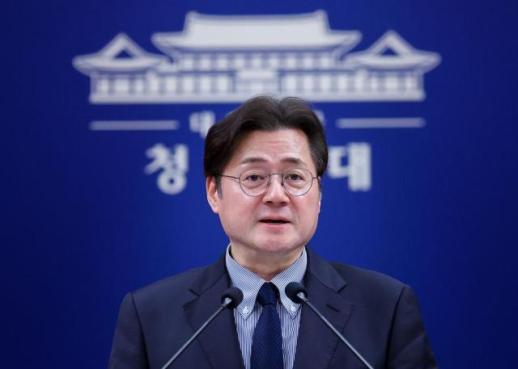 Cheong Wa Dae to form emergency task force to monitor Middle East fallout SEOUL, March 25 (AJP) - An emergency task force will be set up within Cheong Wa Dae to respond to potential economic shocks as the conflict in the Middle East drags on with no clear end in sight. During a press briefing at Cheong Wa Dae in central Seoul on Wednesday, Hong Ik-pyo, senior presidential secretary for political affairs, said the emergency situation room, led by presidential chief of staff Kang Hoon-sik, will be created, separately from the existing government-wide emergency unit headed by Prime Minister Kim Min-seok. Hong said the new body is intended for crisis management in response to domestic and international developments related to the prolonged conflict in the Middle East, which began with U.S.-led airstrikes on Iran late last month. It will be divided into five working-level groups to preemptively respond to potential economic emergencies, with senior presidential secretaries responsible for each group. Each group will be assigned to specific areas including macroeconomics, energy supply, financial stability, public welfare and overseas emergencies, and will be required to submit daily monitoring reports. Their findings will also be regularly disclosed to the public. Meanwhile, Hong said details of a supplementary budget to support those affected by energy supply disruptions and others will be finalized at a regular Cabinet meeting next week, though they remain subject to change depending on preparations by fiscal authorities. 2026-03-25 14:20:59
 -
 Woori Bank Launches AI System to Detect Suspicious Transactions Woori Bank said on the 25th it has launched an artificial intelligence-based fraud detection system (FDS) inspection platform to help prevent financial incidents and automate work. The system is designed to let AI learn transaction patterns on its own and flag new types of financial wrongdoing. Using the bank’s full set of financial transaction data, it screens for unusual signs and uses AI to automatically generate inspection data and preliminary scenarios. After the scenarios are checked for accuracy, they are applied to actual inspections, which the bank said can strengthen prevention through daily monitoring. The platform also analyzes unstructured data such as scanned images and applies retrieval-augmented generation (RAG) to make large volumes of inspection materials easier to use, improving the efficiency of internal controls. RAG is an AI method that automatically finds and organizes needed information, reducing the time staff spend reviewing documents and enabling faster checks. A Woori Bank official said the upgraded AI-based FDS inspection system will expand the scope of daily monitoring and allow the bank to respond proactively to hard-to-predict financial incidents. The official said the bank will actively introduce AI into internal controls as part of its shift to an AI transformation-based management system to help prevent financial incidents.* This article has been translated by AI. 2026-03-25 14:15:00
 -
 KBO preseason sets attendance record with 440,247 fans in 60 games The KBO League drew a record number of fans to its preseason schedule this year. The Korea Baseball Organization said Tuesday that 440,247 fans attended 60 games in the 2025 Shinhan SOL KBO League preseason through Monday, the highest single-season total in preseason history. The previous record was 321,763 set last year. With the regular season a week away, attendance topped 80,000 on consecutive days March 21-22, for a combined 163,626. On March 22, the KBO set a single-day preseason record with 83,584 fans. Cumulative attendance rose 36.8% from a year earlier. Average attendance per game was 7,337, down about 4.2% from last year’s record 7,661 over 42 games, affected by eight games scheduled at Futures League parks such as Icheon and Masan. Games averaged 2 hours, 52 minutes, up 7 minutes from last year. Strikeouts per game fell 4.4% to 14.45, while walks rose 0.3% to 7.88. The leaguewide ERA increased 35.0% to 5.25 from 3.89. Hits per game climbed 12.7% to 18.23 from 16.17. Home runs rose 57.1% to 1.98 per game from 1.26, and batting average increased 9.0% to .267 from .245.* This article has been translated by AI. 2026-03-25 14:00:35
 -
 APFF 2026 probes why Korean finance sector fails to move beyond home turf SEOUL, March 25 (AJP) -South Korea’s manufacturers and pop culture have gone global, but its financial industry still struggles to move beyond home turf — a gap that took center stage at the 2026 Asia-Pacific Financial Forum in Seoul on Wednesday. Hosted by Aju Business Daily and ABC, this year's forum held at The Plaza Hotel asked “In the AI era, why has Korean finance yet to cross borders?” The event sought to diagnose the structural limitations holding back Korea’s financial industry and to explore how its role and competitiveness should be redefined in the age of artificial intelligence. Now in its 19th year, the APFF has established itself as a platform for discussing strategies to help Korean finance grow beyond its home market. The forum brought together leading experts from South Korea and abroad for a series of high-level lectures and discussions. Agustín Carstens, former general manager of the Bank for International Settlements (BIS), delivered the keynote speech titled, “Why K-industry is global, but K-finance remains local,” focusing on the challenges facing Korea’s financial sector and its future potential. 2026-03-25 13:37:14