
Journalist

Lee Hugh
=
-
 BTS’ ‘Life Goes On’ Tops 1 Billion Spotify Streams, Their Sixth Song to Hit the Mark BTS’ “Life Goes On” has surpassed 1 billion streams on Spotify. The track, the title song from the group’s seventh mini album “BE,” released in November 2020, reached 1 billion cumulative plays on the global audio and music streaming platform as of March 21. It became BTS’ sixth song to cross the 1 billion-stream threshold. The group previously hit 1 billion streams with “FAKE LOVE,” “Boy With Luv,” “Dynamite,” “Butter” and “My Universe.” “Life Goes On” is notable for reaching the milestone with lyrics primarily in Korean. The achievement drew added attention as it coincided with the strong performance of BTS’ new release “ARIRANG,” unveiled March 20. As all tracks from “ARIRANG” showed strength on Spotify’s “Daily Top Songs Global” chart, “Life Goes On” also re-entered the rankings as of March 21, nearly five years after its release. “Life Goes On” delivers a message of comfort — “still, life goes on” — in the face of circumstances that force people to stop. Upon release, it topped Billboard’s main singles chart, the Hot 100, dated Dec. 5, 2020, sparking global attention. Billboard said it was the only song in the chart’s 62-year history to reach No. 1 with lyrics centered on Korean. The music video, which Jungkook helped direct, has also drawn steady interest. The video shows the members in everyday moments and singing in a calm mood, conveying warmth to fans. Jungkook expressed the disappointment and longing of not being able to meet fans in person due to COVID-19. BTS released “ARIRANG” on March 20. Its title track, “SWIM,” ranked No. 1 on Spotify’s “Daily Top Songs Global” chart for two consecutive days, dated March 20-21. In South Korea, it also topped daily charts dated March 22 on major music platforms including Melon, Genie and Bugs. * This article has been translated by AI. 2026-03-23 15:51:42
 -
 South Korea to Expand Loan Curbs on Multi-Homeowners; Installment Mortgages Also in Scope The Financial Services Commission is expected to announce steps as early as the end of this month to tighten lending rules not only for rental business operators but also for individual multi-homeowners. Beyond denying extensions, regulators are weighing measures such as blocking refinancing and encouraging higher borrowing costs, signaling a broad push to rein in multi-homeowner lending. According to data provided by the office of Rep. Kim Hyun-jung of the Democratic Party, a member of the National Assembly’s Political Affairs Committee, mortgages held by individual multi-homeowners at the four major banks — KB Kookmin, Shinhan, Hana and Woori — totaled 63.7 trillion won as of the end of January. The amount represents a meaningful share of household lending, making market impact likely if new restrictions take effect. By repayment type, installment loans accounted for 96% (61 trillion won), while interest-only, lump-sum repayment at maturity made up 4% (2.5 trillion won). Shinhan Bank and Hana Bank reported no such lump-sum loans. KB Kookmin Bank and Woori Bank had only a small share, about 5% to 10%. That breakdown is drawing attention to whether the FSC will also target installment mortgages held by individual multi-homeowners. Even if regulators stop short of the toughest measures for individuals immediately, they could broaden the scope to manage multi-homeowner lending more comprehensively. Analysts say expanding rules beyond rental business operators to individual multi-homeowners would raise the overall policy intensity. One option under discussion would curb a strategy used by some borrowers who keep 30-year loans but switch to lower-rate products after three years, when prepayment fees are waived, to reduce interest costs. Regulators could also consider steps that encourage banks to raise add-on rates, increasing borrowing costs for multi-homeowners more broadly. For lump-sum repayment loans, regulators are expected to consider denying maturity extensions. An FSC official said, “The main axis of this regulation is rental business operators, but it will also include rules for individual multi-homeowners.” The FSC is also expected to announce additional measures for rental business operators. As of January, their outstanding bank loan balance totaled 258.5 trillion won. Unlike individual multi-homeowners, rental business operators had a much higher share of lump-sum repayment loans, at 88%, exceeding installment loans. The FSC is reviewing whether to apply a 0% loan-to-value rule — previously limited to new loans — at the time of maturity extensions as well. If the FSC rolls out multi-homeowner lending curbs alongside overall household lending caps by the end of the month, pressure on financial firms is expected to increase. Blocking maturity extensions could raise borrowers’ repayment burdens and fuel concerns about higher delinquency rates. At the same time, tighter household lending limits could reduce capacity for new loans. A financial industry official said, “With concerns growing about a domestic slowdown as Middle East risks drag on, strong regulations could quickly expand delinquency rates,” adding, “The president has also mentioned tax adjustments as a last-resort regulatory tool, making changes to lending strategy unavoidable.” 2026-03-23 15:51:00
 -
 ITZY’s Yuna Makes Solo Debut With First EP, ‘Ice Cream’ ITZY’s youngest member, Yuna, is stepping out on her own seven years after debuting with the group, unveiling her first solo EP, “Ice Cream.” A release news conference was held Monday afternoon at the Pullman Ambassador Seoul East Pole in Seoul’s Gwangjin district. Yuna debuted with ITZY in 2019 and becomes the group’s second member to launch a solo project, following Yeji. “It’s my first solo album in seven years, so I feel a lot of pressure, and I really want to do well,” Yuna said. She added that Yeji’s solo work “influenced me in a good way” and helped her prepare. Yuna said she wrestled with doubts during production, asking herself whether she could carry a project alone, but said the process ultimately gave her confidence. “While preparing the album, I discovered sides of myself I didn’t know and gained courage,” she said, crediting support from staff, her bandmates and the group’s fan community, known as MIDZY. “It wasn’t easy to fill a song in diverse ways with only my voice. I studied a lot at home and in the studio, and I think that process gave me another chance to grow.” She said the solo project also pushed her to be more assertive than she typically is in group work. “In group activities, the five of us have to bring our opinions together and compromise, so I tended to follow,” she said. “For this album, I shared my opinions first and acted more proactively.” The title track, “Ice Cream,” is a bubblegum pop song with a bouncy, addictive hook. It carries a message about savoring the moment “as sweetly as ice cream melting,” she said. “I was hooked the first time I heard ‘Ice Cream,’” Yuna said. “As soon as I heard it, I could picture the stage, the performance and the visuals, and I thought I wanted to show my charm with this song.” She said she hoped the choreography would be something “anyone would want to follow,” and that she prepared a performance that suits her. The EP also includes “B-Boy,” described as having a freer mood; “Blue Maze,” which depicts a soft, dreamy moment of love; and “Hyper Dream,” built on layered sound. “I think my strength is bright, natural energy,” Yuna said, calling the release a good fit for spring and recommending it for commutes. She said ITZY members encouraged her after hearing the songs, and that Yeji visited the music video set. “When I saw her, I teared up,” Yuna said, adding that a snack truck sent by the members — with bungeoppang and fish cake — was “really delicious” and moving. Yuna also recalled encouragement from Park Jin-young, whom she referred to as PD. “He told me, ‘Yuna, I’m really looking forward to it. Don’t get hurt, and finish it well in good health,’” she said, adding that his support meant more because he has watched her grow since she was young. Yuna said she hopes the promotions help establish her beyond her role as the group’s youngest member. “I want to be recognized as Yuna, and I want to receive a lot of love,” she said. “I’ll do my best so that when you see the stage, you’ll say Yuna has grown up well.” “Ice Cream” will be released at 6 p.m. Monday on major music streaming platforms. * This article has been translated by AI. 2026-03-23 15:45:19
 -
 S. Korean broadcaster wins final copyright suit against China's video platform Bilibili SEOUL, March 23 (AJP) - South Korean broadcaster MBC has secured a final victory in its high-stakes copyright infringement suit against the Chinese video-sharing platform Bilibili, the company said Monday. The Jiangsu High People's Court delivered a definitive blow to the digital "safe harbor" defense long utilized by Chinese tech giants, signaling a critical shift in how Beijing enforces international intellectual property standards for foreign content providers. By significantly increasing damages in this final appeal, the court established that a platform's duty of care scales with its commercial influence and the sophistication of its recommendation algorithms. The ruling marks a long-awaited turning point for foreign entities that have historically struggled to find functional legal recourse within the Chinese judicial system. Based in Shanghai, Bilibili is one of China’s most influential video-sharing platforms, often described as a hybrid of YouTube and Netflix with a heavy focus on anime, gaming, and "user-generated content." By the end of 2025, the platform averaged 366 million monthly active users, making it a central hub for young Chinese consumers and a dominant force in the region's digital economy. Unlike other online video platforms where South Korean dramas and films are the primary focus, Bilibili serves as the preeminent source for South Korean music programs, variety entertainment shows, and celebrity-driven content. These broadcasts are typically uploaded to the platform within one or two hours of their original airing in Seoul, complete with sophisticated Chinese subtitles provided by "fansub" groups. This near-simultaneous piracy undercuts the commercial viability of legitimate licensing deals and streaming rights, creating a systemic drain on the industry. The scale of the crisis is underscored by data from Park Young-soon, a lawmaker from South Korea's Democratic Party, who noted that trademark infringements in China surged from 977 in 2017 to a peak of 3,457 in 2020. While 2021 saw 2,922 recorded cases, the systemic nature of the problem remains evident. According to Park Young-soon, China accounts for 63.4 percent of all overseas intellectual property disputes involving South Korean companies. Despite this overwhelming volume, government support for affected firms has remained relatively modest, with only 65 cases receiving state assistance in 2021. The case originated in 2021 when MBC filed for damages after discovering thousands of unauthorized clips circulating on the platform for extended periods. Although a lower court initially recognized the infringement, the broadcaster appealed because the awarded damages failed to reflect the actual commercial value of the content or the platform’s role in its spread. In its final judgment, the Jiangsu High People's Court pivoted, ruling that the platform's failure to act despite the obvious "commercial value and high recognition" of the MBC library constituted a form of contributory infringement. This hardening of the Chinese judiciary aligns with broader trends observed in recent years. In 2024 alone, Chinese courts awarded approximately 120 million dollars in punitive damages across 18 major cases, reflecting an intensified effort to align domestic enforcement with international standards like the Berne Convention and TRIPs Agreement. The court has signaled that the sheer scale of a platform now dictates a higher duty of care. Beijing appears increasingly willing to treat large-scale digital platforms not as passive hosts, but as active distributors responsible for the legality of the traffic they monetize. An official from MBC stated that the ruling makes it clear that platforms can no longer evade responsibility while exercising substantial influence over content distribution and reaping immense profits. The broadcaster confirmed it will continue to pursue aggressive legal action against any overseas platforms that facilitate the unauthorized distribution of its content, regardless of the format. The judgment is final and takes immediate effect under China’s two-instance trial system. 2026-03-23 15:30:55
 -
 Korean cracking facilities shuttering amid naphtha crunch, Seoul reacting to crisis SEOUL, March 23 (AJP) - South Korea's major naphtha cracking facilities at the Yeosu Industrial Complex are shuttering as a worsening naphtha supply crunch triggered by the blockade of the Strait of Hormuz forces the industry into emergency measures. LG Chem, the country's largest petrochemical firm, said Monday it would suspend operations at its No. 2 naphtha cracking center (NCC) plant in Yeosu, which has an annual ethylene production capacity of 800,000 tons. The company will keep its larger No. 1 plant, with a capacity of 1.2 million tons per year, running to maintain baseline output. Yeochun NCC, a joint venture between Hanwha Solutions and DL Chemical, also halted its olefin conversion unit (OCU) and some downstream operations. Lotte Chemical is advancing maintenance shutdowns and reallocating supplies to sustain core production. The moves reflect mounting strain as feedstock costs surge and supply routes remain disrupted. The move is aimed at conserving limited naphtha stocks by curtailing production of lower-demand petrochemical products while keeping core ethylene output intact. Yeochun NCC is struggling to maintain its operating rate at about 60 percent as a drop below 50 percent would force a complete shutdown due to safety risks. Naphtha prices have surged since the blockade of the Strait of Hormuz cut off imports from the United Arab Emirates, Qatar and Kuwait. Domestic naphtha prices reached $1,068 per ton as of March 18, roughly double the level at the start of the year. Global benchmark naphtha prices climbed to $873 per ton on Monday from about $480 at the beginning of the year, according to Trading Economics. The spike has effectively eliminated refining margins between naphtha and ethylene, meaning petrochemical producers are incurring losses for every ton of output. The shutdowns have raised concerns over downstream supply disruptions. Ethylene and propylene are essential feedstocks for plastics and vinyl, while butadiene is used in synthetic rubber for tires and paraxylene serves as a base material for polyester textiles. With the industry facing cascading risks, the government moved to shore up supplies and contain the fallout. Yang Ki-wook, the Ministry of Trade, Industry and Resources director-general of industrial resource security, said at a daily briefing of the government's Middle East response task force on Monday that "the pace of international oil price increases has been steeper than during the 2022 Russia-Ukraine war." He added that there would be no major disruption to domestic crude oil supply in April. Speaking at the National Press Club in Australia's capital, International Energy Agency chief Fatih Birol said Monday compared the current energy crisis to those of the 1970s and the impact of Russia's 2022 invasion of Ukraine. "This crisis as things stand is now two oil crises and one gas crash put all together," Birol said. The industry ministry plans to redirect domestically produced naphtha from exports to the domestic market by coordinating with refiners, which account for about 55 percent of the country's naphtha supply. Yang said emergency supply adjustment orders could delay potential plant shutdowns until late April or May, and that the government would seek supplementary budget allocations to support the effort. He added that the refiners were securing alternative volumes by rerouting shipments around the Strait of Hormuz. Of 24 million barrels to be sourced from the UAE, about 4 million barrels are set to arrive in late March and early April, with the remaining 18 million barrels expected to begin arriving from early to mid-April. The government is also considering imports of Russian crude oil, made possible by a temporary easing of U.S. sanctions, but remains cautious due to concerns over quality, financial settlement risks and potential secondary sanctions. 2026-03-23 15:08:30
 -
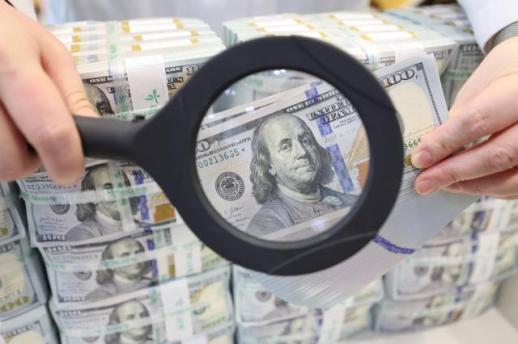 FX deposits fall for second month on overseas investment, import payments SEOUL, March 23 (AJP) - Resident foreign currency deposits in South Korea declined for a second straight month in February, as corporate demand for overseas investments and import settlements weighed on balances. According to data released Monday by the Bank of Korea (BOK), outstanding resident foreign currency deposits at foreign exchange banks stood at $117.53 billion at end-February, down $490 million from a month earlier. The decline follows a sharper $1.4 billion drop in January, extending the downward trend. Resident foreign currency deposits include holdings by domestic residents, local companies, foreigners residing in Korea for more than six months, and foreign corporations operating in the country. By currency, U.S. dollar-denominated deposits fell by $340 million, while Japanese yen deposits declined by $210 million. In contrast, euro deposits rose by $200 million. Corporate deposits — which make up the bulk of total holdings — led the decline, dropping $450 million to $100.23 billion. Individual deposits edged down $40 million to $17.31 billion. By institution, deposits at domestic banks decreased by $280 million, while those at local branches of foreign banks fell by $210 million. The BOK said the decline in dollar deposits was driven by outbound investments and payments for import bills, while the drop in yen deposits reflected settlements of current account transactions. The data suggest the continuation of demand-driven fluctuations seen in recent months. In January, euro deposits had also declined, largely due to corporate payment needs. 2026-03-23 14:50:14
 -
 ITZY’s Yuna on ‘THAT’S A NO NO’ resurgence: ‘Ice Cream’ solo debut can keep momentum ITZY’s Yuna shared her thoughts on the renewed popularity of the group’s track “THAT’S A NO NO.” A news conference marking the release of Yuna’s first solo album, “Ice Cream,” was held Monday afternoon at the Pullman Ambassador Seoul East Pole in Seoul’s Gwangjin district. “THAT’S A NO NO,” a B-side from ITZY’s second mini-album “IT’z ME,” released in March 2020, has been gaining traction through social media and is climbing music charts again. “‘THAT’S A NO NO’ is rising again,” Yuna said. “As spring comes, it’s getting a lot of love, so I feel great. I’d be grateful if ‘Ice Cream’ is loved along with ‘THAT’S A NO NO.’” She added, “I’m confident I can keep this momentum with my solo activities.” She said her strength is “bright, natural energy,” adding that listeners will be able to feel that in the new album. “Ice Cream” is a bubblegum pop track described as bouncy and highly addictive. It carries the message: “Like ice cream melting sweetly, don’t miss this moment — enjoy it to the fullest,” and aims to energize listeners. The album is set to be released at 6 p.m. Monday on major music platforms.* This article has been translated by AI. 2026-03-23 14:39:16
 -
 Kookmin University holds industry seminar on robot skin research SEOUL, March 23 (AJP) - The Robot Functional Skin and Hyper-Sensory Research Center at Kookmin University (KMU) held a meeting with 16 participating companies on March 17 at the JW Marriott Dongdaemun Square to share first-year research outcomes. The center, led by Professor Lim Si-hyung of the KMU Department of Mechanical Engineering, operates as part of the Engineering Research Center (ERC) project supported by the National Research Foundation of Korea. The project involves 10 professors from KMU, Seoul National University, Ulsan National Institute of Science and Technology (UNIST), Gachon University, and Kumoh National Institute of Technology. Research focuses on developing functional skins and sensory systems that allow robots to operate in extreme environments involving high temperatures, humidity, and corrosion. The center aims to overcome the limitations of current robotic systems, which rely heavily on visual sensors, by developing non-visual recognition platforms and durable surface materials. The seminar provided a forum for partner companies, including SOS Lab and Nexensor, to discuss technical difficulties and industry needs. Participants agreed to establish a cooperation system to identify joint research projects beyond the current scope of the ERC mandate. "Close exchange with industry is essential to complete next-generation robot technology that performs precise missions even in extreme environments," Center Director Lim Si-hyung said. "We will continue to hold regular meetings to reflect corporate needs in our research and develop effective original technologies." 2026-03-23 14:04:56
 -
 Asia markets slide as foreign flows unwind amid U.S. ultimatum on Iran SEOUL, March 23 (AJP) — A sharp pullback in foreign positioning rippled across Asian markets Monday after Washington issued a 48-hour ultimatum for Iran to reopen the Strait of Hormuz, prompting investors to cut exposure to risk-sensitive assets. Chip-heavy markets led regional losses. Japan’s Nikkei 225 slipped below the 51,000 mark for the first time since Jan. 5, according to Kyodo News, dragged down by semiconductor stocks. Advantest plunged 6.76 percent, while Tokyo Electron fell 4.35 percent. Oil-sensitive chemical and manufacturing shares, along with retail heavyweight Fast Retailing, also declined. Hong Kong’s Hang Seng Index dropped 2.40 percent to 24,670.29, China’s Shanghai Composite fell 1.88 percent to 3,882.67, and Taiwan’s Taiex Index declined 2.04 percent to 32,860.10. The KOSPI slid sharply at the open, triggering a sell-side sidecar at 9:18 a.m. after KOSPI200 futures dropped more than 5 percent for over one minute — the 10th such activation this year. Foreign investors accelerated outflows, dumping more than 1.16 trillion won worth of shares shortly after the opening bell. The Korean won also came under pressure. The dollar-won exchange rate opened at 1,504.9 won and rose to as high as 1,511.8 won in early trade — its highest level since March 2009 during the global financial crisis. The market reaction followed U.S. President Donald Trump’s warning that Iran must reopen the Strait of Hormuz within 48 hours or face further military action, intensifying fears of a prolonged disruption to a critical global energy route. As of 11:01 a.m., the KOSPI had fallen 4.88 percent, or 281.93 points, to 5,499.27, while the KOSDAQ dropped 3.65 percent to 1,119.08. Losses were broad-based across sectors. In semiconductors, Samsung Electronics declined 4.96 percent and SK hynix dropped 6.26 percent. Automakers also weakened, with Hyundai Motor down 4.84 percent, Kia falling 4.57 percent and Hyundai Mobis losing 5.37 percent. Energy, industrial and shipbuilding stocks were also under pressure. LG Energy Solution fell 3.60 percent, SK Square plunged 8.22 percent and Doosan Enerbility declined 5.75 percent. Hanwha Aerospace, HD Hyundai Heavy Industries, Hanwha Ocean and HD Hyundai Electric all posted losses of around 4 to 7 percent. In bio and healthcare, Samsung Biologics fell 3.81 percent and Celltrion declined 5.79 percent. Financials tracked the broader downturn, with KB Financial Group falling 4.83 percent, Shinhan Financial Group down 5.62 percent, Mirae Asset Securities dropping 6.50 percent and Samsung Life Insurance losing 4.32 percent. Among other large caps, Samsung C&T declined 5.38 percent and NAVER slipped 4.51 percent. On the KOSDAQ, Samchundang Pharm stood out among the few gainers, rising 3.97 percent on continued optimism over its oral insulin pipeline. Analysts said market direction this week will hinge on geopolitical developments and U.S. rate expectations, while warning of potential peak-out concerns in the memory cycle following Micron’s earnings. Investors were advised to monitor semiconductor earnings revisions and foreign fund flows closely. 2026-03-23 11:40:35
 -
 BTS week continues with back-to-back Tonight Show and Netflix documentary SEOUL, March 23 (AJP) - BTS moved immediately into the next phase of its comeback campaign after officially returning as a full group through a livestreamed concert at Gwanghwamun on Saturday, departing for New York the following day. The K-pop superstars are set to appear on “The Tonight Show Starring Jimmy Fallon” on March 25 and 26. RM, Jin, SUGA, j-hope, Jimin, V and Jung Kook will join Fallon in studio for their first public interview tied to a new album release in six years. The group is also scheduled to perform two songs from “ARIRANG.” It marks BTS’s first full-group return to the program since the July 2021 “BTS Takeover,” which drew more than 120 million views across digital platforms and included performances of “Butter” and “Permission to Dance.” The group’s full-scale return was amplified by a free concert at Gwanghwamun, which was livestreamed through Netflix, turning the album launch into a global event. As of Saturday, a day after the album’s release, “SWIM” and “Body to Body” were leading Spotify charts, while several other tracks also landed in the top 10. Netflix is set to release the documentary film “BTS: THE RETURN” on Friday, chronicling the making of “ARIRANG” and offering behind-the-scenes insight into the band’s reunion after nearly four years. The rollout will continue into April with the launch of BTS’s new world tour, beginning in Goyang, just outside Seoul. The group is scheduled to hold three shows there on April 9, 11 and 12 before moving on to Tokyo for the first overseas leg of what is expected to become a multi-continent tour. BTS closed its Gwanghwamun performance with a message stressing that the event had been made possible through broad collective support, thanking fans, local residents and public authorities. “This stage was not ours alone,” the group said in a letter released after the concert. The members also acknowledged the inconvenience caused to nearby residents and businesses, expressing both gratitude and apology for the disruption. 2026-03-23 11:32:23