

The presidential office Wednesday expressed “deep regret” after three days of government-mediated wage talks collapsed in Sejong City, while the Ministry of Employment and Labor vowed to use “every possible method” to keep both sides engaged ahead of the union’s planned 18-day walkout from May 21 through June 7.
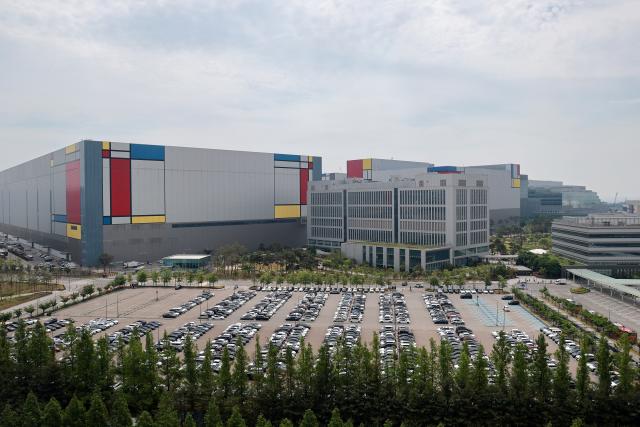
The strike would mark the most serious labor disruption in Samsung Electronics’ history and comes at a particularly sensitive moment for the global semiconductor industry as artificial intelligence-driven demand fuels a worldwide race for advanced memory chips.
Samsung Electronics, which accounted for 36 percent of the global DRAM market and 22 percent of the high-bandwidth memory market as of the end of 2025, plays a central role in the AI supply chain powering data centers and next-generation computing systems.
At the heart of the dispute is the union’s demand that Samsung allocate 15 percent of annual operating profit to bonuses, scrap the current cap equivalent to 50 percent of annual salary and institutionalize the revised compensation structure as a permanent rule.
Samsung rejected the demands, arguing that the proposal would undermine performance-based pay by forcing the company to compensate even loss-making divisions at levels it described as “socially difficult to justify.”
“There should be no strike under any circumstances,” Samsung said in a statement, while adding that it remained open to further dialogue to avoid production disruptions.
Union leaders accused management of dragging out decisions until the mediation deadline expired despite meaningful progress during the talks.
“The union participated sincerely throughout the three days of talks and did its best to find common ground,” said Choi Seung-ho, head of the Samsung Electronics chapter of the National Samsung Group Union. “We accepted the mediation proposal presented by the National Labor Relations Commission, but management failed to make a decision in time.”
The labor ministry declined to comment on whether it could invoke emergency arbitration powers, a rarely used mechanism that allows the government to suspend strikes for up to 30 days in industries deemed critical to the national economy.
Industry estimates cited by government officials suggest that an 18-day strike could inflict direct and indirect economic losses of up to 100 trillion won ($72 billion). Prime Minister Kim Min-seok earlier publicly warned about the possibility of “100 trillion won in damage” if semiconductor production suffers prolonged disruptions.
A recent Bank of Korea report delivered to the presidential office reportedly estimated that a prolonged strike combined with the time required to fully restore semiconductor production lines afterward could shave 0.5 percentage point off South Korea’s annual economic growth while causing roughly 30 trillion won in semiconductor output losses.
Samsung has also warned of serious operational risks unique to semiconductor manufacturing. The company said cleanroom systems require uninterrupted temperature and humidity control while wafers can become unusable if they fail to move through fabrication processes within strict time limits.
A local court earlier this week partially sided with Samsung by ordering the union to maintain minimum staffing levels necessary for safety, facility protection and quality control during any industrial action. The ruling also barred union leaders from blocking access to production facilities.
Suppliers have urged the union to reconsider the strike, warning that disruptions to chip production could quickly spread to equipment suppliers, subcontractors and nearby commercial districts.
The dispute has additionally exposed tensions within the union itself. Some members from Samsung’s DX division filed injunction requests accusing union leadership of bypassing normal voting procedures and focusing excessively on semiconductor-related bonus demands while failing to adequately represent other business divisions.
Legal controversy surrounding the strike is also expected to intensify. South Korea’s Supreme Court has previously ruled that Samsung’s excess-profit incentives are not ordinary wages but post-performance distributions tied to management results, raising broader questions over whether strikes centered on profit-sharing disputes fall within the traditional scope of collective bargaining.
Copyright ⓒ Aju Press All rights reserved.
