Apart from a handful of convenience stores, butcher shops and fruit vendors, the neighborhood’s only meaningful grocery option is a Homeplus supermarket whose shelves are increasingly dominated by tissues, detergents and whatever inventory remains.
"I walked around the neighborhood for more than half an hour to buy a carton of eggs," she said. "I gave up on finding spaghetti sauce."
The affluent Seocho district neighborhood has seen more than three grocery stores shut down in recent years, leaving Homeplus as the area’s last sizable brick-and-mortar supermarket. Weekend checkout lines regularly stretch across the store, while delivery orders can take hours.
At the retailer's branch in Hwaseong, Gyeonggi Province, the basement floor once occupied by cosmetics chains Olive Young and Nature Republic now sits vacant after both tenants pulled out.
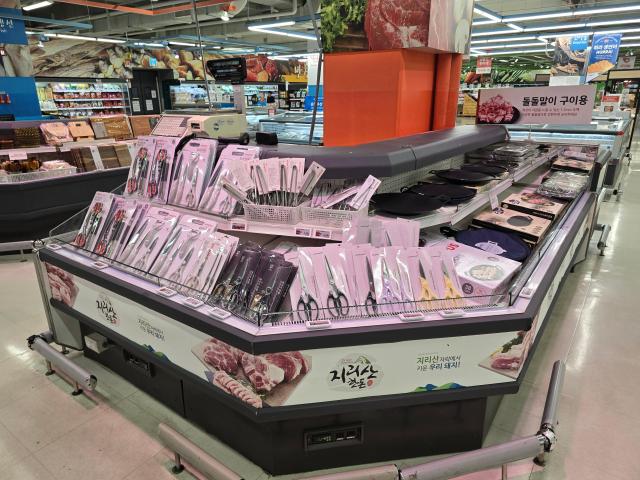
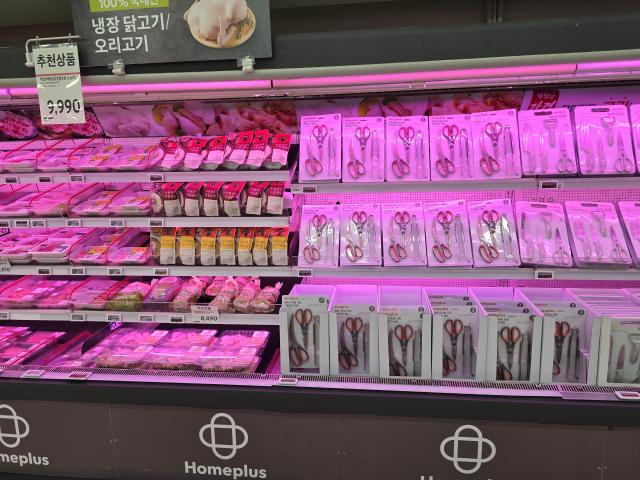
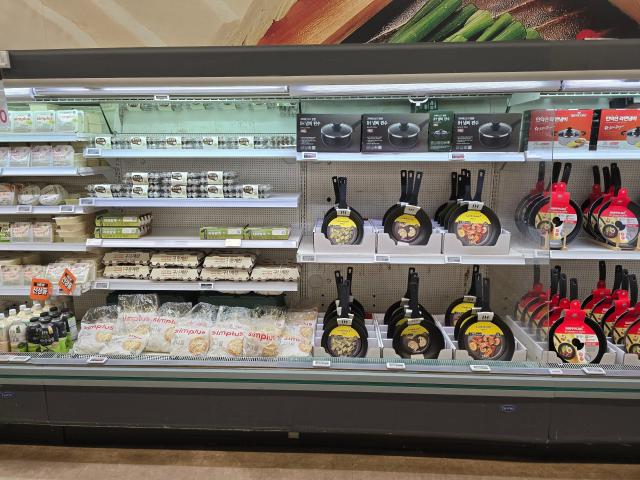
The pork counter labeled "Handon" — domestic pork — displays wooden cutting boards instead of meat. Ceramic bowls sweat with condensation beside packs of marinated bulgogi, while kitchen scissors rest awkwardly among refrigerated chicken trays.
Frying pans are stacked in the eggs-and-tofu aisle. In the liquor section, beer has vanished entirely. Only zero-alcohol versions of Hite and Terra beer remain alongside slow-moving whisky and traditional liquors. Soju is nowhere to be found.
The scene tells a sharper story than any balance sheet.
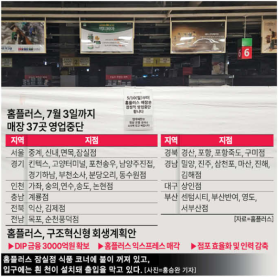
Homeplus, South Korea's second-largest hypermarket operator, is bleeding cash under court-led rehabilitation proceedings even after agreeing to sell its supermarket arm, Homeplus Express, to NS Shopping, an affiliate of Harim Group, for around 120 billion won ($79 million).
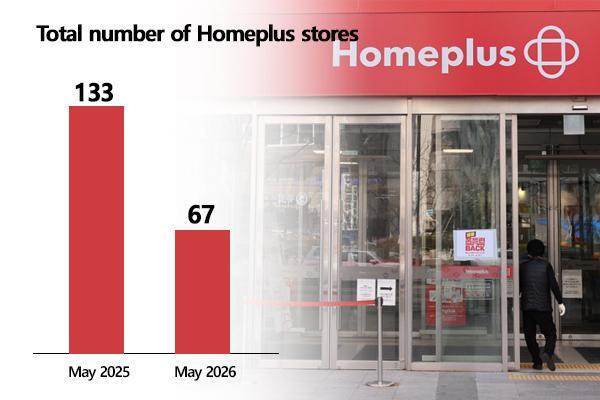
The proceeds from the sale are not expected to arrive until late June, and the company said earlier this week that 37 of its 104 hypermarkets have suspended operations since May 10. Only 67 stores remain open.
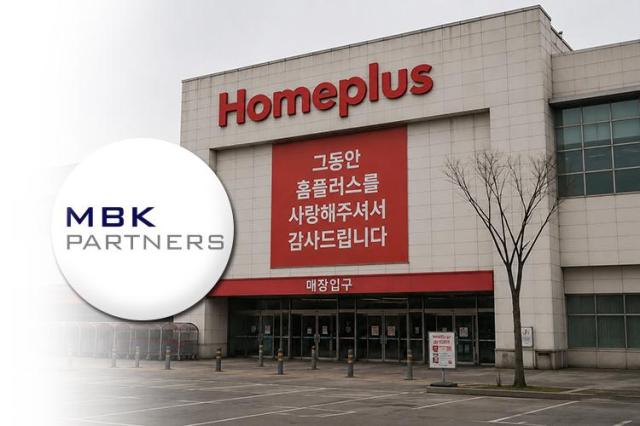
Homeplus has requested a short-term bridge loan from its largest creditor, Meritz Financial Group, using the proceeds from the Express sale as collateral. But negotiations have reportedly stalled as Meritz demands joint guarantees from owner MBK Partners and company management, citing potential breach-of-trust risks should the rehabilitation collapse.
"Without resolving wage arrears and unpaid supplier bills, it is extremely difficult to sustain the rehabilitation process," Homeplus said in a statement. "If the remaining 67 stores are also forced to close, continuing rehabilitation proceedings will no longer be feasible."
The picture beyond Homeplus is hardly any brighter.
Data from South Korea's Ministry of Trade, Industry and Energy show sales at large discount chains plunged 15.2 percent in March from a year earlier, marking the sector’s eighth consecutive quarter of decline since the second quarter of 2024.
Smaller-format supermarket chains, known locally as SSMs, saw sales fall 8.6 percent.
Online retail, by contrast, expanded 8.1 percent and now accounts for 60.6 percent of all major retail sales. The hypermarket sector's share has shrunk to just 8.1 percent, down sharply from 15.1 percent in 2021.
Single- and two-person households — once the core customer base for chains like Homeplus — increasingly prefer smaller, faster and app-based purchases over large weekly shopping trips.
Rivals that recognized the shift early are beginning to pull away.
Emart, South Korea's largest discount chain, posted a first-quarter operating profit of 178.3 billion won, its strongest first-quarter performance in 14 years after converting major stores into experience-focused "Starfield Market" complexes.
Convenience-store chains are pushing in the opposite direction — outward.
GS25 and CU launched 24-hour delivery services through Coupang Eats this week, filling the final overnight gap in their nationwide quick-commerce networks.
Meanwhile, Daiso expanded same-day delivery coverage to all 25 districts of Seoul on May 14, effectively transforming its 1,600 stores into urban micro-fulfillment hubs.
Even Lotte Mart is accelerating investment in logistics infrastructure through its Zetta grocery app and an automated fulfillment center in Busan developed with Britain's Ocado, scheduled to begin operations later this year.
The common thread is increasingly clear: offline space alone no longer pays the rent.
The survivors are reinventing stores as experience venues, logistics hubs or rapid-delivery nodes — anything that offers a function a smartphone screen cannot.
Homeplus, by contrast, is running out of time to decide what it wants to become.
Supplier arrears alone are estimated at around 200 billion won, exceeding the cash expected from the sale of Homeplus Express. Even if Meritz ultimately agrees to extend emergency funding, industry observers say the money would buy only weeks, not a turnaround.
For now, the empty shelves in Hwaseong stand as a reminder of what happens when a retail giant stops being a destination and becomes, briefly, a showroom for whatever stock remains.

Copyright ⓒ Aju Press All rights reserved.