
Homeplus said on Tuesday that Harim Group affiliate NS Shopping was selected as the preferred bidder for its smaller-format supermarket division, following a public tender conducted as part of the retailer's court-led rehabilitation.
Industry watchers peg the likely acquisition price at around 300 billion won ($202 million), well below the 1 trillion won once floated when the unit first went up for sale.
NS Shopping, which has pledged to link Homeplus Express' nationwide brick-and-mortar network with its TV home shopping, T-commerce and online mall businesses, described the acquisition as a strategic move to strengthen its omnichannel competitiveness.
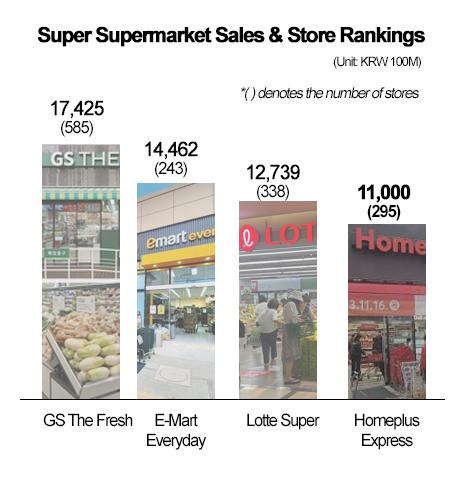
The move marks Harim's return to the super supermarket (SSM) segment after a 14-year absence. Homeplus Express, with about 295 stores at the end of last year, ranks third by store count behind GS Retail's GS The Fresh (585) and Lotte Shopping's Lotte Super (338).
The acquisition would effectively complete a food value chain Harim has pieced together over the past decade. Starting out as a chicken processor in the late 1970s, the group expanded into feed, pork and processed foods before buying bulk shipper Pan Ocean for 1 trillion won in 2015 to secure grain imports.
Harim has also spent years developing an urban high-tech logistics complex in Seoul's Yangjae district, after acquiring the site in 2016 for 452.5 billion won. Industry observers say Homeplus Express' store network, roughly 80 percent concentrated in the Greater Seoul area, dovetails with that logistics hub and could serve as last-mile delivery nodes.
"Securing a retail channel has long been Harim's unfulfilled ambition, but given the structural downturn in offline retail and Harim Industries' current financial condition, the risks are significant if the deal is justified by vertical integration alone," said Kim Dae-jong, a professor of business administration at Sejong University.
"The outcome will depend on whether the group can genuinely turn its stores into quick-commerce logistics hubs and extract real cost savings through manufacturing-to-retail integration."
For Homeplus, the deal offers a rare piece of good news after a brutal year. The chain, wholly owned by private equity firm MBK Partners since 2015, filed for court-led rehabilitation in March 2025 after credit rating downgrades triggered a liquidity squeeze. MBK had acquired the retailer from British owner Tesco for 7.2 trillion won in what was then Asia's largest leveraged buyout.
Homeplus has since shuttered dozens of stores, fallen behind on supplier payments and drawn regulatory scrutiny. The National Pension Service, which invested 612.1 billion won in the original deal, has estimated potential losses of about 900 billion won.
The deal has also unsettled labor, though not in the direction often assumed. The Korea Mart Labor Union (KMLU)'s Homeplus branch, affiliated with the militant Korean Confederation of Trade Unions, had long opposed selling Express as a stand-alone asset, viewing it as a prized division whose disposal could hollow out the rest of the chain.
Rather than opposing a change in management, it has called for a professional restructuring specialist such as UAMCO to replace MBK at the helm — a distinction widely misread as hostility to the sale itself.
"We believe a professional restructuring firm like UAMCO would manage the company far better than a non-specialist private equity group such as MBK," said Choi Cheol-han, general secretary of the KMLU's Homeplus branch.
The Seoul Bankruptcy Court set a May 4 deadline for creditors to approve Homeplus' rehabilitation plan, after granting a two-month extension in March. The plan hinges on selling Homeplus Express to raise operating funds and persuading creditors led by Meritz Financial Group, which holds senior beneficiary rights over a trust backed by 62 store properties securing 1.22 trillion won in loans.
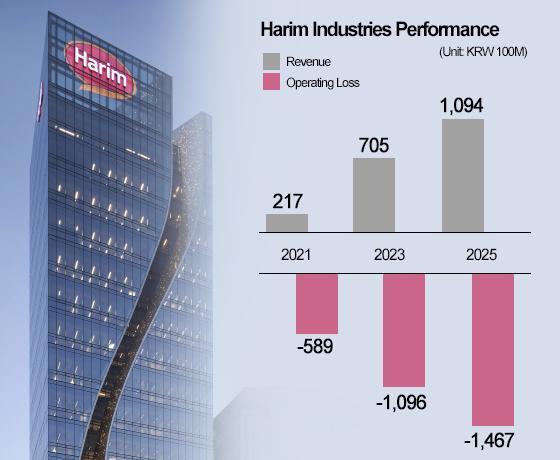
Risks loom on both sides. Harim's food manufacturing arm Harim Industries posted a 146.7 billion won operating loss last year and has accumulated more than 500 billion won in cumulative losses over the past five years.
On the Homeplus side, approval of the revised rehabilitation plan is far from certain, with major creditors earlier balking at a 300 billion won debtor-in-possession financing proposal.

Copyright ⓒ Aju Press All rights reserved.