But a quieter shift now seems to be taking place. It is not marked by dramatic breakthroughs or major progress on long-standing historical disputes. Instead, it is more gradual, built on the steady rebuilding of trust through frequent exchanges including an unusual new practice in which leaders meet not only in their capitals, but also in each other's hometowns.
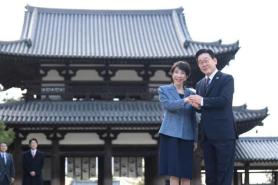
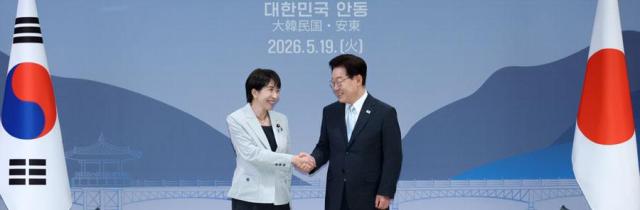
At a summit between President Lee Jae Myung and Japanese Prime Minister Sanae Takaichi held in Andong, a historic city in southern South Korea on Tuesday, the leaders reflected on a pattern that would have been hard to imagine just a few years ago. Just four months earlier, they had met in Nara, Takaichi's hometown.
Now the visit was reciprocated in Lee's hometown. The symbolism was deliberate. By stepping outside the formal setting of traditional diplomacy and into places tied to personal memory, both sides are signaling a desire to humanize a relationship that has long been shaped by historical resentment and mutual misunderstanding.
Yet symbolism alone does not define this moment. What gives this phase of bilateral relations its potential significance is the steady accumulation of practical agreements beneath the formal, ceremonial meetings.
Among them is a long-delayed effort to address remains recovered from Japan's Chosei coal mine, where DNA identification procedures are finally set to begin. The issue, long marked by emotional and historical weight, is being approached through humanitarian cooperation rather than political contestation. It is a small but telling example, showing that even the most painful historical issues can sometimes be worked through when both sides are willing to cooperate and share responsibility.
Police agencies from both countries also signed an agreement to jointly tackle transnational crime and scam networks, which have become increasingly sophisticated and borderless. In an era when fraud is often run across multiple countries and digital platforms, and both sides seem to recognize that older ways of cooperating simply are not enough anymore.
Economic cooperation is now driven by practical needs. Both South Korea and Japan rely heavily on imported energy, and with global markets becoming increasingly unstable, neither country can afford to go it alone. The two countries are now exploring ways to coordinate, including sharing crude oil and petroleum reserves and jointly purchasing liquefied natural gas. These are not symbolic gestures, but practical arrangements that could help shield both economies when the next external shock would come.
At the same time, the two leaders recognized that regional stability cannot be separated from their bilateral relationship. The prolonged conflict in the Middle East, which began with joint U.S. and Israeli airstrikes against Iran in late February, has showed how distant conflicts can quickly translate into domestic economic vulnerability, including disruptions to global supply chains and risks to key shipping routes such as the Strait of Hormuz.
There is also continued emphasis on coordination through broader regional frameworks, including trilateral cooperation with Washington, while keeping channels of dialogue open with North Korea as well as its traditional ally China.
Still, the central question remains whether "shuttle diplomacy," a practice of frequent reciprocal visits, can evolve into something more durable than diplomatic routine. There is always a risk that repetition creates comfort without depth, ritual without results. Leaders may visit each other's hometowns, attend cultural events, and issue joint statements, while some key issues remain unresolved.
Their next meeting, in this iterative format, is expected to take place at a hot spring resort in Japan, further extending this increasingly personal style of diplomacy and reflecting an effort to turn abstract commitments into more practical mechanisms. Even historical issues, often the most intractable, are being approached through narrower, more manageable paths.
Whether this evolving model can endure will depend on how it holds up when political climates change. Shuttle diplomacy can open doors, but it does not guarantee that domestic politics in either country will remain aligned. Security crises, contentious historical issues and other disputes could still persist. For now, at least, a quieter shift is taking shape.
Copyright ⓒ Aju Press All rights reserved.