
Journalist

Lee Hugh
=
-
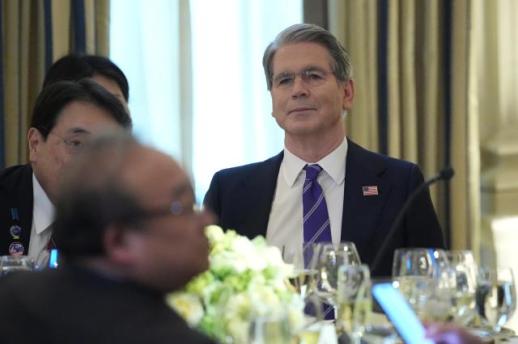 U.S. Iran oil waiver offers limited relief for Korea, little help for petrochemicals SEOUL, March 23 (AJP) - A temporary U.S. decision to allow the sale of Iranian oil already at sea is expected to ease near-term supply pressures, but offers limited relief for South Korea’s petrochemical sector struggling with naphtha naphtha shortages from Strait of Hormuz disruption. The U.S. Treasury Department has authorized a 30-day waiver covering Iranian crude loaded before March 20, a move aimed at injecting additional supply into global markets and stabilizing prices. Treasury Secretary Scott Bessent on Sunday defended the decision, arguing that it would not materially strengthen Tehran while benefiting U.S. allies. “Iran already gets a huge amount of the money, because Iran is the largest sponsor of state terrorism, and China has been funding them,” Bessent said. “This sale…would help the United States’ Asian allies, like Japan, Korea, Indonesia and Malaysia.” For South Korea, the additional supply—estimated at around 140 million barrels globally—could help ease price volatility and improve access to crude suited for domestic refineries. Iranian crude, typically medium-sour, aligns well with Korea’s refining system, allowing efficient processing without major adjustments. The government has yet to issue an official response. The measure is unlikely to significantly ease pressure on Korea’s petrochemical industry, which depends heavily on condensate, a key feedstock for naphtha production. Before U.S.-led sanctions, Iran was a critical supplier. According to the Korea Petroleum Association, Iranian crude accounted for 14 percent of Korea’s total imports in March 2018 before dropping sharply as sanctions tightened. More importantly, Iran supplied about half of Korea’s condensate imports in 2017. Iranian condensate is prized for its high naphtha yield—the base material for petrochemical products—and is typically sold at a discount compared with alternatives, making it both efficient and cost-competitive. The current waiver does not restore direct imports from Iran, nor does it signal a broader shift in sanctions policy. It is restricted to stranded oil—much of it already purchased, often by China—to re-enter the market. 2026-03-23 09:38:31
 -
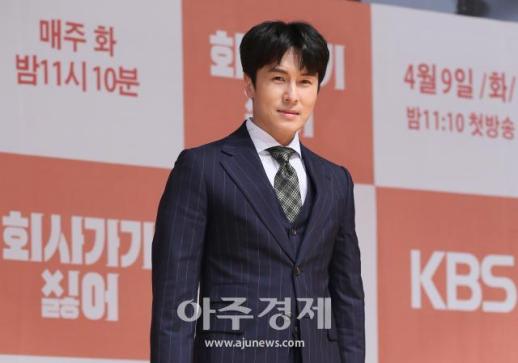 Shinhwa’s Kim Dong-wan Warns of Legal Action Over Ex-Manager’s Online Claims Shinhwa member Kim Dong-wan said he will take legal action over an online post accusing him of misconduct. On Monday, Kim wrote on social media that he would not address “personal relationships,” but warned that if the spread of false information continues, he will pursue “all civil and criminal legal measures.” Earlier, a person identified only as A, who claimed to be Kim’s former manager, posted on an online community: “A few years ago or now, how can you be exactly the same? You drink, go live on SNS and fight with fans — and this time, did you want to be a hero?” A is believed to have written the post after Kim shared a message on March 21 that read, “Anyone want to cheer for Dingdong for no reason?” 2026-03-23 09:27:15
 -
 DeChambeau wins LIV Golf South Africa for second straight title, earns $8.9 million in two weeks 브라이슨 디섐보(미국)가 LIV 골프 남아프리카공화국(총상금 3000만 달러) 대회에서 우승하며 2주 연속 정상에 올랐다. 디섐보는 22일(현지시간) 남아공 요하네스버그 인근 미드랜드의 더 클럽 앳 스테인시티(파71)에서 열린 최종 라운드까지 합계 26언더파 258타를 기록했다. 그는 욘 람(스페인)과 연장전에서 첫 홀인 18번 홀(파5)에서 팁인 버디를 잡아 우승을 확정했다. LIV 골프 개인전 통산 5승째다. 디섐보는 지난주 싱가포르 대회에 이어 2주 연속 LIV 골프 개인전 우승을 차지했다. 싱가포르 대회에서는 연장전 끝에 이태훈(캐나다)을 꺾고 정상에 올랐다. 두 대회 연속 우승으로 디섐보는 2주 동안 상금 890만 달러(약 134억원)를 벌었다. 개인전 우승 상금 400만 달러씩 800만 달러(약 120억원)를 챙겼고, 단체전에서는 6위와 1위로 합계 90만 달러(약 13억원)를 추가했다. 송영한은 합계 16언더파 268타로 공동 17위에 올랐다. 지난주 싱가포르 대회 준우승자 이태훈은 합계 12언더파 272타로 공동 31위를 기록했다. 안병훈은 합계 8언더파 276타로 공동 44위다.* This article has been translated by AI. 2026-03-23 09:24:00
 -
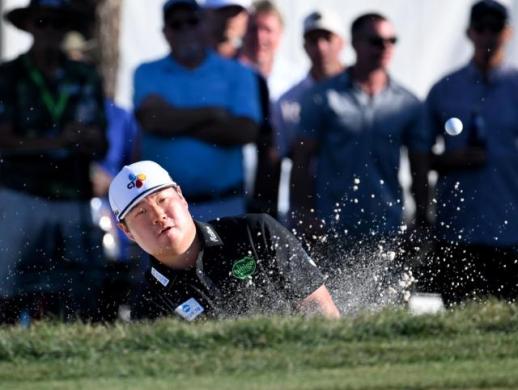 Im Sung-jae finishes fourth at Valspar as Fitzpatrick claims victory SEOUL, March 23 (AJP) - Im Sung-jae secured a tie for fourth place at the Valspar Championship on Sunday, marking his strongest performance of the 2026 season. The 27-year-old South Korean entered the final round at Florida's Innisbrook Resort with a two-stroke lead, seeking his third career victory on the PGA Tour. A challenging closing 3-over 74 left him at 8-under 276 for the tournament, three strokes behind winner Matt Fitzpatrick. The result signals a vital return to form for Seoul’s most consistent golfer. Im had been sidelined throughout January and February due to right wrist inflammation following his mandatory military basic training. After missing the cut in his previous two starts this month, his 54-hole lead at the Copperhead Course effectively ended concerns regarding his physical recovery. Im established himself as a premier talent early in his career, earning the 2019 PGA Tour Rookie of the Year award. Known as the "Ironman" for his heavy playing schedule, he remains the only player to reach the season-ending Tour Championship in every season since his debut. His performance in Florida marks his first top-ten finish of the year. The final round proved difficult as Im carded five bogeys through his first ten holes. He managed to stabilize his round on the back nine, highlighted by a chip-in birdie from the edge of the green on the par-4 16th. While the late surge was not enough to reclaim the lead, the top-five finish provides significant momentum heading into the Masters in April. Britain's Fitzpatrick clinched the title with a 4-meter birdie putt on the 18th hole to finish at 11-under 273. The victory was his first since the 2023 RBC Heritage and earned him a $1.6 million prize. David Lipsky finished one stroke back in second place, while Jordan Smith took third. Other South Korean competitors also delivered notable performances at Innisbrook. Kim Seong-hyeon shot a 1-under 70 to finish tied for seventh at 7-under 277, his best result since May 2024. Kim Joo-hyung finished in a tie for 18th at 4-under 280, level with Brooks Koepka. The PGA Tour continues next week as players make their final preparations for the first major championship of the year. Im is expected to remain the highest-ranked South Korean player in the world rankings following this result. 2026-03-23 09:15:11
 -
 Korea Content Agency Opens 2026 Startup Support Program Applications The Ministry of Culture, Sports and Tourism and the Korea Creative Content Agency, or KOCCA, said on the 23rd they are recruiting companies to take part in the “2026 Content Startup Support Program,” which is designed to back promising content firms from discovery through growth. The program will select 42 projects across three tracks and provide commercialization funding and growth-support programs. Under the “2026 Accelerator-Linked Support” track, KOCCA will select two accelerators and 18 content companies that have been in business for seven years or less. Each company can receive up to 90 million won in commercialization funding, along with startup incubation programs. Selected companies will be able to use the accelerators’ expertise and networks for investment connections, professional consulting and networking support, KOCCA said, aiming to strengthen competitiveness and promote a private-sector-led startup ecosystem. The “2026 Investment-Linked Scale-Up Program” targets 12 companies with a record of attracting private investment. Companies that have secured a single investment of at least 400 million won since January 2024 can receive up to 180 million won in commercialization funding. The “2026 Co-Growth Support Program Linked to Leading Companies” will be run in cooperation with major partners including Naver Cloud, Lotte World, Samsung C&T, Epic Games Korea, Gen.G and Hyundai Engineering & Construction. KOCCA will select 12 content companies that have been in business for at least three years but no more than seven years, offering up to 68 million won in commercialization funding and opportunities to carry out joint projects. A briefing session on the 2026 program will be held at 2 p.m. March 27 in the conference room on the 11th floor of the Gwanghwamun CKL Corporate Support Center. KOCCA said it will explain support details by track, how to apply and key cautions, and will also offer on-site consultations. Details on how to apply and required documents are available on the KOCCA website and the e-Nara Help website. Applications close at 11 a.m. April 8. * This article has been translated by AI. 2026-03-23 08:45:15
 -
 Im Sung-jae Ties for Fourth at Valspar Championship as Matt Fitzpatrick Wins Im Sung-jae’s bid for his first PGA Tour victory in 4 years and 5 months fell short after he faltered in the final round of the Valspar Championship. Im shot a 3-over 74 on Sunday in the fourth round at Innisbrook Resort and Golf Club’s Copperhead Course (par 71) in Palm Harbor, Florida, with two birdies and five bogeys. The tournament purse was $9.1 million. After starting the day alone in first with a two-shot lead, Im finished at 8-under 276, tied for fourth. He opened with back-to-back bogeys on Nos. 2 and 3 and made five bogeys through the par-4 10th, slipping out of contention for his third career PGA Tour title. Still, the result marked his first top-10 finish of the season and a step forward after a wrist injury sidelined him from tournaments in January and February. He struggled upon returning in March, missing the cut at the Arnold Palmer Invitational and The Players Championship. At this event, he led outright after each of the first three rounds. Matt Fitzpatrick of England won with a closing rally, finishing at 11-under 273. He earned $1,638,000 (about 2.46 billion won) in prize money. It was Fitzpatrick’s third PGA Tour title, following the 2022 U.S. Open and the 2023 RBC Heritage. Kim Seong-hyeon finished tied for seventh at 7-under 277, his first top-10 since a tie for fourth at the 2024 May CJ Cup Byron Nelson, 1 year and 10 months ago. Kim Joo-hyung ended tied for 18th at 4-under 280.* This article has been translated by AI. 2026-03-23 08:42:38
 -
 OPINION: Why Iraq now matters As tensions between the United States, Israel and Iran intensify, global attention has fixed on Tehran, Washington and Tel Aviv. Yet the most consequential variable in this widening conflict lies elsewhere — largely overlooked, but increasingly decisive. That variable is Iraq. At first glance, Iraq appears peripheral, spared the sustained bombardment seen elsewhere. In reality, it is fast becoming the space where the logic of war is most deeply embedded. What unfolds inside Iraq may not dominate headlines, but it is quietly shaping the structural conditions that will determine how — and whether — this conflict ends. Iraq’s fragility is not new. The 2003 U.S.-led invasion, justified by the search for weapons of mass destruction, dismantled the precarious balance that had allowed a Sunni minority to govern over a Shiite majority and Kurdish population. What followed was not simply regime change, but state erosion. The post-2011 U.S. withdrawal, combined with the shockwaves of the Arab uprisings and the Syrian civil war, created a vacuum that gave rise to the Islamic State group, which seized Mosul and declared a caliphate stretching across Iraq and Syria. Though IS was eventually defeated through international coordination, the conflict left behind a fragmented security landscape. Armed groups proliferated, and many were never fully absorbed into the state. Iraq today remains a country where the state exists, but does not fully monopolize the use of force. The most visible manifestation of this reality is the Popular Mobilization Forces (PMF), a loose umbrella of largely pro-Iran militias. Formally incorporated under the prime minister’s authority in 2016, the PMF in practice retains significant autonomy. Its influence extends beyond security into politics and the economy. Meanwhile, remnants of IS continue to stage low-level insurgent attacks, underscoring the persistence of instability. And yet, Iraq in recent years had shown tentative signs of recovery. Under Prime Minister Mohammed Shia al-Sudani, the government attempted to recalibrate its posture with an “Iraq First” approach — seeking to soften its pro-Iran image while maintaining internal balance. The fragile power-sharing arrangement among Shiites, Sunnis and Kurds, though imperfect, was functioning. Baghdad was even beginning to be seen as a city on the path to normalization. That fragile equilibrium is now rapidly unraveling. The most immediate driver is the growing assertiveness of armed groups beyond state control. Iran-aligned militias — some only loosely connected to the PMF — have already entered the conflict in support of Tehran, launching drone and missile attacks on U.S. bases, diplomatic facilities and energy infrastructure within Iraq. These actions are not directed by the Iraqi government, yet they are unfolding on Iraqi soil. Baghdad has repeatedly insisted that it will not be drawn into war and that disputes must be resolved diplomatically. But its inability to control military activity within its own borders is becoming increasingly evident. For Washington and Tel Aviv, Iraq is no longer a neutral space, but a permissive environment for hostile operations. The response has been calibrated but clear. The United States has carried out targeted strikes against militia positions and leadership nodes — limited in scope, but designed to maintain deterrence without triggering full escalation. Israel, too, has reportedly continued intermittent strikes against Iran-linked networks in Iraq and Syria. Iraq may not be an official battlefield, but it is already a theater of shadow war. Another layer of volatility lies in the Kurdish region. The Kurdistan Regional Government retains substantial autonomy and maintains channels with Western partners. In a conflict scenario, Erbil’s strategic choices could significantly alter Iraq’s internal balance. At the same time, Kurdish forces may be drawn into confrontation if militia attacks intensify, raising the risk of a broader internal clash. The economic dimension is equally precarious. Iraq’s fiscal stability depends overwhelmingly on oil exports, most of which flow through southern terminals in Basra. Any disruption tied to Gulf tensions or infrastructure damage would quickly translate into a national financial crisis. Compounding this risk, instability in Iranian gas supplies is already affecting electricity generation, feeding public discontent and amplifying political pressure. Security risks are bleeding into economic vulnerability — and back again into political instability. Iraq thus faces a stark dilemma. If the government fails to restrain militias, it invites stronger U.S. military responses, fueling sovereignty disputes and domestic backlash. If it confronts them directly, it risks internal conflict with powerful, politically entrenched armed groups. Neither path offers a clear route to stability. This is precisely why Iraq matters. It is not the primary battlefield of the Iran-Israel confrontation. But it is the arena where uncontrolled escalation is most likely to occur — where deniable attacks, fragmented authority and overlapping interests create a constant undercurrent of tension. Iraq does not simply reflect the conflict; it sustains it. For the international community — and for South Korea in particular — this reality demands closer attention. Iraq’s instability is not a contained national issue. It is directly linked to regional order, energy security and the broader global risk environment. The war we are witnessing is not confined to visible frontlines. Another front is already open — less visible, but no less decisive. And it runs through Iraq. About the author: ▷Visiting senior research fellow, Asan Institute for Policy Studies ▷Adviser, Daeryook Ajou Law Firm ▷Chair, Economic and Trade Subcommittee, Korea-Russia Dialogue (KRD) ▷Member, Trade Agreement Countermeasures Committee, Ministry of Trade, Industry and Energy ▷Former president, Korea Institute for International Economic Policy ▷Former chair, Korea Pacific Economic Cooperation Council (KOPEC) 2026-03-23 07:21:54
 -
 Korea’s National Museums, Library Launch BTS-Themed Programs for Visitors With BTS’ comeback performance at Gwanghwamun now over, national cultural institutions are rolling out programs aimed at keeping the momentum going for visitors in South Korea. The events include exhibitions, hands-on activities and performances introducing the depth and range of Korean culture. The Ministry of Culture, Sports and Tourism said on the 22nd that five institutions are running BTS-related special programs: the National Museum of Korea, the National Museum of Modern and Contemporary Art, the National Folk Museum of Korea, the National Museum of Korean Contemporary History and the National Library of Korea. The ministry said the programs were designed to help visitors experience K-culture. The National Museum of Korea released an English-language video in which a museum guide introduces cultural treasures BTS members are known to favor, including the pensive bodhisattva statue and the moon jar. The National Museum Foundation of Korea, working with HYBE, developed merchandise using objects from the museum’s collection and is selling the items at museum shops and other outlets. The National Museum of Modern and Contemporary Art is running a program for international visitors, “MMCA: Meet the K-Art,” offering expert-led explanations through April 19. The National Folk Museum of Korea is operating an outdoor “K-playground” where visitors can try traditional games such as tuho, spinning tops and jegichagi, featured in the holiday episode of the YouTube series “RUN BTS!” The museum also holds a Saturday performance, “K-Heung Hanmadang,” featuring BTS songs with Korean elements — including “IDOL” and “ON” — along with introductions to traditional instruments, rhythms and hanbok referenced by the group. The program runs through April 30. The National Museum of Korean Contemporary History is displaying a “time capsule” donated by BTS and related videos through May 31. It will also run a children’s education program, “Arirang of Rock (樂),” from April through June, linking the 100th anniversary of director Na Woon-gyu’s film “Arirang” (1926) with BTS’ “Arirang” performance (2026) to explore the song as popular culture in modern and contemporary history. The National Library of Korea is holding a book display at its Digital Library under the theme “Books That Inspired BTS Music!” The exhibit brings together literary works said to have inspired BTS members, including Kim Yeong-rang’s “Until the Peonies Bloom” and Yun Dong-ju’s “Boy.” The ministry said, “This event will turn the BTS performance into a comprehensive cultural festival where Korea’s history, art and literature come together,” adding that it expects the effort to raise South Korea’s cultural profile and help attract K-culture tourists. * This article has been translated by AI. 2026-03-23 06:05:27
 -
 Artist Park Chan-kyong Recasts Zen Tales in Solo Show 'Eyeball Zen Master' at Kukje Gallery In Park Chan-kyong’s painting “Eyeball Zen Master” (2025), a disciple whose eyeball has been torn out is smiling. Blood pours from the wound — an emergency by any measure — yet a strange grin spreads across his face. The work is a reworking of a Buddhist story about Guji Zen Master. The tale says Guji taught by raising a single finger when asked about the Dharma. A novice monk copied the gesture without understanding it, and Guji cut off the boy’s finger. The story does not end there: Guji later summoned the novice and asked, “What is the great meaning of the Buddha Dharma?” As the novice tried to raise his index finger, he saw it was gone and, the story says, reached enlightenment. Park replaced the finger with an eyeball to make the theme his own. “As a painter, or a visual artist, if I’m dealing with the riddle-like stories of Zen koans, I thought the eye worked better than the finger,” he said. A representative of the Jogye Order offered a blunt explanation: “The point is that everything is absent.” The representative continued: “It’s the realization of, ‘I said it was there when it wasn’t.’ It exists, yet it doesn’t; it doesn’t exist, yet it does. Knowing that you don’t know is the beginning. Then you can begin from there.” Park discussed appropriation, transformation and artistic identity at a press preview March 19 for his solo exhibition “Eyeball Zen Master” at Kukje Gallery in Seoul. “I can’t say my work lacks individuality, but my main interest is less in finding an original expression of Korean modernization than in recreating stories and pictorial motifs that have been handed down for a long time,” he said. “I like going to temples and taking photographs. From that process, I transform or borrow motifs I find in paintings.” The exhibition includes works that reshape Buddhist episodes into what Park described as a kind of “Zen Buddhist grotesque SF.” They include “Huike Cutting Off His Arm” (2026), based on the story of Huike severing his arm in pursuit of the Way, and “Hyetong Zen Master” (2025), his take on the story of Hyetong showing resolve to learn the Dharma by carrying a brazier on his head. The gallery space also echoes a temple. “When you go to a temple, you see a lot of dark browns and greens,” Park said. “I painted the exhibition space in those colors to create that atmosphere.” In “The Late-Arriving Bodhisattva — Diorama” (2026), Park replaces the Buddha and the disciple Mahakashyapa with the Buddha and a rabbit. He referred to a commonly depicted scene in which the Buddha extends his feet in welcome when Mahakashyapa arrives late to the cremation. “But I think painting it exactly as it was long ago isn’t very realistic,” Park said. “This is a much more gloomy and troubled era, so I changed it to a lonelier scene, with a rabbit looking at the Buddha’s feet.” Park said encountering “Eyeball Zen Master” can feel like looking at a pagoda. “My attitude toward tradition is similar to the feeling of looking at the pagoda in the painting ‘Brother-and-Sister Pagoda,’” he said. “When I saw that pagoda before, it felt familiar and unfamiliar at the same time — like I almost understood it, but didn’t. I wanted to show that feeling. The figures in the painting looking at the pagoda and viewers looking at my paintings are the same.” The exhibition runs through May 10 at Kukje Gallery K1. * This article has been translated by AI. 2026-03-23 06:03:29
 -
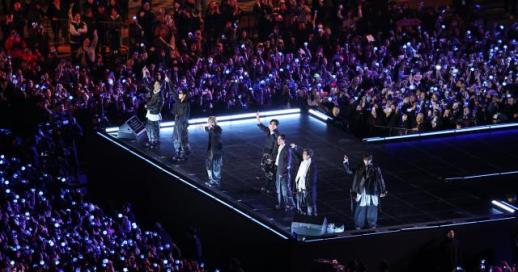 BTS comeback and legacy SEOUL, March 22 (AJP) - On the night of March 21, Gwanghwamun Plaza became a festival ground for the world. 'BTS THE COMEBACK LIVE: ARIRANG,' BTS members' first full-group stage in 3 years and 9 months since their military discharge, concluded with long preparation and a spectacular finale. That day, Gwanghwamun was not simply a concert venue. It was a place of harmony, a moment when the world became one. A plaza where the world gathered Those filling the plaza were not only Koreans. Fans flew in from Japan, America, Europe, South America, and Southeast Asia, gathering in one place. English, Japanese, Chinese, Spanish, Thai. Different languages mixed, but everyone communicated in one language. The language of music. Even foreigners became friends with each other. They took photos with light sticks together. Shared gifts. Their faces were full of smiles. Police and volunteers in yellow vests were armed with foreign languages. They guided in English, Japanese, and Chinese. But many foreigners had studied Korean. Instead of "Where go?" they asked "Where should I go?" Some had practiced "Thank you." Awkward Korean met awkward English, creating amusing scenes. Everyone smiled and communicated. A festival that began while waiting in line The festival began even while lining up to enter the venue. People yielded to each other. Those who came first held their places, those who came later stood behind. There was no cutting in line. Instead, there was laughter. Even waiting was enjoyable. A plaza that became one When the performance started, the plaza became completely unified. Tens of thousands of purple light sticks swayed together. When songs played, everyone sang along. Fans who didn't know Korean had memorized the lyrics. Pronunciation didn't matter. Singing together was enough. When someone fell, people around helped them up. In front of shorter people, others naturally lowered their posture. While enjoying the performance, they considered each other. Lingering echoes Even as people left after the performance, the festival continued. No pushing. No rushing. Moving slowly, in order, exchanging greetings like "Good job," "It was fun." Fans naturally picked up what had fallen on the ground. Those who enjoyed the festival took responsibility for its ending. The real stage was the entire plaza BTS sang on stage. But the real stage was the entire plaza. The harmony, consideration, and joy ARMYs showed. That was the real performance. The next day, March 22, Gwanghwamun Plaza returned to daily life. But those passing through know. The day before, something special happened here. People from around the world gathered in one place to enjoy music, respect each other, and laugh together. Different languages, different skin colors, different ages—all were one. What happened at Gwanghwamun Plaza wasn't simply a concert. It was a global festival. A moment of harmony. A miracle created by music. Where the purple wave passed, warmth remained. And in everyone's memory, this day will last long. A global festival unfolded at Gwanghwamun. That night, Seoul was the center of the world. 2026-03-22 20:48:54