
Journalist

Lee Hugh
=
-
 KFA confirms North Korean female soccer club visit for AFC finals in Suwon SEOUL, May 04 (AJP) - The Korea Football Association confirmed Monday that North Korean women's soccer club Naegohyang (meaning "my hometown" in Korean) will visit Suwon, south of Seoul, for the Asian Football Confederation Women's Champions League finals. The visit marks the first time a North Korean athletic delegation has entered South Korea in eight years. According to South Korea's football governing body, the Asian Football Confederation (AFC) informed South Korean officials of the North Korean team's participation on May 1. The move ends a long hiatus in cross-border sports exchange following a period of active cooperation in 2018 that included unified teams and joint athletic entries. Naegohyang qualified for the tournament finals after winning the 2023~2024 North Korean top-flight league title. The team will face Suwon FC Women in a semi-final match scheduled for May 20 at Suwon Sports Complex. The visiting delegation includes 39 individuals, consisting of 27 players and 12 staff members, according to the Ministry of Unification. Naegohyang is a corporate-style club founded in Pyongyang in 2012 and receives sponsorship from a consumer goods company. The squad is led by Ri Yu-il, who previously served as head coach for the North Korean national women's team. The team demonstrated a dominant performance in the qualifying rounds, scoring 23 goals without conceding. Naegohyang advanced through the group stage with two wins and one loss, including a 3-0 victory over Suwon FC. They secured a place in the final four by defeating Ho Chi Minh 3-0 in the quarter-final round. The Korea Football Association won the bid to host the tournament finals in January after Suwon FC successfully advanced to the knockout stages. The winner of the semi-final match will face either Melbourne City or Tokyo Verdy in the championship match on May 23. 2026-05-04 14:12:08
 -
 South Korea Firms Take Diverging Paths in Vietnam’s LNG Power Market Two large liquefied natural gas-fired power projects in Vietnam are moving in opposite directions. Ca Na LNG in Khanh Hoa province took a first step after signing an investment and project contract in April. But Nghi Son LNG in Thanh Hoa province has stalled after failing to attract a single bidder in three tenders. Vietnam’s Finance and Investment Newspaper, an outlet under the Ministry of Finance, reported on May 4 (local time) that South Korean companies are now pursuing different strategies. SK Innovation has been listed as an investor in the nearby Quynh Lap LNG project in Nghe An province, while POSCO International has proposed developing Nghi Son and Quynh Lap together as a package. Vietnam’s LNG market is emerging as a new test for South Korean energy firms. Ca Na LNG signed its investment and project contract on April 10 with Khanh Hoa province through a consortium of Vietnam’s Trung Nam Group and Sideros River. The project is notable as the first LNG power project selected through an international tender under Vietnam’s Power Development Plan VIII. Nghi Son LNG, by contrast, again failed to secure any investor in its third tender. The project calls for a 1,500-megawatt combined-cycle gas turbine LNG plant with total investment of 57.524 trillion dong, but tenders have repeatedly fallen through since 2024. In the second tender on April 4 last year, five foreign companies — including Japan’s JERA, Thailand’s Gulf Energy and South Korea’s SK Innovation — showed interest, but no formal bid was submitted. As Nghi Son drifts, South Korean firms are looking to adjacent projects. SK Innovation was approved in February as an investor in Quynh Lap as part of a consortium. Nghe An selected its developer through direct negotiations rather than a competitive tender. SK Innovation has repeatedly proposed an integrated plan to link the two plants and share LNG storage, a dedicated port and a transmission yard. POSCO International has taken a similar approach. POSCO International CEO Lee Kye-in sent a letter to Vietnam’s Ministry of Industry and Trade in July last year, formally proposing integrated development of the Nghi Son and Quynh Lap LNG projects and selection of investors through direct appointment. The company argued that sharing infrastructure would cut costs and speed up the projects. Local government policy, however, does not align with that approach. An official at the Nghi Son Economic Zone and Industrial Park Management Board said Thanh Hoa chose an open tender because multiple investors had shown interest for a long time, calling it a process to ensure transparency and select capable investors. Thanh Hoa is also maintaining a policy, based on ministry guidance, that each LNG plant should have its own dedicated port — a direct clash with the South Korean proposal to share infrastructure between plants. Still, Thanh Hoa has signaled it does not intend to leave Nghi Son on hold indefinitely. In late March, it formed a working group to address obstacles facing LNG power projects in the province. On April 17, it met with Russia’s Novatek to gauge investment interest in three LNG plants — Nghi Son, Thanh Hoa and Cong Thanh — totaling about 4,500 MW, indicating it is also looking beyond South Korean capital. From an investor’s perspective, the two projects differ in appeal. Ca Na has existing advantages including a deepwater port, stable geological conditions and nearby industrial complexes. Nghi Son and Quynh Lap face the twin burdens of infrastructure needs and heavy investment costs — a key reason South Korean firms keep pushing an integrated development plan. Vietnam, meanwhile, designated LNG power as a core tool for its energy transition in August last year through Politburo Resolution No. 70-NQ/TW. Whether South Korean companies gain ground as stand-alone developers or through an integrated consortium will depend on how policy differences with provincial governments are resolved. Decisions on a possible fourth tender for Nghi Son and whether authorities accept the SK and POSCO integrated proposal are expected to be a turning point for South Korean energy companies in Vietnam’s LNG market.* This article has been translated by AI. 2026-05-04 14:10:35
 -
 Korea University, UNIST team up to build Korean version of Harvard-MIT HST SEOUL, May 04 (AJP) - Korea University College of Medicine and the Ulsan National Institute of Science and Technology (UNIST) have been picked for the government's flagship program to nurture physician-scientists, marking a fresh push to close the gap between Korean medical research and global leaders such as Harvard-MIT and Stanford. The two institutions were selected as a new consortium under the 2026 K-MediST (Korea Medical Science & Technology) program, supervised by the Ministry of Health and Welfare and administered by the Korea Health Industry Development Institute. The five-year project runs from April 2026 through December 2030. Kim Tae-hoon, professor at Korea University College of Medicine and head of research at Korea University Anam Hospital, will serve as principal investigator, while Baek Seung-jae, dean of UNIST's Graduate School of Health Sciences and Technology, takes on the role of co-principal investigator. At the heart of the partnership lies what the schools call the "KUNIST" platform, a joint framework offering a joint MD-PhD degree, a shared research institute, and direct support for technology commercialization. A roughly 502-square-meter research hub will be set up at Korea University's Chung Mong-koo Hall in northern Seoul, linked to UNIST's high-performance computing and analytical infrastructure in Ulsan. The curriculum revolves around four pillars — medical AI, precision medicine, smart hospitals and extreme medicine — and will be built on the ADDIE instructional design model to tailor coursework to each student's research focus. A so-called 'Data Living Lab' is to feed real-time clinical data into research, allowing trainees to move between bedside and bench without friction. The program was modelled on Harvard-MIT's Health Sciences and Technology and Stanford University's BioX, both regarded as global benchmarks for physician-scientist training. The Korean partners say they intend to pursue joint research and exchange ties with those institutions. "Physician-scientists are the core talent in the bio-health field who can solve problems encountered in clinical settings through laboratory research," said Jung Eun-young, director-general for health industry policy at the Ministry of Health and Welfare, in a separate briefing on the broader program. 2026-05-04 14:09:56
 -
 South Korea to Recruit 25,000 for Youth Savings Accounts Aimed at Low-Income Workers The South Korean government is rolling out a program to help low-income young workers build assets. On May 4, the Ministry of Health and Welfare said it will recruit 25,000 new participants for this year’s Youth Tomorrow Savings Account program from May 4 to 20. The program supports working young people on low incomes in saving a lump sum over a three-year term. Eligible applicants are working youths ages 15 to 39 in households earning 50% or less of the median income. Participants who save 100,000 to 500,000 won a month will receive a government match of 300,000 won per month. At maturity after three years, participants can receive a total of 14.4 million won, including their own savings, plus interest of up to 5% annually. Since its introduction in 2022, eligibility had been expanded to those at 100% or less of median income. Starting this year, however, the government said it will focus support on youths at 50% or less of median income — including basic livelihood recipients and the near-poor — with the launch of a new “Youth Future Savings” product. To receive the full payout at maturity, participants must keep working and make monthly deposits, complete 10 hours of self-reliance training through the asset-building portal and submit a plan for how the funds will be used. The ministry also said it improved program rules. Previously, deposits could be paused for up to six months for unavoidable reasons such as job loss, illness or an accident. The pause period has been extended to up to 12 months so accounts can be maintained even during temporary interruptions in income-generating activity. Applicants can apply online through the Bokjiro welfare portal or in person at an administrative welfare center in their local eup, myeon or dong within their city, county or district from May 4 to 20. Selection results will be announced individually by text message in August after reviews of income and assets. Those selected can open an account at a nearby Hana Bank branch or through the Hana Bank OneQ app, and begin saving from August. More information is available through the Korea Self-Sufficiency and Welfare Development Institute’s asset-building portal chatbot service, the asset-building support call center, or local administrative welfare centers.* This article has been translated by AI. 2026-05-04 14:09:18
 -
 Vietnam Draws $18.24B in FDI in First Four Months, Led by Singapore and South Korea Vietnam is boosting growth momentum by expanding both foreign direct investment and public spending. In the first four months of this year, total registered FDI reached $18.24 billion, up 32.0% from a year earlier, while disbursed FDI rose 9.8% to $7.4 billion, the highest for the period in the past five years. Singapore ranked as the top investor with $6.05 billion, and Thai Nguyen and Nghe An led provinces in attracting capital. Vietnam’s Finance Ministry said total registered FDI as of April 27 — including newly registered capital, adjusted capital and foreign investors’ capital contributions and share purchases — totaled $18.24 billion. New registrations alone amounted to $12.15 billion across 1,249 projects. The number of projects rose 3.7% from a year earlier, while registered capital more than doubled. New capital flowed mainly into manufacturing. Processing and manufacturing drew $8.12 billion, or 66.8% of newly registered capital. Electricity, gas, water supply and air conditioning attracted $2.31 billion, or 19.0%, with other sectors accounting for $1.72 billion, or 14.2%. By source country, Singapore invested $6.05 billion, representing 49.8% of newly registered capital. South Korea followed with $4.08 billion, or 33.6%. China invested $524.1 million, Japan $462.0 million, Hong Kong $329.2 million and the Netherlands $318.5 million. By locality, Thai Nguyen remained No. 1 with more than $5.75 billion. Nghe An ranked second with more than $2.2 billion. Ho Chi Minh City attracted $983.0 million across 656 projects, followed by Dong Nai with $596.0 million, Bac Ninh with more than $473.0 million and Ha Tinh with more than $412.0 million. Disbursed FDI totaled $7.4 billion in the first four months. Manufacturing accounted for $6.12 billion, or 82.7%, followed by real estate at $540.5 million and electricity, gas, hot water, steam and air conditioning at $270.6 million. Public investment also increased. Investment disbursed from the state budget reached 187.1 trillion dong, equal to 19.7% of the annual plan and up 10.4% from a year earlier. Spending managed by local governments rose 11.4% to 161.7 trillion dong, while centrally managed spending increased 4.6% to 25.4 trillion dong. Nghe An reported strong results in its own investment drive. In the first four months, it approved 18 new projects and adjusted 58, with new and additional capital exceeding 65.219 trillion dong, up 8.74 times from a year earlier. FDI alone topped $788.0 million. The province also recorded 1,883 newly established businesses, up 58.6%, and 589 firms resuming operations. Vietnamese companies also stepped up overseas investment. Total outbound investment reached $713.9 million, 2.3 times the level a year earlier. Laos accounted for $198.0 million, or 27.7%, followed by Kyrgyzstan with $149.9 million and the United Kingdom with $82.8 million. With inbound FDI, public investment and outbound investment all rising in the first four months, Vietnam’s investment flows are broadening at home and abroad.* This article has been translated by AI. 2026-05-04 14:08:26
 -
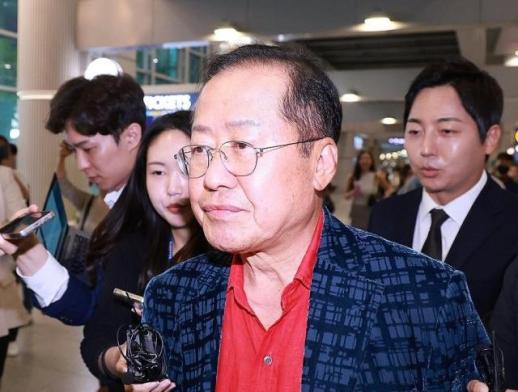 Hong Joon-pyo Slams Conservative Candidates as ‘Shameless’ Ahead of June 3 Local Elections Hong Joon-pyo, former mayor of Daegu, on Monday criticized conservative figures running in the June 3 local elections and by-elections, calling them “shameless” and “thick-faced.” In a Facebook post, Hong said they were seeking office after “ruining the administration,” adding that they were running in by-elections and local government races “just to save themselves.” He also faulted parties for nominating them and voters for supporting them, saying South Korea’s conservative camp had become “a bizarre mess.” He added that some people, after being cut from consideration, did not leave the party and instead focused on attacking from within, asking how elections could succeed under those conditions. Using a metaphor, Hong said it would be better to leave a well and spit than to keep trying to drink from it while spitting into it. “A local election is a local election,” he wrote, but warned that “the bigger confusion will come after the local elections.” * This article has been translated by AI. 2026-05-04 14:07:38
 -
 Japan Airlines’ Mileage Programs Tested as Fuel Surcharges Surge Japanese airlines’ mileage businesses are facing a key test as a surge in global oil prices drives up the real cost of award tickets and pushes carriers to tighten program rules. According to the Nikkei business daily, All Nippon Airways and Japan Airlines sharply raised international fuel surcharges for tickets issued starting May 1, after jet fuel prices jumped following the effective closure of the Strait of Hormuz. On one-way flights from Japan to Europe, ANA raised its surcharge from 31,900 yen to 56,000 yen, while JAL lifted its fee from 29,000 yen to 56,000 yen. Some routes saw increases close to double. The higher charges also hit travelers using miles. For example, a June round-trip economy award ticket between Tokyo and London previously required about 55,000 miles plus about 100,000 yen in additional payments, but now requires about 150,000 yen. Even with miles, the cash outlay has risen sharply, weakening the appeal of “bonus” tickets. Mileage programs were designed to secure loyal customers, expanding rapidly after their introduction in the 1990s by allowing points earned from flight distance to be redeemed for tickets. ANA surpassed 10 million members within seven years of launching its program. Over time, miles became a broader revenue model tied to finance and retail, as card and insurance companies bought miles to offer as customer perks and more consumers accumulated miles without flying. For airlines, mileage operations can be a high-margin business: miles sold externally trade at higher prices than general-purpose points, while redemptions are concentrated on the airline’s own tickets. JAL’s mileage, card and other businesses in finance and e-commerce posted EBIT of 45.5 billion yen for the fiscal year ended March 2026, about 20% of the total. The segment’s profit margin was 20%, far above the airline’s core aviation business at 9%. Still, the model is harder to sustain if earning grows while redemption becomes more difficult. Complaints have risen that seats are hard to book even with miles, as award inventory has tightened, especially in business and first class. With fuel surcharges also climbing, Nikkei said the perceived value of miles is falling quickly. Airlines are responding. ANA said it will tighten requirements for premium member card benefits starting in fiscal 2028, restricting some perks such as lounge access if annual spending via ANA cards and smartphone payments falls below 3 million yen. Previously, once status was obtained, members could keep benefits by paying the annual fee; the new structure will require a minimum level of spending. The change is expected to affect Japan’s culture of pursuing elite status, often referred to domestically as “mile runs.” Carriers are also continuing to expand ways to earn miles. JAL recently invested in online life insurer Lifenet Insurance and said it will consider developing insurance products that accrue miles. But industry observers warn that expanding earning opportunities may have limited pull if redemption value keeps eroding. The central challenge, the report said, is restoring the value of using miles. Airlines are considering broader redemption options, including low-cost carriers and non-aviation services, but the report said there is no fundamental solution without making award tickets attractive again. With oil prices adding pressure, Japan’s airline mileage businesses built over more than three decades are at a structural turning point.* This article has been translated by AI. 2026-05-04 14:06:20
 -
 Royal night revived through open-air concert at Changdeok palace SEOUL, May 03 (AJP) -The glow of lanterns and the sound of centuries-old melodies filled Changdeokgung as a 100-member traditional Korean music ensemble transformed the royal palace into an open-air nighttime stage during a rare spring performance in central Seoul. Held from May 1 to 3 at Injeongjeon Hall, the palace’s main throne hall, the “2026 Royal Palace Concert: Music of Great Peace” invited visitors to step into a royal setting once reserved for kings, court ceremonies and state rituals of the Joseon Dynasty. The concert marked the first time the annual spring gugak performance was staged at the palace’s central ceremonial court, adding fresh life to the UNESCO World Heritage site after sunset. One hundred musicians — including professors, students and alumni from Ewha Womans University’s Korean music department — performed beneath the palace rooflines in an ensemble led by artistic director Kwak Eun-a. The program opened with the stately court piece “Sujecheon,” followed by “Cheonnyeonmanse,” “Suryong-eum” and “Taepyeongga,” alongside a geomungo solo in the style of Han Gap-deuk. A contemporary gayageum composition, “Sound of the Night,” added a modern layer to the historic atmosphere. As cool spring air swept through the stone courtyard, the palace’s wooden halls amplified the deep resonance of strings, drums and wind instruments, blurring the distance between past and present. The night concluded with all 100 musicians joining in a finale performance of “Arirang,” as audience members quietly sang along beneath the illuminated palace eaves — reviving, if only briefly, the soundscape of a royal Korean night centuries ago. 2026-05-04 14:05:21
 -
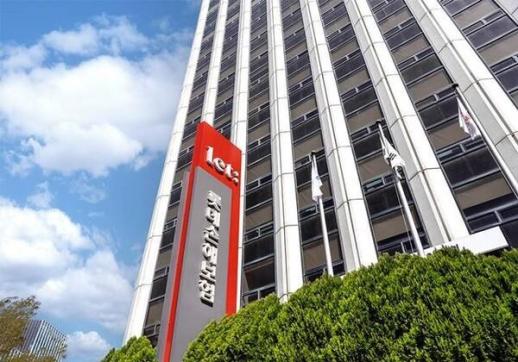 Lotte Insurance Resubmits Turnaround Plan With Capital-Raising Options Lotte Insurance said its newly resubmitted management improvement plan includes steps to bolster capital adequacy, including a capital increase, a potential third-party acquisition and possible transfer of all or part of its business. The company’s earlier plan was not approved, and it subsequently received a formal management improvement order from regulators. With that backdrop, the specificity and feasibility of the new capital-raising measures are expected to be central to the Financial Services Commission’s review. Lotte Insurance said May 4 that it submitted the plan to financial authorities on April 30. The plan includes cutting expenses, disposing of troubled assets, improving staffing and organizational operations, and increasing capital. It also calls for drawing up plans related to a merger, becoming a subsidiary of a financial holding company under the Financial Holding Companies Act, a third-party acquisition, and transferring all or part of its business. Lotte Insurance submitted its first management improvement plan to the commission in January, but it was not approved. The commission then issued a management improvement order, a step above a management improvement recommendation under Korea’s prompt corrective action framework. Industry watchers said the key issue in the review will be whether the capital-strengthening measures are workable. They noted that after the first plan failed to win approval, regulators are likely to focus on whether proposals such as a capital increase or acquisition-related steps are concrete enough to execute. The commission is expected to decide whether to approve the plan within one month of its submission. If approved, Lotte Insurance would proceed with the measures recognized by authorities, including cost cuts, troubled-asset cleanup, operational changes and capital strengthening. If not approved, additional revisions or follow-up steps remain possible. * This article has been translated by AI. 2026-05-04 14:00:17
 -
 KT&G Named to Dow Jones Sustainability World Index for Second Straight Year KT&G said it was included for a second consecutive year in the top-tier “World Index” of the Dow Jones Best-in-Class Indices (DJBIC), a global ESG (environmental, social and governance) assessment that recognizes leading sustainability performance. The company said Monday it was also included in the Dow Jones “Asia Pacific” and “Korea” indices. DJBIC is an annual sustainability evaluation published by S&P Global, and is used by global investors as a benchmark for responsible investment. The World Index includes only the top 10% of companies for ESG performance among roughly 2,500 firms with the largest global market capitalization, KT&G said. It said it was ranked No. 1 within its industry group after receiving high marks across governance, environmental and social categories. KT&G said it earned the highest score in governance-related items including board independence, diversity policies and having an ESG governance structure. In the environmental category, it cited recognition for climate-change response and water-resource management based on its “2030 Green Impact” environmental management vision. In the social category, it said it scored highly for efforts such as implementing human-rights management. “This World Index inclusion is the result of the global capital market objectively recognizing our continued efforts to advance ESG management,” said Shim Young-a, head of ESG management at KT&G. “We will continue to strengthen execution of ESG management in step with enhancing our core business competitiveness and establish ourselves as a trusted company.” KT&G said it is also strengthening its compliance and ethics management system. In January, it elevated its compliance management center to a compliance management office to enhance companywide compliance and ethics oversight. It also designates June 2 each year as “KT&G Corporate Ethics Day” and shares ethics messages with employees. * This article has been translated by AI. 2026-05-04 13:48:31